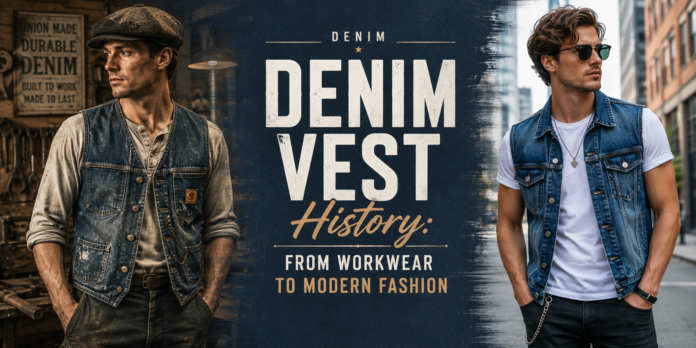
Denim vest history is the story of a simple sleeveless garment that moved from hard work to everyday fashion. A denim vest is made from strong cotton denim, but it has no sleeves, so it gives freedom to the arms while still adding a tough outer layer. In the beginning, denim clothing was mostly linked with workers, farmers, miners, and people who needed strong clothes for long days. Over time, the denim vest became more than workwear. It became a sign of confidence, youth culture, street style, music, and personal fashion. The best part of denim vest history is that the garment never lost its practical value. It still feels useful, easy to wear, and simple to style. Today, people wear denim vests over T-shirts, hoodies, dresses, shirts, and casual outfits. This makes denim vest history important for anyone who wants to understand how a workwear piece became a modern fashion essential.
What Is a Denim Vest?
A denim vest is a sleeveless jacket or waistcoat made from denim fabric. It usually has a front opening, buttons or snaps, chest pockets, and strong stitching. Some denim vests look clean and simple, while others have faded washes, raw edges, patches, embroidery, studs, or distressed details. In denim vest history, this garment became popular because it was lighter than a full denim jacket but still gave structure to an outfit. Workers liked it because it protected the body without making the arms feel tight. Fashion lovers later liked it because it could change the mood of a simple outfit very quickly. A plain T-shirt can look more styled with a denim vest, and a basic dress can look more relaxed with one layer on top. This is why denim vest history connects both function and fashion. The garment is easy to understand, easy to wear, and easy to make personal.
Early Workwear Roots of the Denim Vest
The early part of denim vest history is strongly connected with workwear. Denim fabric became popular because it was strong, practical, and able to handle rough use. People who worked outdoors needed clothes that could survive dust, tools, sweat, movement, and long hours. A sleeveless denim layer made sense because it gave workers a tough front and back covering while keeping the arms free. This was helpful for lifting, carrying, riding, repairing, and building. The denim vest was not first seen as a fashion item. It was a useful layer for people who cared more about comfort and durability than style. Its pockets were also helpful because workers could carry small items, notes, tools, or personal things. Denim vest history shows that many fashion pieces start from real needs. When a garment solves a daily problem, it often stays useful for many generations.
Denim Vest History in Everyday Clothing
Denim vest history changed when denim moved from job sites into normal daily life. People started wearing denim not only because it was strong, but also because it looked casual, honest, and easy. The denim vest became a simple layer for people who wanted a rugged look without wearing a full jacket. Modern brands and buyers can still see this wide appeal in the full denim vest category, where the style appears as part of denim apparel rather than only as old workwear. This shift is important because it shows how the denim vest became flexible. It could work with jeans, chinos, shorts, skirts, dresses, and streetwear outfits. The same garment could look practical, rebellious, relaxed, or stylish depending on the person wearing it. That flexibility is one big reason denim vest history continues to matter in fashion.
Why Workers Liked Denim Vests
Workers liked denim vests because they were strong but not heavy like a full jacket. A vest protects the chest and back, but the arms stay open for movement. This made it easier to bend, lift, reach, and work with tools. In denim vest history, comfort was just as important as durability. A good work garment had to move with the body, not fight against it. Denim also became better with age. Instead of looking useless after wear, it often looked more natural and personal. Fades, creases, marks, and small repairs showed the life of the person who wore it. That is one reason denim clothing has such strong emotional value. It does not always need to look perfect. It can look used, real, and lived-in. Denim vest history proves that clothing can be practical and still carry character.
From Workwear to Youth Culture
A major change in denim vest history happened when young people began using denim as a fashion statement. Denim started to represent freedom, independence, and casual confidence. The vest became popular because it was easy to customize. People could cut the sleeves off an old denim jacket, add patches, write on it, distress it, or decorate it with pins. This made each vest feel personal. In many youth cultures, clothing is not only about covering the body. It is about showing taste, attitude, and identity. The denim vest fit this idea perfectly. It was affordable, strong, and open to change. A clean vest could look simple and classic, while a ripped or patched vest could look bold and rebellious. This part of denim vest history explains why the garment became linked with music, street fashion, and self-expression.
Black Denim and the Edgy Fashion Era
Black denim added a new chapter to denim vest history because it gave the vest a darker and sharper mood. Blue denim often feels classic and casual, while black denim can feel bold, urban, and modern. A black vest works well with graphic tees, boots, black jeans, cargo pants, or layered streetwear looks. For brands building an edgy collection, a black denim vest can connect old workwear toughness with modern fashion energy. This is why black denim became popular in rock, punk, biker-inspired, and street-style outfits. It gives the same sleeveless shape but changes the message of the outfit. Denim vest history is not only about one color or one style. It is about how small changes in wash, color, trim, and fit can make the same garment feel completely different.
Denim Vest History in Men’s Fashion
Denim vest history in men’s fashion is closely linked with rugged style, outdoor work, music culture, and casual dressing. Men often wore denim vests over T-shirts, flannel shirts, sweatshirts, or hoodies. This made the outfit look layered without feeling too heavy. A vest also gives shape to the upper body because it frames the shoulders and chest. In modern collections, a mens denim vest can work for streetwear, casualwear, festival looks, and even brand merchandise. The appeal comes from its simple but strong shape. It can look clean with plain colors or bold with patches and distressed details. This part of denim vest history shows how the garment stayed useful for men because it offered both comfort and style. It is not too formal, not too delicate, and not too difficult to wear.
Denim Vest History in Women’s Fashion
Denim vest history in women’s fashion shows how one garment can become soft, bold, casual, or stylish depending on the outfit. Women have worn denim vests over summer dresses, tank tops, oversized shirts, fitted tees, skirts, wide-leg pants, and denim jeans. The vest can make a feminine outfit feel more relaxed, or it can make a basic outfit look more complete. A womens denim vest also gives designers many options with cropped cuts, oversized fits, shaped waists, light washes, dark washes, and decorative trims. This matters because women’s styling often uses layering to change balance and mood. A denim vest adds structure without fully hiding the outfit under it. Denim vest history in women’s fashion proves that the garment is not limited to workwear or men’s clothing. It became a flexible wardrobe piece for many different personal styles.
Key Takeaway Points From Denim Vest History
The most useful lesson from denim vest history is that strong clothing can become stylish when it is easy to wear and easy to personalize.
- Denim vests started as practical workwear because denim was strong and long-lasting.
- The sleeveless shape gave workers better arm movement than a full jacket.
- Young people later used denim vests to show freedom, attitude, and identity.
- Music and street culture helped make the denim vest bold and expressive.
- Black denim made the vest look more edgy, while blue denim kept it classic.
- Men used denim vests for rugged casual outfits and layered streetwear looks.
- Women used denim vests to balance dresses, skirts, tees, and relaxed outfits.
- Modern denim vests remain popular because they are simple, useful, and easy to style.
How the Denim Vest Became Modern Fashion
Denim vest history became modern fashion because the vest can fit many lifestyles. It is not only for workers, bikers, singers, or fashion models. It can be worn by students, travelers, artists, office workers on casual days, and people who like simple outfits. Modern fashion values clothing that can be styled in more than one way. A denim vest can be casual with sneakers, bold with boots, relaxed with shorts, or polished with clean layers. It can also support seasonal dressing. In spring and summer, it works over light shirts. In fall, it works over hoodies or sweatshirts. In warm places, it gives the feeling of a jacket without too much heat. That year-round use keeps it relevant. Denim vest history shows that a garment stays alive when it can move with changing habits and still feel useful.
Common Styling Mistakes to Avoid
Even though denim vests are easy to wear, some styling mistakes can make them look forced. One common mistake is wearing a vest that is too tight across the chest, because it can pull at the buttons and make the outfit uncomfortable. Another mistake is choosing a wash that clashes badly with the rest of the outfit. Denim on denim can work, but the shades should either match well or create a clear contrast. Too many patches, chains, prints, and accessories can also make the outfit feel crowded if there is no balance. Denim vest history teaches that the best looks often come from simple styling. Let the vest be the main layer, then keep the rest of the outfit clean. A plain tee, good pants, and the right shoes are often enough. The vest should add character, not make the outfit look messy.
Conclusion
Denim vest history proves that a useful workwear piece can become a lasting fashion icon. The denim vest started with practical value: strong fabric, free arm movement, and everyday durability. Then it moved into youth culture, music, streetwear, men’s fashion, and women’s fashion. It changed through color, fit, wash, details, and styling, but it never lost its simple shape. That is why the denim vest still feels fresh today. It can look classic, edgy, casual, vintage, or modern with only small changes. For brands, designers, and everyday wearers, denim vest history is a reminder that the best clothing is not always complicated. Sometimes, the strongest fashion pieces are the ones that solve real problems, feel comfortable, and allow people to show their own style.
FAQs
What is the main idea of denim vest history?
Denim vest history is about how a sleeveless denim workwear layer became a modern fashion item. It started as practical clothing for movement and durability, then became popular in casualwear, music culture, street fashion, and everyday styling.
Why did denim vests become popular?
Denim vests became popular because they were strong, comfortable, and easy to style. The sleeveless design gave freedom to the arms, while denim fabric gave the garment a rugged and timeless look.
Are denim vests still in fashion today?
Yes, denim vests are still in fashion because they work with many outfits. People wear them with T-shirts, hoodies, dresses, shirts, jeans, skirts, and streetwear looks.
What makes a denim vest different from a denim jacket?
A denim vest has no sleeves, while a denim jacket has sleeves. The vest feels lighter, gives more arm movement, and works better as a layering piece in warm or mild weather.