Rainwear performance lives or dies by the materials it’s built from. A jacket that looks waterproof in a store display can fail completely during the first sustained downpour if its fabric construction doesn’t genuinely deliver what the marketing claims. Understanding the best fabrics used in rainwear manufacturing helps brands make informed decisions that translate into products customers trust — and helps outdoor enthusiasts identify genuine protection from inadequate alternatives that only perform in light drizzle. Here’s a complete breakdown of every major rainwear fabric and what each one truly delivers.
Gore-Tex — The Industry Benchmark
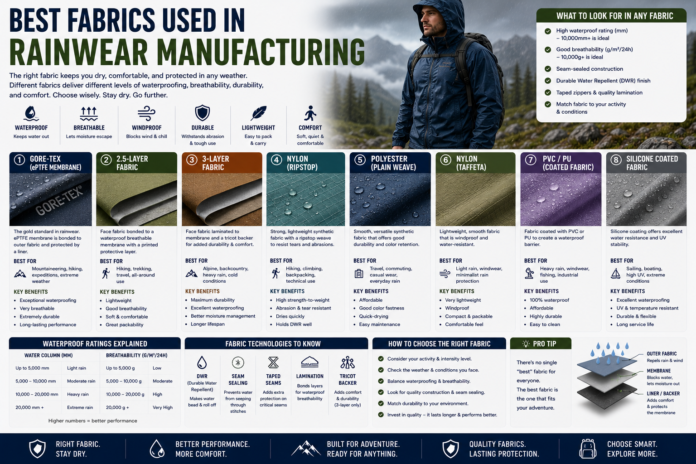
Gore-Tex remains the most recognized and trusted waterproof breathable membrane in rainwear manufacturing globally. Its expanded polytetrafluoroethylene membrane contains billions of microscopic pores — each small enough to block liquid water droplets while large enough to allow moisture vapor molecules to escape. This physical structure delivers genuine waterproofing combined with breathability that keeps wearers dry from both external rain and internal perspiration simultaneously.
Gore-Tex product lines serve different rainwear applications across a performance spectrum. Gore-Tex Pro delivers maximum durability and breathability for demanding mountain and professional applications. Gore-Tex Paclite suits packable lightweight rainwear where weight efficiency matters alongside genuine waterproofing. Gore-Tex Active serves high-intensity athletic applications demanding maximum breathability during sustained physical output.
The Gore-Tex licensing program requires manufacturers to meet specific construction quality standards — including seam sealing requirements and hardware specifications — before using the certification on finished products. This quality assurance makes Gore-Tex labeling a meaningful credential rather than purely a marketing claim for hardshell jackets and serious rainwear products.
eVent Fabric — Direct Venting Breathability
eVent fabric uses a different membrane technology approach than Gore-Tex — an ePTFE membrane with an oil-resistant treatment that allows direct moisture vapor transmission without the polyurethane coating that Gore-Tex traditionally applied over its membrane. This direct venting approach delivers higher breathability performance than comparable Gore-Tex constructions — particularly during high-intensity activity where moisture vapor transmission rate becomes the limiting factor in internal comfort management.
eVent suits high-output athletic rainwear applications where breathability performance matters as much as waterproofing — trail running rain jackets, cycling rainwear, and fast-hiking applications where sustained intense physical effort generates moisture vapor faster than lower-breathability membranes can manage comfortably. Brands building performance-oriented waterproof clothing collections find eVent serves the most athletically demanding customer segments within their outdoor market.
Pertex Shield — Performance at Accessible Price Points
Pertex Shield delivers waterproof breathable membrane performance at more accessible price points than Gore-Tex and eVent licensing costs allow — making it commercially valuable for brands targeting mid-range rainwear price points without compromising on genuine membrane waterproofing performance.
Multiple Pertex Shield variants serve different performance tiers. Pertex Shield Air maximizes breathability for aerobic applications. Pertex Shield+ delivers enhanced durability for demanding outdoor use. The range gives outdoor brands flexibility to specify appropriate membrane performance levels across different rainwear product tiers within their collection — aligning construction cost with retail price point and target customer expectations.
Polyurethane Coating — Accessible Waterproofing
Polyurethane coating applies a waterproof film directly to the interior surface of face fabrics — creating waterproof performance without membrane lamination costs. PU-coated rainwear delivers genuine waterproofing adequate for recreational outdoor use at significantly lower production costs than membrane-laminated alternatives.
The primary limitation of PU coating is breathability — coated constructions breathe significantly less effectively than quality membrane alternatives because the coating covers fabric pores rather than utilizing the selective permeability that membrane structures achieve through controlled pore sizing. This breathability limitation matters most during high-intensity physical activity where moisture vapor accumulation creates uncomfortable internal dampness within the jacket system.
PU-coated rainwear suits light recreational use, casual outdoor activities, and applications where sustained physical intensity is low enough that breathability limitations don’t create meaningful comfort problems during wear. Rainwear manufacturers use PU coating to deliver accessible price point products that serve the largest recreational outdoor market segment effectively without premium membrane construction costs.
Nylon Face Fabrics — Durable and Lightweight Shell Construction
Nylon serves as the primary face fabric in premium rainwear construction — providing the durability, lightweight properties, and smooth surface that waterproof membrane laminates require for optimal performance and longevity. High-tenacity nylon resists abrasion from pack straps, vegetation contact, and terrain exposure that rainwear experiences constantly during outdoor activity.
Ripstop nylon constructions prevent tear propagation from small snags and contact points — maintaining face fabric integrity across the demanding mechanical stresses that serious outdoor rainwear endures throughout extended field use. The tensile strength of nylon significantly exceeds equivalent weight polyester — making it the preferred face fabric for technical rainwear applications where durability alongside weight efficiency creates the optimal performance combination.
Waterproof jackets built on high-tenacity nylon face fabrics with quality membrane lamination deliver the complete performance package that serious outdoor rainwear demands — combining face fabric durability with membrane weather protection for products that maintain both functions across multiple seasons of demanding use.
Polyester Face Fabrics — Color Stability and Sustainability
Polyester face fabrics serve rainwear applications where color stability, sustainability credentials, and specific aesthetic requirements matter alongside waterproof performance. Polyester maintains vibrant colorways across extended UV exposure significantly better than nylon — making it valuable for fashion-oriented rainwear collections where visual longevity across the product’s service life matters commercially.
Recycled polyester — produced from post-consumer PET plastic waste — delivers identical technical performance to virgin polyester while significantly reducing environmental impact. Sustainability-focused outdoor brands increasingly specify recycled polyester for rainwear face fabrics — responding to growing consumer demand for environmentally responsible outdoor clothing without compromising waterproof performance that customers depend on in actual rain.
Three-Layer Laminate Construction — Maximum Durability Integration
Three-layer laminate construction bonds face fabric, waterproof membrane, and interior backer fabric into a single unified material — eliminating the separate hanging lining found in two-layer constructions. This integration creates the most durable and highest-performing rainwear fabric construction available.
The bonded construction prevents the delamination that separate-layer constructions eventually experience under sustained hard use — and eliminates the weight and bulk of separate lining fabrics while improving moisture vapor transmission by removing the additional fabric layer that moisture must penetrate before reaching the exterior. Three-layer construction suits hardshell jackets and serious technical rainwear where durability, weight efficiency, and maximum performance justify premium fabric costs.
2.5-Layer Construction — Ultralight Packable Performance
2.5-layer construction bonds a waterproof membrane to the face fabric interior and protects it with a printed or embossed pattern coating rather than a separate lining fabric — creating the lightest possible waterproof construction in jacket format. The 0.5 designation refers to this interior coating that protects the membrane without qualifying as a full lining layer.
This construction produces the packable rainwear that trail runners, cyclists, and outdoor travelers carry as constant emergency protection — ultralight jackets that compress to minimal volumes while providing genuine membrane waterproofing when conditions deteriorate unexpectedly. The tradeoff is reduced wearing comfort against base layers compared to fully lined alternatives — but for emergency carry applications used occasionally rather than continuously, this compromise is commercially and practically justified.
DWR Treatments — The Essential Surface Layer
DWR treatment applied to rainwear face fabrics causes water to bead and roll off the surface rather than saturating it — maintaining face fabric water repellency that prevents the waterlogging that would block membrane breathability even on correctly functioning waterproof membrane garments. DWR is not a substitute for membrane waterproofing — it’s a complementary treatment that maximizes how effectively the membrane underneath performs by keeping the face fabric dry and permeable to moisture vapor transmission.
Modern fluorocarbon-free DWR formulations — replacing traditional C8 and C6 chemistry — meet increasingly stringent environmental regulations while delivering comparable initial performance. These sustainable DWR alternatives are becoming standard specification across serious outdoor rainwear collections from brands that prioritize environmental credentials alongside performance — a growing market requirement that outdoor jackets manufacturers increasingly build into their standard production specifications.
Seam Sealing Tapes — Construction Point Waterproofing
Seam sealing isn’t fabric — but it’s the critical construction material that determines whether waterproof fabrics actually deliver complete rain protection or simply provide waterproof panels joined by moisture-permeable seam lines. Every needle penetration through waterproof fabric creates potential moisture entry points that thermally bonded seam sealing tape covers and seals permanently.
Critical seam placement — shoulders, hood attachment, sleeve insertions, and pocket edges — requires seam sealing as a non-negotiable construction standard for genuinely waterproof rainwear. Brands building camping apparel and outdoor collections must specify seam sealing requirements explicitly in manufacturing briefs — because seam sealing quality and coverage extent vary significantly between manufacturers and directly determine whether finished products perform as promised in sustained rain.
Building Your Rainwear Collection Around the Right Fabrics
The best fabrics used in rainwear serve different performance requirements across different product tiers and target markets. Gore-Tex and eVent suit premium technical rainwear for serious outdoor users. Pertex Shield and quality PU coatings serve mid-range and recreational markets. Recycled polyester face fabrics serve sustainability-focused brand positioning. Ultralight constructions serve packable emergency protection markets.
Working with a professional outdoor apparel manufacturer who sources verified performance fabrics — with genuine technical credentials and appropriate environmental certifications — ensures your rainwear collection delivers the protection promises your brand makes to customers who evaluate products through real-world use in actual outdoor conditions.
Conclusion
Understanding the best fabrics used in rainwear manufacturing — Gore-Tex membranes, eVent technology, Pertex Shield, polyurethane coatings, nylon and polyester face fabrics, three-layer and 2.5-layer constructions, DWR treatments, and seam sealing systems — gives brands the technical foundation to build rainwear collections that genuinely protect their customers across real outdoor activities in real rain. Every fabric decision communicates your brand’s commitment to genuine outdoor performance quality. Choose verified materials, partner with experienced rainwear manufacturers, and build products that earn lasting customer trust through consistent protection performance every time it rains.
FAQs
Is Gore-Tex worth the premium price in rainwear?
Yes for serious outdoor users who regularly encounter demanding weather conditions. Gore-Tex delivers verified performance consistency backed by rigorous manufacturer quality standards — the reliability and brand trust it provides genuinely justifies premium pricing for frequent outdoor use where rain protection performance directly impacts safety and comfort.
What is the difference between waterproof and water-resistant rainwear fabrics?
Waterproof fabrics use membrane construction that prevents water penetration indefinitely. Water-resistant fabrics rely on DWR treatment that repels light rain initially but eventually wets out during sustained heavy precipitation — allowing moisture penetration that genuine waterproof membrane construction prevents throughout extended rain exposure.
How long do waterproof membrane fabrics maintain their performance?
Quality membrane fabrics maintain waterproof performance across many years of regular outdoor use when properly cared for. DWR treatment requires periodic refresh through tumble drying or re-treatment products — but the membrane itself maintains performance as long as face fabric integrity is maintained and garments are washed correctly using technical fabric wash products.
Can rainwear with premium fabrics be produced under a private label?
Yes. Professional rainwear manufacturers offer complete private label production with certified waterproof membranes, seam sealing, sustainable DWR treatments, custom colors, hardware, labels, and packaging — giving outdoor brands full technical and commercial control over their rainwear collection identity.