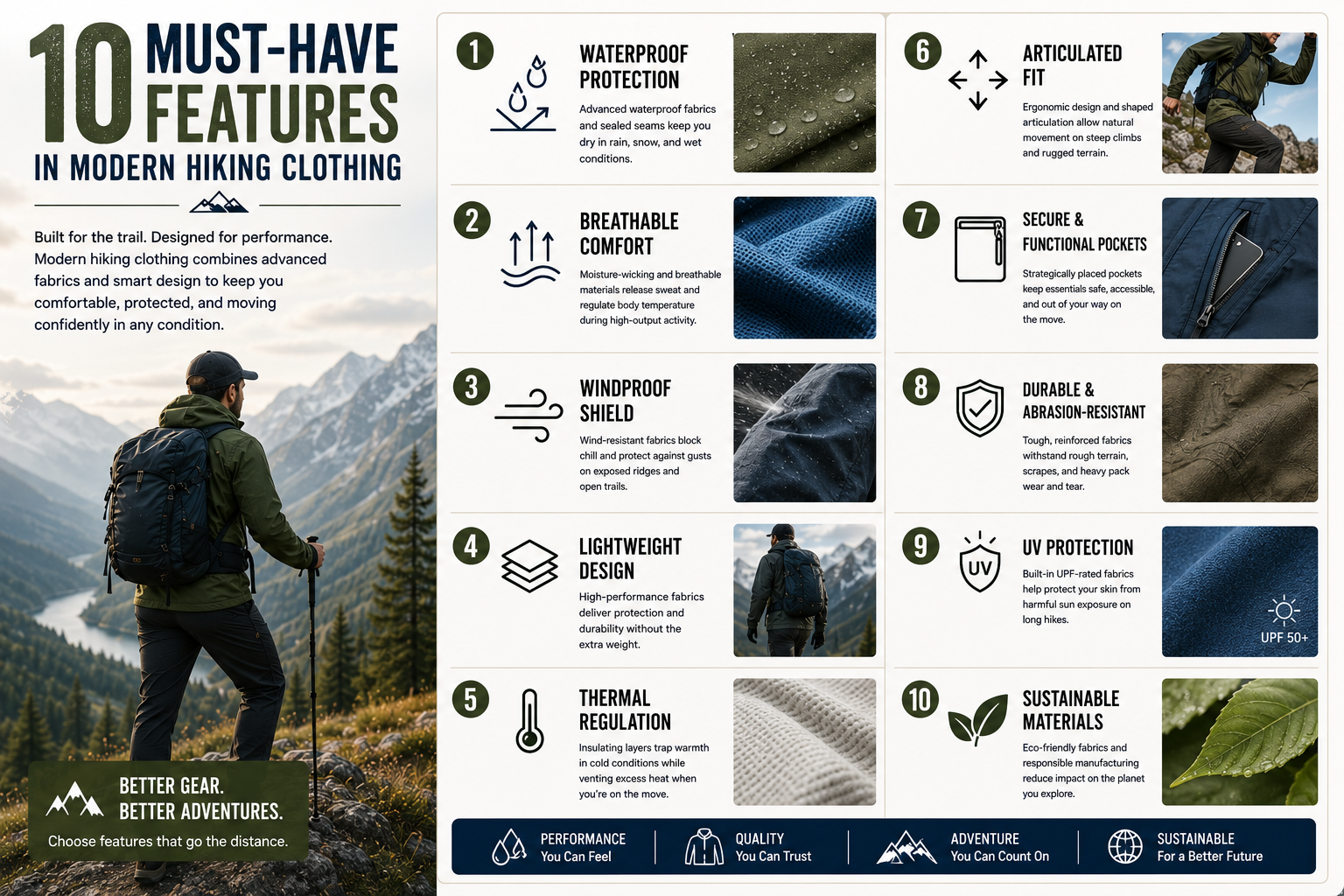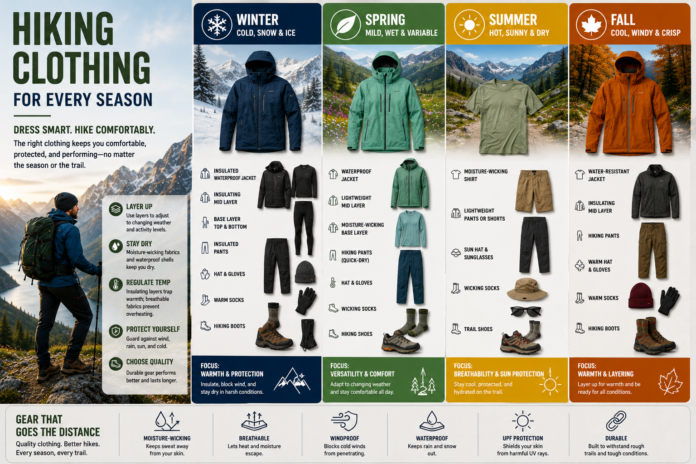
In January, hiking is different from what it looks like in July. Although the trails are the same, the temperatures, weather, daylight hours and physical demands placed on your clothing will be completely different. In winter, a summer hiking outfit will leave you underprepared. In summer, a winter kit can make you too hot before you even reach the summit.
This guide will help you how to choose the right hiking clothing for the season.
The Principle of Layering is applicable to all seasons
It’s important to establish the general principle before tackling each season. Hiking clothing is layered — base, mid, and outer layers — each serving a different purpose. The combination can be changed as the conditions change during the day.
This system isn’t just for winter hiking. Even in the summer, there can be considerable temperature differences between the valley and the summit, morning and noon, and moving and stationary. Knowing which layers to wear and when to remove or add them is just as important as choosing the right clothing.
A manufacturer of hiking clothing that designs for all seasons knows how each garment in a system is related to the other — and builds every piece with the layering context in view.
Spring Hiking Clothing
The spring is a challenging time for hiking clothes, as conditions can be unpredictable and change quickly within a day. Many hiking areas have a variety of weather conditions, including cold mornings, warm middays, and rainy afternoons.
Spring is all about versatility. A lightweight, moisture-wicking base layer in base layers will manage the heat of midday exertion. Packable fleece is ideal for the morning chill and summit chill. A waterproof jacket, which packs small and can be deployed quickly, will cover the spring rain.
Stretch nylon hiking trousers are lightweight and quick drying, and they can handle the moisture and temperature variations that spring brings.
Summer Hiking Clothing
The most important factors to consider when hiking in summer are breathability, moisture control, and sun protection. Summer is not about cold, but rather overheating, sun damage, and dehydration during high-intensity activity in warm weather.
outdoor tees, shirts and shorts are made of lightweight, moisture-wicking fabric to manage sweat when moving uphill for long periods. Outdoor Shorts made of quick-drying Nylon reduce the thermal load on your lower body. In high-altitude and high-UV environments, sun protection is just as important as moisture control.
Even in the summer, it’s worth packing a windbreaker coat. Summit wind chills or unexpected afternoon weather conditions can make even warm summer days feel cold.
Autumn Hiking Gear
Autumn hiking is a combination of the physical conditions and cold bias of spring. Temperatures drop more quickly, weather windows are smaller, and as the season progresses, the likelihood of experiencing genuinely cold temperatures increases.
Autumn is a better time to wear a mid-weight baselayer than the lighter versions that are more suitable for spring and summer. A Softshell Jacket is ideal for autumn weather conditions. It provides wind protection and light rain protection, while still allowing you to move freely. As an emergency layer of insulation, a puffer coat is a great choice for cold weather.
Outdoor cargo trousers made from heavier nylon or stretch polyester provide greater warmth than summer trail shorts, without adding the weight of winter pants. They are the perfect choice for autumn hiking.
Winter Hiking Clothing
Clothing for winter hiking needs to be able to withstand the cold – sustained temperatures below freezing, wind chill at exposed ridges and conditions of snow, ice and rain. Layering becomes crucial, and each layer must perform better than its equivalent three-season garment.
Base layers should be made of merino wool or synthetics in base-layer clothing. This is because wet base-layers in winter can cause dangerous and rapid heat loss. The mid-layer is a heavyweight fleece with significant warmth retention. The outer shell should consist of a Hardshell Jacket, with a waterproofing membrane and sealed seams.
Winter hiking and skiing both require the same protection for exposed skin.
What to always carry irrespective of season
Some items are essential for hiking, no matter what season it is. Packable waterproof layer. Lightweight insulating layer. Base layers with moisture-wicking properties that regulate sweat in any temperature. Lower body protection to handle sudden weather changes.
While the specific weights and levels of warmth of each item vary by season, the general principle of carrying three items — moisture management and insulation — and weather protection is applicable to spring, summer and autumn hiking as well.
Camping clothing designed to be worn overnight shares the same layering requirements. A manufacturer that produces both day hiking apparel and camping apparel knows how to make clothing systems perform over extended outdoor periods rather than only a day.
Conclusion
The best way to pick the right hiking clothes for each season is to understand what each season requires and build a layering scheme around that, rather than relying solely on one all-purpose outfit.
Spring requires versatility. Summer requires sun protection and breathability. Autumn requires wind and rain resistance. Winter requires warmth and waterproofing. The layering principle is beneficial for all seasons.
Explore the hiking apparel manufacturing options when you are ready to develop a seasonal hiking clothing line and find the best production partner for your brand.
FAQs
What’s the most important hiking apparel for each season?
The moisture-wicking baselayer is essential in all temperatures.
What do I need to bring for sudden weather changes?
An ultra-compact waterproof jacket that can be carried in a daypack, but provides full protection from the elements when unexpected conditions arise.
Can a softshell jacket be used for winter hiking in cold conditions?
No. Softshell offers wind resistance and a light rainproofing, but does not provide the insulation and waterproofing that cold winter weather requires.
Which fabrics are best for autumn hiking pants?
Heavyweight nylon or stretch polyester trousers offer more warmth without adding the bulk of winter bottoms, making them the most versatile option for autumn conditions.