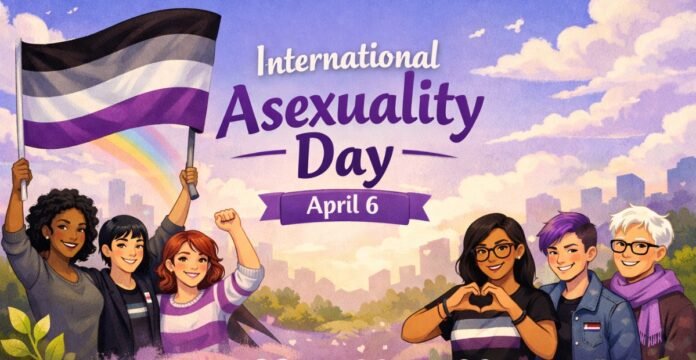
International Asexuality Day is observed every year on April 6. This important day raises awareness about asexuality, celebrates diversity, and promotes understanding of people who experience little or no sexual attraction.
In today’s world, conversations about identity and inclusion matter more than ever. Therefore, International Asexuality Day plays a key role in educating society and supporting the asexual community.Celebrated annually on April 6th, this day unites asexual individuals and allies worldwide, fostering understanding, acceptance, and visibility. It’s a time to amplify asexual voices, share personal stories, and address the misconceptions surrounding asexuality. By increasing awareness and challenging societal norms, International Asexuality Day helps create a more inclusive world where everyone feels seen, respected, and valued for who they are.
What Is Asexuality?
Asexuality is a sexual orientation. People who identify as asexual (often called “ace”) may feel little or no sexual attraction to others. However, this does not mean they cannot form deep emotional or romantic connections.Asexuality is a spectrum, and asexual people may have varying experiences with attraction and relationships. Some asexual people may experience romantic attraction, while others may not. Those who experience romantic attraction may identify as heteroromantic, homoromantic, biromantic, or panromantic, to name a few. It is important to note that asexuality is not the same as celibacy or abstinence, which are choices to not engage in sexual activity. Asexuality is a sexual orientation, while celibacy and abstinence are behaviors.
For example:
- Some asexual people experience romantic attraction
- Others may not feel romantic attraction at all
- Many still value relationships, companionship, and love
In short, asexuality exists on a spectrum, and every individual’s experience is unique.
History of International Asexuality Day
International Asexuality Day was first celebrated in 2021. It was created by international organizations and activists to give visibility to the asexual community worldwide.
Since then, the day has grown rapidly. Communities across different countries now take part in events, campaigns, and discussions.
Why International Asexuality Day Matters
This day is not just about recognition. It also focuses on breaking myths and encouraging acceptance.
1. Raises Awareness
Many people still misunderstand asexuality. Therefore, this day helps educate the public and clear confusion.
2. Promotes Inclusion
Asexual individuals often feel overlooked. International Asexuality Day ensures they are included in conversations about identity and rights.
3. Supports Mental Well-being
Lack of understanding can lead to isolation. However, awareness helps create a more supportive and accepting environment.
Common Myths About Asexuality
Myth 1: Asexual people don’t feel love
This is false. Many asexual people experience deep emotional and romantic connections.
Myth 2: It’s just a phase
Asexuality is a valid and recognized sexual orientation, not something temporary.
Myth 3: Asexual people cannot have relationships
In reality, many asexual individuals have fulfilling relationships based on trust and emotional connection.
The Asexual Pride Flag
The asexual pride flag consists of four colors, each with a special meaning:
- Black – Asexuality
- Gray – Gray-asexual and demisexual identities
- White – Sexual allies and partners
- Purple – Community and unity
This flag is widely used during International Asexuality Day celebrations.
How to Celebrate International Asexuality Day
1. Learn and Educate
Read articles, watch videos, and understand the asexual spectrum.
2. Share on Social Media
Use hashtags like #InternationalAsexualityDay and #AceVisibility to spread awareness.
3. Support the Community
Listen to asexual voices and respect their experiences.
4. Attend Events
Many online and local events take place on this day. These include discussions, workshops, and awareness campaigns.
Global Impact of International Asexuality Day
Over time, International Asexuality Day has become a global movement. It encourages conversations about identity, respect, and diversity.
Moreover, it helps build a world where everyone feels seen and valued—regardless of their orientation.
Conclusion
International Asexuality Day is a powerful reminder that every identity deserves respect and understanding. It promotes awareness, breaks stereotypes, and celebrates diversity.
As awareness grows, society becomes more inclusive. So, take a moment to learn, share, and support—because acceptance starts with understanding.