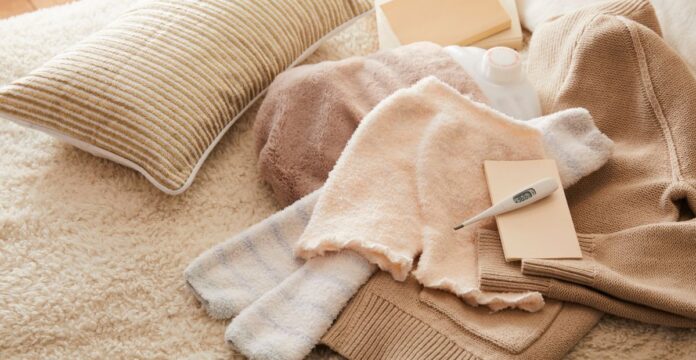
Bedding material and blankets are critical factors that help in establishing the homely, welcoming, and comfortable sleep atmosphere. The selection of the fabric can also impact the quality of sleep and wellbeing, as well as warmth and comfort. Of the natural fibers like cotton and wool and the synthetic ones like fleece or microfiber, the range of blankets and other bedding cloths may seem daunting initially. Knowing their differences may assist you to make good decisions that will bring comfort during the year. This guide will cover the most popular types of bedding material, their advantages and the process of choosing the most appropriate material to use so that you can get a soothing and cozy sleep experience.
History of Bedding and Blankets Fabric.
The history of Bedding fabric and blankets can be traced thousands of years and its history mirrors the need of people to survive. Old civilization used natural materials to safeguard themselves against cold and the bad weather. The first versions of a bedding were represented by the skins of animals, fur, and woven plant fibers used by ancient people. The early blankets concentrated on warmth rather than comfort but they formed the basis of the contemporary bedding fabrics.
With the advancement of the weaving techniques, the ancient Egyptians started using flax fabric as the bedding cloth made of linen. Linen was breathable and comfortable during hot weather, and this made it suitable to sleep. In the colder areas, early people depended on wool blankets in the meantime. Wool was very insulating and was not useless even in wet weather. This saw wool being a useful tool of bedding and clothing.
Why Blankets and Bedding Fabric Matter
Bedding cloth and blankets are important as they have a direct influence on the comfort, warmth, and the quality of sleep. The material that comes into contact with your skin the whole night determines how well your body rests and recuperates. An appropriate bedding cloth assists in maintaining body temperature and avoids sleeping disorders. The body is able to relax better when the fabric is comfortable, thus helping to promote deeper and long sleeps.
The bedding cloth and right blankets are also important in keeping warm and not overheated. Insulating clothes help retain the body heat and avoid cold in cold weather. During hot weather, breathable clothing permits air circulation and sheds off heat. This equilibrium makes the body relaxed at night and will lessen insomnia.
Another need that makes the choice of bedding fabric significant is the health of the skin. Fabrics of substandard quality can irritate, sweat or result in allergy. Hypoallergenic and natural bedding clothes minimize friction and enable the skin to breathe. This is particularly necessary to individuals who have sensitive skin, children or those with allergy. A light fabric enhances comfort and preserves the health of the skin.
What Are Blankets and Bedding Fabric
Blankets and bedding fabric are defined as the materials that are utilized to produce items that are comfortable to use and offer warmth when one is sleeping. These are the base materials of blankets, bed sheets, duvets, comforters and mattress covers. They are primarily meant to control body temperature besides providing a smooth and comforting touch to the skin. The comfort and relaxation of sleep and relaxation highly depends on the quality of bedding material.
Blankets: Bedding products that are insulated are known as blankets that are meant to keep the warmth in, therefore they insulate. They are usually worn in cold climate or in air-conditioned places. Bedding fabric, however, contains lighter materials that are applied to sheets and covers which are in direct contact with the body. Blankets and bedding fabric are together in such a way that they form a system that allows thermal balance during sleep.
Blanket and Bedding Fabric types.
Blankets and bedding cloth differ greatly in their texture, warmth and nursing needs. Both types have their purpose, and they are appropriate in various climates and sleeping patterns. The choice of the appropriate fabric will guarantee a combination of the comfort, durability, and fashion.
Cotton Bedding Fabric
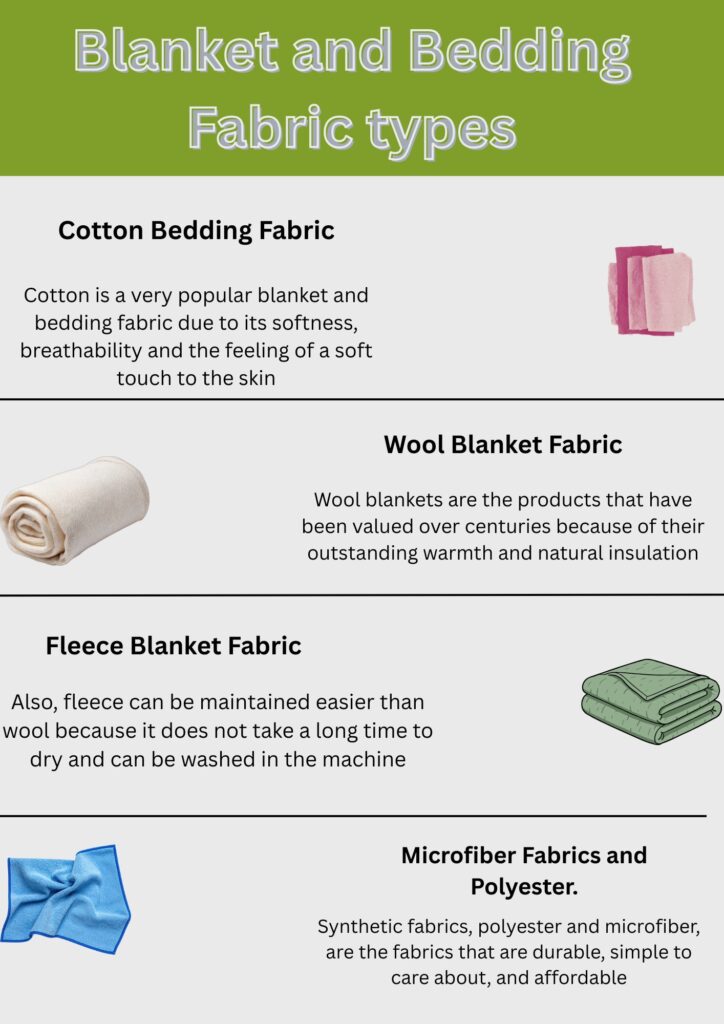
Cotton is a very popular blanket and bedding fabric due to its softness, breathability and the feeling of a soft touch to the skin. The natural fabrics also permit air to pass freely thus keeping you cool during the summer seasons whilst keeping moderate coolness in the cool seasons. Cotton does not allow any dampness and thus one does not feel uncomfortable due to sweat. This is what makes cotton bedding the best choice of persons with sensitive skin or allergies. Cotton is very tough and simple to maintain, yet it wrinkles easily and can even shrink in case of improper treatment, that is why it should be carefully washed and dried.
Wool Blanket Fabric
Wool blankets are the products that have been valued over centuries because of their outstanding warmth and natural insulation. Wool fibers are very effective in trapping air and forming a barrier which retains body heat without making one feel bulky and stuffy. This is what makes wool blankets a good fit in colder climates, where it is essential to be warm when spending night during winter. Wool is also naturally moisture wicking so that it absorbs sweat to keep a person cool during the night without getting wet. Although wool should be treated with more attention than cotton or synthetic clothes, its warmth and comfort last longer and make it one of the favorite winter blankets.
Fleece Blanket Fabric
Synthetic fibre fleece blankets are also known to be lightweight, soft and warm. They are good to wear over the other beddings or apply in a casual environment like living room and traveling because of their heat retaining properties. Also, fleece can be maintained easier than wool because it does not take a long time to dry and can be washed in the machine. It is however non-breathable as compared to natural fibers and pilling may occur over time hence impacting on its softness. These small disadvantages notwithstanding, fleece is a common wear in the name of cheap, comfy comfort.
Microfiber Fabrics and Polyester.
Synthetic fabrics, polyester and microfiber, are the fabrics that are durable, simple to care about, and affordable. They can maintain their form and they do not shrink, stretch or wrinkle hence can be used regularly. A soft texture of microfiber resembles natural fibers and can be used as the bedding of everyday comfort. These fabrics, however, do not breath as well as cotton or wool, and are likely to become hot during sleep, becoming uncomfortable in warmer weather. However, they offer a cost-effective and durable alternative and are popular among households.
Common Uses of Blankets and Bedding Fabric
Blankets and bedding fabric are used in many settings where comfort, warmth, and hygiene are essential. These fabrics serve both functional and aesthetic purposes across different environments. Their versatility makes them suitable for everyday living as well as specialized needs.
Home Bedding and Everyday Comfort
In homes, blankets and bedding fabric are mainly used for sleeping and relaxation. Bed sheets, quilts, and comforters provide softness and temperature control during rest. Different fabrics are chosen based on climate and personal comfort needs. Warm fabrics improve winter comfort, while breathable fabrics support summer sleep. Home bedding fabrics also enhance bedroom style and overall comfort.
Hotel and Hospitality Industry
Hotels rely heavily on blankets and bedding fabric to provide consistent guest comfort. Durable and easy-care fabrics are preferred due to frequent washing. Soft textures and clean finishes create a luxurious sleeping experience for guests. Bedding fabric quality directly affects customer satisfaction and hotel ratings. This makes fabric selection crucial in the hospitality industry.
Baby and Children’s Bedding
Blankets and bedding fabric are widely used in baby and children’s products. Soft and gentle fabrics protect delicate skin and prevent irritation. Breathable materials help regulate body temperature and reduce discomfort. Parents often choose hypoallergenic bedding fabric for safety and comfort. These fabrics support healthy and peaceful sleep for infants and children.
Medical and Healthcare Settings
In healthcare environments, blankets and bedding fabric provide warmth and comfort to patients. Hospitals use fabrics that support hygiene and frequent cleaning. Comfortable bedding helps patients rest and recover more effectively. Specialized bedding fabrics may also assist in temperature control and moisture management. These uses highlight the importance of fabric performance and durability.
Natural vs Synthetic Bedding Fabrics
Choosing between natural and synthetic bedding fabrics is an important decision for comfort and long-term use. Both fabric categories offer unique benefits and limitations. Understanding their differences helps in selecting blankets and bedding fabric that match climate, lifestyle, and sleep preferences.
Natural Bedding Fabrics
Natural bedding fabrics come from plant or animal sources such as cotton, wool, linen, and bamboo. These fabrics feel breathable and gentle against the skin. They allow airflow and help regulate body temperature during sleep. Natural fibers absorb moisture effectively, which keeps the body dry and comfortable throughout the night.
Synthetic Bedding Fabrics
Synthetic bedding fabrics are created using man-made fibers such as polyester, fleece, and microfiber. These fabrics are designed for durability and easy care. They resist wrinkles, shrinking, and fading, even after frequent washing. This makes them practical for everyday use and busy households.
Which Bedding Fabric Is Better for Blankets
The better bedding fabric for blankets depends on personal comfort needs and climate conditions. Natural fabrics work well for breathability and temperature balance. Synthetic fabrics perform better for durability and cost efficiency. For cold environments, wool or fleece provides reliable warmth. For moderate climates, cotton or blended fabrics offer balanced comfort.
Best Blanket and Bedding Fabric for Each Season
Choosing the best blanket and bedding fabric for each season plays a major role in sleep comfort and overall well-being. Seasonal temperature changes affect how the body regulates heat during rest. Therefore, selecting the right blankets and bedding fabric helps maintain comfort throughout the year. A fabric that feels perfect in winter may feel uncomfortable in summer. Understanding seasonal needs allows better decisions that support restful sleep.
During winter, warmth and insulation become the top priorities. Heavy and heat-retaining blankets help protect the body from cold temperatures. Wool blankets work especially well because they trap body heat while still allowing airflow. Fleece is another popular winter option because it provides strong insulation without excessive weight. Flannel bedding fabric also adds warmth due to its brushed surface, which holds heat close to the body. These fabrics create a cozy sleeping environment that supports deep and uninterrupted sleep in cold weather.
How to Choose the Right Blanket and Bedding Fabric
Choosing the right blanket and bedding fabric is essential for achieving comfort, warmth, and restful sleep. The fabric you select directly affects how your body feels throughout the night. Therefore, understanding key factors before buying helps avoid discomfort and frequent replacements. A thoughtful choice improves sleep quality and supports overall well-being.
Comfort should always come first when selecting blankets and bedding fabric. The fabric must feel soft and pleasant against the skin. Rough or stiff materials can cause irritation and disturb sleep. Natural fabrics like cotton, bamboo, and linen offer gentle textures that suit most skin types. Synthetic fabrics may feel soft at first but can become uncomfortable if they trap heat or moisture.
Warmth and breathability must remain in balance. Some people need extra warmth, while others feel hot easily. Wool and fleece provide strong insulation and work well for cold sleepers. Cotton and bamboo allow air to flow freely and prevent overheating. Choosing a fabric that matches your body temperature needs ensures uninterrupted sleep.
Blanket and Bedding Fabric Weaves Explained
Weave patterns in blankets and bedding fabric influence softness, durability, and warmth. Percale offers a crisp and airy feel, while sateen provides a silky, smooth texture. Flannel blankets feature brushed fibers that create softness and thermal insulation, making them excellent for cold weather. Knit fabrics offer flexibility and stretch, adding comfort for casual bedding, whereas woven fabrics provide structure and long-term durability. Understanding weave characteristics allows you to select fabrics that balance comfort, appearance, and performance.
Eco-Friendly and Sustainable Bedding Fabrics
Sustainability is a growing concern in the bedding industry. Organic cotton, grown without harmful pesticides, provides a safe, eco-conscious option. Recycled polyester repurposes plastics while maintaining durability, reducing environmental impact. Bamboo and Tencel fabrics are renewable, biodegradable, and soft, offering both comfort and ecological responsibility. Choosing sustainable blankets and bedding fabric benefits the environment, supports ethical manufacturing, and contributes to healthier living spaces.
Latest Trends in Blankets and Bedding Fabrics
Modern bedding trends focus on comfort, performance, and style. Minimalist textures with natural colors and simple designs are increasingly popular, providing a serene and sophisticated bedroom aesthetic. Temperature-regulating fabrics that adjust to body heat ensure a more restful sleep. Smart textiles are also emerging, offering moisture-wicking, hypoallergenic, and anti-odor properties. As 2026 approaches, these innovative blankets and bedding fabric options continue to attract attention for their practicality and aesthetic appeal.
Common Mistakes When Buying Blankets and Bedding Fabric
A major mistake in choosing blankets and bedding fabric is prioritizing price over comfort and quality. Selecting fabrics without considering climate or season can lead to discomfort, such as using heavy wool in summer or lightweight cotton in winter. Ignoring fabric blends may overlook the advantages or disadvantages of hybrid textiles. Finally, poor care habits, like incorrect washing or improper storage, reduce fabric lifespan and performance. Avoiding these errors ensures a satisfying purchase and prolonged enjoyment of your bedding.
Care and Maintenance of Bedding and Blanket Fabrics
Proper care and maintenance of bedding and blanket fabrics help preserve comfort, softness, and durability. When fabrics receive the right treatment, they remain fresh and supportive for longer periods. Understanding how to wash, dry, and store different materials prevents damage and maintains sleep quality.
Washing Bedding and Blanket Fabrics Correctly
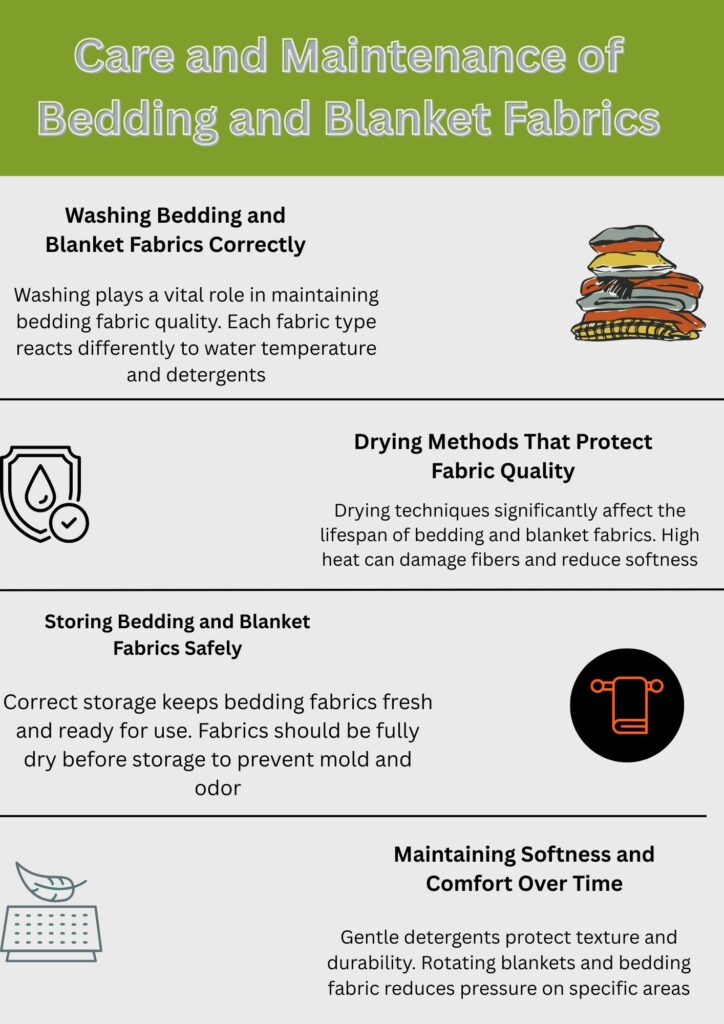
Washing plays a vital role in maintaining bedding fabric quality. Each fabric type reacts differently to water temperature and detergents. Cotton and bamboo bedding fabrics usually perform best in cool or warm water. Wool blankets require gentle washing with mild detergent to avoid shrinking. Synthetic fabrics tolerate regular machine washing, but harsh chemicals can weaken fibers. Washing fabrics correctly protects texture and comfort.
Drying Methods That Protect Fabric Quality
Drying techniques significantly affect the lifespan of bedding and blanket fabrics. High heat can damage fibers and reduce softness. Air drying works best for natural fabrics like wool and linen. Low heat settings suit cotton and synthetic fabrics. Gentle drying prevents shrinkage and preserves the original shape. Proper drying also reduces fabric wear over time.
Storing Bedding and Blanket Fabrics Safely
Correct storage keeps bedding fabrics fresh and ready for use. Fabrics should be fully dry before storage to prevent mold and odor. Cool and dry spaces protect blankets from moisture damage. Natural fabrics benefit from breathable storage covers. Avoiding plastic bags helps maintain airflow and fabric quality.
Maintaining Softness and Comfort Over Time
Softness defines bedding comfort and sleep quality. Fabric softeners may provide temporary results but can weaken fibers. Gentle detergents protect texture and durability. Rotating blankets and bedding fabric reduces pressure on specific areas. Proper maintenance ensures fabrics remain comfortable night after night.

Conclusion
Selecting the right blankets and bedding fabric is crucial for warmth, comfort, and better sleep. Natural fabrics provide softness, breathability, and eco-conscious choices, while synthetics offer durability and low maintenance. Seasonal needs, sleeping habits, and personal preferences should guide your selection. Understanding fabric types, weaves, care, and sustainable options allows informed decisions that enhance comfort and ensure long-lasting quality. Prioritizing comfort, climate suitability, and care over price ensures your blankets and bedding fabric provide restful, cozy nights every time.
FAQs
What is the best fabric for blankets?
The best fabric for blankets depends on climate and comfort needs. Wool offers excellent warmth and insulation for cold weather. Cotton provides softness and breathability for everyday use. Fleece works well for affordable warmth and casual comfort. Choosing the right fabric improves sleep quality and comfort.
Which bedding fabric is best for sleeping?
Cotton, bamboo, and linen are ideal for sleeping. These fabrics allow airflow and help regulate body temperature. They feel gentle against the skin and reduce night sweats. Their breathable nature supports deeper and more comfortable sleep.
Are synthetic blanket fabrics safe to use?
Synthetic blanket fabrics are safe for regular use. Polyester and microfiber offer durability and easy maintenance. However, they may trap heat and reduce airflow. Hot sleepers should balance synthetic warmth with breathable bedding layers.