Rain can turn a normal workday into a hard and uncomfortable shift. Wet clothing feels heavy, makes the body cold, slows movement, and can distract workers from the job. That is why choosing the right rain protection is not only about comfort. It is also about safety, focus, and long workwear life. This waterproof workwear buying guide explains how to choose clothing that keeps rain out while still allowing workers to move, bend, lift, climb, and stay active. A good waterproof jacket or pant should not feel like a plastic bag. It should protect from rain, block wind, handle rough use, and feel practical during a full shift. The best choice depends on the worksite, weather, job role, and how much movement the worker needs. This waterproof workwear buying guide is written in simple language so buyers, supervisors, and workers can understand what matters before ordering.
Waterproof Workwear Buying Guide
This waterproof workwear buying guide starts with one clear rule: buy for the real job, not just for the rain. A warehouse worker walking between buildings may not need the same gear as a road worker, farmer, utility worker, or construction crew member standing outside for hours. Some workers need light rain protection for short exposure, while others need strong waterproof layers for heavy rain, mud, wind, and cold. Before choosing any garment, think about how long the worker stays outside, how hard the work is, and whether the clothing must be high visible, breathable, insulated, or easy to layer. You can review broader workwear options when planning a complete rainwear program because waterproof clothing often works best when it fits into a larger uniform system. A smart waterproof workwear buying guide should always look at fabric, seams, fit, visibility, pockets, cuffs, hood design, and care needs together.
Choose the Right Waterproof Level for the Weather
Not every waterproof garment gives the same protection. Some jackets are made for light rain, some are made for steady rain, and some are built for long exposure in wet outdoor jobs. In this waterproof workwear buying guide, the simple way to choose is to match the clothing to the weather. For drizzle and short outdoor tasks, a lighter waterproof layer may be enough. For roadwork, construction, delivery, agriculture, security, utilities, or outdoor maintenance, stronger waterproof workwear is usually better. If workers kneel, sit, carry tools, or brush against wet surfaces, pants matter as much as jackets. Rain can enter through weak seams, loose cuffs, poor zippers, open necklines, or short jacket lengths. Good rain protection should cover the worker properly without making the body overheat. This waterproof workwear buying guide also recommends checking whether the garment is only water resistant or truly waterproof. Water resistant gear can handle small splashes, but proper waterproof workwear is built for heavier wet conditions.
Check Sealed Seams, Zippers, and Closures
The fabric may be waterproof, but the garment can still leak if construction is weak. That is why seams, zippers, storm flaps, cuffs, and closures are very important. In many wet jobs, water enters through stitched lines because needle holes create small paths for rain. Sealed or taped seams help block water at these points. A front zipper should have a storm flap or waterproof design so rain does not pass through the center opening. Cuffs should close around gloves or wrists, and the neck area should protect without feeling too tight. This waterproof workwear buying guide recommends looking at real garment details, not just product names. A jacket with poor closures may fail during heavy rain even if the fabric looks strong. For teams that work outside every day, Eco Jersey’s waterproof workwear category can help buyers compare relevant rain protection styles within one workwear group. Strong construction helps waterproof workwear last longer and perform better.
Think About Breathability and Sweat Control
Waterproof clothing should block rain, but it should not trap too much body heat. When workers carry tools, lift materials, walk long distances, or work fast, sweat builds up inside the garment. If the fabric cannot release heat and moisture, the worker may feel wet even when rain is not entering. This is one reason cheap rainwear often feels uncomfortable. This waterproof workwear buying guide suggests choosing breathable waterproof workwear for active jobs. Breathability helps reduce sweat build-up, improves comfort, and makes workers more likely to keep their jackets closed when rain starts. Vent openings, mesh linings, underarm vents, back vents, and adjustable closures can also help. However, breathability should not replace waterproof protection. The garment must still block rain properly. The best balance depends on the job. A worker standing still in heavy rain may need stronger waterproof coverage, while a worker moving all day may need a lighter and more breathable setup.
Match Jacket Design to the Worksite
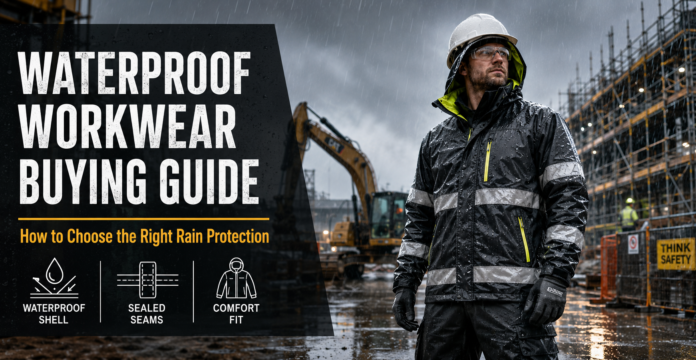
A waterproof jacket should match the worker’s tasks. For example, a short jacket may feel easy to move in, but it may leave the lower back exposed when the worker bends. A longer jacket gives more coverage, but it can feel bulky if the worker climbs, drives, or uses a tool belt. This waterproof workwear buying guide recommends checking hood shape, collar height, sleeve length, pocket placement, and hem adjustment before buying. A hood should fit over the head without blocking side vision. If helmets are used, the hood design should work with that need. Pockets should stay useful even when the jacket is wet, and important items should not fall out while bending. A high visible waterproof jacket can be useful for road, yard, transport, construction, and low-light work, and Eco Jersey’s high visible waterproof jacket is a relevant example for teams that need both rain protection and better visibility. Good jacket design makes rainwear safer and easier to wear.
Do Not Forget Waterproof Pants
Many buyers focus on jackets and forget pants, but rain does not only hit the upper body. Wet pants can make workers cold, heavy, and uncomfortable very quickly. This waterproof workwear buying guide recommends buying pants when workers sit on wet surfaces, kneel on damp ground, walk through grass, handle mud, or stand in heavy rain. Pants should allow knee movement and should not pull tightly when workers squat or climb. The waistband should stay secure without digging into the body. Ankle openings should work with work boots and should help stop water from running inside the footwear. Reinforced knees, practical pockets, and adjustable hems can make waterproof pants more useful for real jobs. If pants are too loose, they may snag. If they are too tight, they may tear or limit movement. Good waterproof pants complete the rain protection system and prevent the worker from feeling half protected during wet weather.
One-Paragraph Buying Checklist
Use this waterproof workwear buying guide checklist before choosing rain protection:
- Choose waterproof gear for the real worksite, not only the product name.
- Check whether the garment is waterproof, not just water resistant.
- Look for sealed or taped seams.
- Choose zippers with storm flaps or waterproof protection.
- Make sure the hood does not block vision.
- Pick breathable fabric for active jobs.
- Choose high visibility when workers are near traffic or machines.
- Make sure jackets cover the lower back when bending.
- Add waterproof pants for long wet shifts.
- Check cuffs, hems, pockets, and closures.
- Test samples before ordering for a team.
- Follow care labels to keep waterproof performance longer.
Fit and Layering Make a Big Difference
Fit is one of the most common problems in waterproof workwear. If the jacket is too tight, workers cannot layer under it in cold weather. If it is too loose, the fabric can flap, catch, or feel messy during work. This waterproof workwear buying guide recommends allowing enough room for base layers, work shirts, sweatshirts, or light insulation when needed. At the same time, the garment should not be so oversized that it affects movement or safety. Sleeves should cover the wrists when arms are raised. Pants should stay comfortable when kneeling. The jacket should close fully over inner clothing. Layering should also match the season. In warm rain, a lighter breathable shell may be enough. In cold rain, workers may need a waterproof outer layer over warm inner layers. Avoid using non-workwear fashion jackets in risky job areas because they may lack the strength, visibility, coverage, and pocket design needed for daily work.
Durability, Care, and Long-Term Value
The cheapest waterproof workwear is not always the lowest-cost option in the long run. If a jacket leaks, tears, or loses performance quickly, the company may need to replace it sooner. This waterproof workwear buying guide suggests checking fabric strength, stitching quality, zipper strength, abrasion areas, and washing instructions before buying in bulk. Workwear faces rough surfaces, tools, mud, oil, dust, and repeated movement, so it must be stronger than casual rain clothing. Proper care also matters. Workers should clean waterproof garments according to the label and avoid harsh washing methods that damage coatings, membranes, or seam tapes. Garments should be dried properly before storage to reduce odor and fabric damage. Buyers should also inspect waterproof workwear after heavy use. Broken zippers, peeling seam tape, torn cuffs, and damaged fabric can reduce protection. A good rainwear program saves money by buying better garments, training workers to care for them, and replacing damaged pieces on time.
Conclusion
The best rain protection is not only the strongest garment on paper. It is the waterproof workwear that matches the job, fits the worker, handles the weather, and stays comfortable during real use. This waterproof workwear buying guide shows that fabric, seams, breathability, jacket length, pants, visibility, closures, layering, and care all matter. A worker who feels dry, warm, and free to move can focus better on the task. A worker who feels trapped, sweaty, cold, or restricted may adjust the clothing in unsafe ways. Before buying, think about the daily worksite and test the garment if possible. Choose rain protection that blocks water, supports movement, and fits your team’s real conditions. In the end, this waterproof workwear buying guide is about making a smart, practical choice that workers can trust on wet days.
FAQs
What is the main purpose of waterproof workwear?
The main purpose of waterproof workwear is to keep workers dry during rain, wet surfaces, and outdoor weather. It also helps reduce discomfort, cold stress, distraction, and clothing weight during long shifts. Good waterproof workwear should protect without stopping movement.
Is water resistant workwear the same as waterproof workwear?
No, water resistant workwear only handles light moisture or short exposure. Waterproof workwear is made to block heavier rain for longer periods. This waterproof workwear buying guide recommends true waterproof gear for outdoor jobs with regular wet conditions.
Should I buy waterproof pants with a jacket?
Yes, waterproof pants are useful when workers stand, kneel, sit, or walk in wet areas. A jacket protects the upper body, but pants protect the legs from rain, mud, and wet surfaces. Full rain protection is better for long outdoor shifts.
How do I choose the best waterproof workwear?
Choose waterproof workwear by checking the jobsite, rain level, seams, breathability, fit, visibility, and garment strength. This waterproof workwear buying guide also recommends testing samples before bulk orders. The best option should feel protective and easy to wear.