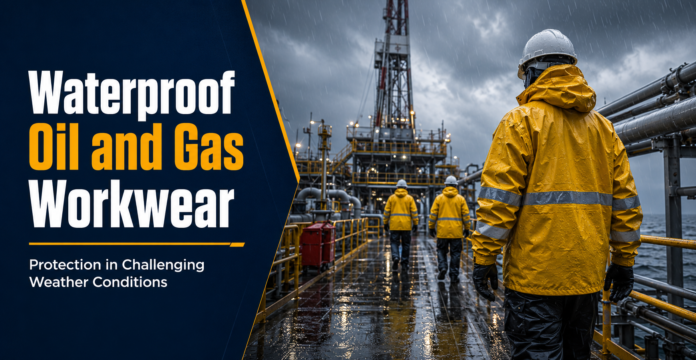
Oil and gas work is already tough, but bad weather makes it even harder. Rain, wind, mud, cold air, splashes, and wet equipment can make workers uncomfortable and unsafe. That is why waterproof oil and gas workwear is not just normal outdoor clothing. It is work clothing made to help people stay dry, warm, visible, and ready to move during long shifts. When workers get wet, they can lose focus, feel cold, move slowly, or become tired faster. Wet clothing can also become heavy, which makes climbing, lifting, bending, and walking more difficult. Good waterproof oil and gas workwear helps reduce these problems by keeping rain and surface moisture away from the body. It also supports better comfort when crews work around drilling areas, refineries, pipelines, offshore platforms, terminals, and outdoor maintenance sites. The right clothing should protect without making the worker feel trapped, overheated, or restricted.
2. Waterproof Oil and Gas Workwear
Waterproof oil and gas workwear means protective clothing designed for wet, windy, and demanding oilfield conditions. It may include jackets, coveralls, pants, bib trousers, vests, and outer shells. These garments are usually made for people who work in rain, spray, mud, and rough outdoor spaces. However, waterproof clothing should not only stop water. It should also allow safe movement, cover the body well, and handle daily job pressure. Workers in oil and gas often kneel, climb, carry tools, inspect equipment, and work near metal surfaces. Because of that, waterproof oil and gas workwear must be stronger than basic rainwear. A normal rain jacket may keep someone dry for a short time, but it may tear quickly or feel unsafe on a job site. Good workwear should feel practical, durable, and suitable for the environment. It should also match company safety needs, site rules, weather conditions, and worker comfort during full shifts.
Choosing the Right Workwear System
Choosing the right clothing starts with the full work environment, not only the weather forecast. A worker on a muddy pipeline site may need different protection than someone doing inspection work at a refinery. A person working in light rain may need a breathable waterproof jacket, while a crew facing heavy rain may need coveralls or layered outerwear. Buyers can explore general protective clothing through Eco Jersey’s workwear collection when planning a complete site clothing range. A strong waterproof oil and gas workwear system should include outer protection, comfortable inner layers, and enough flexibility for movement. It should also be easy to wear with helmets, gloves, boots, and other safety gear. If the clothing is too tight, workers may not move naturally. If it is too loose, it can snag or flap in strong wind. The best system protects against rain while still helping workers do the job safely.
Jacket, Coverall, Pant, or Vest: What Works Best?
Different garments solve different problems. Jackets are useful for upper-body rain protection, especially when workers need easy on-and-off use. Waterproof pants help keep legs dry when walking through mud, water, or wet grass. Coveralls give fuller body coverage and are useful when rain, dirt, and splashes can hit many parts of the body. Vests can be useful when workers need extra visibility or light protection, but they are not enough for heavy rain alone. Waterproof oil and gas workwear should match the job, weather, and movement needs. For example, a coverall may be better for dirty and wet field jobs because it keeps the body covered in one piece. A jacket and pants set may be better when workers need more flexibility. A vest may work as an added layer over other clothing. The goal is not to buy every garment. The goal is to choose the right garment for the real work situation.
Why Coveralls Are Useful in Wet Oilfield Conditions
Coveralls are often a smart choice when the work is messy, wet, and physically demanding. They cover the upper and lower body together, which can reduce gaps where rain, mud, or wind may enter. This is helpful for workers who bend, climb, kneel, or work near oily and dirty surfaces. Eco Jersey’s oil and gas safety coveralls are a relevant option when a team needs full-body workwear for tough outdoor environments. Good coveralls should not feel stiff like plastic. They should allow arm movement, leg movement, and comfortable body rotation. Waterproof oil and gas workwear in coverall form should also have practical closures, strong seams, useful pockets, and enough room for layers underneath. A poor coverall may protect against rain but make the worker sweat too much or move badly. A better coverall protects while still feeling wearable through a long shift.
Comfort and Breathability Are Safety Features
Many people only think about waterproofing, but comfort is just as important. If clothing blocks rain but traps too much heat, workers can become sweaty inside. When sweat cannot escape, the worker may still feel wet, even if rain does not enter. That is why waterproof oil and gas workwear should balance water resistance with breathability. Breathable fabric helps reduce heat buildup, especially during active tasks like lifting, walking, climbing stairs, or carrying tools. Good ventilation details, better fabric structure, and proper fit can make a big difference. The clothing should also feel comfortable at the neck, wrists, waist, shoulders, and knees. A jacket that pulls when the worker raises the arms can become annoying and unsafe. Pants that restrict bending can slow the worker down. In oil and gas work, comfort is not luxury. Comfortable waterproof oil and gas workwear helps workers keep protection on instead of removing it during the shift.
Key Features to Check Before Buying
Before buying waterproof oil and gas workwear, check the features that affect real site performance:
- The fabric should resist rain and surface moisture.
- The seams should be strong and protected against water entry.
- The fit should allow bending, reaching, and climbing.
- The jacket or coverall should close securely in wind.
- The cuffs should help stop rain from running inside sleeves.
- The hood should work with other safety gear when needed.
- The garment should not feel too heavy when wet.
- The pockets should be useful without collecting water.
- The material should handle mud, dirt, and regular site use.
- The clothing should be easy to layer in cold weather.
- The color and design should support site visibility.
- The garment should be simple to clean and inspect.
- The size range should support different worker body types.
- The workwear should match the company’s safety rules.
- The style should be practical enough for daily wear.
Outer Layers for Rain, Wind, and Cold
Outer layers are very important when workers face rain and wind for many hours. A good outer jacket helps protect the chest, arms, back, and shoulders from wet weather. It should close properly, cover the body well, and allow movement over base layers or mid-layers. Eco Jersey’s oil and gas safety jackets are a useful example when planning protective outerwear for wet job sites. For colder conditions, the jacket should also allow enough room for warm layers underneath. However, the outer layer should not become too bulky. Bulky clothing can make it harder to climb, drive, inspect equipment, or use tools. Waterproof oil and gas workwear should also reduce wind discomfort because wind can make wet weather feel much colder. A strong jacket, matched with proper pants or coveralls, can help workers stay more comfortable and focused during rain, storm response, and outdoor maintenance work.
Fit, Sizing, and Movement on the Job
Fit can decide whether workwear is useful or frustrating. Waterproof oil and gas workwear should not be so tight that it pulls across the shoulders, knees, or waist. It should not be so loose that it catches on equipment or moves too much in strong wind. Workers should test clothing by raising both arms, bending the knees, sitting, walking, climbing steps, and reaching forward. These simple movements show whether the garment will work in real life. The sleeves should stay long enough when arms are raised. The back should remain covered when the worker bends. Pants should not pull tightly at the knees. Coveralls should not feel short in the body when the worker reaches up. Good sizing also allows layering in cold weather. A worker may need a thermal layer or sweatshirt under outerwear, so waterproof oil and gas workwear should leave enough space without becoming baggy or unsafe.
Common Buying Mistakes to Avoid
One common mistake is buying simple rainwear and calling it oil and gas workwear. Basic rainwear may work for walking outside, but it may not handle rough job sites, tools, mud, sharp edges, and long shifts. Another mistake is choosing clothing only by price. Cheap garments may fail faster, feel uncomfortable, or need replacement sooner. Some buyers also ignore breathability, which can make workers sweat too much inside the garment. Waterproof oil and gas workwear should be chosen for real working conditions, not only for product photos. Do not forget pants, because a waterproof jacket alone does not protect the lower body. Do not forget fit testing, because workers have different body shapes and movement needs. Do not buy clothing that is too heavy for the climate. Also, do not use unrelated sportswear or casual clothing as a substitute. Proper waterproof oil and gas workwear should support protection, comfort, and long-term use.
Conclusion
Proper care helps waterproof oil and gas workwear last longer. Workers should clean mud, dirt, and site residue according to the garment care label. Harsh washing, high heat, or the wrong chemicals may reduce fabric performance. Clothing should be checked for torn seams, broken zippers, damaged cuffs, worn knees, and weak areas. If rain starts passing through easily, the garment may need repair or replacement. Teams should also store workwear in a dry place instead of leaving it wet in bags or lockers. In the end, the best waterproof oil and gas workwear is the clothing that keeps workers dry, allows safe movement, handles rough weather, and fits the actual job. It should not be chosen only because it looks strong. It should be selected because it helps people work better in rain, wind, mud, and difficult outdoor conditions. A good clothing system protects the worker and supports the whole team.
FAQs
What is waterproof oil and gas workwear?
Waterproof oil and gas workwear is protective clothing made for wet and rough oilfield conditions. It helps workers stay dry during rain, mud, wind, and outdoor site work. It can include jackets, pants, coveralls, and other protective outerwear.
Is waterproof workwear the same as normal rainwear?
No, waterproof workwear is usually stronger and more practical for job sites. Normal rainwear may protect from rain, but it may not handle oilfield movement, tools, mud, and long shifts. Waterproof oil and gas workwear is designed for tougher work conditions.
Which is better for oil and gas workers: jacket or coverall?
It depends on the job. Jackets are good for flexible upper-body rain protection, while coveralls give fuller body coverage. For wet, dirty, and heavy-duty work, coveralls may provide better overall protection.
How should waterproof oil and gas workwear fit?
It should fit comfortably without being too tight or too loose. Workers should be able to bend, climb, reach, and walk easily. Good waterproof oil and gas workwear should also allow safe layering in cold weather.