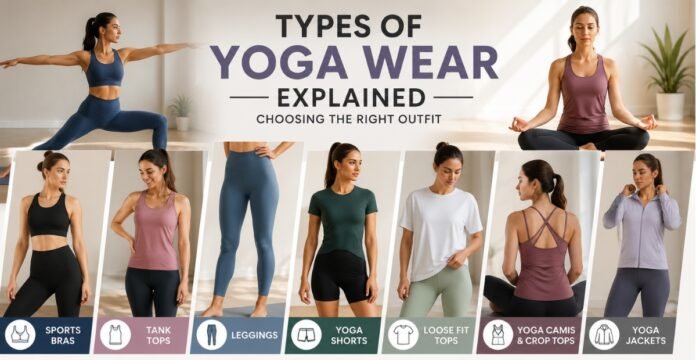
Yoga clothes should help you stretch, bend, breathe, and relax without constant adjustment. The main types of yoga wear include fitted tops, sports bras, leggings, shorts, loose pants, and light layers. Each piece has a different purpose, so the right choice depends on your yoga style, room temperature, body comfort, and preferred coverage. A complete yoga wear collection can show how different pieces work together for practice. Good types of yoga wear should feel soft, move with the body, and stay in place from the first pose to the final rest.
Why the Right Outfit Matters
Having the right outfit helps you concentrate on movement and not readjusting the clothes. Fabric that rolls, becomes transparent, traps heat and pulls at the shoulders can make class uncomfortable. Different types of yoga wear can help different scenarios. A fitted top can keep things secure for downward facing poses, while the relaxed pants can be preferable for meditation. A supportive bra can keep everything in place, as a smooth waistband of pants will prevent a pressure stomach. When differentiating between types of yoga wear, try the outfit in a squat, bend, twist, and sit. The outfit should do its job of supporting, while still allowing movement and deep breathing.
Types of Yoga Wear for Different Practices
When it comes to choosing yoga wear, think about the speed and intensity of a practice. For hot or power yoga, the best styles of yoga wear are lightweight tops, supportive bras, fitted shorts, and moisture-managing leggings. For Hatha, Yin, and restorative yoga, try soft leggings, loose pants, and lightweight tops with long sleeves. For yoga practiced outdoors, you will want an additional layer for before and after the practice. No yoga wear is ideal for every type of class. The styles of yoga wear that you select should maintain a balance of freedom, support, airflow, and coverage.
Yoga Tops and Fitted Shirts
Yoga tops can be tank tops, fitted tees, crop tops, long sleeves, and cover-ups of any fit. For an active class, fitted tops are best because loose tops can fall forward and cover the face during bends and inversions. Loose tops can stay cool, so be sure they won’t cover during practice. One of the most vital styles of yoga wear is a soft stretch top. To ensure a top is yoga-friendly, check the fit of the neckline, body length, and underarms. The best yoga wear will allow you to move freely and won’t pull when arms are lifted.
Sports Bras and Supportive Layers
A sports bra should match the movement level of the class and the support needs of the wearer. Gentle yoga may only need light support, while fast flows or mixed fitness sessions may feel better with medium or high support. Well-designed running sports bras can suit active yoga when they offer flexible straps, a secure lower band, and comfortable coverage. Supportive base layers are important types of yoga wear because they help the upper body feel stable without limiting breathing. Avoid straps that slide or bands that dig into the ribs. Practical types of yoga wear bras should stay smooth during bends, twists, and arm movements.
Leggings and Full-Length Yoga Pants
Leggings are popular types of yoga wear because they provide close coverage and make body movement easy to see. A good pair should stretch in every direction, stay opaque during deep bends, and return to shape after use. High-rise waistbands may feel secure, but they should not roll or squeeze. Full-length leggings work well in cool rooms, while ankle-length options feel lighter in warm weather. People who prefer more space around the legs may choose wide-leg yoga pants for gentle yoga or meditation. When checking these types of yoga wear, look at the rise, gusset, seams, waistband, and stretch recovery.
Quick Yoga Wear Checklist
- Choose fitted types of yoga wear for fast flows and inverted poses.
- Choose breathable types of yoga wear for hot or humid classes.
- Choose soft types of yoga wear for Yin and restorative yoga.
- Select a sports bra that supports movement without limiting breathing.
- Check that bottoms stay opaque during squats and forward bends.
- Look for smooth seams that do not rub the skin.
- Make sure the waistband stays flat during sitting and twisting.
- Pick a removable layer for warm-ups and cool-downs.
Yoga Shorts and Cropped Bottoms
Yoga shorts are great for hot studios and for yoga classes that have lots of movement. These can be fitted, cycling shorts, longer compression styles, or relaxed shorts that have support. Shorts should have full coverage when the legs open and ease movement when shorts are lifted. Shorts can be made with pockets, but they may lift the fabric during yoga, so be careful with shorts that have pockets. Choose a length that gives enough coverage without restricting movement. Make sure shorts can be used for lunges, sitting, and downward pose.
Loose Pants, Joggers, and Light Layers
Popular opinions regarding proper yoga wear suggest fitted clothes are a must, but that is not always the case. Loose yoga pants, joggers, harem pants, and even soft straight-leg trousers are great options for meditation, breathing exercises, slow stretching, and restorative yoga. These types of yoga wear give your legs more freedom and are less restrictive, but they can slide down during leg lifts, and drawstrings need to be flat during seated poses. These types of yoga wear are great for those who prefer modest coverage, or need something that they can wear yoga pants that can be versatile for before, during, and after the practice.
Fabrics, Fit, and Construction
How yoga clothing feels can be affected by the quality of the fabric. Cotton rich fabrics are soft, but can hold more moisture during a demanding session. A faster dry time can be achieved with fabrics containing a blend of polyester and nylon, while some elastane can be added for stretch and retention of the shapes. A good balance of softness and airflow, strength, and movement can be achieved with careful construction. Fit is equally important. Painfully tight clothes are a no, but clothes should stay in place. Good details are flat seams, gussets, soft elastic, secure pockets, and tag-less.
Choosing for Your Body and Routine
Everyone has their own idea of what comfort is, so everybody can’t be expected to wear the same outfit. Some people are okay wearing fitted leggings and short tops, while some people prefer longer shirts and looser pants. The best kinds of yoga wear are those that account for body shape, the movements needed, and personal preference for style and covering. Start with yoga wear that best addresses the concern (heat, support, waistband, modesty) that you have. It is better to have a limited number of types of yoga wear that you really rely on, than a large number of yoga wear that you have to adjust all the time.
Conclusion
It becomes easier to choose the right yoga outfit when you match the clothing to the yoga practice, instead of being forced to stick to one rigid style. Layers, tops, leggings, shorts, and sports bras are the main types of yoga wear. Each option includes varying levels of support, movement, heat, and coverage. Each of these options also varies in support and coverage. During each pose, the yoga wear that you choose should support you, be soft, be secure, and be breathable and stretchable. The goal when class begins is to focus on your practice and not on your yoga wear.
FAQs
What Are the Main Types of Yoga Wear?
The main options include fitted tops, tank tops, sports bras, leggings, yoga shorts, loose pants, and light outer layers. Your choice should match the class, temperature, and coverage you prefer.
Should Yoga Clothes Be Tight or Loose?
Yoga clothes can be fitted or loose as long as they do not restrict movement or slide during poses. Fitted styles suit fast flows, while relaxed styles work well for gentle yoga.
What Fabric Is Best for Yoga Wear?
Stretch blends made with nylon, polyester, cotton, and elastane are common choices. A good fabric should feel soft, move freely, manage moisture, and keep its shape.