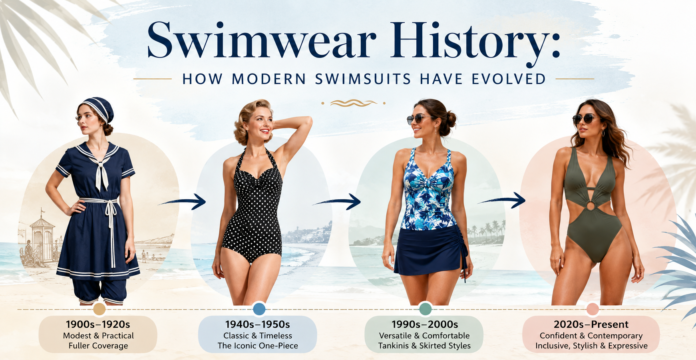
History is important for understanding the changes in swimsuits from the older designs, which covered the majority of the body, to contemporary beachwear and poolwear. Traditional swimwear styles were heavy and less flexible. In contrast, swimwear styles are lighter and more comfortable. Knowledge of the history of swimwear gives the customer an understanding of why, in contemporary styles, stretch, fit, and coverage design are all important swimwear considerations. It is important for the customer to appreciate this in order to understand their own needs. The history of swimwear design shows that customers’ needs are the driving force of the design and development swimwear.
Swimwear History Basics
Swimwear history starts with the idea that swim clothing was once mainly about coverage and social rules. Over time, swimwear became more practical for swimming, travel, beach days, pool use, and active water lifestyles. A full category like the swimwear collection shows how many choices modern buyers have today. The evolution of swimwear has included many styles including modest, fitted, swim-suit pieces, skirts, tankinis, high-waisted bottoms, and open beachwear designs. What’s the biggest change? Swimwear moved from bulky swimwear to lighter designs made for water and movement.
Early Swimwear and Heavy Coverage
History shows early swimwear focused on modesty. Swim outfits from early swimwear history covered much more of the body than today’s. Initially, swimwear designs used heavy fabrics, which made them difficult to swim in. Swimwear from these early designs would dry off much slower and would often feel heavy after being submerged. Designs from this era were focused on modesty rather than swim performance. Early designs of swimwear, especially from the era when swimwear first started to be a thing, were not focused on the comfort aspect of swimwear.
Fabric Changes in Swimwear
The evolution of swimwear fabric began with fabric absorbing heavy amounts of water tacking on long drying times. Faster drying, more lightweight, elastic repair fabric was developed and substituted. This alteration made swimwear more convenient for use with travel, sports, and leisure time. Improvements in fabric design also allowed designers to create better and more comfortable shapes and fits. Contemporary buyers of swimwear also expect the shape and fit to be better, more comfortable, convenient, and more competitive for the use of travel, water, and sports. A good fabric should not feel heavy, rough, or weak post water use. These advances in fabric design have ruined the swimwear market.
Modest Swimwear and Coverage Evolution
Coverage has always been an important aspect of swimming history. While older swimsuits provided more coverage by default, coverage swimsuits provide more coverage by choice. Coverage can now be selected as minimal, medium, or full. This is decided based on what the buyer prefers in terms of comfort and style. A product like modest swimwear shows how covered swim styles still remain important for many customers. Swimwear history is not only about less coverage over time. It is about more choice. Modern modest swimwear can be lightweight, stylish, flexible, and comfortable. This gives buyers coverage without losing swim-ready movement.
Rise of Two-Piece and Mix-and-Match Styles
Swimwear evolution also generated the two-piece and interchangeable swim sets. With the continuing evolution of stylish swimwear, consumers began selecting swimwear tops and bottoms separately. This provided customers with options to best match comfort as well as cover. Mix and match swimwear also included options for two-piece swimsuit sets, including varying styles of swim tops with bottoms, as well as varying styles of swim bottoms, including high-waisted bottoms. More modern swimwear trends show more preference by the customer with many styles of swimwear being sold.
Tankinis and Practical Swim Styling
Tankinis became an important part of swimwear history because they gave buyers another option between one-piece swimsuits and bikinis. A product like tankinis womens swimwear can offer more body coverage while still keeping the flexibility of separate pieces. Designers of swimwear want feedback in order to build comfortable and practical swimwear. Tankinis are considered the most convenient for a casual day at the beach or the pool, and for women who prefer a modest style. Since a tankini can be paired with various styles of swim bottoms, such as high-waisted, skirted, or classic styles, it has greater flexibility for a multitude of body types.
Skirted Swimwear and Feminine Design
Skirted styles are another important part of swimwear history. They add coverage around the hips and upper legs while keeping a feminine swimwear look. A product like skirted swimwear women shows how modern swimwear can balance coverage, comfort, and styling. There have been many styles in the history of swimwear, but skirted swimwear is a composite of styles having the most to offer buyers wanting coverage, not a full modest swimwear set. The skirt should be light in water along with being easy to move in as one swims. Successful skirted swimwear is a combination of coverage and a modern look at the beach.
Simple One-Line History Checks
These checks make swimwear history easier to understand for buyers and brands.
- Swimwear history started with heavier and more covered designs.
- Swimwear history changed as swimming became more active and popular.
- Swimwear history improved when fabrics became lighter and stretchier.
- Swimwear history shows that coverage choices became more personal.
- Swimwear history includes tankinis, skirted styles, and modest swimwear.
- Swimwear history moved toward comfort and better movement.
- Swimwear history now supports more body shapes and style needs.
These one-line checks help explain swimwear history in simple terms.
Modern Swimwear and Body Confidence
Body confidence has played a huge role in changing the face of modern swimwear. Now, consumers like to purchase swimwear based on how comfortable they feel based on the trends, rather than how fashionable a piece may be. Some consumers like to purchase swimwear that is covered more, consumers have different levels of comfort when it comes to swimwear selection. Consumer diversity has led to a greater range of swimwear choice, and evolving textile technology has played a role in swimwear comfort. Customers like to have a variety of swimwear pieces based on fit, coverage, and comfort care, so they feel confident, fashionable, and comfortable being in and out of the water.
Final Guide to Modern Swimsuit Evolution
The last aspect of swimwear evolution is the transformation. From heavy, cumbersome, and fully covered clothing designed for swimwear, garments became lighter, more sophisticated, stylish, and comfortable. Today, swimwear provides customers choices in coverage, fit, fabrics, and styles. Customers may choose any number of styles including the modest swimwear, tankinis, modest skirt styles, and other styles including high-waisted bottoms, low-rise styles, and more. The history of swimwear illustrates that improved fabrics and improved design and tailoring for swimwear made swimwear more functional for everyday use. Customers want to know the changes that help design swimwear that is more comfortable and functional. Brands should articulate the improvements and changes on product designs.
FAQs
What is swimwear history?
Swimwear history explains how swimsuits changed from heavy covered clothing to modern swim apparel.
How did swimwear change over time?
Swimwear became lighter, stretchier, faster drying, more comfortable, and more style-focused.
Why is modern swimwear better?
Modern swimwear offers better fabric, fit, movement, coverage options, and comfort.
Which swimwear styles are common today?
Common styles include modest swimwear, tankinis, skirted swimwear, bikinis, and high-waisted bottoms.