Home Blog Page 7

Essential Features of Modern Hunting Apparel

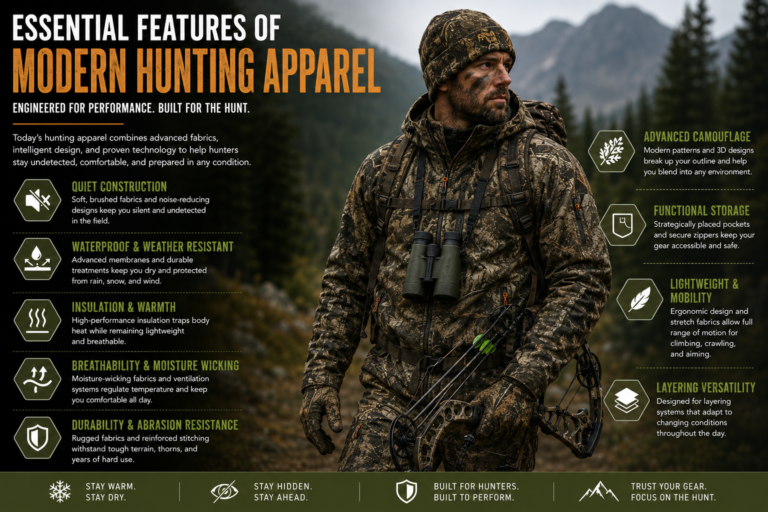
Hunting has evolved in the past 20 years. Modern hunters wear clothes that are especially designed to keep the individual quiet, concealed, and dry. Features of modern Hunting Apparel has incorporated advanced technologies and designs. These clothes are now more than just garments to keep hunters warm. The right hunting apparel is essential. This is true whether you are a novice or expert. You can find a good outdoor apparel manufacturer that will help you get the custom hunting clothes that you want.

Camouflage That Really Works

You can tell Features of modern Hunting Apparel clothes by the patterns. These patterns now break your outline and help conceal you as you blend in with the trees, grass, and snow. Good camouflage is actually a scientific phenomenon. Good camouflage also accounts for how different animals perceive light and movement. For the thick woods, you are going to want something that is completely different than what is needed for an open field. You can find high-quality camouflage clothing manufacturer services that print any pattern you want on the fabric.

Quiet and Soft Fabrics

Hunting jackets in the past used to make so much noise. Every swift movement resulted in an attention-demanding “swish” sound. This was noticed by all of the animals. Features of modern Hunting Apparel take advantage of soft knits and fleece to help keep the fabric silent. These fabrics are sueded to feel more like suede. For cold mornings, a good outdoor fleece manufacturer can make a jacket that is warm, light, and completely silent when you walk or draw your bow.

Layering System (Base to Outer)

Features of modern Hunting Apparel prefer to wear three layers of clothing, as this provides warmth, comfort, and protection from the elements. There’s the base layer, the mid layer, and the outer layer. The base layer, which is the first layer, is the layer that is closest to the skin. The mid layer is usually made of fleece or another fabric with good insulation. The outer layer, often referred to as the shell, protects the inner layers from wind and rain. A trusted base layer clothing manufacturer will use merino wool or special polyester that stops smells and keeps you dry all day.

Waterproof and Breathable Shells

Rain and snow can ruin a hunt fast. But a cheap raincoat makes you sweat inside. That sweat then makes you colder. The solution is a waterproof fabric that also breathes. It stops rain from getting in but lets your body heat and sweat go out. Look for sealed seams and pit zips for extra airflow. You can order custom waterproof clothing manufacturer products that are tough, silent, and keep you dry for hours in a blind.

Pants Built for Movement and Thorns

If your pants rip after getting caught on a bush, it will ruin your Features of modern Hunting Apparel day. Pants that are used for hunting will usually be made of a strong stretch fabric or ‘ripstop’ nylon. These pants also have strong knees and a gusseted crotch, which allow the wearer to easily step and kneel. Pockets should hold essential items, while also being quiet. Good hunting pants will have pockets that also provide these functions. A professional hiking pants manufacturer can also make tough hunting pants with the same durable, flexible design.

Face and Head Protection

Your face and hands are the easiest to spot. Because of this, Features of modern Hunting Apparel clothing is designed to keep your movement and face hidden. Good hunting clothing will usually feature a good ski mask or balaclava. A balaclava that stretches andBreathes will keep the neck and face covered. It’s also helpful to have a design that keeps the fabric off of your mouth, so that you don’t breath into it and cause it to get wet. You can get a custom ski mask manufacturer to make one in your exact camo pattern and size.

Bullet Point: Top Features Summary

  • Noise-free fabric (brushed polyester or fleece)
  • Scent control technology to block human odor
  • Reinforced elbows and knees for crawling
  • DWR coating (Durable Water Repellent) for light rain
  • Zippers that don’t shine (matte finish)
  • Adjustable cuffs and hoods for a custom fit
  • Lightweight insulation (synthetic down that works when wet)

Why Choose a Good Manufacturer?

Not all hunting clothes are created equal. Often, larger store brands may be too loud or too weak. For true quality, go to a manufacturer with a working understanding of the outdoors. Quality companies will use the right threads, taped seams, strong zippers, and test the fabric for tearing and water pressure. For the best results, find a reliable outdoor jackets manufacturer who can build a custom shell jacket that is silent, waterproof, and built for years of hard use.

Conclusion

Today’s hunting apparel help give the hunter improved comfort, safety, and performance in the outdoors. Modern apparel features like windproof fabrics, breathable fabrics, and waterproof fabrics along with durable stitching make it easier for hunters to be prepared in all different weather conditions. Lightweight hunting apparel is also easy to navigate through the forests, mountains, and open-fields. By using quality hunting apparel, hunters can now stay comfortable and protected to help them stay outdoors for longer.

FAQs

What are the main Features of modern Hunting Apparel?

Modern hunting apparel usually includes waterproof fabric, camouflage patterns, breathable materials, and durable construction for outdoor use.

Why is waterproof fabric important in hunting apparel?

Waterproof fabric keeps hunters dry during rain and wet conditions, making outdoor activities more comfortable.

How does camouflage help hunters?

Camouflage clothing helps hunters blend with their surroundings, making them less visible to wildlife.
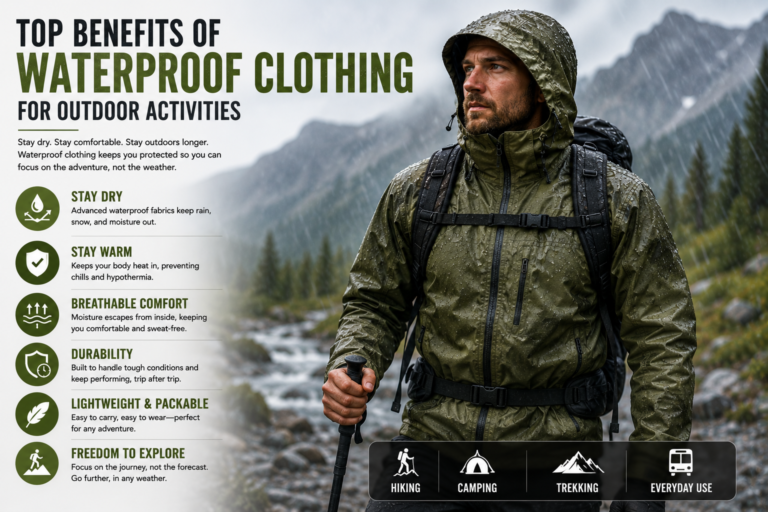
Top Benefits of Waterproof Clothing for Outdoor Activities

Picture yourself enjoying a serene, picturesque mountain hike. Suddenly, out of the blue, rain starts to pour. The typical attire means you’re getting drenched and frozen. Add into the mix the company that gives you the top benefits of waterproof clothing, and rain merely beeds off of your jacket! You’ll stay dry, warm, and most importantly, happy! It’s clear to see that waterproof clothing is a wise investment — be it hiking, camping, or just walking to the bus stop.

Top Benefits of Waterproof Clothing

Waterproof clothing is excellent because it completely keeps you dry. The most crucial job of waterproof clothing is to stop water from getting to your skin. The typical attire consisting of cotton apparel and jeans gets drenched in the rain. The good waterproof jackets use special fabrics that block the rain. Plus, these fabrics are also capable of body heat. For example, a good Top Benefits of Waterproof Clothing company creates jackets with well constructed, strong, and sealed seams. So, even the worst storms, you are dry as a fish in an aquarium.

It Protects You from Dangerous Wind and Cold

When rain and wind join forces it causes your body to lose heat and can even lead to dangerous conditions like hypothermia. Rainproof Clothing essentially acts like a barrier. Just like a shield, it blocks the wind from breaking through your layers. Outside jackets even have a soft inner lining that traps warm air near your body. This feature makes them great for winter sports where you are exposed to the elements like skiing and snowboarding. You can have fun in the snow without having to stifle it all day.

Getting wet is not just uncomfortable; it can be unsafe. When your clothes are soaked, you cannot move easily. Your pants become heavy, and your jacket sticks to your arms. This makes climbing rocks or walking on muddy paths very hard. Top Benefits of Waterproof Clothing is designed to be lightweight and flexible. For example, a pair of hiking pants manufacturer creates pants that dry quickly and have reinforced knees. You can jump, run, or crouch without any problem. Therefore, you reduce your chance of slipping or falling.

Waterproof Gear Lasts for Many Years

Especially raining seasons can make the ground a little dangerous. Having good waterproof gear improves the safety of you and others around you. However, a high-quality Top Benefits of Waterproof Clothing from a softshell jackets manufacturer uses strong stitching and tough fabrics like nylon ripstop. These materials resist tears, abrasion, and sun damage. You can wear the same jacket for five or more years. So, you spend less money buying new clothes again and again.

You Can Enjoy All Four Seasons Outdoors

Do you truly enjoy being outside in every season? If so, then Top Benefits of Waterproof Clothing is the ultimate solution for you. From springs dreary rain to summer showers. Also fall can bring cold winds. Not to mention winter moisture. Just like the waterproof coatings on clothing, winter waterproof ski jackets are the solution as well. A reliable ski wear manufacturer adds extra features like powder skirts and armpit zippers. This way, you can ski, hike, or camp in any weather without stopping early.

It Keeps Your Body at the Perfect Temperature

Every human body has an ideal temperature. They cannot be too hot or too cold. Finding the right temperature balance can be difficult. But, with Top Benefits of Waterproof Clothing, it can be done. Waterproof clothing still lets the body’s temperature escape in the form of sweat. But it shuts out the rain. This is convenient because you are not overheating when you are constantly on the move, and you are not freezing when you’re taking a break. Many base layer clothing manufacturer products work perfectly under a waterproof shell. The base layer wicks away moisture, and the outer layer stops wind and rain. Together, they make a perfect team for your comfort.

Modern Waterproof Clothing Is Light and Packable

Heavy, bulky, and stiff clothing is a thing of the past. Thankfully, modern Top Benefits of Waterproof Clothing is noticeably thin and foldable. Some clothing can even fold into a pocket. This is a substantial advantage for traveling, and especially hiking. The lighter the load, the easier the trip. A camping apparel manufacturer understands this need. They create gear that packs down small but opens up to full protection. You can carry it “just in case” without feeling weighed down.

It Offers Protection Beyond Just Rain

Another benefit of waterproof clothing is the protection beyond water. Many waterproof jackets also block harmful UV rays from the sun. It also helps to keep mud, dirt, and bug sprays the jacket on the outside. Some of the fabrics are also odor resistant and silent, meaning you are protected when crossing a river, walking through the bushes, or sitting next to a campfire with a group of people.

Conclusion

As described, waterproof clothing has a host of advantages. You remain dry and warm while protected and comfortable. Clothing has a prolonged life. You can enjoy the seasons without concern. Waterproof clothing is lightweight, can be packed easily, and protects against the sun, wind, and dirt. From raincoats to full expedition clothing, waterproof clothing is a smart choice.

FAQs

Can I wear waterproof clothing in hot summer weather?

Yes, you can. Look for “breathable” waterproof jackets. They have vents or zippers under the arms. These let hot air escape. Also, choose light colors and thin fabrics.

How do I wash my waterproof jacket without damaging it?

Always read the label first. Use a special tech wash soap, not regular detergent. Close all zippers. Wash on a gentle cycle. Then, tumble dry on low heat to reactivate the water-repellent finish.

What is the difference between waterproof and water-resistant?

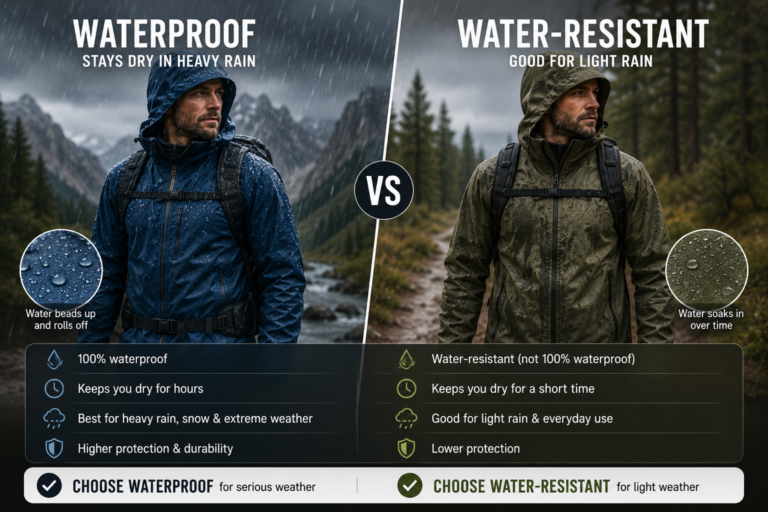
Water-resistant clothing can handle light rain for a short time. But waterproof clothing can handle heavy rain and pressure for hours. For serious outdoor activities, always choose waterproof.

Waterproof vs Water-Resistant Clothing Complete Comparison

The two terms you see most often when buying new Waterproof vs Water-Resistant Clothing. Although similar, these two terms are distinct. Say you find yourself outside during a very heavy rain. A water-resistant jacket will keep you dry on a short walk to the car but will be ineffective for anything past that. A waterproof jacket will keep you dry for many hours, even during a heavy rainstorm. This distinction is quite significant while buying outdoor gear. Choosing the wrong jacket can leave you cold and soaking wet. This guide will explain these differences in a way that a sixth grader is able to understand.

What Does Water-Resistant Mean?

Waterproof vs Water-Resistant Clothing is made to fight off light rain or a little snow. Think of it like a shield that works for a short time. These clothes have a special coating on the fabric. This coating makes water form into small beads. The beads then roll off the surface. For example, a softshell jacket is often water-resistant. It is great for windy days or a light drizzle. But if the rain becomes very heavy, the water will eventually soak through. You can find great Waterproof vs Water-Resistant Clothing options for different weather needs. To see how a durable softshell is made, check out this softshell jackets manufacturer. They build jackets that are perfect for dry and windy conditions.

What Does Waterproof Mean?

Waterproof gear offers the best protection from the elements. There are some gear items that are perfect for heavy downpours or for trekking in the snow. There are waterproof zippers that the manufacturers use in addition to fabrics and seam sealers. Waterproof vs Water-Resistant Clothing gear is ideal for those that are always outside or enjoy the outdoors in the rain. A great example of waterproof gear is a hardshell jacket. A hardshell jacket is waterproof, fully and can be breathable. If gear can be breathable, then it can be waterproof and allow your sweat escape from from it as to not leave you feeling sticky. Learn more about durable waterproof clothing manufacturer options for your brand.

The Key Difference in Rain

The main thing that differentiates Waterproof vs Water-Resistant Clothing gear is the duration of protection. Waterproof gear provides protection against heavy moisture while water-resistant gear protects against light moisture. If it is light rain when you are camping, a water-resistant jacket will suffice for about 15 minutes and then you will be wet. A waterproof jacket will maintain dryness for the duration of the rain. Water resistant gear can have exposed seams, while waterproof gear will have seams that are taped. For those that are hiking on a water-resistant gear will suffice. But for a camping apparel manufacturer, they will always suggest waterproof for sleeping bags or outer shells.

Which One is Better for Hiking?

Weather can be unpredictable. At times you can be hiking in the sun, only to be caught in the rain moments later. What do you do in this scenario? For a quick thirty minute to hour hike a water resistant windbreaker would suffice. It’s lightweight, and easy to carry. For a longer hike that lasts all day, a completely waterproof jacket would be a better choice. If you’re hiking in the mountains it’s important to note that mountain weather can change quickly. The best strategy is to layer your clothes. This strategy helps you stay dry and warm. Many hiking clothing manufacturer experts build these systems specifically for long trails.

Understanding “Breathability”

The biggest problem you’ll have with rain gear is sweat. Breathability is a big part of outdoor gear. The breathability of a fabric is measured in grams, and the higher the metric is, the more sweat that can escape the fabric. Water resistant fabrics are very breathable, since they are thin and lightweight. They do run the risk of getting wet, however, if you need warmth, then they will be damp. For gear that will be used in high activity, such as skiing, breathability becomes very important, since you will be up to high speeds and will be working up quite the sweat. A ski wear manufacturer focuses a lot on this balance.

When to Choose Water-Resistant

You should choose Waterproof vs Water-Resistant Clothing in these situations:

  • Light Drizzle: Walking in the city or a light shower.
  • High Energy Sports: Running or climbing where you sweat a lot.
  • Dry Snow: Very cold snow that is dry and does not melt.
  • Wind Protection: Stopping cold wind on a dry day.

Water-resistant gear is usually cheaper and softer. It feels more like a normal shirt. For example, a fleece jacket is often water-resistant. It keeps you warm and blocks a little mist. A outdoor fleece manufacturer makes these for chilly, dry days. They are very comfortable for casual wear.

When to Choose Waterproof

You must choose Waterproof vs Water-Resistant Clothing for these activities:

  • Heavy Rain: Farming, fishing, or standing in a storm.
  • Snow Sports: Skiing or snowboarding where you sit in snow.
  • Water Sports: Boating or kayaking where water splashes a lot.
  • Long Exposure: Hiking for 4+ hours in unknown weather.

Waterproof gear uses membranes like Gore-Tex. It is tougher and lasts longer. The zippers are special “aqua guard” zippers. The hoods have stiff peaks to keep rain off your face. If you are a hunter sitting still in the rain, you need total silence and dryness. A hunting apparel manufacturer understands this need for absolute protection from wetness.

How to Care for Your Gear

The longevity of care for your clothing relies heavily on washing practices. Dirt will always damage a clothing item’s waterproof coating. Under no circumstance should regular soap be used. Traditional soap boundaries will attract water. To prevent this, a “Tech Wash” will be your best option. Keep in mind that Waterproof vs Water-Resistant Clothing will wear out and be completely damaged and ineffective after a period of washing. There is a spray available to “reactivate” water resistance. For waterproof clothing, especially jackets, never store them wet. Simply hang them to dry. A tactical outdoor apparel manufacturer often uses very strong fabrics that need gentle care to last for years.

Conclusion

Knowing the difference between Waterproof vs Water-Resistant Clothing will help you become an educated consumer in jacket buying. It is imperative to know that water-resistant clothing can only stand up to a light rain of very short duration. Differently, waterproof clothing can withstand a downpour of long duration. It is always best to consider your situation. If you live in a rainy city and work on a boat, a water-resistant jacket is sufficient. If you are an outdoor climber that is a waterproof jacket is necessary. You should consider your situation and the breaks of water that you will be facing and be cognizant of the clothing you are purchasing.

FAQs

Can I make a water-resistant jacket waterproof?

No, you cannot make it fully waterproof. You can spray it with a DWR coating to improve the beading effect, but the seams and zippers will still let water in during heavy rain.

Is waterproof clothing hot to wear?

Not if you buy breathable types. Good waterproof jackets have vents or membranes that let sweat vapor out. However, they are usually warmer than a simple cotton shirt because they trap body heat.

How do I know if my jacket is waterproof?

Look at the label. It should say “waterproof” and list a rating (like 10,000mm). This number means how tall a water column can sit on the fabric before it leaks. A 5,000mm rating is good for light rain, while 20,000mm is for storms.

How Waterproof Clothing Works Fabrics Coatings and Membranes

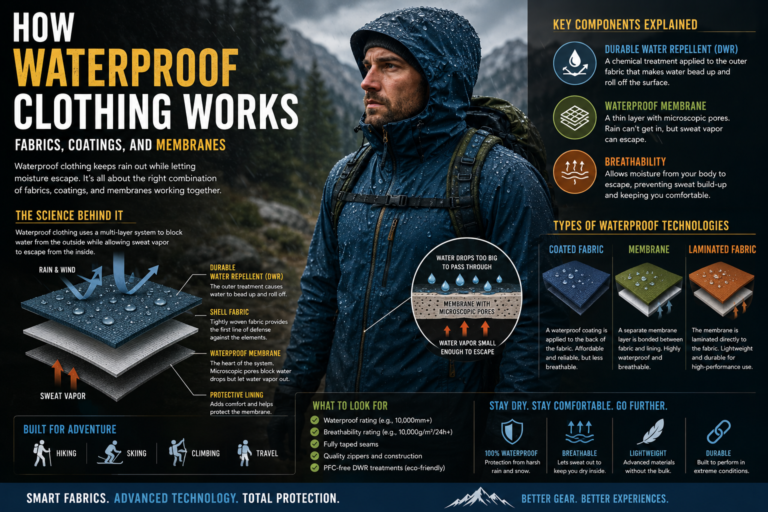
Have you worn a rain jacket and still ended up dripping wet and freezing? It may be because most clothing isn’t completely waterproof. How Waterproof Clothing Works uses smart technology to solve this issue. It utilizes clever coatings, extremely thin, and clever coatings called membranes. These smart fabrics use all these technologies to block rain and let your body heat evaporate. An example is a waterproof clothing manufacturer that uses all these technologies to create jackets and clothing for hikers and skiers. Knowing this helps you figure out what better gear to choose for your outdoor adventures.

The First Secret: Waterproof Fabrics

The first and most important part of making a rain jacket is choosing fabric. Choosing regular fabric like cotton or regular polyester makes a sponge for water. How Waterproof Clothing Works uses special fabrics that are tightly woven nylon. These fabrics can be polyester that have extremely small gaps between their threads that are so small water droplets cannot fit through. However, that fabric, tightly woven can still easily let water through, so for heavy rain, more is needed. A trusted hiking clothing manufacturer knows that the right fabric is the first step to a dry and happy hiker.

Coatings: A Shield on the Surface

Another method for making a jacket waterproof is adding a coating. This one is fairly easy because all you have to do is paint on a very thin layer of rubber. This makes a fabric waterproof. However, if the coating is too thick, heat and sweat cannot escape, so How Waterproof Clothing Works carefully balances this. The coating has to be just thick enough to stop rain, but thick enough to let water vapor escape.Many camping apparel manufacturer use a DWR (Durable Water Repellent) coating. This makes water bead up and roll off the surface, like water on a waxed car.

Membranes: The High-Tech Layer

For optimum defense, top-tier attire employs membranes. Membranes are ultra-thin sheets, usually ePTFE (expanded Polytetrafluoroethylene). This layer contains an astounding number of pores, reaching the billions, per square inch. The wizardry of How Waterproof Clothing Works occurs here. The drops of liquid water are too large to permeate, but those membranes’ pores are large enough to let water vapor (your sweat) escape. This phenomenon is termed “breathable waterproofing. Top ski wear manufacturer love membranes because skiers stay dry from snow outside and sweat inside.

The Difference Between Waterproof and Water-Resistant

Distinguishing “water Resistant” and “Waterproof” is very imperative. Water Resistant attire can withstand a light drizzle but for the truly stormy weather, How Waterproof Clothing Works relies on Waterproof Clothing, which can sustain heavy rain for long periods of time without the fabric leaking. Water resistant jackets can have a very simple coating, while waterproof jackets can have membranes which are thoroughly tested and all the seams are sealed. If you need gear for tough conditions, look for a true waterproof jackets manufacturer. They build jackets that pass real rain tests.

How Sealed Seams Complete the Job

How Waterproof Clothing Works is dependent on sealed seams, for the best waterproof fabric is still useless if water is permitted to enter via the holes from stitching. Every single hole made by a needle can be a possible leak. There is a tap which is special, and manufacturers glue that over all the seams which are on the insides. When rain hits a seam on your shoulder, that seam is still waterproof, and the rain will simply run off. A professional outdoor jackets manufacturer will always seam-seal their products. Without this step, your jacket is not truly waterproof.

Caring for Your Waterproof Gear

Your waterproof gear can lose its waterproofing without the right care. Oils and dirt can ruin the waterproofing. A simple tip for keeping your gear working: Use a tech wash to wash your gear and don’t use normal detergent to help the waterproofing stay. When the DWR coating wears off, the water will stop beating and will start soaking into the outer fabric. This will make the fabric heavy and cold. This also can be remedied.A proper hardshell jackets manufacturer will tell you to re-apply a DWR spray after cleaning. Then your jacket will work like new again.

Different Types for Different Activities

Not all waterproof clothing is the same. Manufacturers build different types for different jobs. For high-output activities like running or climbing, you need very breathable membranes. For sitting in a rainy deer stand, you need durable, quiet fabrics. For example, a hunting apparel manufacturer focuses on silent, rugged waterproofing. A tactical outdoor apparel manufacturer might prioritize abrasion resistance. So, when you shop, think about what you will do in the rain. The right type for a bike ride is wrong for a fishing trip.

Conclusion

Now you know the inner workings of waterproof clothing, you know about the coatings, the membranes, sealed seams, and fabric closeness. You also now know that clothing that is water-resistant will not be useful when it comes to a heavy downfall and that taking care of your gear is important in making the gear last. You can know ask good question when purchasing a new rain jacket. Look for the makers that utilize these concepts and trust them. A good rainwear manufacturer will gladly help you understand their products. Now you can be comfortable and dry on your newly equipped outdoor adventures.

FAQs

How is a waterproof membrane different from a coating?

A coating is a solid layer on the fabric that can trap heat. A membrane is a thin, porous film that blocks liquid water but lets water vapor escape, making it more breathable.

Can I make any jacket waterproof?

You can add a DWR spray to improve water resistance, but true waterproofing requires sealed seams and a membrane or heavy coating. Most regular jackets cannot become fully waterproof.

Is waterproof clothing also windproof?

Yes, almost always. If a fabric can block liquid water, it can easily block wind, which is made of much smaller gas molecules. So waterproof gear is naturally windproof as well.

How to Choose Hunting Clothing for Different Weather Conditions

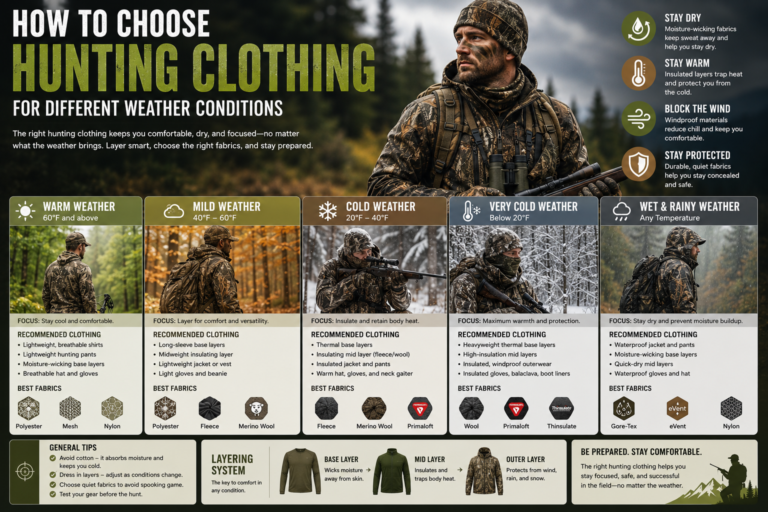
Hunting is enjoyable, but weather changes can be Rapid and unsafe. Being unprepared with the wrong How to Choose Hunting Clothing could cause things like being too hot, too cold, or getting soaked. Because of this, it is crucial you understand the factors of choosing the appropriate hunting attire before you walk into the woods. New hunters typically buy cotton or everyday jackets. A bad choice is cotton. It gets soaked and stays soaked making you freezing. A better alternative is the lightweight synthetic hunting shirts of the synthetic variety that provide the wearer warmth and let the hunting shirt dry quickly, even with light rain.

How to Choose Hunting Clothing for Hot Weather

Purchasing the appropriate attire requires the knowledge of choosing the most breathable clothing. Having a thick, heavy jacket is basically a recipe for sweating way too much. Then, as the sun begins to set you will feel the coldness of the sweat. Also, a breathable hunting hat can protect your face and neck from the sun. Avoid dark colors like black or dark green because they trap heat.

Rainy Weather

Rain is a hunter’s worst enemy and can soak How to Choose Hunting Clothing. This will cause you to bed shivering and can drop your body temperature. Protecting yourself from the rain requires a waterproof jacket with sealed seams. A proper raincoat won’t get you sweating inside and will leave you comfortable. A good waterproof hunting jacket will keep rain out but let sweat escape. Also, wear a hat with a brim and waterproof boots.

Snow and Freezing Cold

Snow and freezing winds are dangerous. You need layers. The first layer (base layer) should be wool or a special synthetic fiber. Never cotton. The second layer (mid layer) can be fleece or softshell for warmth. The third layer (outer layer) needs to block wind and snow. How to Choose Hunting Clothing for snow includes gloves and a warm hat. A heavy insulated hunting parka can save your life on very cold days. Also, wear two pairs of socks: one thin wool and one thick wool.

Quick Tips for Any Weather

  • Always pack an extra pair of socks.
  • Zip your jacket up when statically. Unzip when moving.
  • Choosing hunting clothing that is quiet is key (noisy fabrics scare animals).
  • A neck gaiter or balaclava protects your face from the wind.
  • Check the weather forecast every morning before you begin your hunt.
  • A good hunting vest is perfect for the unpredictable mild days.

Windy Days

Wind makes cold feel much worse. Wind can not be allowed to cut through a good hunting jacket. A good hunting jacket can be described as “windproof” and also “breathable”. Many softshells are windproof and softshells are soft. How to Choose Hunting Clothing for wind also means covering your ears and neck. A windproof hunting hoodie can be worn over a base layer. Do not forget your hands – thin windproof gloves work better than thick cotton gloves.

Changing Weather

Mornings can be cold, but the temperature rises rapidly during the day. The worst aspect about this is wearing a heavy jacket that can make you sweat. The best answer is to dress in removable layers. This means a base layer, a fleece or the equivalent, then a lightweight windbreaker. The fleece can then be snapped off when the sun rises. Changing Weather means having easy zippers and straps. Bringing a small backpack to store all the layers in is a good idea. A convertible hunting pant that zips off into shorts is very smart for spring or fall hunting.

Conclusion

Choosing the proper clothes is essential for both safety and performance when in the wilderness. Good hunting clothes should keep you warm, dry, and hidden in nature. When concealed in the wilderness, How to Choose Hunting Clothing needs to have strong and reliable fabrics. Waterproof materials also help a lot when the weather changes. Moving and getting into the right cover becomes a lot easier with the right gear. Bigger investments and more quality gear mean every hunting trip can be prepared for.

FAQs

Can I wear jeans for hunting?

Jeans are cotton. They get wet and heavy and will make you cold. Always wear synthetic or wool.

What is the single most important piece of hunting clothing?

Cold, wet feet ruin any hunt. Buy waterproof, insulated hunting boots.

How do I know if a jacket is waterproof or just water-resistant?

Water-resistant means light rain only. Waterproof means heavy rain. Look for “10,000mm” or higher rating.

How Camping Apparel Improves Comfort and Outdoor Performance

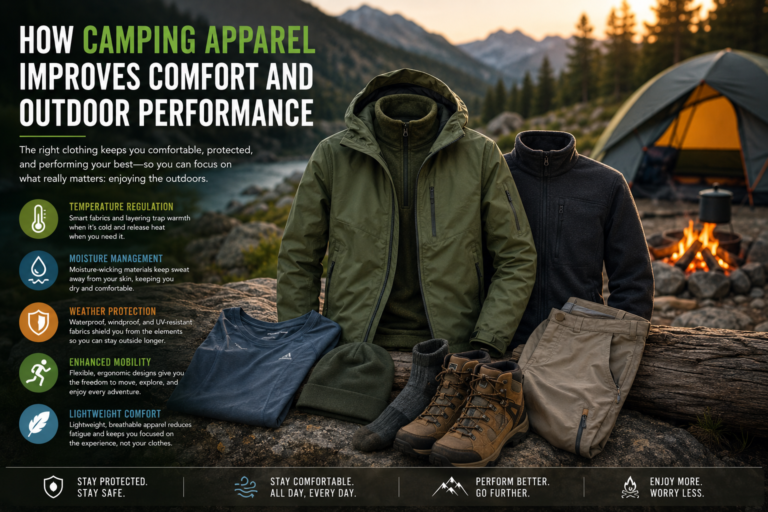
Most people don’t think seriously about what they wear camping until something goes wrong. A soaked jacket on a mountain trail. A torn pair of trousers on the second day of a five-day trip. A base layer that smells unbearable after one night. Outdoor camping apparel comfort isn’t a luxury consideration — it’s a genuine performance factor that determines how well you function, how safe you stay, and how much you actually enjoy your time outdoors. Here’s exactly how the right camping apparel makes a measurable difference.

Temperature Regulation Keeps You Performing Longer

Your body works hardest in the outdoors when it’s fighting temperature extremes rather than focusing on the activity at hand. Quality camping apparel actively manages body temperature — keeping you warm when conditions are cold and preventing dangerous overheating during intense physical activity.

The layering system is the foundation of effective temperature regulation in outdoor camping apparel. Each layer serves a specific purpose:

  • Base layers manage moisture directly against skin
  • Mid-layers trap warm air and retain body heat
  • Outer shell layers protect against wind, rain, and external cold

Base layer clothing made from merino wool or moisture-wicking synthetic fabrics keeps skin dry by pulling sweat away from the body — preventing the dangerous chill that wet skin causes when activity levels drop or temperatures fall unexpectedly.

Moisture Management Prevents Discomfort and Danger

Wet clothing is one of the biggest comfort and safety challenges in outdoor environments. Fabric that absorbs sweat and holds it against the skin creates cold, heavy, uncomfortable conditions that significantly impair physical performance and — in cold environments — creates genuine hypothermia risk.

Quality outdoor camping apparel comfort depends heavily on moisture management performance at every layer. Wicking base layers move moisture away from skin. Breathable mid-layers allow moisture vapor to continue moving outward. Waterproof clothing with breathable membranes prevents rain penetration while still allowing internal moisture to escape — keeping campers dry from both directions simultaneously.

This complete moisture management system — working across all three layers together — is what separates genuine outdoor performance clothing from fashion-inspired outdoor aesthetics that look the part but fail in real conditions.

Freedom of Movement Enables Better Performance

Camping involves constant physical variety — hiking steep terrain, setting up shelters, gathering firewood, crossing streams, and scrambling over rocks. Clothing that restricts movement forces the body to compensate — creating fatigue, reducing agility, and increasing injury risk across all of these activities.

Quality camping apparel addresses movement through articulated construction — pre-shaped knee panels in hiking pants, gusseted crotches in trousers, and stretch panels in softshell jackets all allow natural body movement without fabric pulling or binding at critical joint areas.

Four-way stretch fabrics in high-movement zones deliver unrestricted mobility that rigid constructions cannot match — allowing campers to move with complete confidence across varied terrain and physical demands throughout their entire trip.

Weather Protection Extends Your Outdoor Range

Unpredictable weather stops underprepared campers from fully experiencing the outdoors. Rain, wind, and sudden temperature drops force retreats to shelter that quality weather protection clothing prevents entirely.

Waterproof jackets with sealed seams and waterproof zippers keep campers completely dry during sustained rainfall. Windbreaker jackets block wind chill that dramatically lowers effective temperature even on moderately cool days. Hardshell jackets provide maximum protection for severe weather conditions where lighter alternatives become genuinely inadequate.

Proper weather protection doesn’t just improve comfort — it extends the range of conditions campers can operate in safely and confidently. That expanded capability is what turns fair-weather day trippers into genuine all-season outdoor enthusiasts.

Durability Protects Performance Throughout the Trip

Outdoor camping apparel comfort depends on clothing that maintains its performance properties throughout the entire trip — not just on day one. Fabric that tears, seams that fail, and waterproof treatments that wash out after the first rain all undermine comfort and protection when campers are far from replacement options.

Ripstop constructions, reinforced stress points, and quality DWR treatments that last through multiple field uses ensure camping apparel continues performing across every demanding day of extended trips. Quality camping apparel built with durable materials and professional construction standards protects that performance investment across seasons of regular outdoor use rather than just a single trip.

Protection From Environmental Hazards

The outdoors presents specific hazards that quality camping apparel directly addresses. Sun exposure, insect contact, abrasive terrain, and temperature extremes all threaten comfort and safety in ways that inadequate clothing fails to prevent.

UPF-rated fabrics block harmful UV radiation during extended sun exposure. Tightly woven fabric constructions reduce insect penetration in environments with high bug populations. Abrasion-resistant panels protect high-contact areas from rough terrain damage. Outdoor fleece provides warmth during cold evenings when temperatures drop faster than casual campers often anticipate.

These protective functions work together to keep campers safe, comfortable, and focused on enjoying the outdoor experience rather than managing the physical discomfort that inadequate clothing creates.

Conclusion

Outdoor camping apparel comfort directly improves physical performance, safety, and overall outdoor experience in ways that casual clothing simply cannot replicate. Temperature regulation, moisture management, freedom of movement, weather protection, durability, and environmental hazard protection all work together within a properly chosen camping apparel system — transforming challenging outdoor conditions from obstacles into manageable parts of a genuinely rewarding experience. Invest in the right camping clothing and every trip becomes better, safer, and more enjoyable from the very first day outdoors.

FAQs

How does camping apparel differ from regular casual clothing for outdoor use?

Camping apparel uses technical fabrics and construction specifically engineered for moisture management, weather protection, durability, and movement freedom — properties regular casual clothing doesn’t deliver in demanding outdoor environments.

What is the most important single piece of camping apparel for comfort?

A quality waterproof breathable jacket is arguably the most critical single piece — it protects against the weather conditions that most rapidly and severely undermine outdoor comfort and safety.

Can camping apparel be produced under a private label for outdoor brands?

Yes. Professional outdoor apparel manufacturers offer complete private label production with custom fabrics, performance treatments, colors, labels, and packaging — giving outdoor brands full creative and commercial control over their camping collections.

How should I layer camping apparel for maximum comfort in variable conditions?

Start with a moisture-wicking base layer, add a fleece or insulating mid-layer for warmth, and finish with a waterproof breathable shell outer layer — adjusting the combination as activity level and temperature conditions change throughout your day outdoors.

How to Choose the Right Ski Mask

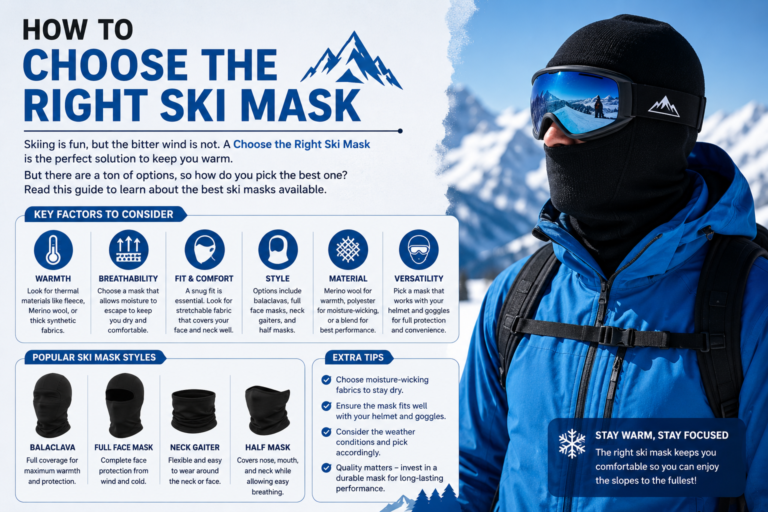
Skiing is fun, but the bitter wind is not. A Choose the Right Ski Mask is the perfect solution to keep you warm. But there are a ton of options, so how do you pick the best one? Read this guide to learn about the best ski masks available.

Why You Need a Good Ski Mask

The wind on the ski slopes can be painful on exposed skin. Choose the Right Ski Mask help combat this by blocking the wind and protecting the skin on your face. Ski masks even help protect your neck and cheeks. Without a ski mask, you may get too cold to continue skiing. A quality Ski Wear Manufacturer makes masks that are tested for real mountain conditions, so you know they will work when you need them most.

Look for the Right Fabric

The fabric of a ski mask needs to be windproof and still allow air flow. The perfect fabric needs to be strong and thick enough to stop the wind, but thin enough to not cause sweating. The best outdoor fabrics often come from cargo pant technology. Ski masks need to be soft and stretchy, so look for a ski mask that has a breathable fabric.

Check for a Good Fit

A Choose the Right Ski Mask needs to fit snug to your head to ensure there are no gaps, but also needs to be loose enough to not cause headaches. It is also super important to be able to easily move your mouth, so make sure there is enough space there too. A great Base Layer Clothing Manufacturer uses flatlock seams, which are seams that lie flat on your skin. These seams stop the mask from rubbing or itching your face, making it comfortable to wear for hours.

Moisture Wicking is a Must

While skiing, it is common to sweat. If moisture isn’t pulled away, it will chill and become ice on your face. You’ll want a mask that uses fabric that will pull moisture away and not sit against your skin. These mask fabrics will also keep your face dry and warm throughout your long, active days while skiing.

Think About Your Goggles

Your mask will also need to work in conjunction with your goggles. If your mask has a fabric that directs your breath up toward your goggles, they will fog and you’ll lose your ability to see. You’ll want a mask that has a fabric that allows your breath to escape downward. A reliable Outdoor Fleece Manufacturer often designs masks with this smart feature in mind, helping you stay safe and able to see the trail clearly.

Choose the Right Thickness

Choose the Right Ski Mask come in different weights for different weather.

  • Lightweight: Good for cool, sunny spring days.
  • Mid-weight: Best for normal winter days with a little wind.
  • Heavyweight: For very cold days or night skiing.
    Think about where you usually ski. If you ski in a very cold place, you need a thicker mask. A good Hardshell Jackets Manufacturer will tell you that layering is key, and your mask is the first important layer for your face.

Conclusion

There are a lot of options and things to consider when shopping for the perfect ski mask. Ultimately you will need a mask that retains warmth and allows your breath to escape, while also fitting simply under your ski gear. You’ll want a mask that has a lightweight, soft, moisture-wicking fabric. This will ease the chill and pull any trapped moisture during your outdoor excursion.

Ensure you have a ski mask with good coverage, but does not cover your eyes. If you intend to wear the mask during the extreme cold, then be sure to purchase a thick ski mask. If you plan to wear the mask while hiking, skiing, or working outdoors, then a breathable and tough ski mask will be more comfortable.

FAQs

How do I choose the right ski mask?

Choose a ski mask based on the weather, comfort, fabric quality, and the level of face protection you need.

What material is best for a ski mask?

Fleece, polyester, merino wool, and moisture-wicking synthetic fabrics are popular because they are warm and breathable.

Should a ski mask fit tightly?

A ski mask should fit snugly but not so tightly that it becomes uncomfortable or makes breathing difficult.

Essetial Features of High-Performance Outdoor Jackets

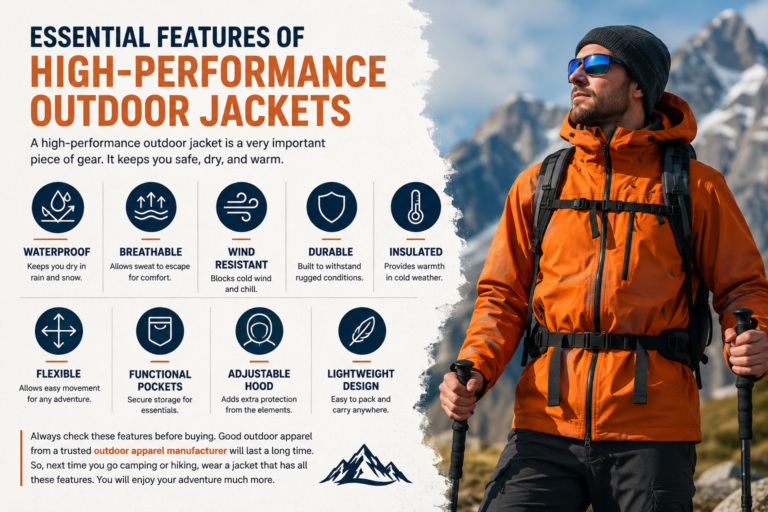
Features of high-performance outdoor jackets is a very important piece of gear. It keeps you safe, dry, and warm. The main Features of Outdoor Jackets are waterproofing, breathability, wind resistance, durability, insulation, flexibility, pockets, an adjustable hood, and lightweight design. Always check these features before buying. Good outdoor apparel from a trusted outdoor apparel manufacturer will last a long time. So, next time you go camping or hiking, wear a jacket that has all these features. You will enjoy your adventure much more.

Waterproofing: The First Feature to Check

The first and most important outdoor jacket feature is, can it stop water from getting in? If it’s raining, and you are out on the trail, a waterproof jacket will keep you dry. High-performance Features of Outdoor Jackets use strong fabrics like ripstop with a laminated waterproof membrane. Water won’t come in and neither will air and heat, thanks to the sealed seams. For example, a waterproof clothing manufacturer always tests jackets against heavy rain. Therefore, a waterproof jacket is a must for camping and skiing. This is one of the top Features of Outdoor Jackets.

Breathability: Stay Dry from Inside

Breathability, lets your heat and sweat escape, and it’s also very important. If you are hiking, and your jacket is not breathable, it’s going to be a sweaty walk in the woods. A good breathable jacket will push air and moisture out while keeping rain out. A jacket also stops rain from coming in. Many hiking clothing manufacturers use softshell fabrics that are both wind-resistant and breathable. So, always check if your outdoor jacket has mesh panels or vents. Good breathability is a key Feature of Outdoor Jackets.

Wind Resistance: Block the Cold Wind

Cold air makes a higher temperature feel even colder, which is known as the wind chill effect. A high-performance outdoor jacket needs to be able to block wind. Wind-resistant materials allow Features of Outdoor Jackets to block air from getting into jackets and allow warming air to remain inside the jacket. Many camping apparel manufacturers use bonded seams and tight weaves to block wind. If you are going to a windy mountain or open field, a windproof jacket is very helpful. So, never forget this important Feature of Outdoor Jackets.

Durability: Strong Enough for Rough Use

During outdoor activities, jackets can get snagged on branches and even sit on rocky terrain. Features of Outdoor Jackets need to stand tough through activities. Nylon ripstop is a fabric that helps prevent tears through a special grid. To prevent the fabric from getting snagged at pockets and zippers, look for bar-tack reinforcements. A tactical outdoor apparel manufacturer makes jackets for rough field use. So they use very durable materials. Therefore, durability is one of the best Features of Outdoor Jackets.

Insulation and Warmth

Insulation helps fill jackets and trap warm air. When used as filling, insulation comes in two forms: down and synthetic. Down feathers of birds that are light and warm and help trap warm air. As synthetic insulation is man-made, it helps trap warm air and even remains warm when wet. Many ski wear manufacturers use synthetic insulation for snowy conditions. Some jackets have fleece lining for extra softness and heat. So, if you are going to a cold place, choose a jacket with good insulation. Warmth is a basic Feature of Outdoor Jackets.

Flexibility and Mobility

The design of outdoor jackets should not help block the range of motion of the human body. Along with the movements of the body when walking, jackets should help the body bend and even allow the arms to be raised above the head. Stretch fabrics are designed to help move along with the body. A softshell jackets manufacturer uses stretch wovens for climbing and hiking. So, always check the fit. A jacket that is too tight is not good for the outdoors. Flexibility is an important Feature of Outdoor Jackets.

Pockets and Storage

When hiking or camping, you may want to bring a map, your phone, or snacks, for which a camping jacket has designated pockets. To ensure nothing falls out, you should look for zippered pockets. Items that require additional safety can go in chest pockets. Some tactical jackets will have hidden pockets for tools. A waterproof jackets manufacturer often adds hand-warmer pockets as well. Many pockets are a smart Feature of Outdoor Jackets because they keep your hands free and your items secure.

Hood and Adjustable Fit

Hoods come as a jacket pocket or a hat and serve the purpose of protecting the head and neck from the elements. However, hoods that can simply be pulled over the head, will not be sufficient. Hoods should be adjustable and can be pulled to the face to protect from the wind. A stiff brim on a hood can be turned to prevent water from hitting the eyes. Wind can also be prevented from riding up the sleeves by adjustable cuffs. A hem should also be adjustable. A hunting apparel manufacturer uses these features for quiet movement. So, an adjustable hood and cuffs are useful Features of Outdoor Jackets.

Lightweight and Packability

Sometimes you do not need to wear your jacket all the time. You might carry it in your backpack. A lightweight jacket is easier to carry. Some jackets are packable, which means you can fold them into a small bag. Packable rain jackets are very popular for summer hiking. A rainwear manufacturer makes jackets that fold into their own pocket. This saves space in your bag. So, if you travel light, look for lightweight and packable Features of Outdoor Jackets.

Conclusion

The most important gear that you may want to purchase will be a camping jacket. Keeping you comfortable and protected is the primary purpose. Water and wind resistance, insulation, pockets, adjustability, and a lightweight design should be the primary concerns. Apparel of this quality should last for an extended time. The traveling will be even more enjoyable with the right gear.

FAQs

What is the most important Feature of Outdoor Jackets?

The most important feature is waterproofing. It keeps you dry in rain and snow.

Are softshell jackets good for windy days?

Yes, softshell jackets are wind-resistant and breathable. They are good for mild wind and light rain.

Can I wear a hunting jacket for camping?

Yes, many hunting jackets have camouflage patterns and are very durable. They work well for camping too.

10 Must-Have Features in Modern Hiking Clothing

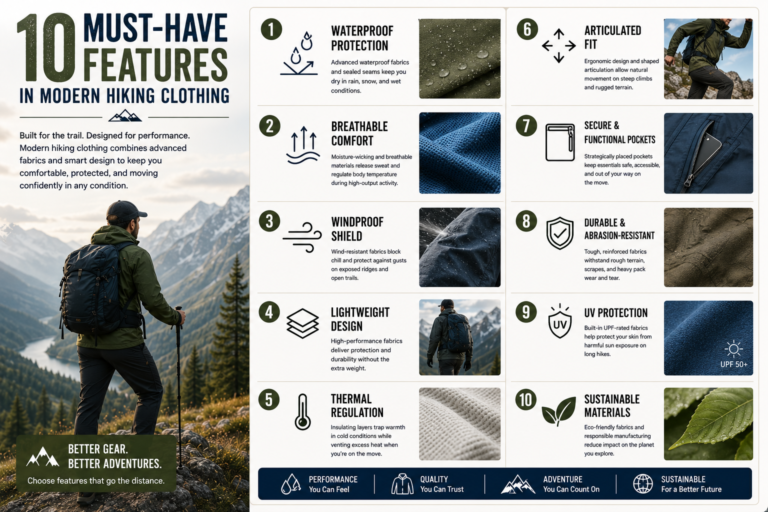
Modern hiking apparel has evolved beyond basic outdoor clothing. If you’re designing a collection of 10 must-have features in modern hiking clothing to build a brand that is trail-ready, knowing what features are important on the trail will help you create products that win customer loyalty. Here are 10 characteristics that make up today’s performance-ready clothing.

1. Moisture-Wicking Fabric Technology

The most important aspect of any hiking garment is sweat management. Modern clothing is made of moisture-wicking fabric that moves perspiration to the surface, where it can evaporate quickly. This feature is essential for hiking clothing. Without it, hikers will experience uncomfortable chafing and dangerous coldness when temperatures drop.

2. Lightweight construction without sacrificing durability

On a multiday trek, every gram counts. Hiking apparel of high quality strikes the perfect balance between weight and durability. It uses lightweight fabrics such as ripstop nylons or performance polyesters, which are easy to pack, light in weight, and resist trail abrasion. Fabric construction and weight optimization must be combined to optimize garments that are durable but light.

3. Breathability for sustained activity

Hiking generates sustained heat output across long hours. Outdoor T-shirts and hiking trousers are all in need of breathability. This allows warm air to escape, preventing heat buildup and fatigue. Mesh panels, ventilation zippers under the arm, and open-knitted back panels are all common construction details to enhance airflow.

4. Stretch and Freedom of Movement

The terrain of the trail requires a variety of movements — such as stepping over stones, scrambling in loose soil, and climbing steep slopes. Modern hiker pants, and clothing, incorporates four-way stretch fabric, articulated knee patterns, and gusseted construction for the crotch to move with your body. Clothing that restricts movement can cause fatigue and increase the risk of injury on technical terrain.

5. Weather Resistant for Changing Conditions

The mountain and trail conditions can change rapidly. The fabric should be treated with DWR to repel light rain or morning dew. Packable hardshell or waterproof coat provides storm protection on more exposed routes without having to carry a separate shell. Waterproof clothing is necessary for multi-day and high-alpine hiking routes.

6. Sun and UV Protection

Hikers who hike at high altitudes or in wide-open landscapes are exposed to more UV radiation. The UPF rating should be 30 or higher for quality outdoor tees, trail shirts and other clothing. This will block a large portion of the solar radiation. The lightweight UPF-rated fabric options for long sleeves protect your arms without the weight of heavy clothing. This is important when hiking in the desert, along coastal trails or on exposed ridgelines.

7. Practical Storage and Pocket Systems

Hikers must have easy access to their essentials, such as maps, snacks and phones, without having to stop to remove their packs. hiking pants that have zip-secured thigh pocket, outdoor pants which offer multiple storage options and jackets featuring inner chest pockets are all designed to make the trail more functional. The placement of pockets should be based on the actual reach and access position for a hiker, not just in a static display.

8. Layering System Compatibility

The modern hiking performance is based on the layering system, not just individual garments. A base layer that wicks moisture away from the skin is layered with an insulating middle-layer, such as a puffer or outdoor fleece jacket, to provide warmth. Finally, a softshell or outdoor jacket provides protection against wind and rain on top. Brands who design their collection in a coherent way, with compatible sizes and fits between layers, offer a lot more value than brands that sell isolated pieces.

9. Odor Control for Multi-Day Use

On multi-day and overnight hikes, odor control becomes a real comfort and hygiene issue. Anti-microbial fabrics, such as silver-ion finishes or treated synthetic blends, inhibit bacterial growth which causes odors. This extends the wearable lifespan of a garment. This feature is becoming more common in premium hiking collections, and it is a key differentiator among brands that target the serious trekking and exploration markets.

10. Compact storage and Packability

When not in use, the best hiking clothes can be stuffed into a backpack. Windbreaker Jackets and packable Outdoor Vests as well as compressible Rainwear can be stuffed into a small bag or pocket to provide hikers with weather protection. Packability is a feature that brands can use to their advantage when creating hiking collections. Customers who are making purchases at retail will notice and appreciate garments which compress.

Conclusion

Modern hiking clothing does not have a single best feature. It is determined by the way that multiple features work together to provide optimum performance over a multi-day or full day trail experience. The combination of moisture management, stretch, weather resistance, layering compatibility and packability determines whether a hiking item will be included in a regular customer’s kit. Brands developing hiking collections need to incorporate these features in every product, from base layer through hiking trousers, outer shells, and insulation layers. This is what differentiates a compelling range from a generic collection. We manufacture hiking clothing for brands and private label companies worldwide. Request a quote to start developing your hiking collection.

FAQs

What is the most versatile fabric for hiking apparel?

 Lightweight blends of polyester and nylon with moisture-wicking properties and DWR treatment are the best fabrics. They are able to manage sweat, repel light rain, dry fast, and withstand trail abrasion.

Do I need waterproof hiking trousers or are water-resistant pants enough for most day hikes?

DWR-treated, water-resistant pants offer sufficient protection. For multi-day hikes, areas with high rainfall, and regions with high altitude terrain, it is important to have full waterproof clothing.

How important is UV protection in hiking clothing?

Very, especially for hiking in high altitudes, open ridges or desert environments, where UV intensity can be higher. The UPF rating of outdoor T-shirts or trail shirts can reduce solar exposure over a hiking day.

Best Fabrics for Hiking Apparel: A Complete Guide

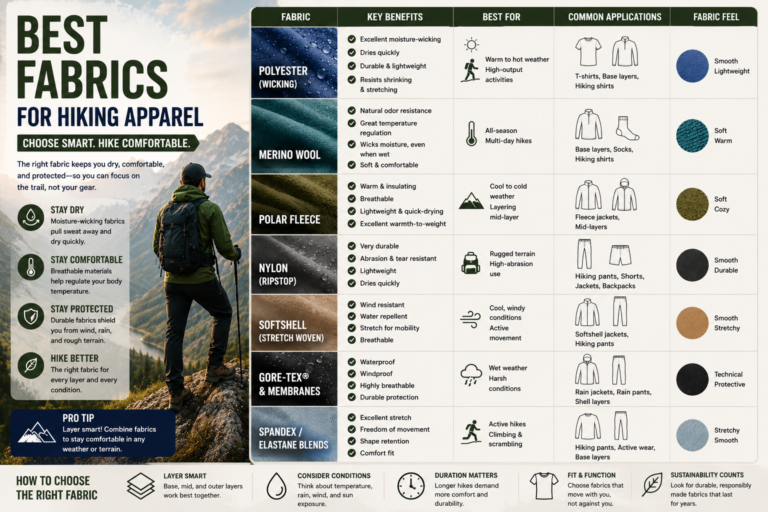
Fabric is the most crucial factor in choosing a hiking garment. If you get it right, the clothing will perform in all weather conditions, including wet and cold, as well as during prolonged physical activity. If you get it wrong, the garment will fail when it counts most – on a trail, far from shelter or in weather that’s changed.

This guide will cover the best fabrics for hiking apparel, including what they are, their performance, and what applications they suit best.

What makes a fabric suitable for hiking?

Clothing for hiking is subject to multiple demands that are not met by most fabrics. Fabrics must be able to dry quickly, manage moisture, move with the body over technical terrain and offer weather protection without being too heavy.

A specialist manufacturer of hiking clothing will understand these requirements and choose fabrics that perform well in actual trail conditions, rather than relying on textile specifications.

Merino Wool

Merino is one of hiking’s most versatile fabrics. Moisture-wicking, it draws sweat from the skin to release as vapour. It regulates the body temperature over a wide range, keeping you cool when exercising and warm while resting. It is also naturally odour resistant, which is important on long hikes when washing isn’t possible.

Merino’s main limitation is its durability. It is less resistant to abrasion than synthetic alternatives, which means that it will wear out faster around the collar edge, underarms and pack contact areas. Merino is a great choice for base layers, and lighter hiking layers.

The use of Polyester

The most popular synthetic fabric for hiking clothing is polyester. Its commercial dominance reflects its performance credentials. It is lightweight and dries quickly. It holds its shape even after repeated washings. And it accepts moisture-wicking treatment well.

Standard polyester fabric is not as comfortable against the skin as merino, but performance polyester fabrics designed for active wear close this gap. Polyester is the best fabric for outdoor T-shirts, hiking mid-layers and other garments that require moisture management.

Nylon

Nylon is stronger and more resistant to abrasion than polyester, making it an ideal fabric for trousers, shorts and other garments that come into contact with the trail surface, vegetation and equipment.

Nylon is also softer to the touch than polyester, which helps reduce friction on the skin when you’re moving for long periods of time. Hiking Pants made of nylon or nylon-spandex are durable, stretchy, and fast-drying, which is what multi-day trails require. The combination of lightweight and durability make nylon the best fabric for outdoor briefs during warm weather hiking.

Stretch fabrics — Polyester-Spandex blends and Nylon-Spandex blends

In technical hiking, freedom of movement is essential, especially for steep ascents and scrambling sections, where full hip and knee range is required. The limited stretch of pure nylon and polyester fabrics can limit movement when it is most important.

Addition of elastane, typically between four and fifteen percent, transforms rigid hiking fabrics into ones that move freely in all directions while returning to their original shape at the end of each movement cycle. Stretch nylon-spandex is the best choice for technical shorts and hiking trousers. Stretch polyester blends are ideal for outdoor cargo trousers, where both multi-directional movement as well as weight from pockets need to be controlled.

Softshell fabrics

Softshell fabrics, which are a stretch-woven outer and a fleece/jersey inner, provide a combination that includes wind resistance, light waterproof repellency, stretch, and breathability in one layer. Softshell is the perfect choice for hiking in cooler or more variable weather conditions, where a waterproof shell would be too heavy or warm.

Softshell Jackets offer enough protection from the weather for windy, dry and cold conditions. They are also stretchy and breathable enough to allow for sustained movement uphill. Softshell garments are produced by a manufacturer who has experience in bonded fabric. The bond between the layers of fabric remains intact even after repeated use on trails and washing.

Membranes Breathable and Waterproof Membrane

Waterproof breathable membranes offer the best protection for hiking in wet conditions, such as sustained rain, mountainous environments with high humidity, or multiday expeditions that require staying dry.

Waterproof clothing With a membrane and taped edges, it keeps out rain while allowing the body to exhale. These jackets are heavier than softshell and less breathable, but they are ideal for wet weather.

Fleece

The standard mid-layer for hiking is fleece. It’s warm, lightweight, quick-drying and works even when wet. It does not provide weather protection but is a very effective insulating layer when it’s cold.

Outdoor fleece is available in a range of weights, from lightweight grid fleece – ideal for high-output sports where breathability is more important than warmth – to heavyweight fleece – perfect for camping and static belays during cold weather. The weight of the fleece should be matched to your intended activity. This will prevent you from overheating and being under-insulated during rest.

Conclusion

Best Fabrics for Hiking Apparel are categorised into merino, polyester, nylon and stretch blends. Softshell, waterproof membranes and fleece all have their own performance requirements. To create hiking apparel that performs well on the trail, it is important to understand which fabrics are best for which applications and conditions.

Explore the range of manufacturing options for hiking clothing and find a production partner that is right for your brand.

FAQs

Which fabric is best for base layers for hiking?

 Wool for its comfort, odour-resistance, and temperature regulation. Synthetic polyester is better for durability and faster drying. The best choice will depend on your hiking situation.

Why are nylon trousers preferred to polyester trousers for hiking?

 Because nylon is more resistant to abrasion and has a softer handfeel, which is important for trousers, as they will be in contact with the trail surface, vegetation and equipment for a whole day.

What are the advantages of stretch fabrics for hiking clothing? 

They allow full ranges of movement on technical terrain, such as steep ascents and scrambling over rocks, without restricting hip and knee movements that trail users require.

Should I opt for a softshell jacket over a waterproof one for hiking?

 A softshell jacket is best for conditions that are cool, dry or slightly wet, and where stretchability and breathability are important. When heavy rain is expected, a waterproof jacket will provide the best protection.