
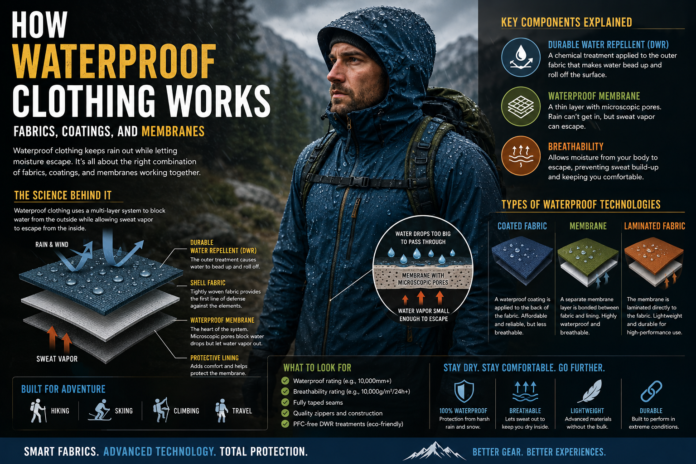
Have you worn a rain jacket and still ended up dripping wet and freezing? It may be because most clothing isn’t completely waterproof. How Waterproof Clothing Works uses smart technology to solve this issue. It utilizes clever coatings, extremely thin, and clever coatings called membranes. These smart fabrics use all these technologies to block rain and let your body heat evaporate. An example is a waterproof clothing manufacturer that uses all these technologies to create jackets and clothing for hikers and skiers. Knowing this helps you figure out what better gear to choose for your outdoor adventures.
The First Secret: Waterproof Fabrics
The first and most important part of making a rain jacket is choosing fabric. Choosing regular fabric like cotton or regular polyester makes a sponge for water. How Waterproof Clothing Works uses special fabrics that are tightly woven nylon. These fabrics can be polyester that have extremely small gaps between their threads that are so small water droplets cannot fit through. However, that fabric, tightly woven can still easily let water through, so for heavy rain, more is needed. A trusted hiking clothing manufacturer knows that the right fabric is the first step to a dry and happy hiker.
Coatings: A Shield on the Surface
Another method for making a jacket waterproof is adding a coating. This one is fairly easy because all you have to do is paint on a very thin layer of rubber. This makes a fabric waterproof. However, if the coating is too thick, heat and sweat cannot escape, so How Waterproof Clothing Works carefully balances this. The coating has to be just thick enough to stop rain, but thick enough to let water vapor escape.Many camping apparel manufacturer use a DWR (Durable Water Repellent) coating. This makes water bead up and roll off the surface, like water on a waxed car.
Membranes: The High-Tech Layer
For optimum defense, top-tier attire employs membranes. Membranes are ultra-thin sheets, usually ePTFE (expanded Polytetrafluoroethylene). This layer contains an astounding number of pores, reaching the billions, per square inch. The wizardry of How Waterproof Clothing Works occurs here. The drops of liquid water are too large to permeate, but those membranes’ pores are large enough to let water vapor (your sweat) escape. This phenomenon is termed “breathable waterproofing. Top ski wear manufacturer love membranes because skiers stay dry from snow outside and sweat inside.
The Difference Between Waterproof and Water-Resistant
Distinguishing “water Resistant” and “Waterproof” is very imperative. Water Resistant attire can withstand a light drizzle but for the truly stormy weather, How Waterproof Clothing Works relies on Waterproof Clothing, which can sustain heavy rain for long periods of time without the fabric leaking. Water resistant jackets can have a very simple coating, while waterproof jackets can have membranes which are thoroughly tested and all the seams are sealed. If you need gear for tough conditions, look for a true waterproof jackets manufacturer. They build jackets that pass real rain tests.
How Sealed Seams Complete the Job
How Waterproof Clothing Works is dependent on sealed seams, for the best waterproof fabric is still useless if water is permitted to enter via the holes from stitching. Every single hole made by a needle can be a possible leak. There is a tap which is special, and manufacturers glue that over all the seams which are on the insides. When rain hits a seam on your shoulder, that seam is still waterproof, and the rain will simply run off. A professional outdoor jackets manufacturer will always seam-seal their products. Without this step, your jacket is not truly waterproof.
Caring for Your Waterproof Gear
Your waterproof gear can lose its waterproofing without the right care. Oils and dirt can ruin the waterproofing. A simple tip for keeping your gear working: Use a tech wash to wash your gear and don’t use normal detergent to help the waterproofing stay. When the DWR coating wears off, the water will stop beating and will start soaking into the outer fabric. This will make the fabric heavy and cold. This also can be remedied.A proper hardshell jackets manufacturer will tell you to re-apply a DWR spray after cleaning. Then your jacket will work like new again.
Different Types for Different Activities
Not all waterproof clothing is the same. Manufacturers build different types for different jobs. For high-output activities like running or climbing, you need very breathable membranes. For sitting in a rainy deer stand, you need durable, quiet fabrics. For example, a hunting apparel manufacturer focuses on silent, rugged waterproofing. A tactical outdoor apparel manufacturer might prioritize abrasion resistance. So, when you shop, think about what you will do in the rain. The right type for a bike ride is wrong for a fishing trip.
Conclusion
Now you know the inner workings of waterproof clothing, you know about the coatings, the membranes, sealed seams, and fabric closeness. You also now know that clothing that is water-resistant will not be useful when it comes to a heavy downfall and that taking care of your gear is important in making the gear last. You can know ask good question when purchasing a new rain jacket. Look for the makers that utilize these concepts and trust them. A good rainwear manufacturer will gladly help you understand their products. Now you can be comfortable and dry on your newly equipped outdoor adventures.
FAQs
How is a waterproof membrane different from a coating?
A coating is a solid layer on the fabric that can trap heat. A membrane is a thin, porous film that blocks liquid water but lets water vapor escape, making it more breathable.
Can I make any jacket waterproof?
You can add a DWR spray to improve water resistance, but true waterproofing requires sealed seams and a membrane or heavy coating. Most regular jackets cannot become fully waterproof.
Is waterproof clothing also windproof?
Yes, almost always. If a fabric can block liquid water, it can easily block wind, which is made of much smaller gas molecules. So waterproof gear is naturally windproof as well.


