Home Blog Page 20

Case Study:Launching Yoga Wear Collection Successfully

Yoga is no exception. The majority of people who launch a yoga clothing brand have a vision for the perfect yoga apparel and the desire to make that vision a reality.

This type of motivation, while important, is not sufficient to create a successful launching yoga wear collection line. This case study explains the steps involved in turning an idea into a successful yoga line.

What All Started

The brief stated that launching a yoga wear collection was ready for a teacher with a boutique and vet clientele. She knew about the fabrics which were uncomfortable, and the frontal and unhelpful designs. She had no idea how to make the designs come to life.

The process starts here: with a clear brief and not in a factory.

This instructor was very diligent. She specified the feel she desired from the fabric. She specified the level of compression and coverage she desired for each piece. The color palette. The sizes she would like to offer. The retail price she wanted to achieve. Before contacting any manufacturer, she documented everything and wrote down her instructions.

Selecting the right yoga wear manufacturer

The first thing to do is choose the best yoga wear manufacturer. Leggings can be made by many factories. The manufacturer must be able to produce performance yoga wear.

manufacturer is familiar with four-way stretch fabric, squat proof, flat seam construction and finishing details to help a garment meet the demands of yoga practice.

One factory stood out as the clear winner after sampling three factories. The factory had a good understanding of fabrics, consistently high sample quality and was transparent from the start.

Fabric Selection and Development

Fabric was the key component in this collection. The brief called for a mid-weight fabric with the best balance between stretch and recovery. The fabric needed to be moisture wicking, smooth and resistant to piling from washing.

One of the six fabric options included a recycled polyester/spandex blend. The fabric met all technical requirements and the recycled material was in line with the brand’s sustainability goals and values.

The activewear company managed the entire fabric testing and sourcing process, providing GSM, stretch recovery test results, and washability test reports, before any fabric could be approved for mass production.

Tech Pack Development and Sampling

The fabric was chosen, and now it was time for the design of the tech pack. Each item in the collection, including three different styles of leggings and two sports bras as well as a longline coat, was meticulously detailed. The notes included information on the type and placement of stitches, the construction of the waistband and the placement of branding.

Two problems were found in the first batch of samples. When the fabric was stretched, the waistband of the high-waisted pants rolled. One sports bra cup was missing support. The tech pack was also responsible. The next batch of samples was corrected to address each issue.

The second round of samples approved all six styles, making the entire sampling process five-weeks long. This is a very rapid process for a six piece technical collection.

Bulk Production and Quality Control

Eight weeks was the period of bulk production. The order consisted of six styles in three colorways and 1,800 total units.

Three times quality control is performed during production. First, the fabric was checked upon arrival to ensure that it had the correct GSM and color. The second time was when the seams of the garment were checked during production. Before the units are packed, the final quality inspection is done. The fabric is checked to ensure the correct finish and labeling.

During the final inspection, two units were rejected due to incorrectly placed labels. The remaining units were passed.

Delivery and Launch

Six days prior to the launch date, the collection arrived. Packaging was consistent, clean and branded for each unit. The first colorway was sold out within three weeks.

The launch of the yoga wear collection was not prepared by chance. Preparation was key. The right manufacturer of yoga wear was selected, and the samples were excellent. The quality control process continued all the way to delivery.

Now, the brand has also placed two orders and is developing a second yoga wear collection with the same manufacturer.

Image Placement: After This Section Image: Stacked boxes from the yogawear collection, with each box displaying the brand and consistent packaging. Ready for dispatch. Alt Text: The entire collection of yogawear packaged and ready to be delivered at the launch.

conclusion

The most important thing you can do to make your launch successful is to have the right processes in place. From the briefing to the bulk order, each step builds on the previous one.

Explore the options for yogawear manufacturing and find a partner to help you with your project.

FAQs

How long does it take a launching yoga wear collection?

From brief to delivery, most collections take between 16 and 24 weeks, depending on complexity, number of styles, and sampling rounds required.

How many sample rounds should I expect?

Most brands go through two to three rounds. Technical garments like launching yoga wear collection sometimes require more due to fit and construction complexity.

What fabrics work best for launching yoga wear collection?

Recycled polyester and spandex blends are popular for their stretch, moisture-wicking properties, and sustainability credentials.

Do I need a tech pack before approaching a launching yoga wear collection?

es. A tech pack gives the factory a clear reference for every garment. Without one, consistent production is very difficult to achieve.
10 Most Popular Knitwear Styles Trending in Global Fashion

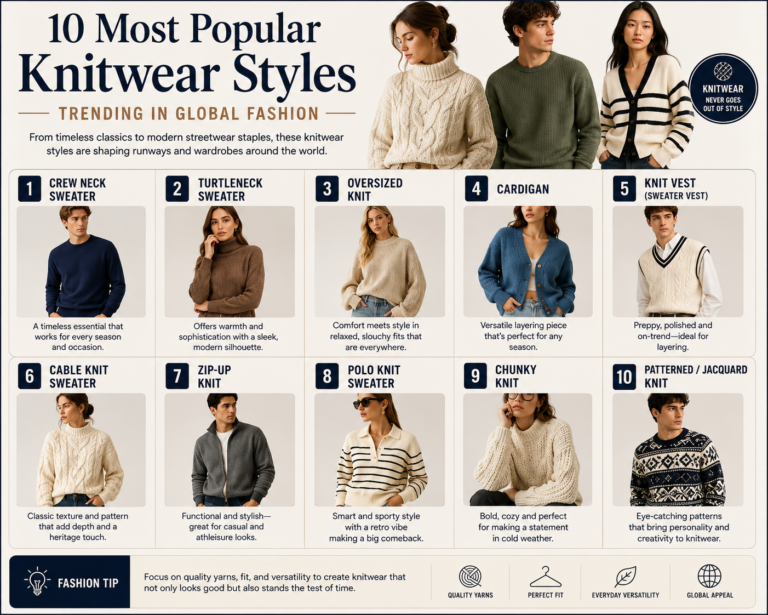
Knitwear has never been more commercially relevant. From luxury runways to high-street retail and direct-to-consumer fashion brands — knitted pieces are driving strong sales across every market segment and season. But knowing exactly which 10 most popular knitwear styles are trending globally helps brands invest in the right products rather than producing pieces that miss their target market entirely. Here’s your complete guide to what’s selling and why.

Classic Crew Neck Sweater — The Perennial Bestseller

The crew neck sweater is knitwear’s equivalent of the white t-shirt a timeless foundational piece that sells consistently regardless of season or trend cycle. Clean neckline, ribbed cuffs and hem, and comfortable body its simplicity drives universal appeal across every demographic your brand might target.

Merino wool and cotton-acrylic blends both perform well for crew neck sweaters merino for premium positioning and cotton blends for accessible mid-range collections. Every serious knitwear manufacturer starts here and for good commercial reason.

Oversized Knit Sweater — Contemporary and Cozy

Oversized knit sweaters dominate contemporary casual fashion combining the warmth and texture of knitwear with the relaxed silhouette that modern customers consistently prefer. Chunky knit constructions, dropped shoulders, and extended body lengths create that deliberately slouchy aesthetic that photographs beautifully and sells powerfully across social media-driven fashion brands.

This style pairs naturally with joggers and wide-leg trousers creating effortlessly complete outfit combinations that increase average order value when marketed as intentional looks rather than individual pieces.

Cardigan — Versatile Layering Essential

Cardigans are experiencing a significant fashion renaissance moving firmly from grandmother’s wardrobe into contemporary fashion territory. Open-front construction, button or snap fastenings, and varying lengths create a layering piece that works across casual, smart-casual, and even semi-formal styling contexts simultaneously.

Oversized boyfriend cardigans, cropped styles, and longline versions all trend strongly in 2025 — each serving different customer aesthetics within the same broad knitwear category. Brands building casual wear collections find cardigans among their strongest performing autumn and winter products consistently.

Turtleneck Sweater — Sleek and Sophisticated

Turtleneck sweaters carry instant sophistication the high neck creates a clean, architectural silhouette that elevates any outfit it anchors. They layer brilliantly under fashion jackets and coats making them genuinely useful across multiple styling contexts rather than purely standalone statement pieces.

Fine gauge merino or cashmere blends work beautifully for turtlenecks — providing the smooth, fitted appearance that makes this style look intentional and premium rather than bulky and uncomfortable.

Knit Co-ord Set — The Complete Outfit Solution

Knit co-ord sets — matching knit tops and bottoms in coordinated yarn weights and colorways are one of the strongest performing knitwear products across global fashion markets right now. They offer customers a complete, effortlessly styled outfit in one purchase — driving higher average order values and significantly stronger customer satisfaction scores.

Brands already producing co-ord sets in woven or jersey fabrics find knit co-ords a natural seasonal extension — serving the same customer with warmer, more textured options as temperatures drop across their target markets.

Polo Neck Knit — Smart-Casual Crossover

Polo neck knits — sometimes called mock neck or funnel neck sweaters sit between a crew neck and a full turtleneck in height. They carry a smart, considered aesthetic that suits professional casual environments without requiring the full commitment of a high turtleneck collar.

This style performs consistently across men’s fashion specifically where the smart-casual crossover appeal makes it a reliable seller for brands targeting professional male customers who want polished casualwear options for workplace and social occasions alike.

Knit Vest — Fashion’s Favourite Layering Piece

Knit vests have moved from niche vintage revival into mainstream fashion dominance and they show no signs of slowing in 2025. Worn over collared shirts, longline tees, or as standalone tops with high-waisted bottoms their layering versatility makes them genuinely multi-occasion pieces that justify strong retail prices.

Ribbed constructions in fine to mid-gauge yarn work best for vest styles providing structure and shape without the bulk that heavier constructions add to a sleeveless silhouette.

Chunky Cable Knit Sweater — Textural Impact and Heritage Appeal

Cable knit sweaters carry immediate visual impact through their distinctive twisted rope patterns worked directly into the knit structure. The texture communicates craftsmanship, quality, and heritage in a way that plain knit constructions simply cannot replicate — supporting premium price positioning across lifestyle, outdoor, and heritage fashion markets.

Chunky cable knits photograph exceptionally well — their textural depth creates visually rich product images that drive strong engagement across e-commerce platforms and social media channels where fashion brands build their audiences and drive conversion.

Knit Hoodie — Where Streetwear Meets Knitwear

Knit hoodies combine the familiar silhouette of a classic hoodie with knit fabric construction — creating a hybrid piece that carries streetwear credibility with a premium, artisanal aesthetic that woven fleece hoodies cannot deliver. Fine-gauge knit constructions in cotton or merino create lightweight hoodies perfect for transitional season wear.

Brands building streetwear collections find knit hoodies a strong premium addition — attracting customers who want the streetwear silhouette in a more elevated, textured material that differentiates their wardrobe from standard fleece alternatives everyone else is wearing.

Longline Knit Cardigan — Dramatic and Wearable

Longline cardigans extend to mid-thigh or knee length — creating a dramatic, coat-like silhouette that serves as both layering piece and outerwear alternative during transitional seasons. Open-front construction makes them easy to style over virtually any outfit — and their length provides practical warmth coverage that shorter knitwear styles cannot match.

This style performs particularly strongly in modest fashion markets — the extended length providing natural coverage that works beautifully within Islamic fashion collections and broader modest dressing consumer segments globally.

Building Your Knitwear Collection Strategically

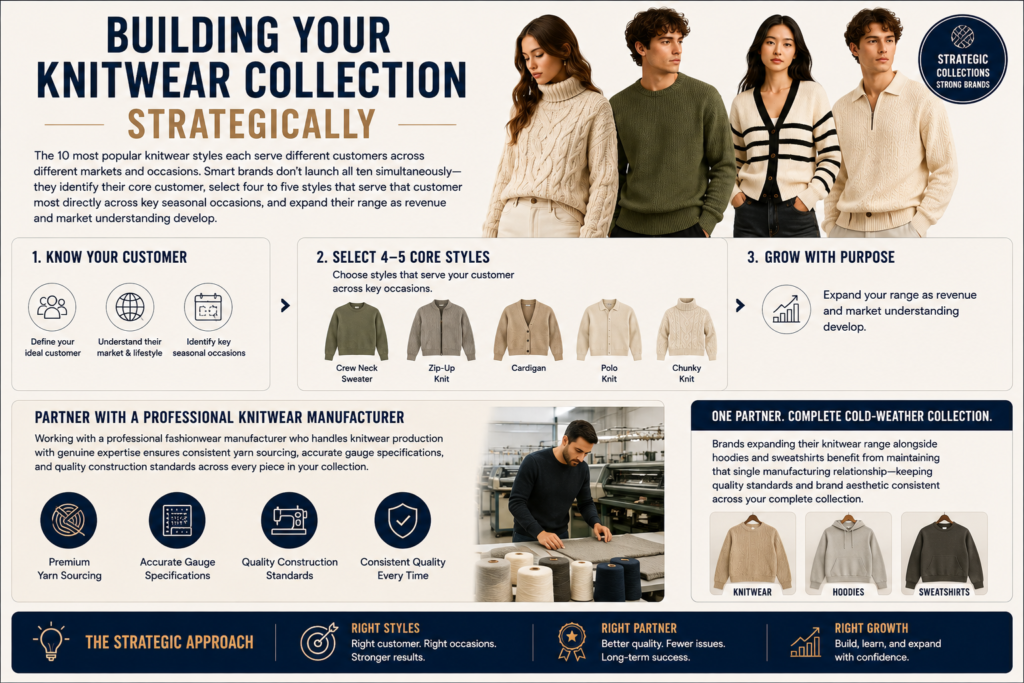
Professional knitwear collection strategy infographic showing how fashion brands can build a focused knitwear range with core styles, seasonal planning, and professional manufacturing support.
Smart knitwear brands grow strategically — starting with core customer-focused styles and expanding collections with consistent quality and manufacturing expertise.

The 10 most popular knitwear styles each serve different customers across different markets and occasions. Smart brands don’t launch all ten simultaneously — they identify their core customer, select four to five styles that serve that customer most directly across key seasonal occasions, and expand their range as revenue and market understanding develop.

Working with a professional fashionwear manufacturer who handles knitwear production with genuine expertise ensures consistent yarn sourcing, accurate gauge specifications, and quality construction standards across every piece in your collection. Brands expanding their knitwear range alongside hoodies and sweatshirts benefit from maintaining that single manufacturing relationship — keeping quality standards and brand aesthetic consistent across your complete cold-weather collection.

Conclusion

Understanding the 10 most popular knitwear styles trending in global fashion gives your brand the commercial knowledge to build collections that genuinely serve your target customer across every season. Crew necks anchor the range. Oversized styles drive contemporary appeal. Co-ords increase order values. Cable knits justify premium positioning. Knit vests and cardigans add layering versatility. Cover the right combination for your specific market — partner with the right manufacturer — and your knitwear collection becomes one of the most reliable, margin-strong categories your brand produces every single season.

FAQs

Which knitwear style sells most consistently across global markets?

Classic crew neck sweaters and cardigans consistently outperform other knitwear styles globally — their universal appeal across demographics and styling versatility drive reliable year-round and seasonal sales for virtually every fashion brand.

What yarn types work best for fashion knitwear manufacturing?

Merino wool suits premium and luxury positioning. Cotton and cotton-acrylic blends suit accessible mid-range collections. Cashmere blends support ultra-premium pricing. Acrylic blends offer durability and color vibrancy at entry price points.

Can all knitwear styles be produced under a private label?

Yes. All knitwear styles support full private label customization including custom yarn weights, stitch patterns, colors, labels, and packaging — giving your brand complete creative control over every piece in your collection.

How many knitwear styles should a new fashion brand launch with initially?

Start with three to four core styles — typically a crew neck, an oversized sweater, a cardigan, and one trend-driven style relevant to your specific market. This covers your broadest seasonal customer base without overextending your initial production investment.

Why Waxed Leather Aprons Are Gaining Popularity

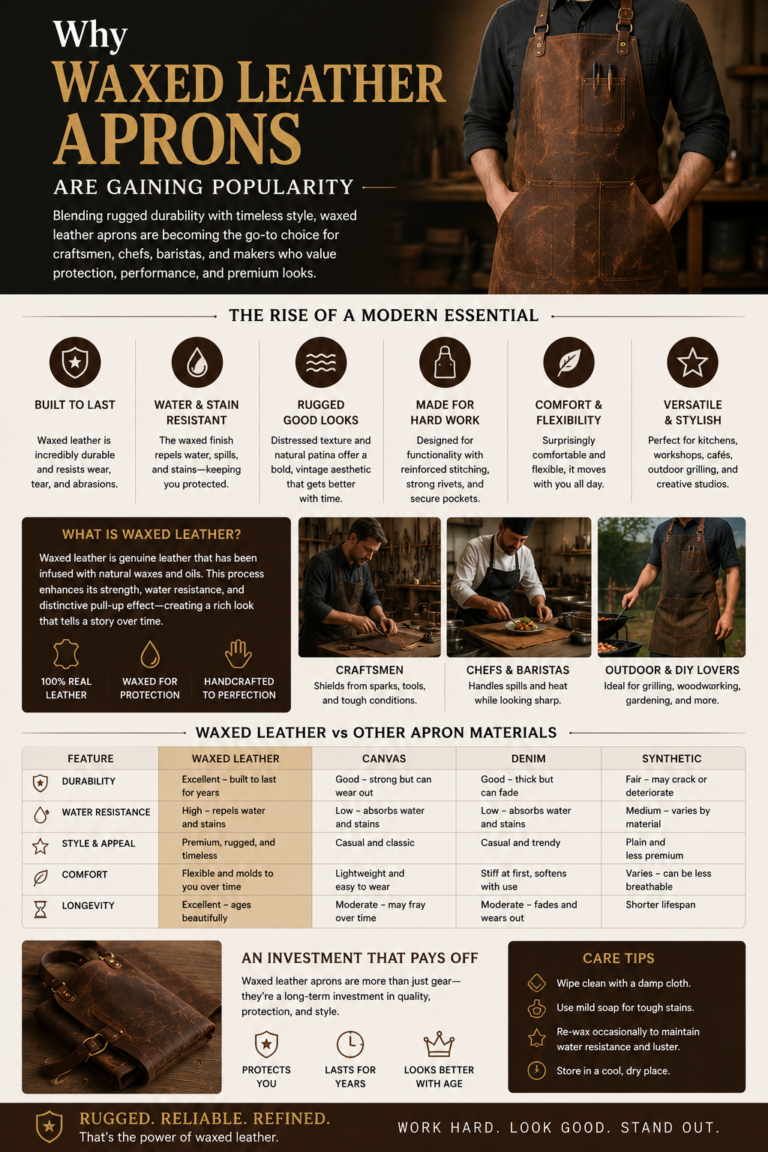
Workwear has evolved. What use to serve utility alone has become functional and fashionable. There is a unique balance of utility and aesthetics in waxed leather aprons. Because of this, waxed leather aprons have been gaining popularity in various industries. Waxed leather aprons can be spotted from craft breweries to upscale barbershops.

What Makes Waxed Leather Different?

For waxed leather, natural waxes (like beeswax) infiltrate the leather during an added treatment. This technique completely alters the properties of the leather.

Once the waxed leather is completed, it is enough to provide protection to the entire surface. It not only strengthens and protects the leather from common abrasions, but it also makes it more water- and stain-resistant. It also makes the leather more aesthetically pleasing by giving a leather a unique deep, matte finish that adds character and improves with age.

Waxed leather is also different from standard leather due to its patina. This leather absorbs the scrapes and marks from daily use, without losing its beautiful character.

Why Industries Are Choosing Waxed Leather Aprons

Multiple industries are switching to waxed leather aprons for different reasons.

Hospitality and Food Service It’s common for bartenders, baristas, and chefs to constantly be around liquids. Leather that has been waxed spares them the trouble of constantly scrubbing their aprons to maintain a clean and professional look during busy shifts. A well-crafted leather apron in waxed finish photographs beautifully too — which matters enormously for brand-conscious hospitality businesses.

Craft and Artisan Trades Woodworkers, blacksmiths, and leatherworkers require durable aprons due to the wear and tear caused by their specific trades. Waxed leather withstands tool and environmental exposure in workshops better than regular leather and canvas.

Barbershops and Grooming Studios Leather aprons have become a part of barbering brand identities. Waxed leather aligns with the caregiving philosophy of modern barbers and serves the growing customer base that prefers an entire brand experience through the use of multiple senses.

Lifestyle and Retail Brands The utility of waxed leather aprons as workwear has resulted in a merging with lifestyle retail. Brands that sell leather bags and leather belts have begun to list waxed aprons in their inventories — forming comprehensive leather lifestyle assortments to entice design-conscious shoppers.

The Key Benefits of Waxed Leather Aprons

  • Water and stain resistance — spills bead separates from the surface and can be easily wiped clean
  • Enhanced durability — leather is protected from surface abrasion by the wax
  • Natural patina development — the apron’s individuality and overall appearance improves with age
  • Premium aesthetic — the finish of the of leather is both visually pleasing and professional
  • Low maintenance — the apron’s appearance and performance is preserved by routine waxing

Branding Potential of Waxed Leather Aprons

Some leather takes soak in branding techniques. There are some techniques to place logos on waxed surfaces. These techniques include embossing and debossing. The texture of waxed leather gives a branded apron a feel that waxed canvas and synthetic leather can’t provide.

For brands building complete leather product lines alongside leather jackets and leather vests, waxed leather aprons create a strong visual consistency that ties the entire collection together beautifully.

Working with a professional leather apparel manufacturer ensures the waxing treatment is applied correctly and consistently — so every apron in your order delivers the same premium finish your brand promises.

Conclusion

The increasing appeal of leather aprons, and especially waxed leather styles, shows how attitudes towards workwear are changing as a result of the changing concepts of work and working. Functional workwear is no longer sufficient. Workwear is an extension of the creative process, and workwear should be safe, perform well, look great, and effectively communicate a brand message. Waxed leather aprons accomplish all those goals. As other sectors see that value, the demand will increase. For that reason, the time to add waxed leather aprons to your product line is now.

FAQs

What is the re-waxing frequency of waxed leather aprons?

Depending on frequency of use and maintenance, most waxed leather aprons should be re-waxed every 6-12 months.

Are logos able to be branded/written on waxed leather aprons and how?

Absolutely. Branding activity such as embossing and debossing are very effective on waxed Leather and results in a sharp and clear branding logo and stamp.

Why is the cost of purchasing waxed leather aprons and accessories higher?

Due to a price increase on the material, waxed leather does cost a bit more, but the greater performance and great looking finish make it a good long term investment.

Which trades and professions really benefit from flexible waxed leather?

Waxed leather is very advantageous for the hospitality, craft trades, barbering and lifestyle retail businesses, as there is an emphasis on appearance and performance.

Why Full Grain Leather Belts Outlast Every Other Type on the Market

Retail leather belts are not the same. In almost any shop, you can find belts stamped with “genuine leather” and placed next to full grain selections for different prices. “Genuine leather” doesn’t mean what most think it means and it literally shows. Monthly usage should be considered when choosing a belt. Full grain leather belts are less common but the value for longevity is reflected in the price. Full grain options will save you the cost and time spent in refined shopping.

What Is Full Grain Leather?

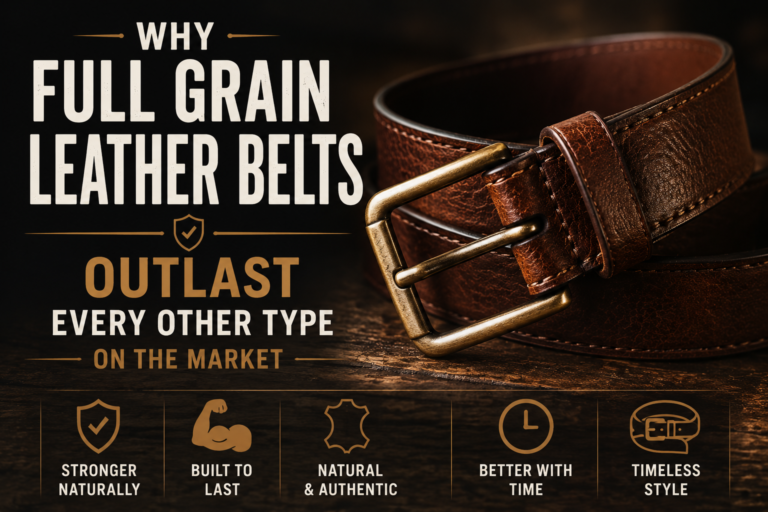
Full grain leather comes from the outermost layer of animal hides. Because of its location, this leather is the strongest and densest. One thing that separates full grain leather from other leathers is that the grain is not sanded, buffed, or corrected to hide the natural imperfections, and because of that, full grain leather has natural imperfections. Those imperfections result in cheaper leather, but in full grain leather, they demonstrate its superiority.

Because full grain leather’s grain has not been altered or sanded, all of its original fiber’s integrity are intact. There are no compromises in quality or leather. This is leather in the strongest and most durable form.

Why Full Grain Leather Belts Last Longer

That fiber structure means full-grain leather is tough and durable. Here’s what that means for you.

It stays put. Full-grain leather maintains structural integrity, even under tension. It won’t distort or loosen at the buckle holes, the most common failure point for lower-grade belts.

Cracked leather will run and discolor. Full-grain leather, however, improves with age, developing a rich, deep patina. After years of wear, full-grain leather looks better instead of worse.

It doesn’t warp or break down from humidity. The natural grain surface of full-grain leather manages moisture better than corrected grain or bonded leather, which absorb moisture poorly and deteriorate quickly.

Full grain leather handles the abrasion of belt buckles and loops better than other processed leathers. It holds up against friction from everyday surfaces better than processed alternatives.

Full Grain vs Other Leather Grades

  • Full grain leather is the highest quality option; the most durable, develops gorgeous patina over time
  • Top grain leather is sanded on the surface; may feel softer but lacks on long-term durability
  • Genuine leather goes to lower layers and is processed a lot; it may look good at first, but goes down hill quickly
  • Bonded leather goes to scraps that are glued together; this option peels and cracks almost instantly

For all options, the differences in quality show during the first year of use; Correctly maintained Full grain leather lasts by decades.

Why Fashion and Accessory Brands Choose Full Grain

For brands creating premium leather accessories, nothing builds customer trust and repeat sales quite like full grain. A customer who buys a full grain belt from you and wears it for a decade is your most loyal supporter.

A skilled leather belts manufacturer works with full grain hides specifically because the material holds hardware securely, stitches cleanly, and finishes beautifully — producing a final product that reflects genuine craftsmanship rather than cost-cutting.

Brands that carry full grain leather bags and leather gloves alongside belts create a consistent quality message across their entire accessory range — something customers notice and reward with brand loyalty.

Building a Full Grain Leather Belt Collection

Full grain leather should be the anchor for the premium tier in your leather belt collection. Pair it with excellent quality hardware, stitching and widths. Dress width for formal styles and wider for casual and workwear markets.

Working with an experienced leather apparel manufacturer ensures consistent hide sourcing, proper thickness selection, and quality finishing across every belt in your production run. Brands building complete leather collections that include leather jackets and leather pants benefit from positioning full grain belts as the natural finishing piece — completing the outfit and reinforcing the brand’s quality commitment at every price point.

Conclusion

Full grain leather belts are stronger than any other belts because they use the strongest part of the leather hide. These belts do not stretch, develop a beautiful patina, and age gracefully rather than wear. Full grain leather should be the choice for anyone wanting the best value because their belts last and for businesses wanting to retain customers.

FAQs

How long do full grain leather belts typically last?

Full grain leather belts surpassed the life span of top grain and genuine leather belts by lasting an impressive 10-30 years with the correct maintenance.

How do I care for a full grain leather belt?

Care instructions are simple; clean with a damp rag, apply leather conditioner every few months, and keep in a cool and dry climate away from the sun. Store the belt flat or rolled.

Is full grain leather worth the higher price?

Yes. Because of the durability and longevity of full grain leather belts, the cost is actually less than cheaper belts with a life span up to 3 years.

Do full grain leather belts have branding options?

Yes, they can easily be branded by debossing into the leather, which creates a clear long lasting imprint. of your logo.

Top 10 Types of Leather Belts Trending in Fashion and Workwear

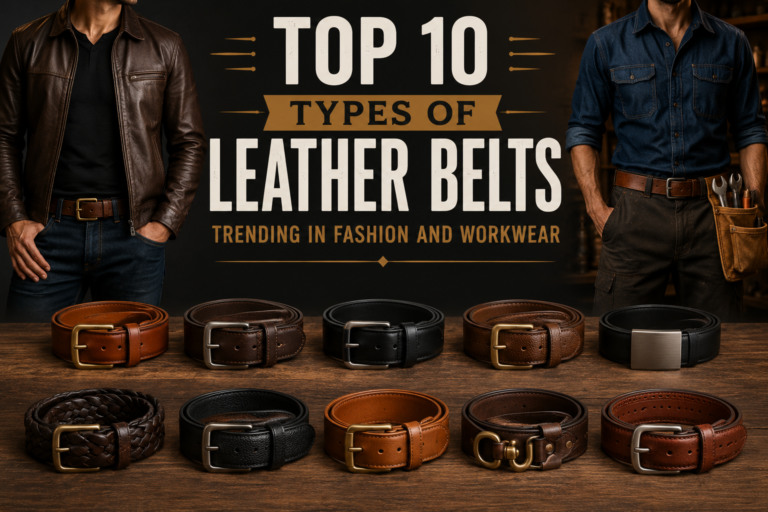
Belts are no longer just functional. Nowadays, they support outfits, showcase personal style, and impact brand reputation in the fashion and workwear markets. With many styles of belts available, having an understanding of the types of leather belts is essential for your brand. A competitive advantage is what this knowledge provides your brand. Here are the top ten styles trending today.

Classic Dress Belt

The belt is a classic piece of clothing that will never go out of style. They can be worn with formal pants or tailored leather pants. They are simple belted pants that will always be in style. A dress belt is simple. This belt does not exceed one-half of an inch. It is a simple belt. It should be paired with a suit or dress pants. They are timeless. They are a classic piece of fashion. It goes with everything. This is a great first piece in a leather belt collection. They will always be in style no matter the season.

Casual Leather Belt

These belts are slightly wider than dress belts and have a more casual finish. These casual belts are designed to wear with jeans, chinos, and typical casual wear. They can be expressed in more creative ways and have various detail stitching, buckles, and different leather textures. Because of this they are popular among a wider variety of customers.

Western Leather Belt

Western belts are wide and bold, highlighting attention to detail. Oversized decorative buckles and tooled leather patterns give them a distinct look. Western styles are rapidly popularizing in the fashion and lifestyle industries. This is especially true for brands with an American or country-inspired appeal.

Braided Leather Belt

Braided belts use a series of thin interconnected strips of leather, allowing for a lot of flexibility and a great range of visual options for leather accessories. The lack of rigid holes in the design and the adjustable nature of these belts give them a lot of popularity and versatility in many styles of fashion. Braided belts complement many of the more casual styles of belts and are great craftsmanship for photography.

Double Ring Belt

The double ring belt uses two metal rings instead of a traditional buckle — threading leather through both rings to secure the fit. This style carries strong fashion credibility right now, particularly in women’s fashion and contemporary streetwear. It pairs naturally with leather skirts and tailored leather trousers for a complete, cohesive look.

Reversible Leather Belt

Reversible belts can be either two toned or two finished. A good example would be a black side and brown side. A rotatable buckle locks the two sides. It provides a good combo of price and value for the customer, and is a best-seller for brands aimed at the customer who wants value and ease.

Garrison Belt

The garrison belt is wide, thick, and built for durability. Originally a military style, it has crossed firmly into workwear and fashion markets. Garrison belts suit heavy-duty work environments and rugged lifestyle aesthetics — pairing well with leather aprons and workwear collections targeting trades and craft industries.

Studded Leather Belt

Studded belts add metal hardware — studs, spikes, or decorative rivets — across the leather surface. They carry strong rock, punk, and streetwear energy that resonates powerfully with fashion-forward youth markets. Studded styles pair well with leather jackets and create strong visual impact in product photography and social media content.

Wide Statement Belt

Typically measuring three to four inches wide, statement belts have the potential to cinch at the waist and define midlines. These belts can be worn on top of dresses, coats, or bulky tops, serving as both an accessory and an outfit anchor. They are becoming increasingly popular in women’s fashion and the luxury lifestyle markets.

Tooled Leather Belt

Handmade tooled leather belts are belts that have style imprints pressed into them. Some customers like to draw geometric shapes, flowery shapes, and some even like to do custom art. Many customers, for unique and handmade, desire more than boring and mass-produced belts.

Building Your Leather Belt Collection

The strongest leather belt ranges don’t pick one style — they build across multiple categories to serve different customers and occasions. A reliable leather belts manufacturer helps you develop diverse styles with consistent quality, proper hardware sourcing, and precise finishing across every piece.

Brands expanding beyond belts into leather bags and leather gloves create complete leather accessory collections that increase customer spend and strengthen overall brand positioning. Working with an experienced leather apparel manufacturer ensures every product in your range reflects the same quality standards your customers expect.

Conclusion

Your brand gets the insight to build collections that really sell by knowing the kinds of leather belts that are appearing in both fashion and workwear. From traditional dress belts to statement studded belts — every type has a customer and a market segment. If you cover the correct offerings, get quality leather, and find a good manufacturer, then your collection of leather belts will be a dependable source of sales for your brand every season.

FAQs

What type of leather belt has the most universal appeal?

Classic dress and casual leather belts have the most widespread market appeal. They are the most popular leather belts in the market because they are evergreen and don’t go out of style with the seasons.

Fashion belts are often made with what widths?

Dress belts are commonly seen in the range of 1 to 1.5 inches. Casual styles are often 1.5 to 2 inches. Also, currently trending are wide statement belts, popular in women’s fashion, that are made with widths of 3 to 4 inches.

Are all these belt styles available for customization for a private label line?

Absolutely. These styles are all customizable for a line of branded accessories. Custom buckles, branded packaging, and private label tags are all examples of the personalization that can be used for your collection.

How do I determine what belt styles to introduce first for a new brand?

Include a classic style dress belt, a casual belt, and a fashion forward style belt for example a braided or double-ring belt. This allows your collection to be core-driven and forward thinking right from the beginning.

Why Skinny Leather Belts Are Dominating Women’s Fashion Trends

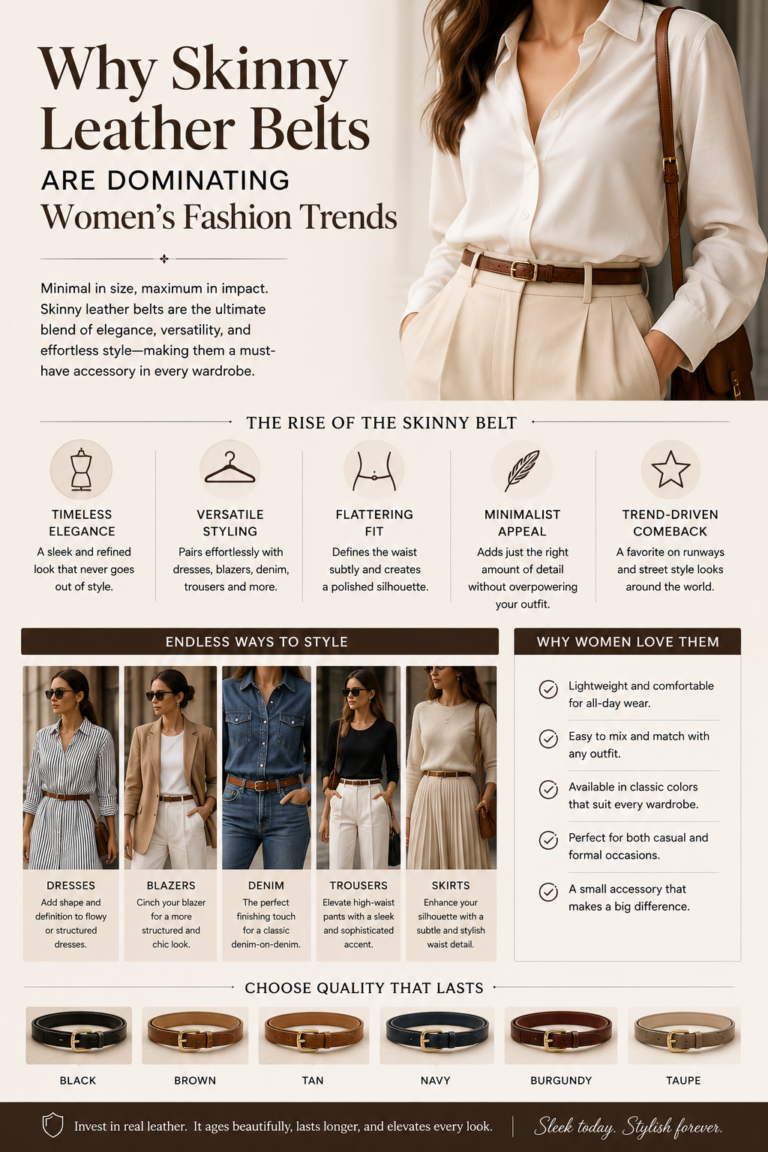
Fashion accessories are always changing. Some styles are so popular that they change entire categories. Right now, skinny leather belts do just that. Skinny leather belts have been appearing on runways and social media for years. They are now a staple in everyday wardrobes. This slim belt is a must-have accessory for women, and brands should pay attention.

What Makes Skinny Leather Belts So Appealing?

Fashion accessories are always changing. Some styles are timeless.

They are unique to fashion. The belts add definition to an outfit without overwhelming it. The cinching of the waist creates visual proportion and finishes a look in a quiet confident manner.

Fashion customers today are looking for subtle, yet powerful power. Not every woman wants a statement belt that screams for attention. She sometimes wants a thin leather detail to elevate her outfit, without overwhelming it. And skinny leather belts do that every time.

How Skinny Leather Belts Style Across Different Outfits

Their versatility is the real reason why skinny leather belts dominate women’s fashion. The belts are versatile enough to be worn with more combinations of outfits than any other style.

They pair beautifully with:

  • High-waisted trousers and tailored leather pants for sharp, polished looks
  • Midi and mini leather skirts for a sleek, cohesive leather-on-leather aesthetic
  • Oversized blazers and longline coats to define the waist without bulk
  • Flowy dresses and knitwear where structure and softness balance beautifully
  • Denim and casual separates for an elevated everyday look

That range of styling options makes skinny leather belts genuinely useful accessories — not just occasional statement pieces collecting dust in a drawer.

The Role of Social Media in Driving Skinny Belt Popularity

The skinny leather belt has been a trend that is gaining traction on social media. Stylers and fashion influencers use them in outfits because they look great. This slim leather creates a clean, visual distinction in photos — it draws the eye to the waist naturally and gives the image that hourglass shape that is popular on Instagram and Pinterest.

The more social media posts that feature an accessory with this level of style and photography, the faster it will drive consumer demand.

Why Fashion Brands Should Add Skinny Leather Belts Now

Brands are entering the category at a good time. The consumer demand for this product is increasing, there are many styling options, and it has healthy margins if made from quality leather.

A professional leather belts manufacturer produces skinny belt styles with precise edge finishing, quality hardware, and consistent leather thickness — all critical details at this narrow width where any inconsistency shows immediately.

Brands building complete women’s leather accessory ranges can pair skinny belts naturally with leather bags and leather gloves — creating shoppable outfit combinations that increase average order value and strengthen overall brand cohesion.

Material and Hardware Choices That Matter

At skinny widths, material quality becomes even more critical than in wider belt styles. The leather must be supple enough to lie flat, strong enough to hold its shape, and thin enough to buckle cleanly without bulk.

Lambskin and soft top grain leathers work best for skinny styles. Hardware should be proportional — delicate pin buckles, minimal O-rings, or slim roller buckles in gold, silver, or matte black finishes. Working with an experienced leather apparel manufacturer ensures material selection and hardware pairing are handled with the precision this style demands.

Conclusion

Women’s skinny leather belts have become a fashion staple because of their versatility, visual impact and styling functionality. These belts are versatile, look great in photos, and can be worn with a variety of outfits. They appeal to all types of customers, from the casual every day dresser to those who follow fashion trends. Skinny leather belts are a smart product to add for brands that want to capitalize on the growing demand in accessory markets.

FAQs

What width qualifies as a skinny leather belt?

Skinny leather belts typically measure between half an inch and one inch wide — noticeably slimmer than standard casual or dress belt widths.

What leather works best for skinny belt styles?

Lambskin and soft top grain leather work best — they are supple enough to buckle cleanly at narrow widths without creating unwanted bulk or stiffness.

Can skinny leather belts be customized with brand logos?

Yes. Small embossed logos on the tail end or inner surface work well — keeping branding subtle and proportional to the belt’s slim profile.

Are skinny leather belts suitable for all body types?

Yes. Skinny belts are universally flattering — they define the waist without adding visual bulk, making them a comfortable and stylish choice across all body shapes.

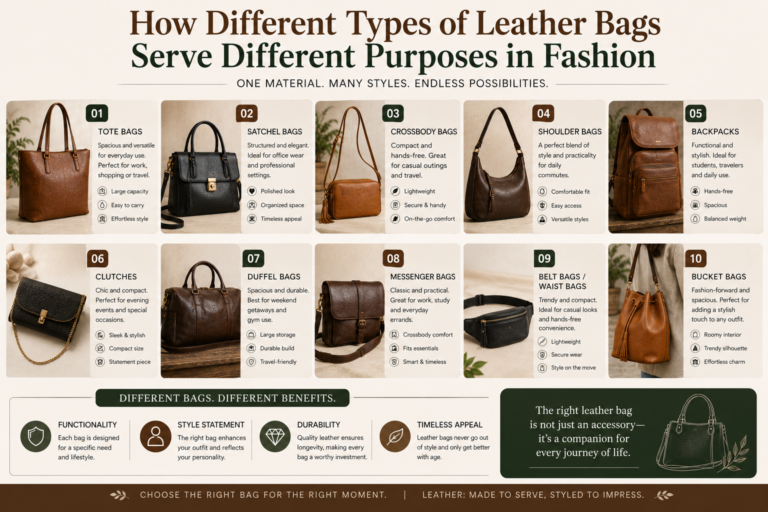
How Different Types of Leather Bags Serve Different Purposes in Fashion

A leather bag is more than just a bag. A leather bag is more than just a bag. It’s a statement of style and carries all the essentials. Not every leather bag is the same, and this is what makes it so powerful commercially. Brands can build more profitable collections by understanding the various types of leather bags, and what they do for customers.

Tote Bags — The Everyday Workhorse

Open-topped, leather tote bags with a spacious interior are designed for everyday use. These bags are perfect for carrying laptops, gym equipment, groceries and more. Leather totes are not only functional, but also look professional and polished in any environment.

Tote bags are a popular product because they meet a real need. They are not just wanted by customers, but they use them daily. The repeated visibility of branded leather bags makes them powerful marketing tools.

Crossbody Bags — Freedom of Movement

The crossbody bag is worn across the chest on an adjustable long strap. This allows you to keep your hands free and secure essentials. These bags are perfect for commuters and travelers who want to get through the day quickly without having to worry about their bag.

Crossbody styles work across casual and semi-formal occasions effortlessly. They pair naturally with leather jackets and leather pants — creating complete leather outfit combinations that fashion brands can market as full looks rather than individual pieces.

Clutch Bags — Evening Elegance

Clutch bag is small and handleless. It’s designed for special occasions and evening wear. The clutch bag is designed to hold only the essentials – phone, cards and keys – nothing else. This deliberate restriction is one of the things that makes them so appealing. Leather clutches communicate elegance and intention in a manner that larger bags cannot.

Leather clutches are a great choice for the luxury market and special occasion markets. They photograph well and have a strong performance. These clutches are also a great entry-level price for those who prefer genuine leather, but don’t want to spend a lot on a large bag.

Satchel Bags — Structure Meets Function

Satchels feature a structured body, top handle, and front flap closure — originally designed for carrying books and documents. Today they sit confidently between professional and fashion-forward styling. Leather satchels suit office environments, creative workplaces, and smart casual dressing equally well.

The structured silhouette holds its shape beautifully on shelves and in product photography — making satchels strong performers in both physical retail and e-commerce environments.

Backpacks — Fashion Meets Practicality

Leather backpacks have moved firmly into premium fashion territory. They offer maximum carrying capacity with hands-free convenience — appealing strongly to students, commuters, and travelers who refuse to compromise on style. A well-crafted leather backpack justifies a premium price point through durability, functionality, and aesthetic appeal simultaneously.

Brands building complete leather accessory ranges alongside leather belts and leather gloves find that leather backpacks anchor the collection as its highest-value hero piece

Bucket Bags — Relaxed Luxury

Bucket bags feature a cylindrical shape, drawstring or magnetic closure, and a relaxed, slightly slouchy silhouette. They carry a casual luxury energy that resonates strongly with contemporary fashion customers who want premium materials without stiff, formal structure.

This style pairs effortlessly with leather skirts and leather coats — making them natural additions to brands building complete seasonal leather fashion collections.

Messenger Bags — Urban and Functional

Messenger bags feature a wide body, single shoulder strap, and front flap — originally designed for bicycle couriers. Today they suit urban professionals, creatives, and anyone who carries a laptop and values quick-access organization. Leather messenger bags communicate a confident, no-nonsense style that works across multiple lifestyle segments.

Building a Leather Bag Collection That Covers Every Customer

The different types of leather bags each attract a specific customer with a specific need. A tote buyer and a clutch buyer are often the same person — just shopping for different occasions. Brands that cover multiple bag types serve that customer completely rather than sending them elsewhere.

Working with a professional leather bags manufacturer ensures consistent hardware quality, reliable stitching, and proper leather selection across every style in your collection. An experienced leather apparel manufacturer guides you through material choices, lining options, and hardware finishing — so every bag in your range reflects the same quality commitment your brand promises.

Conclusion

Every type of leather bag serves a distinct purpose — and every purpose represents a real customer need your brand can meet. Totes handle daily life. Crossbodies enable movement. Clutches dress up evenings. Satchels organize professionals. Backpacks carry everything. Bucket bags add casual luxury. Messenger bags serve urban movers. Understanding the different types of leather bags and building thoughtfully across categories creates a collection that genuinely works for customers — and genuinely sells for brands.

FAQs

Which leather bag type sells best across all markets?

Tote bags and crossbody bags consistently top sales across demographics — their practicality and versatility make them must-have purchases for a wide customer base.

What leather works best for structured bag styles like satchels?

Full grain or vegetable-tanned cowhide works best for structured styles — it holds shape reliably, stitches cleanly, and develops a beautiful patina with regular use.

Can all leather bag types be custom branded for private label collections?

Yes. All styles support full customization including embossed logos, branded hardware, custom lining, and private label tags — making them strong candidates for branded collections.

How many bag styles should a new leather brand launch with?

Start with two to three complementary styles — typically a tote, crossbody, and one occasion piece like a clutch or bucket bag. This covers daily and evening needs without overextending initial investment.

High-Rise vs Low-Rise Denim Jeans: Which Style Is Best in 2026?

The waistline is one of denim’s most important styling elements. It alters the silhouette, changes the appeal of the jeans, and sends a clear message about where the brand stands in the market.

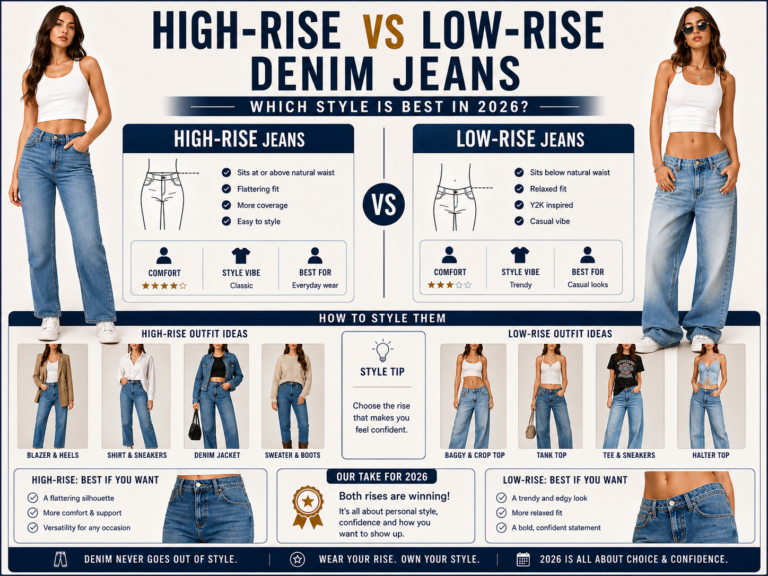
The debate around High-Rise vs Low-Rise Denim Jeans has remained a constant topic in fashion. For years, high-rise jeans dominated the market, while low-rise styles have recently made a controversial comeback. In 2026, both styles continue to sell strongly — but they serve very different fashion purposes and target different customer preferences.

This guide explains where each waistline is in the market today and which one would be best for your brand.

What is high-rise denim?

High-rise denim is worn at or above your natural waistline — usually two to four inches below the hip bone. This creates the illusion of long legs, defines the waist, and offers more coverage in the middle than lower waistlines.

Since the beginning of 2010, high-rise has been a popular style. It has a broad appeal — it suits all body types and ages, and can be worn in casual, smart-casual, and semi-formal settings.

High-rise is the most popular choice for brands that target women’s wear. It is more popular than low-rise in most retail outlets.

What is low-rise denim?

Low-rise jeans sit significantly below your natural waist, often just below or at the hip bone. This was the most popular waistline in the early 2000s, before the high-rise style took over. It has made a comeback due to Y2K fashion nostalgia.

Low-rise is more of a trend statement than it is a staple. This style is popular with younger, fashion-forward demographics – particularly in streetwear or contemporary fashion contexts – but it has a limited appeal at mainstream retailers.

Low-rise jeans can be an attractive and viable option for brands that are targeting youth markets or streetwear denim. Brands targeting a wider demographic will be more at risk.

What the market is saying about 2026

In 2026, high-rise buildings will continue to dominate sales volume. It is the most popular waistline in womenswear.

Low-rise performs well in certain segments, namely fashion-forward collections and brands influenced by Y2K, as well as youth streetwear. Brands that know their customers well enough to make a commitment to this option are a good choice. But it is not the best choice for brands that don’t have a clear positioning.

As a compromise, the mid-rise, which is positioned between the extremes and sits one to two inches below the hip bone, has gained in popularity as a product. It provides more coverage and comfort than low-rise, while still feeling less structured than full-rise.

denim pants manufacturer with experience in all three waistline options will be able to guide you based on the specific market and customer that you are targeting.

What waistline works best with each silhouette?

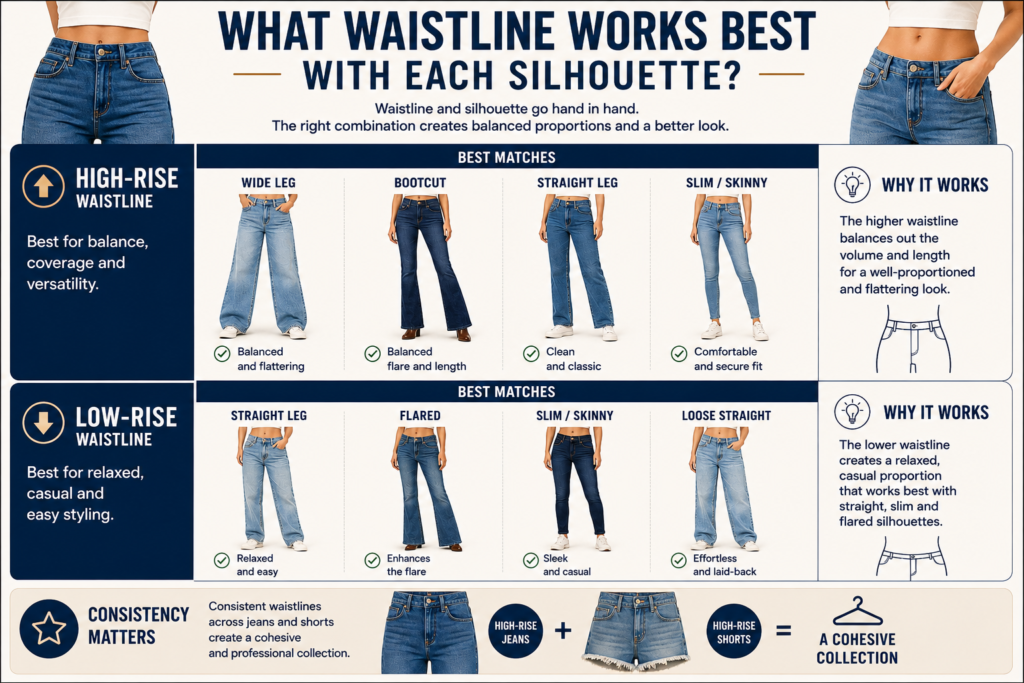
Educational denim infographic explaining which jean silhouettes work best with high-rise and low-rise waistlines, including wide leg, bootcut, straight leg, flare, and slim fits.
The right waistline and silhouette combination creates balanced proportions, stronger styling, and a more cohesive denim collection.

Waistline, silhouette, and interaction are directly related. Certain combinations are always good. Some combinations are too large and can ruin the whole garment.

The high-rise is best suited to wide leg, bootcut, or straight leg silhouettes. This is because the higher waistline balances out the volume and length and gives the overall look a balanced proportion. The higher rise also works in slim styles, where it provides coverage and comfort.

Low-rise is best suited to straight leg, flared, and slim silhouettes. The lower waistline gives the garment a relaxed, casual look. Low-rise works better with straight leg, slim and flared silhouettes — the lower waistline creates a casual, relaxed proportion.

Consistency in waistlines is important for brands that produce denim jeans along with jeans. High-rise shorts that match high-rise jeans will create a cohesive collection.

The Manufacturing Considerations of Each Waistline

High-rise and Low-rise Jeans require different patterns from a production perspective. This is especially true for the rise measurement, waistband construction, and back yoke.

The total fabric consumption is affected by the length of the front and back rise. This also affects the fit in the seat. High-rise jeans are technically challenging because it is difficult to strike the right balance between a flattering, high waist and a comfortable fit in the seat.

When choosing low-rise patterns, pay attention to the way that the waistband fits and remains in place. Fit failures, such as low-rise jeans that gape or slip at the back, are a cause for returns and bad reviews.

Private-label denim manufacturers that have established high-rise or low-rise patterns within their range can help brands get a better-fitting denim product, especially if they are entering the category for the very first time.

What should you choose for your brand?

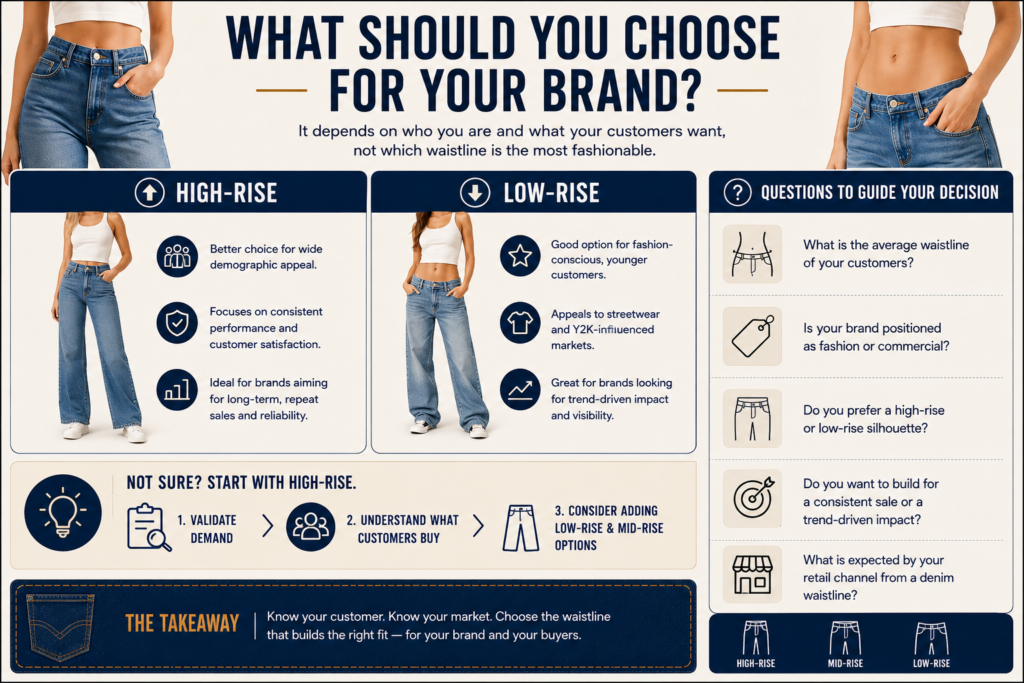
Comparison infographic showing high-rise vs low-rise denim jeans for fashion brands, featuring styling direction, target audience insights, and waistline decision questions for denim collections.
High-rise or low-rise? Choose the denim waistline that matches your audience, brand positioning, and long-term collection strategy.

It depends on who you are and what your customers want, not which waistline is the most fashionable.

High-rise is a better choice if your brand targets a wide demographic and focuses on consistent performance. Low-rise is a good option if your brand targets fashion-conscious, younger customers who are interested in streetwear and markets influenced by Y2K.

If you are unsure, start with high-rise. Validate demand. Once you know what your customers actually purchase, consider adding low-rise and mid-rise options.

These are the questions that will guide you in your decision-making:

  • What is the average waistline of your customers?
  • Is your brand positioned as fashion or commercial?
  • Do you prefer a high-rise or low-rise silhouette?
  • Do you want to build for a consistent sale or a trend-driven impact?
  • What is expected by your retail channel from a denim waistline

Conclusion

The debate around High-Rise vs Low-Rise Denim Jeans is ultimately about brand positioning, not trend-chasing. In 2026, high-rise jeans continue to dominate across most markets, while low-rise styles remain a strong option for brands targeting specific fashion demographics.

Understanding High-Rise vs Low-Rise Denim Jeans helps brands align their denim collections with customer preferences. Know your audience, choose the waistline that fits their style, and build your collection around that decision.

Explore the options for denim clothing manufacturing and find the best partner to help you develop your brand.

FAQs

Does high-rise denim remain dominant on most markets in 2026?

 In 2026, high-rise denim remains the market leader in all major markets. Low-rise denim is gaining popularity in the fashion-forward, youth-oriented segments. However, it has a limited appeal to mainstream consumers.

What does mid-rise mean?

 It is a denim that sits in between high-rise and low-rise — usually one to two inches below the hip bone. It is a compromise between casual style and coverage.

What waistline is best for wide-leg jeans?

 A high-rise waistline balances out the volume and creates an overall well-proportioned silhouette.

Does the waistline have an impact on how jeans fit in the seat?

 Yes, it does. For high-rise patterns, it is important to find the right balance between seat fit and waist height. Low-rise patterns require attention to the way the waistband fits and remains in place while wearing.

What Is The Best Customization for Denim Shorts for Your Brand

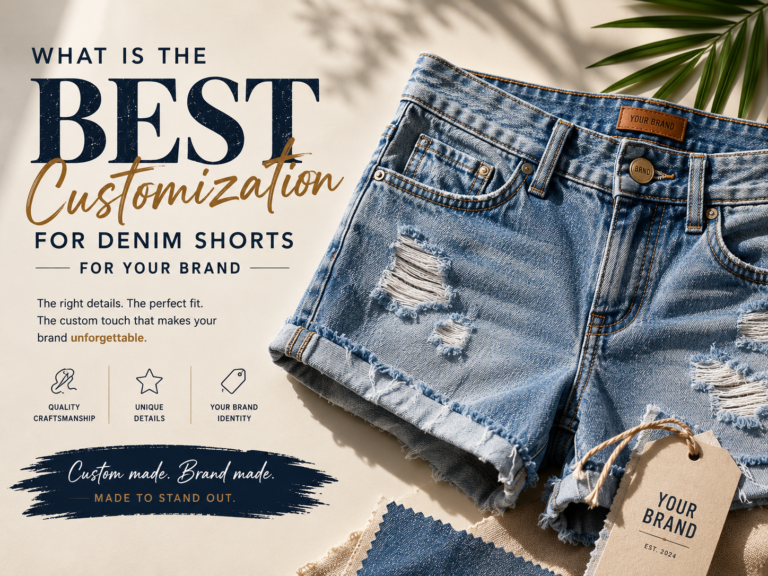
Denim shorts have become a staple in casual apparel and are one of the most competitive apparel categories. Walk into any store selling denim shorts, and you’ll find nearly identical products with the same blue denim, cuts, and hardware. That’s why brands now focus on the Best Customization for Denim Shorts to create unique styles, improve brand identity, and stand out in the fashion market.

Which brands are the most successful? The brands that are most successful are the ones that implement customisations in a purposeful way. They don’t add random extraneous details. Instead, they make customisations in ways that align with their brand and provide a reason for the consumer to select their pair of shorts over the multitude of other options. In this guide, the best customization for denim shorts, more importantly, the best customizations that denim shorts manufacturers can make to their products for the most optimal effect, will be discussed.

The Importance of Customisation in Denim Shorts

Denim shorts are less structurally complex than jeans. They have a lot less fabric than a full leg, and developing a full leg has a lot of pocket balancing and grading. Because the shorts are so simple, every factor of design comes to the forefront.

Less complex designs that have no distinguishing factors look exactly what they are: a plain, generic product. On the other hand, customization can make a product look like a brand product, even if that customization is something as simple as a distinctive wash or branded hardware. These are the reasons that motivate and retain shoppers. Customizations don’t have to come with a lot of costs to the manufacturer — they can be strategically planned to be cost-saving and very beneficial to the brand.

Wash & Finish

In denim shorts, “the wash” packs the most punch of any of the possible fabric customizations. A wash converts the fabric’s base state into a product that’s uniquely visual, characterful, and storied.

Regarding denim shorts, such washes as stonewash, enzyme wash, acid wash, and vintage or used wash are the most pertinent commercially. These washes provide a final product with a soft, uniform fade with a used appearance with the fabric worn and faded over time, a significant, fashionable finish, and a highly aged appearance. For denim shorts, the wash also interacts with any distressing applied — the lighter the base wash, the more visible and dramatic the distressing effect. This relationship between wash and distressing needs to be planned together rather than decided independently.


Distressing and Destruction

The ideal look for worn denim shorts is the one that has developed abrasions, scars, and tears over time. This is neat for the casual, streetwear, and youth markets which prioritize creativity. The most important thing to consider in this uniform, commercial distressing is consistency. When distressing is done by hand, every article tends to look distinctly different which is not efficient for bulking. This is why the use of lasers for distressing and machine built abrasion are preferred by a lot of companies – due to the scale and consistency.

For brands targeting streetwear denim markets, distressing is often a core product differentiator — and the specific placement and intensity of the distress marks becomes a signature brand detail.


Hem Style

The hem of denim shorts is used in many different ways. The hem is also highly customizable. If you want an authentic feel, leaving the hem raw (fraying naturally) is the way to go. This hem is popular in casual and festival-focused denim shorts.

For more structured, vintage-inspired looks, a turned-up cuff is recommended. This style is present in denim shorts offered in fashion-focused and Americana-inspired collections. Height and whether the cuff is stitched or left to be folded by the wearer are design decisions with impact. A clean finished hem — with a standard turned and stitched finish — gives a more polished, smart-casual appearance. This works well in denim skirts and shorts targeted at a slightly older or more formal demographic.


Embroidery and Appliqué

A typical pair of denim shorts can become trendy with the fashion of the season with the addition of embroidery. An original branding logo, embroidered words, floral designs, or even some geometric patterns can become original artwork when placed on the hem of the short or on a pocket or panel. Stitching a fabric design onto a short leg can be even more impactful. Trenches have been in fashion, especially with denim shorts, and can be done by patching an appliqué of contrasting fabric.

Both embroidery and appliqué require specific machinery and expertise. A denim jacket manufacturer or denim specialist with in-house embroidery capability can produce consistent, high-quality results across a bulk run — rather than outsourcing the process and losing quality control.


Hardware and Branding Details

Hardware is an important aspect of customizing denim shorts. Adding your logo to branded rivets, buttons, and zipper pulls makes your product distinctive, and customers will be able to recognize it. Branding your rivets and buttons is inexpensive, and it improves your product’s perceived value. Depending on the wash, antique brass can be great for vintage, and modern street styles can be produced with blackened hardware. A polished and clean look is modern and can use silver hardware.

A denim overalls manufacturer or denim specialist with strong hardware sourcing brings relevant knowledge to shorts customisation, because overalls have high hardware visibility and demand the same quality standards.


Conclusion

The optimal denim shorts customization balances your brand identity, connects with your target audience, and ensures smooth mass production. The Best Customization for Denim Shorts starts with the wash, the most impactful design element. Additional customization includes hem styles, distressing, embroidery, and branded hardware for a complete premium finish.

When you’re ready to develop your customized denim shorts collection, explore the full range of denim shorts manufacturing options and find the right production partner for your brand.


FAQs

What is the most impactful customization for denim shorts?

The wash finish is the single most impactful customization — it transforms the base fabric and sets the aesthetic direction for every other detail on the garment.

What hem styles are available for denim shorts?

Raw hem, turned-up cuff, and clean finished hem are the three main options — each creating a distinctly different aesthetic from casual to fashion-forward to smart.

What hardware finish works best for vintage-inspired denim shorts?

Antique brass is the strongest choice for vintage aesthetics — it complements faded washes and distressed finishes naturally and ages well with wear.

Is distressing consistent across a bulk production run?

It can be — with laser or machine distressing. Hand distressing creates natural variation that some brands value but can be difficult to control consistently across large quantities.

Can I customize both the exterior and interior of denim shorts?

Yes — pocket bag fabric, interior waistband stamps, and lining details are all viable interior customization options that add perceived quality at relatively low cost.

Full Length vs Half Length Leather Aprons: Which One Is Best?

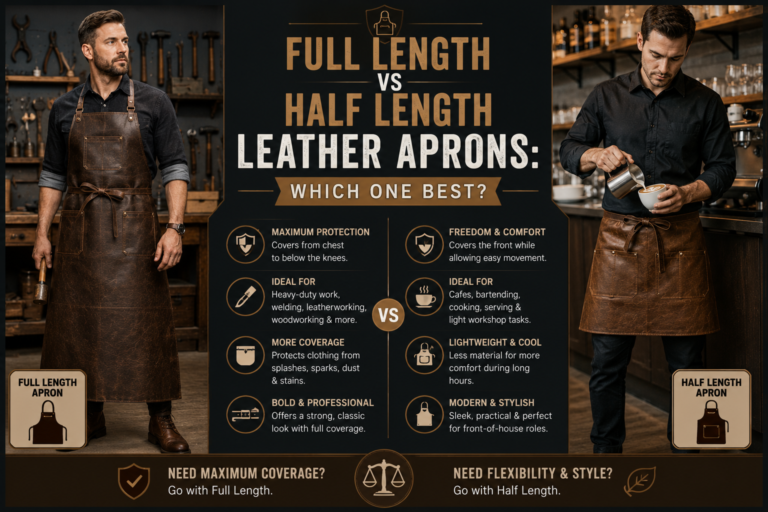
Most people don’t realize how important it is to choose the right style of leather apron. Making the right choice can impact comfort, protection, and the level of professionalism that your team displays on the floor. When considering full-length leather aprons vs. half-length leather aprons, it is about what your work really requires. To best assist with that, we will break down both styles so you can make an informed decision for your company or brand.

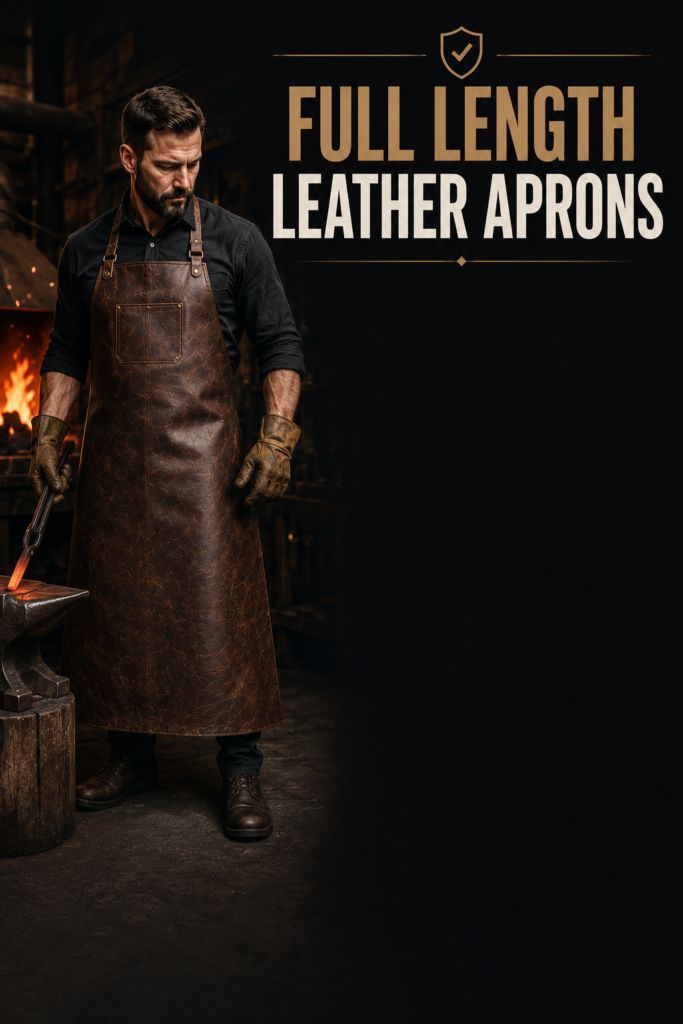
Industrial blacksmith wearing a full length leather apron in a workshop with heavy-duty protective leather construction and reinforced craftsmanship details.
Full length leather aprons provide maximum protection and durability for blacksmiths, welders, woodworkers, chefs, and industrial professionals.

Full Length Leather Aprons — Maximum Protection

Leather aprons. Full-length from chest to knee or ankle. Front body coverage includes chest, torso, and body. They are the best choice for covering the highest risk work environments.

Full-length leather aprons are the best choice for:

  • Blacksmiths and metal workers who deal with heat and sparks.
  • Welders whose profession needs full body coverage.
  • Butchers and meat processors who need protection coverage.
  • Woodworkers and craftspeople which deal with big tools.
  • Chefs who work in high-intensity kitchens.

Full-length leather aprons provide protection from heat and sharp objects, as well as debri and splashes which other coverage does not provide. In the line of work, where coverage is a must, full-length leather aprons is the only choice to make.

A professional leather aprons manufacturer builds full length styles with reinforced stitching, adjustable neck straps, and waist ties that distribute weight evenly — keeping the wearer comfortable during long shifts.

Half Length Leather Aprons — Agility and Style

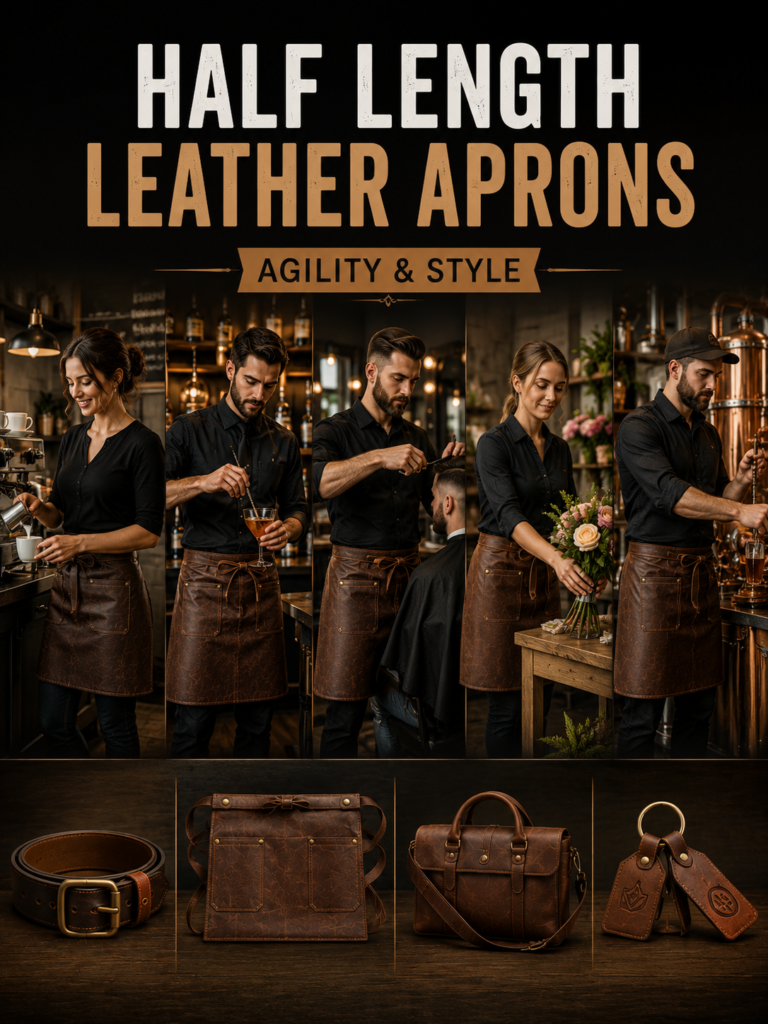
Baristas, bartenders, florists, and lifestyle professionals wearing stylish half length leather aprons in modern hospitality and retail environments.
Half length leather aprons combine agility, lightweight comfort, and modern branding appeal for hospitality and lifestyle businesses.

Half length aprons cover from the waist down to about the mid-thigh area. They are more lightweight and flexible, and easier to move in than full-length aprons. For this reason, they are favored in positions requiring even the slightest bit of agility.

Half length aprons are ideal for:

  • Coffee professionals and baristas
  • Mixologists and bartenders
  • Barbers and hairstylists
  • Florists and retail associates
  • Craft brewers and distillers

The hospitality market is seeing an uptick in the half length apron as people are starting to use them as branding in lifestyle businesses. They pair well in photos, create a neat and contemporary style, and exude a differentiated relaxed professionalism that full length aprons lack.

Brands building lifestyle-driven leather product ranges that include leather belts and leather bags often extend naturally into half length aprons — creating cohesive branded merchandise collections that customers love.

Which Style Should Your Brand Offer?

Your target customers and their markets will guide your response. For the Industrial Trades who need workwear, full length is a must. If your clientele are in Hospitality, the Creative Industries, or characterize their work or business as a Lifestyle – workwear that is half length will be both more comfortable and more visually appealing.

The best brands will provide both lengths. A full line of leather aprons will span a larger clientele, fortifying your brand as a versatile supplier.Working with an experienced leather apparel manufacturer allows you to develop both styles with consistent leather quality, hardware, and branding across your entire range.

Brands that also carry leather jackets and leather vests can build compelling full leather product catalogues — giving B2B buyers and retail customers a single destination for all their leather apparel needs.

Conclusion

Choosing between full length vs half length leather aprons is not about determining which style is better, but which style caters best to your needs. Full length aprons provide complete protection. Half length aprons offer stylish movement. Top leather apron companies cater to both needs by confidently creating stylish, high quality collections for every customer and every industry.

FAQs

What leather apron length is ideal for kitchen work?

As a rule of thumb: full length for professional kitchens, half length for most other hospitality settings. In the latter scenarios, the apron provides a good barrier without being in the way.

Are full length leather aprons for kitchens really comfy enough for long shifts?

Yes! Good full length leather aprons have great adjustable straps to help balance the weight of the apron.

Can half length leather aprons be branded?

Yes! The front panel of half length leather aprons can be debossed/embossed or engraved.

Which leather is best for both kitchen apron styles?

Both apron styles can be made from cowhide that is full grain or vegetable tanned to yield a product that is durable, ages beautifully, and looks better with time.