Home Blog Page 19

Top 10 Types of Denim Shirts That are Trending in Fashion World

The denim shirt has become a staple of modern fashion. They are durable, versatile and stylish. Denim shirts are always stylish, whether you wear them fully buttoned, tucked into a shirt, or open. Let’s look at the 10 most popular denim shirts in the fashion world today.

1. Classic Button Down Denim Shirt

All denim shirt styles are built on the classic button-down. The shirt has a neat collar, chest pockets and a full button closure. It is also suitable for smart casual office settings as well as casual outings. This style is timeless and a must-have for both men and women.

2. Oversized Denim Shirt

Street fashion is dominated by oversized denim shirts. The loose fit looks great when worn as a jacket, or tucked in at the waist. They also look great with leggings or fitted trousers for a balanced appearance. For bold and trend-driven styles, brands building streetwear collections should visit our streetwear manufacturer.

3. Western-Style Denim Shirt

Western denim shirts are characterized by snap buttons, pointed shoulders, and embroidered detail. These shirts have a cowboy-inspired look that is popular on global fashion markets. They also look great with denim jeans to create a denim-on denim look.

4. Chambray Denim shirt

Chambray denim is a lighter and softer fabric, which makes shirts more comfortable. Chambray denim shirts are perfect for summer and warmer climates. The chambray denim shirts give the look of denim without the weight.

5. Distressed Denim Shirt

Distressed denim shirt features intentional rips and fading. They give any outfit a lived-in, edgy look. To keep the look stylish and balanced, pair them with bottoms in a solid color.

6. Denim Shirt with Embroidery

Denim shirts with embroidery feature decorative stitching or patterns such as florals, artistic designs, and even artistic designs. They are bold fashion statements. Our private-label denim manufacturer can create unique, customized items for retailers looking for a personalized look.

7. Sleeveless Denim Shirt

These shirts are similar to denim vest and offer a casual, cool look. These shirts look great layered over solid tank tops or t-shirts and are suitable for men and women. They also add a relaxed summer vibe to your everyday outfits.

8. Cropped Denim Shirt

Cropped denim shirt hits above the waist, creating a youthful and trendy silhouette. These shirts look best when worn with wide-leg or high-waisted jeans, shorts or skirts. They are also perfect for casual occasions, festivals and weekend outfits.

9. Denim shirt with acid-washed denim

Acid-washed denim shirt adds a retro 90s vibe to your wardrobe. The faded and patchy finish is visually striking. They also look great with neutral bottoms, allowing the shirt to be the main focus of the outfit.

10. Kids’ Denim Shirt

Denim shirts don’t have to be for adults. Denim shirts for kids offer the same durability and style in designs that are age-appropriate. These shirts are perfect for school, outdoor activities, and family trips. Browse our Kids Denim Manufacturer page to find durable, comfortable and stylish options for kids’ denim.

What to look for when buying a denim shirt
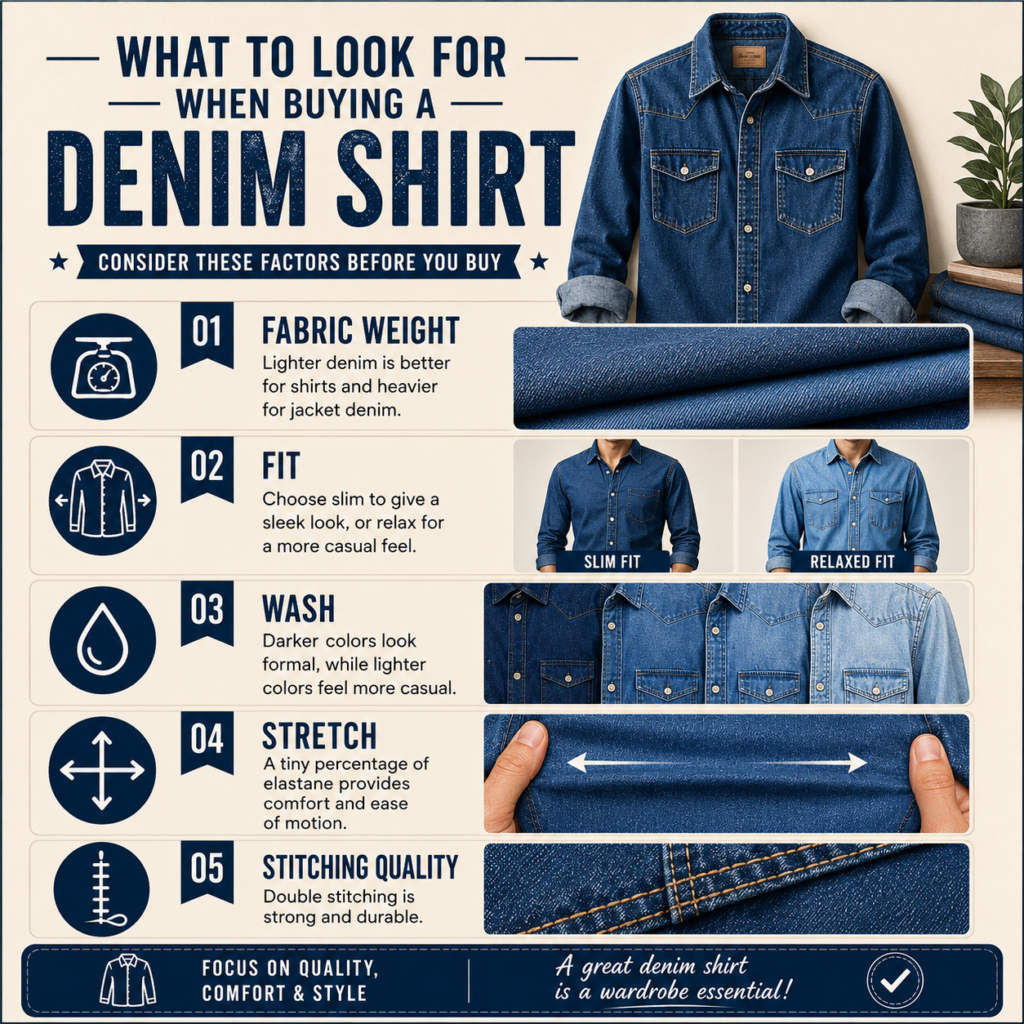
Modern infographic explaining what to look for when buying a denim shirt, featuring fabric weight, fit, wash, stretch, and stitching quality with denim shirt visuals.
Key factors to consider before buying a denim shirt, including fit, fabric weight, wash, stretch, and stitching quality.

Consider these factors before you buy a denim shirt:

  • Fabric Weight: Lighter denim is better for shirts and heavier jacket denim
    • Fit: Choose slim to give a sleek look, or relax for a more casual feel.
      • Wash: Darker colors look formal, while lighter colors feel more casual
        • Stretch: A tiny percentage of elastane provides comfort and ease of motion.
        •  Stitching Quality: Double stitching is strong and durable.

conclusion

The Top 10 Types of Denim Shirts covers every style direction from classic button downs to bold acid washed designs. Each style has a specific purpose and is aimed at a particular audience. Understanding these styles will help you make better fashion choices and build stronger collections for your brand.

Eco Jersey manufactures high-quality jeans shirts as well as complete denim clothing for brands, retailers and private labels around the world. We deliver the highest quality at every stage, whether you are looking for a single signature style or an entire seasonal collection. Let’s create your denim shirt collection together. Contact us today.

FAQs

Which denim shirt style is most versatile?

The classic button-down denim shirt is the most versatile style. It works across casual, smart-casual, and even semi-formal settings depending on how you style it.

Denim shirts can be worn all year round?

Spring and summer are perfect for lightweight chambray denim shirt. Denim shirts that are heavier can be worn under jackets in the fall and winter.

What are the best bottoms to pair with denim shirts: Chinos, trousers or shorts?

Wearing denim on denim is a great way to create a contrast between the two washes. This will avoid achieving a monotone look.

Is it possible to have custom denim shirts made for my brand?

Yes. Eco Jersey offers complete custom manufacturing of all denim shirts, including embroidery, custom washing, private labeling and bulk production.
Launching Compression Collection: A Complete Brand Guide

Launching compression collection is one of the most rewarding moves a fitness brand can make. However, it is also one of the most technically demanding. Compression garments are not like regular activewear. They require precise fabric engineering, careful fit development, and serious testing before a single unit reaches your customer.

The good news is this: with the right preparation and the right manufacturing partner, launching compression collection does not have to feel overwhelming. This step-by-step guide shows you exactly what the process looks like — from your first design idea to finished garments ready for market.

Why Compression Wear Deserves Its Own Launch Strategy

Many brands make the mistake of treating compression wear as just another activewear category. They use the same development process, the same fabric approval timelines, and the same fit testing methods they use for standard gym tees or hoodies. That approach rarely works.

Compression garments apply measured pressure to the body. That pressure must be consistent, accurate, and durable. A fabric that behaves beautifully in a basic legging can completely underperform in a compression tight — because the demands on the material are fundamentally different.

Therefore, launching compression collection requires its own dedicated development pathway. And every brand that takes that seriously ends up with a better product.

Step 1 — Define Your Collection Scope and Target Customer

Before launching compression collection, you need two things locked down: what you are making and who you are making it for.

A compression line built for competitive athletes has different fabric specs, compression levels, silhouettes, and price points compared to one designed for casual gym users or post-workout recovery. These are not minor differences — they affect every manufacturing decision downstream.

Here is how the audience split typically plays out:

  • Serious gym and performance athletes: Moderate to firm compression (15–20 mmHg), warp-knit construction, technical nylon-spandex blends, flatlock seaming. These customers train hard and expect their garments to keep up. Brands building for this audience should work with an experienced gym wear manufacturer familiar with performance-level compression standards.
  • Yoga, Pilates, and low-intensity fitness users: Light to moderate compression (8–15 mmHg), soft nylon or recycled fiber blends, smooth seams, and a buttery handfeel. This audience prioritizes comfort and aesthetics alongside function. Working with a yoga wear manufacturer experienced in soft-touch compression fabrics ensures the product meets this audience’s expectations.

Getting this clarity upfront saves weeks of revision later in the process.

Step 2 — Build Detailed Tech Packs for Every Style

Launching compression collection without complete tech packs is a guaranteed path to expensive problems. Compression garments are technically precise. A waistband sitting 5mm lower than intended changes the fit completely. A seam placed incorrectly causes chafing during movement. A fabric spec that is off by 10% in stretch recovery changes the compression level the garment actually delivers.

Every style in your collection needs a tech pack that covers:

Measurements in both relaxed and stretched dimensions. Fabric specifications including blend, weight, and compression rating. Stitch types and seam placements. Waistband construction details. Label placement and branding specs. Grading increments across your full size range.

Furthermore, because compression fabrics stretch significantly during wear, all measurements must account for both states. This is the single most common tech pack mistake brands make when launching compression collection for the first time. Catching it here avoids two or three extra sampling rounds later.

Step 3 — Fabric Selection and Swatch Approval

Fabric selection is the most critical technical step in launching compression collection. The wrong fabric does not just underperform — it makes everything else in your development process irrelevant.

Here is what to test during fabric swatch approval:

  • Compression consistency across the roll: Compression fabrics can vary in tension from one section of a fabric roll to another. Test swatches from multiple roll positions to confirm pressure is consistent throughout the material — not just in the center section the supplier sends as a showcase sample.
  • Wash cycle performance: Run your swatches through at least twenty to thirty wash cycles before approving any fabric for production. Check dimensional stability, colorfastness, elastic recovery, and surface integrity after washing. A fabric that looks perfect off the roll but pills after fifteen washes will generate returns and negative reviews — exactly what you do not want at launch.

Working with a specialist compression wear manufacturer simplifies fabric approval considerably because they already have tested relationships with compression textile mills that deliver consistent quality. That network is worth more than it appears on the surface.

Step 4 — Sampling and Real-World Fit Testing

Samples approved at the desk fail in the gym. This is one of the most important lessons in launching compression collection — and the brands that learn it early save themselves enormous frustration.

Compression garments must be tested in motion. Put your samples on real people and have them move through the full range of activities the garment is designed for. Running, squatting, lunging, stretching — all of it. Collect structured feedback on:

Waistband stability during dynamic movement. Pressure distribution across the thighs, calves, or upper body depending on style. Seam comfort under sustained physical stress. Coverage and fit at full stretch. Overall compression sensation — too tight, too loose, or just right.

Expect one to two revision rounds before a compression sample is fully approved. This is completely normal. In fact, brands that approve their first compression sample without revisions are usually not testing hard enough. Thorough sampling before launching compression collection protects your reputation after it.

Step 5 — Bulk Production and Quality Control

With approved samples and locked tech packs, bulk production can begin. At this stage, consistency is everything. Every unit must match the approved sample — same fabric batch, same trim specs, same construction methods.

Even small fabric batch variations can create noticeable compression differences between units. Customers buying compression garments are often experienced athletes who will notice a 5% difference in fabric tension between their old pair and the new one. Therefore, quality control checkpoints must cover fabric tension testing, dimensional measurements, seam strength, label placement, and visual inspection for defects throughout the production run — not just at the end.

Brands building compression alongside a broader fitness apparel range should establish unified QC standards across all styles. A consistent quality standard across your product line builds the kind of brand trust that drives repeat purchases.

Step 6 — Packaging and Market Launch

The final step in launching compression collection is packaging and delivery — and it matters more than many brands expect. Compression garments stored in tight packaging for extended periods can develop permanent fabric creases, especially at lower quality levels. Packaging should protect the garment’s shape while presenting it attractively.

Furthermore, include clear compression level information on every package. First-time compression buyers often do not know what level they need. A brand that guides them clearly at the point of purchase reduces returns, increases satisfaction, and builds long-term customer loyalty.

For brands building a full activewear range alongside compression, coordinating packaging design across all product categories creates a stronger, more professional brand impression across every customer touchpoint.

Final Thoughts

Launching compression collection successfully is entirely achievable — even for first-time brands in this category. However, it rewards preparation. Solid tech packs, rigorous fabric testing, honest fit sessions, and disciplined quality control during bulk production are what separate a compression collection that builds loyal customers from one that generates returns and revisions.

Take the time to do it right upfront. The compression category rewards brands that get the product correct — with customers who return again and again for a garment they trust.

FAQs

What is the most important step when launching compression collection?

Fabric selection and swatch testing are the most critical steps. The wrong compression fabric makes everything else in your development process much harder to recover from.

How long does launching compression collection typically take?

From tech pack development to bulk delivery, most compression collections take ten to sixteen weeks. The sampling and fit testing stage usually takes the longest due to revision rounds.

How many styles should a first compression collection include?

Three to six styles is a practical starting point. This range allows you to test market response and cover key silhouettes without creating too many simultaneous sampling rounds.

What compression level should a first-time brand start with?

The 15–20 mmHg moderate compression range is the most accessible starting point. It suits a broad fitness audience and works across a wide range of training activities.

Why is in-motion fit testing so important when launching compression collection?

Compression garments behave very differently at rest and during movement. A garment that fits well on a hanger can ride up, constrict, or lose coverage during actual activity. Testing in motion catches these problems before they reach your customers.

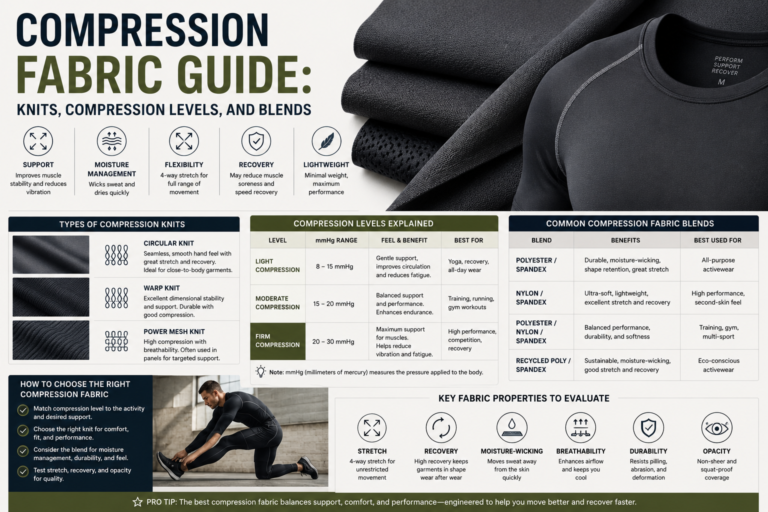
Compression Fabric Guide: Knits Compression Levels and Blends

Fabric choice makes or breaks a compression garment. A poorly chosen fabric loses its shape after a few washes, offers uneven pressure, and frustrates the end customer. A well-chosen fabric, on the other hand, supports performance, holds its compression level wash after wash, and keeps the wearer comfortable through intense physical activity.

This compression fabric guide walks you through everything you need to know — knit structures, compression levels, and blend options — so you can make confident decisions when developing your collection.

Why Fabric Choice Matters So Much in Compression Wear

Compression garments work by applying graduated pressure to the body. That pressure improves circulation, reduces muscle vibration during exercise, and speeds up recovery afterward. However, none of those benefits are possible without the right fabric construction underneath.

Therefore, before you finalize any design, the fabric decision must come first. This is especially true for brands working in the compression wear space, where performance expectations from customers are high and fabric failures are immediately noticeable.

Knit Structures Used in Compression Fabrics

The knit structure of a compression fabric determines how evenly it distributes pressure across the body. Not all knits perform equally. Here are the three most important types:

Circular Knit Circular knit is the most common structure in everyday compression wear. It produces a smooth, consistent fabric with good stretch recovery. It works well for lighter compression garments like training tights, base layers, and everyday fitness leggings. However, it offers less precise pressure graduation compared to more specialized constructions.

Warp Knit Warp knit fabrics are engineered for medical-grade and high-performance compression. They offer superior dimensional stability, excellent shape retention, and very consistent pressure distribution. As a result, warp knit is the preferred structure for professional sports compression, recovery garments, and any product where consistent mmHg ratings matter.

Flat Knit Flat knit compression fabrics allow for shaped, contoured construction — particularly useful for compression sleeves, calf guards, and graduated stockings. They are less common in full-body activewear but highly relevant for targeted recovery products.

[Image Placement: Side-by-side diagram comparing circular knit, warp knit, and flat knit compression fabric structures under magnification] Alt Text: Compression fabric knit structure comparison showing circular knit, warp knit, and flat knit under close-up view

Understanding Compression Levels

Compression garments are typically classified by the amount of pressure they apply, measured in millimetres of mercury (mmHg). Understanding these levels helps brands position their products correctly and choose appropriate fabrics for each range.

Here is a practical breakdown:

  • Light compression (8–15 mmHg): Suitable for everyday wear, mild fatigue relief, and general fitness use. These garments feel comfortable for extended wear and suit a broad consumer audience. Fabrics at this level need good stretch and breathability but do not require highly engineered knit structures.
  • Moderate compression (15–20 mmHg): The most popular range for sports and fitness apparel brands. This level supports muscles during moderate-to-intense activity, reduces vibration, and assists with light recovery. Fabric at this level must balance compression consistency with freedom of movement.

Additionally, medical-grade compression ranges (20–30 mmHg and above) exist for clinical applications. Most activewear brands work within the 8–20 mmHg range for sports and lifestyle compression products.

Compression Fabric Guide Blends for Compression Garments

Blend composition directly affects how a compression fabric performs. No single fiber does everything well, which is why most high-quality compression fabrics combine two or more fibers to balance different performance properties.

Nylon and Spandex (Elastane) This is the industry standard blend for compression wear. Nylon provides strength, durability, and a smooth surface feel. Spandex provides the stretch and recovery that creates and maintains compression. A typical ratio ranges from 70–80% nylon to 20–30% spandex, depending on the compression level required.

Polyester and Spandex Polyester blends are widely used in gym wear and training compression. Polyester offers excellent moisture-wicking properties, holds color well, and is more cost-effective than nylon. However, it has a slightly rougher hand feel compared to nylon blends.

Recycled Fiber Blends Many brands today choose recycled nylon (such as ECONYL) or recycled polyester blended with spandex. These sustainable options perform comparably to virgin fiber blends while significantly reducing environmental impact — an important consideration for brands building responsible product lines in the activewear space.

Additional Fabric Properties to Consider

Beyond knit structure and blend, several additional fabric properties affect compression garment performance:

Moisture management is critical. Compression garments sit close to the skin during intense activity, so fabrics must wick sweat away from the body efficiently. Furthermore, UV protection matters for outdoor compression products — especially for running and cycling gear. Anti-odor treatments, flatlock seam compatibility, and colorfastness under repeated washing are also worth specifying clearly in your tech pack before production begins.

Final Thoughts

Choosing the right compression fabric is not a single decision — it is a series of connected choices about knit structure, compression level, blend composition, and performance properties. Each choice affects how the finished garment performs, how long it lasts, and how satisfied your customers feel wearing it.

Take time with your fabric selection. Test samples thoroughly. And work with a manufacturing partner experienced in compression garment construction to ensure the fabric you choose performs the way you intend it to.

FAQs

What is the best fabric blend for compression wear?

Nylon-spandex blends are the most widely used for compression garments. They offer excellent strength, stretch, and recovery. Polyester-spandex blends are a cost-effective alternative with strong moisture-wicking properties.

What does mmHg mean in compression garments?

mmHg stands for millimetres of mercury — the unit used to measure the pressure a compression garment applies to the body. Higher numbers indicate greater compression force.

Which knit structure is best for high-performance compression wear?

Warp knit offers the most consistent pressure distribution and dimensional stability, making it the preferred choice for sports and medical-grade compression garments.

Can compression fabrics be made from sustainable materials?

Yes. Recycled nylon (such as ECONYL) and recycled polyester blended with spandex perform comparably to virgin fiber blends while reducing environmental impact significantly.

How much spandex content is needed for effective compression?

Most compression fabrics contain between 20–30% spandex. Higher spandex content increases compression and stretch recovery, while lower content reduces the compression level and increases fabric stability.

Tech Packs for Fitness Clothing: What Manufacturers Require

If you are planning to launch a line of fitness apparel, whether for yoga, gym, or compression wear, creating a clear and detailed tech pack is essential. A tech pack acts as the blueprint for your clothing, providing manufacturers with all the specifications they need to produce your designs accurately. Without a properly prepared tech pack, you risk miscommunication, production delays, and errors that can compromise the quality of your apparel.

What is a Tech Pack?

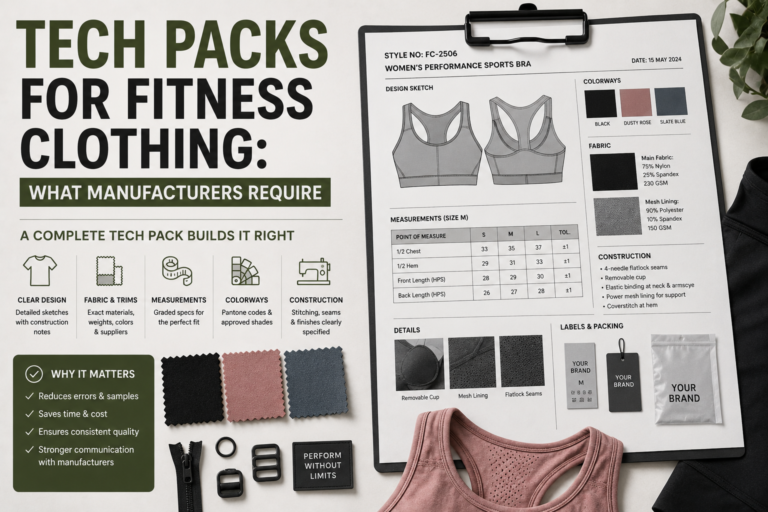
A Tech Pack conveys your clothing design, fabric, and construction details to a manufacturer. It usually contains:

  • Sketched or CAD designed clothing
  • Fabric and materials
  • Color choices
  • Sizes and dimensions
  • Sewing details
  • Labels and other essentials
  • Instructions for the manufacturing process

When you produce any clothing, but especially performance clothing like gym and yoga clothing, tech packs become important. They confirm a manufacturer understands your goals and vision. when working with any apparel manufacturer, especially for performance-driven clothing like gym wear or yoga wear. They ensure your vision is translated correctly and help prevent costly mistakes during production.

Why Tech Packs are Essential for Fitness Apparel

Tech Packs for Fitness Clothing has specific performance requirements, including stretch, moisture-wicking, and durability. These characteristics must be clearly defined in your tech pack. For example, if you are sourcing compression wear, a Compression Wear Manufacturer needs exact specifications on fabric blends, compression levels, and stitching techniques to ensure the garment performs as intended.

Similarly, if you are designing yoga apparel, a Yoga Wear Manufacturer relies on tech packs to understand fabric stretch, seam placement, and waistband construction. A well-prepared Tech Packs for Fitness Clothing allows manufacturers to produce clothing that fits well, looks professional, and meets the high-performance standards customers expect.

Key Elements of a Tech Packs for Fitness Clothing

1. Design Sketches and CADs

Visuals are critical. Include front and back sketches, close-ups of stitching, and detailed CAD designs if possible. These help manufacturers like Eco Jersey Activewear Manufacturer understand the intended look and function of the garment.

2. Fabric and Material Details

Clearly specify the fabrics, blends, and any special finishes. For gym wear, this may include polyester-spandex blends for flexibility and durability. For yoga apparel, soft nylon-spandex fabrics may be preferred. A Fitness Apparel Manufacturer can use this information to source and verify the exact materials.

3. Colorways and Prints

Define color options, patterns, or prints for each style. Include Pantone codes or swatches to avoid mismatches. Accurate color details are particularly important for retail-focused collections where consistency across batches is expected.

4. Sizing and Measurements

Provide detailed size charts with all relevant measurements. This is essential for manufacturers to produce garments that fit the target audience correctly. Tech packs should include tolerances for each size to ensure consistency.

5. Construction and Stitching Instructions

Include seam types, stitching density, and placement details. For compression or performance wear, incorrect stitching can affect elasticity and durability. Sharing these specifications with your Gym Wear Manufacturer ensures that your garments meet functional requirements.

6. Labels, Tags, and Branding

Include instructions for logo placement, care labels, and hangtags. This ensures brand consistency and helps your products stand out in both gyms and retail environments.

Tips for Creating an Effective Tech Pack

  1. Be Detailed – Document with exactness from the type of fabric to the exact stitch length.
  2. Include Imagery – Confusion can be reduced with the use of sketches, CADs, and fabric swatches.
  3. Work With the Right Manufacturers – Compression Wear Manufacturer and Yoga Wear Manufacturer will be more than happy to give recommendations for changes that will allow for great efficiency in manufacturing.
  4. Loyal to Updates – Style and color do change; keep your packed updated to keep in line with trends and allow for ease in production.
  5. Incorporate Functionality Specs – To keep your fitness apparel top notch, consider wicking construction, breathability, stretch, comfort, and maintainability.

Conclusion

The development of fitness apparel relies heavily on the creation of a Tech Packs for Fitness Clothing. It focuses on the specifications of your designs and how they can be produced by the manufacturer. A tech pack illustrates performance and other specifications for your yoga wear, gym wear, compression clothing, etc. When you work with experienced manufacturers, you can be sure that the apparel you designed for retail and gym sales will be produced. At Eco Jersey, we prioritize taking your designs to the next level and ensuring the highest quality products.

FAQs

What is the main purpose of a tech pack?

A tech pack communicates your design, fabric, sizing, and construction details to manufacturers, ensuring accurate production.

Do all fitness apparel manufacturers require tech packs?

Yes. Whether it’s yoga wear, gym wear, or compression garments, manufacturers rely on tech packs to produce accurate and high-quality clothing.

How detailed should a tech pack be?

Extremely detailed. Include sketches, CADs, fabric info, colorways, measurements, stitching, and labels for best results.

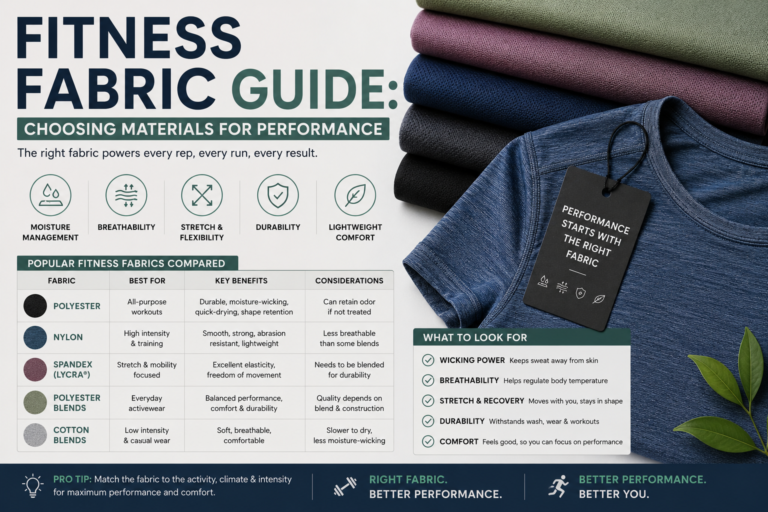
Fitness Fabric Guide: Choosing Materials for Performance

The fabric you incorporate when designing Fitness Fabric Guide can make a colossal difference. High-quality fabrics can be the difference between comfort and durability or restricted, sweaty, and frustrated. Be it yoga, gym, or compression clothing. Knowing how fabrics perform is fundamental. This guide outlines how the most popular activewear fabrics perform and how to choose fabric for your brand or a retail collection.

Why Fabric Selection Matters

Fitness apparel isn’t just about looking good—it’s about functionality. People engage in a range of activities, from high-intensity workouts to yoga and stretching routines, and their clothing needs to move with them. The right fabric provides flexibility, breathability, and durability. It also ensures your apparel maintains its shape after repeated washes and rigorous use. By sourcing quality materials from trusted manufacturers, you can create products that your customers love and return to again and again. For trusted manufacturing options, you can explore Eco Jersey Activewear Manufacturer.

Popular Fitness Fabric Guide Apparel

Polyester

Polyester is a go-to fabric for gym wear due to its strength and resilience. It dries quickly, resists shrinking, and retains its color even after many washes. For brands looking to produce consistent, high-quality gym wear, partnering with a Gym Wear Manufacturer ensures the fabrics meet performance standards and customer expectations.

Nylon

Nylon is smooth, lightweight, and highly durable, making it perfect for yoga and fitness apparel that requires flexibility. It wicks moisture away from the body, helping athletes stay dry during intense sessions. If you are designing a line of yoga wear, a Yoga Wear Manufacturer can help you select the ideal nylon blends for maximum comfort and stretch.

Spandex / Elastane

Spandex, also called elastane, is known for its exceptional stretch and shape retention. This fabric is often used in leggings, compression shorts, and fitted tops. It allows for a full range of motion while providing support, making it a favorite for both gym and performance clothing. For specialized compression garments, a Compression Wear Manufacturer can ensure the right mix of spandex and other fibers to enhance muscle support and comfort.

Cotton Blends

Cotton is soft and breathable but absorbs moisture, which can make it less suitable for intense workouts. Blending cotton with synthetic fibers like polyester or spandex creates fabrics that combine comfort and performance. Many Fitness Apparel Manufacturers offer these blends, giving you apparel that works well in both casual and high-intensity environments.

Eco-Friendly Fabrics

Sustainability is a growing priority for many activewear consumers. Eco-friendly fabrics, such as recycled polyester or bamboo blends, offer the same performance benefits as conventional materials but with a reduced environmental footprint. Brands aiming for sustainability can work with Eco Jersey Activewear Manufacturer to access high-quality, eco-conscious materials.

Tips for Choosing the Right Fabric

  1. Fabric Selection by Purpose – Choose breathable stretchy fabrics for yoga and durable fabrics that wick moisture for gym clothes.
  2. Comfort Test – People will be more likely to buy and wear your brand repeatedly if your apparel is soft and stretchy.
  3. Think About Longevity – Repeated use and washing can distort some fabrics. These should not lose shape after moves.
  4. Choose Fabrics Intelligently – Sometimes, combined fabrics can maximize comfort and high performance, like cotton and polyester or spandex and polyester.
  5. Have a Chat With The Specialists – Reach out to relevant manufacturers who will advise you on material selection for your apparel and help you produce high quality products.

Conclusion

When producing high-performance fitness apparel, the selection of appropriate fabrics is equally as important as the design of the garments. Fabric selection for yoga wear differs from that of gym wear, and the design of compression wear is dependent on the inclusion of spandex. Selecting the right partner, like Eco Jersey Activewear Manufacturer, Yoga Wear Manufacturer, Gym Wear Manufacturer, Fitness Apparel Manufacturer, and Compression Wear Manufacturer, will allow you to provide a range of products that your customers will find to be comfortable and high-performing in gym and retail settings.

FAQs

Which fabric is best for high-intensity workouts?

Polyester and nylon blends are ideal due to durability, moisture-wicking, and quick-drying properties.

Can I use cotton for fitness apparel?

Pure cotton is less suitable for intense workouts. Cotton blends improve moisture-wicking and stretch while retaining comfort.

Why is spandex important in activewear?

Spandex provides stretch, shape retention, and muscle support, making it ideal for leggings, compression wear, and fitted tops.

Choosing Fabrics for Gym Wear Beginners: Performance Basics

Modern fitness and active lifestyles have become more popular with the advent of gym wear. Activewear is expected to provide comfort, flexibility and durability during workouts. Fabric selection is therefore crucial to the success of any fitness wear product.

Understanding Fabrics for Gym Wear clothing is essential to anyone who wants to get into the activewear business. While the right fabric can increase comfort and improve overall movement, poor fabric selections can decrease product quality.

Many activewear brands now work with experienced Gym Wear Manufacturer services to create high-performance apparel designed for both fitness and everyday wear.

Why Fabric Selection Matters in Activewear

Fabrics for Gym Wear is the first thing customers notice when buying gym wear. Poor fabric quality, even if the product is attractive, can lead to uncomfortable wear, decreased durability and negative customer experiences.

Activewear made from high-quality fabrics can improve flexibility, promote body movement and provide comfort for intense workouts.

Many growing brands partner with professional Activewear Manufacturer companies because they understand how important fabric performance is in modern sportswear production.

Strong fabric selection also helps brands build a more professional reputation in the competitive activewear market.

Fabrics for Gym Wear Should Support Performance

Customers invest in activewear for a variety of reasons, including performance. Fabrics for gym wear should be comfortable to help athletes and fitness enthusiasts during their training sessions.

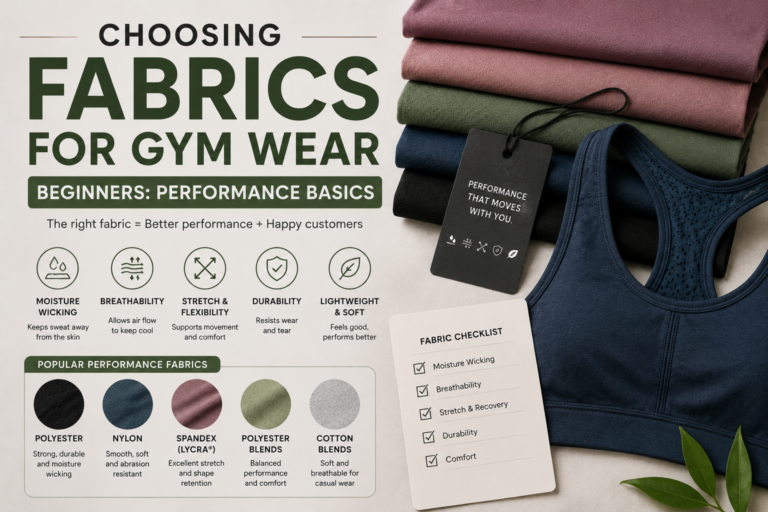
Modern performance fabrics are usually:

  • Breathability during workouts
  • Moisture-wicking performance
  • Better stretch and flexibility
  • Lightweight comfort
  • Long-lasting durability

Activewear that has these features will feel more professional, reliable and comfortable. They will also improve comfort and athletic performance.

Brands who focus on fabric quality experience higher customer satisfaction and repeat sales.

Moisture-Wicking Fabrics Improve Comfort

Moisture management is one of the most important features to look for in gym clothing. Fabrics that hold moisture are uncomfortable when sweating is produced.

The moisture-wicking material helps to pull sweat from the skin and keep the body cool and dry during exercise.

Many activewear brands work with experienced Fitness Apparel Manufacturer services because they understand how to develop sportswear products that combine comfort with performance.

Better moisture control often improves the overall workout experience for customers.

Stretch and Flexibility Are Essential

The fabric of gym wear should be flexible enough to allow for freedom of movement, without causing discomfort or restriction. Flexible fabrics are important for activewear.

Stretchy materials allow products to move with the body naturally during exercise such as weightlifting and yoga.

Many performance-focused brands also work with professional Compression Wear Manufacturer services to create apparel that supports muscle movement and improves workout performance.

Flexible Fabrics for Gym Wear also help garments maintain shape and comfort after repeated use.

Fabrics for Gym Wear in Yoga and Lifestyle Apparel

Modern activewear is not just for gym workouts. Fitness apparel is now worn by many customers for everyday activities, yoga, travel and other lifestyle activities.

Due to this trend, many brands choose materials that are softer and more flexible. These materials combine comfort with functionality.

Many companies partner with experienced Yoga Wear Manufacturer services to develop activewear collections designed for both movement and casual comfort.

This balance helps brands attract a wider customer audience.

Durability Helps Build Customer Trust

Gym wear must maintain its quality after multiple workouts and washing cycles. Poor-quality fabrics for gym wear can lose their shape quickly, fade or become uncomfortable.

Durability is a key factor in selecting fabrics.

Material that is durable and strong can reduce negative feedback, complaints and product returns. Durable products create a stronger brand reputation and increase customer trust.

Brands that focus on quality fabrics for gym wear tend to have a better customer retention rate.

Choosing the Right Fabric Supplier

The experience and reliability of a supplier can have a significant impact on fabric quality. Selecting the right manufacturing partners helps brands achieve greater consistency and performance.

Activewear manufacturers with experience are usually better equipped to guide you in selecting the right materials for your fitness category and customer requirements.

Activewear brands can avoid making common mistakes by working with experienced production teams.

Conclusion

Beginners in the activewear industry must understand fabrics used for gym wear. Fabric quality has a direct impact on comfort, durability, flexibility and overall product performance.

Choose the right material to create products customers will love and trust.

Activewear companies can achieve success by focusing on high-quality Fabrics for Gym Wear, and working with manufacturing partners who have experience in this market.

FAQs

Why are fabrics important in gym wear?

Fabrics affect comfort, flexibility, moisture control, and durability during workouts.

What are moisture-wicking fabrics?

Moisture-wicking fabrics pull sweat away from the body to keep users cooler and drier.

Why is stretch important in activewear?

Stretch fabrics improve movement, flexibility, and workout comfort.

What does a fitness apparel manufacturer do?

A fitness apparel manufacturer produces activewear products designed for athletic performance and comfort.

Can gym wear fabrics also work for yoga apparel?

Yes, many activewear fabrics are designed for both fitness training and yoga wear comfort.

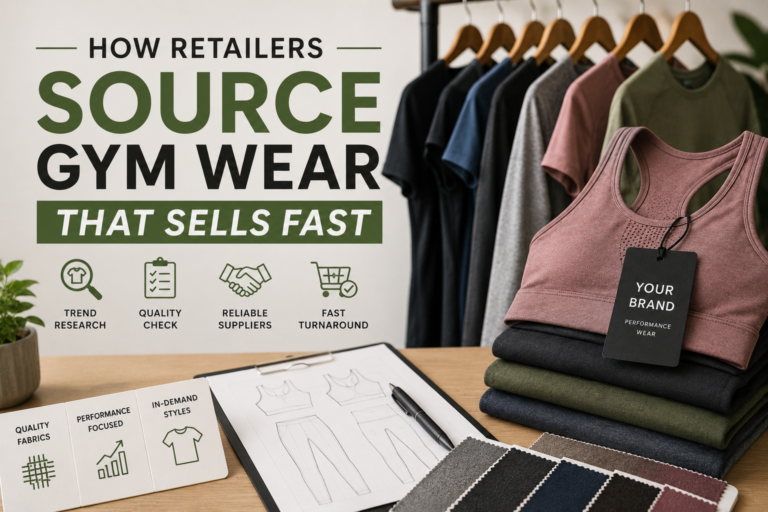
How Retailers Source Gym Wear That Sells Fast

Activewear continues to grow, as consumers continue to focus on comfort, fitness and modern athletic style. Due to this high demand, retailers are always looking for products that will attract customers and increase sales.

Successful retailers, however, do not select products at random. Before adding new products to their collection, they carefully consider market trends, fabric qualities, customer preferences and manufacturing reliability.

Understanding how to source fitness wear correctly helps retailers improve the quality of their products, reduce problems with inventory, and increase profitability over time.

Today, many retailers work with experienced Gym Wear Manufacturer services to create activewear collections that combine style, comfort, and performance.

Understanding Customer Demand in Activewear

Fitness apparel retailers who are successful in this market understand their customers’ needs. Modern Source Gym Wear buyers want it to be stylish, comfortable, durable and flexible.

Before making a purchase, customers are paying more attention to the fabric quality, the fit consistency and performance features.

Many retailers partner with professional Activewear Manufacturer companies because they provide a wider range of activewear products designed for different fitness and lifestyle markets.

Understanding customer demand helps retailers choose products that sell more consistently.

Source Gym Wear With High-Performance Fabrics

The fabric quality is a key factor in the success of activewear. Successful Source Gym Wear retailers focus on materials which improve comfort and athletic performance.

ModernSource Gym Wear is often preferred by customers who want products that:

  • Breathability during workouts
  • Moisture-wicking performance
  • Stretch and flexibility
  • Lightweight comfort
  • Long-lasting durability

By choosing high-quality fabric, retailers can improve customer satisfaction and increase sales.

A strong fabric also helps to create a professional image for your brand in a highly competitive market.

Choosing the Right Manufacturing Partner

By choosing high-quality fabric, retailers can improve customer satisfaction and increase sales.

A strong fabric also helps to create a professional image for your brand in a highly competitive market.

That is why many retailers work with experienced Fitness Apparel Manufacturer services that understand modern sportswear production requirements.

Experienced manufacturers help retailers maintain product consistency, improve production efficiency, and deliver better-quality activewear products.

Compression Wear Continues to Grow in Demand

Compression clothing is becoming increasingly popular with athletes and fitness-focused consumers. Source Gym Wear is now preferred by many consumers because it offers muscle support, improved comfort, and recovery benefits.

Retailers who expand their product range to include compression clothing often gain a larger customer base, and increase the diversity of their products.

Many brands work with professional Compression Wear Manufacturer services to develop high-performance activewear products designed for athletic performance and recovery support.

This category continues to grow as performance-focused activewear becomes more popular worldwide.

Source Gym Wear for Different Fitness Categories

Instead of focusing solely on one type of product, successful retailers build collections that cover multiple fitness categories. This strategy allows businesses to reach a larger audience and increases sales.

Many activewear brands are now expanding into yoga clothing, lifestyle fitness clothing and athleisure.

Working with experienced Yoga Wear Manufacturer services helps retailers create more versatile activewear collections for different customer groups.

Product diversity often improves long-term business stability and customer retention.

Fast-Selling Gym Wear Requires Strong Quality Control

Quality control is important for retailers who sell activewear. Source Gym Wear is expected to provide comfort, durability and performance after repeated wear.

Poor stitching or fabrics of low quality can reduce the customer’s trust in a product and cause it to be less popular.

Experienced retailers inspect the garments to ensure that they are fit consistently, have good stitching, durable fabrics, and perform well before launching them on the market.

A strong quality control system can reduce returns and improve customer satisfaction.

Marketing Helps Gym Wear Sell Faster

Even the best activewear products need a strong marketing strategy to compete in a competitive market. Retailers who invest in professional branding and product photography as well as social media marketing usually achieve higher sales growth.

Activewear can also be more easily marketed to the right audience by using fitness communities, lifestyle marketing campaigns, and influencers.

Brands that encourage confidence, health and active lifestyles are more likely to be embraced by customers.

Conclusion

When Source Gym Wear, retailers focus on more factors than just the product’s appearance. Before building their activewear collections, they carefully consider fabric quality, manufacturing reliability and customer demand.

Successful retailers know that quality and functionality is key in the activewear market today.

Retailers can create collections of gym wear that will sell more quickly and help their business grow by working with manufacturing partners who have experience and adhering to high quality standards.

FAQs

How do retailers source gym wear successfully?

Retailers focus on quality fabrics, reliable manufacturers, and current fitness market trends.

Why are performance fabrics important in gym wear?

Performance fabrics improve comfort, flexibility, moisture control, and durability.

What does a fitness apparel manufacturer do?

A fitness apparel manufacturer produces activewear products designed for performance and comfort.

Why is compression wear popular?

Compression wear supports muscle recovery, improves comfort, and enhances athletic performance.

Can retailers expand into yoga apparel?

Yes, many activewear retailers expand into yoga wear and athleisure collections to reach more customers.

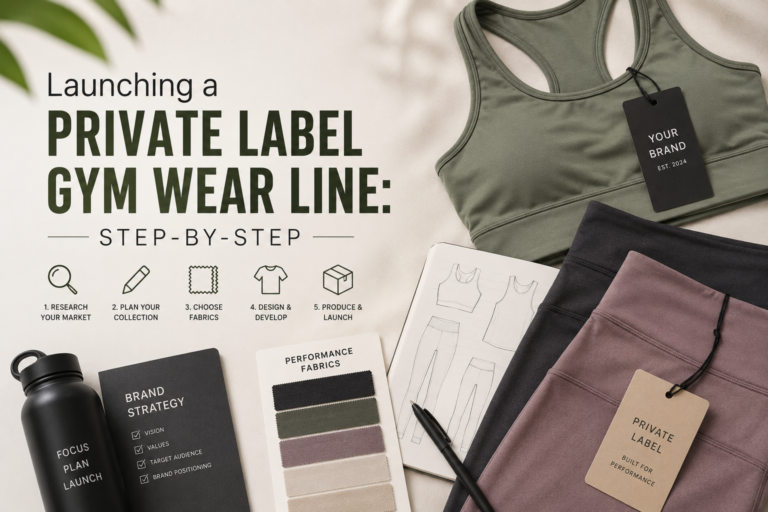
Launching a Private Label Gym Wear Line: Step-by-Step

There is an emerging interest in launching a private label Launching Gym Wear Line brand due to the rapid growth of the activewear market. This has directly resulted from an increase in consumers adopting a fitness- focused lifestyle. However, there are many variables beyond product aesthetics that one must consider to create a successful activewear brand.

Launching Gym Wear Line brand success depends on a combination of quality products, the right materials, dependable manufacturers, and an ironclad strategy to capture the market. Selecting the right manufacturer and highest quality materials are just a few of the many important steps in building a successful long-term business.

Today, many startups work with experienced Gym Wear Manufacturer services to create professional-quality activewear collections that meet modern customer expectations.

Understanding the Gym Wear Market

Prior to production, knowing your desired audience and where you want to position yourself in the market is key. Some brands are more performance-based in the gym, whereas others sell more fashionable activewear.

To productively reach the market and establish the appropriate brand, you need to research competitors as well as consumers and analyze today’s fitness trends.

Many successful brands also explore broader activewear opportunities by working with professional Activewear Manufacturer partners that support different categories of sportswear and fitness apparel.

Understanding your market early helps create a stronger foundation for long-term growth.

Launching Gym Wear Line Requires High-Quality Fabrics

Choosing fabrics for an Activewear Line is a critical phase that affects the success of the venture. Activewear customers need garments that are comfortable, that do not restrict movement, that offer the appropriate moisture management, and that hold up and look good after many washes and workouts.

Comfort is enhanced, and product quality is optimized with high-performing fabrics.

A lot of developing brands target fabric that achieves:

  • Breathability during workouts
  • Moisture-wicking performance
  • Better stretch and flexibility
  • Long-lasting durability
  • Comfortable everyday wear

Choosing the right fabric also helps create a more professional brand image and improves customer satisfaction.

Choosing the Right Manufacturing Partner

For a private label activewear brand, forging a strong partnership with a manufacturer can mean the difference between success and failure. Consistency in quality, operational productivity, and effective communication all stem from a reliable manufacturer.

Many startups choose experienced Fitness Apparel Manufacturer services because they understand the technical requirements of modern sportswear production.

Working with an experienced manufacturer also helps reduce production mistakes and improve overall product performance.

Functional Design Improves Customer Experience

Modern Launching Gym Wear Line attire goes beyond style. Consumers want gear that will move with them, be comfortable, and enhance athletic performance.

This means that brands need to pay attention to flexibility in stitching, use breathable materials and build support within the garments.

Many activewear businesses also work with professional Compression Wear Manufacturer services to develop high-performance apparel designed for muscle support, recovery, and athletic performance.

Functional products often create stronger customer satisfaction and improve repeat purchases.

Building a Strong Brand Identity

Branding is imperative to the success of activewear. Customers prefer brands with an identity, professionalism, and reliability.

Brand identity requires logos, packaging, clear concise messaging, and an even visual consistency among both product and marketing.

The fitness market is especially competitive, and branding is vital to separation.

Expanding Into Different Activewear Categories

Lots of prosperous Launching Gym Wear Line brands branch out into other products after establishing a strong clientele.

For instance, some brands offer yoga apparel, lifestyle activewear, or performance compression clothing to broaden their target market.

Working with experienced Yoga Wear Manufacturer services can help brands develop more versatile activewear collections that appeal to both fitness and lifestyle customers.

Expanding product categories strategically can support long-term business growth.

Launching Gym Wear Line With Strong Quality Control

Quality assurance in activewear production is essential considering customer expectations of durability and reliability in performance.

Unreliable fabric and inconsistent sizing adversely affect customer trust and brand reputation, not to mention poor stitching.

Leading activewear brands put garments through advanced inspections for fabric performance, stitching, and sizing, and ensure the garments are durable before reaching the customer.

Quality control systems enhance customer satisfaction and reduce returns.

Marketing Helps Build Brand Awareness

Quality products require quality marketing to grow. Activewear brands targeting markets with dedicated communities, influencers, and even professional product photography can benefit from the right marketing.

Brands that promote indulging in healthy activities and motivating their customers with the right fitness culture resonate greatly with customers.

Reliable quality products that are marketed consistently can help new activewear brands grow quickly in the market.

Conclusion

Launching Gym Wear Line takes planning, high-quality products, and dependable manufacturing. Each step, from selecting the right performance fabrics and establishing a catchy brand focus, contributes to your success.

For a business to differentiate itself in today’s fast-growing fitness industry, it must emphasize the integration of function, paramount quality control, and as an imperative, the customer’s experience.

Through the right production techniques and partners, a start-up can design a memorable gym wear collection while maintaining business sustainability.

FAQs

How do I start launching a gym wear line?

Start by researching your market, choosing quality fabrics, and finding a reliable activewear manufacturer.

Why are performance fabrics important in gym wear?

Performance fabrics improve comfort, flexibility, moisture control, and durability during workouts.

What does a fitness apparel manufacturer do?

A fitness apparel manufacturer helps produce activewear products with proper quality and performance standards.

Why is quality control important for activewear brands?

Quality control helps maintain durability, sizing consistency, and customer satisfaction.

Can gym wear brands expand into yoga apparel?

Yes, many activewear brands expand into yoga wear and lifestyle fitness products as they grow.

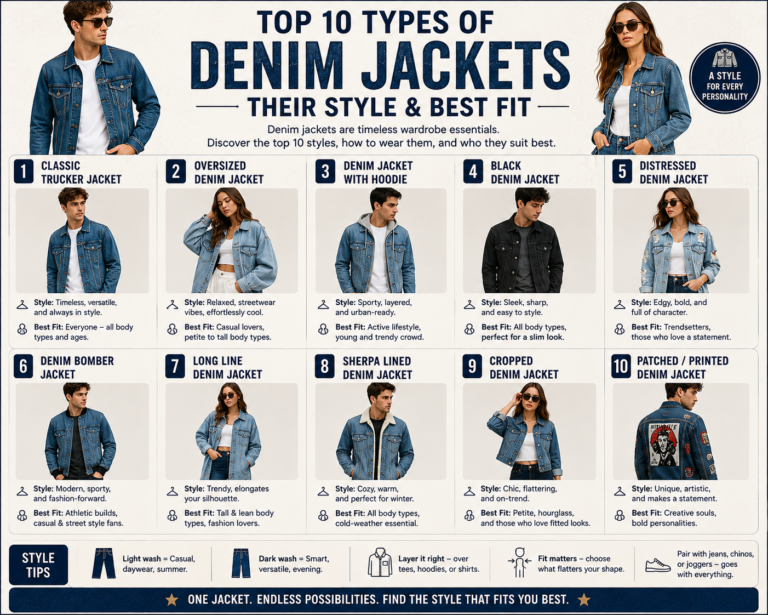
Top 10 Types of Denim Jackets Their Style & Best Fit

Denim jackets are always in style. The right denim jacket can transform any outfit, whether you wear it dressed up or casually. Choosing the right style can be overwhelming, especially with so many options available. Let’s look at the top 10 types of denim jackets so you can find the perfect fit.

1. Classic Trucker Jacket

The trucker jacket has become the most popular denim jacket. The trucker jacket has a structured fit with chest pockets and a button front closure. This style is suitable for almost anyone and goes well with jeans, chinos or joggers. Explore our denim manufacturer for custom options if you want to use this style as part of your brand.

2. Oversized Denim Jacket

Oversized jackets give off a relaxed streetwear look. These jackets are loosely draped over the shoulders, and look great with hoodies and layered outfits. This style is also a staple of urban fashion, and youth culture. Check out our streetwear manufacturer collection for brands looking to create bold urban styles.

3. Cropped Denim Jacket

Cropped jackets are cut above the waist to create a feminine, sharp silhouette. These jackets look best when worn with wide-leg pants, high-waisted trousers, or skirts. They are also suitable for semi-formal and casual occasions.

4. Distressed Denim Jacket

Distressed jackets have rips, fades and raw edges to give them an aged, worn-in look. They also add a rebellious touch to plain outfits such as t-shirts and skinny jeans.

5. Sherpa-Lined denim jacket

Sherpa jackets combine the durability of denim with a warm inner fleece lining. They are therefore ideal for the colder months. Style without sacrificing comfort.

6. Denim Jacket with Embroidered Denim

The fabric of embroidered jackets is decorated with decorative stitches, patches, or artwork. They are unique pieces that express personal style. Our private-label denim manufacturer can help retailers create unique collections by creating truly custom-embroidered pieces.

7. Double-Breasted Denim Jacket

Styles with double-breasted features two rows of buttons and a larger lapel. They have a polished, structured look. They are perfect for fashion-forward and smart-casual dressing.

8. Sleeveless Denim Vest

Sleeveless denim jackets or vests add layering without adding bulk. It can be worn over graphic tees or long sleeves, as well as flannel tops during transitional seasons. Visit our denim shirt manufacturer for wholesale and customized vest options.

9. Denim Jacket Acid-Washed

With their light, patchy finishes, acid-washed coats have a retro, bold aesthetic. These jackets have a strong 80s/90s vibe and continue to be a streetwear trend. They also look great with bottoms in solid colors to balance out the look.

10. Kids’ Denim Jacket

Denim jackets don’t only belong to adults. Denim jackets for kids offer the same style and durability in smaller sizes. These jackets are perfect for everyday wear, outdoor play, and school runs. Browse our kids’ jeans manufacturer for styles that are age-appropriate and durable for active children.

What to look for in a denim jacket

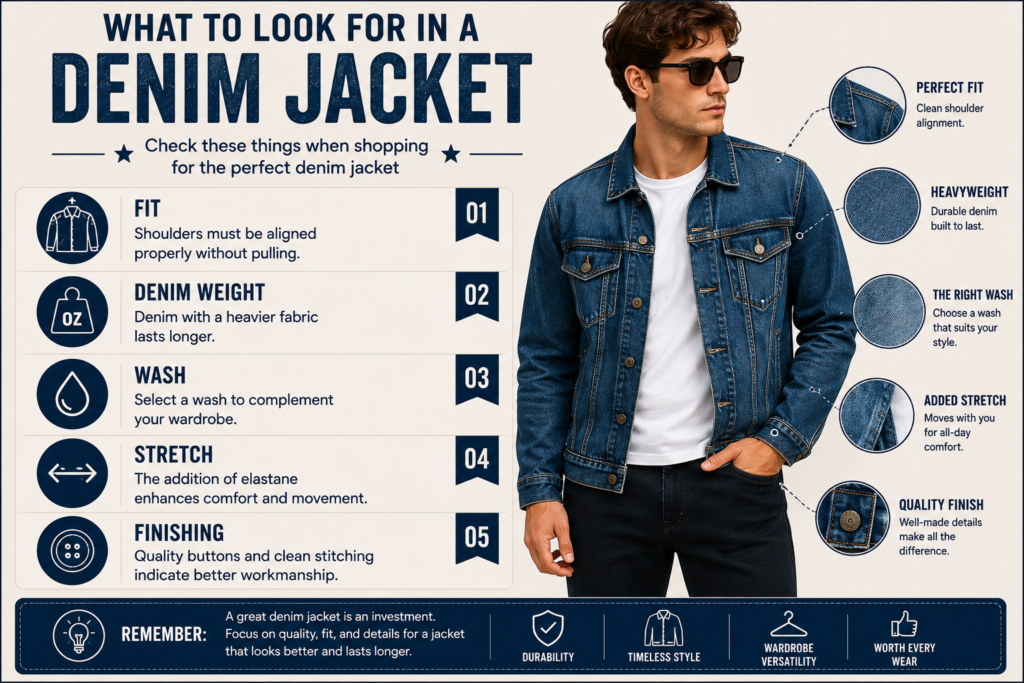
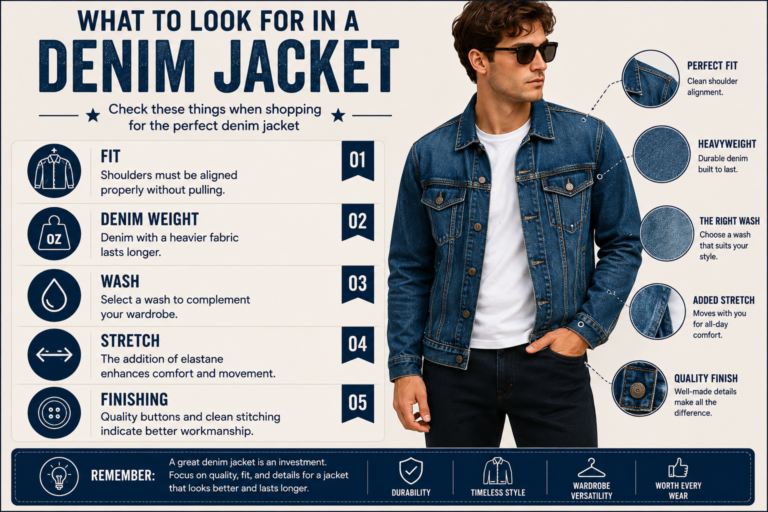
Infographic explaining what to look for in a denim jacket, featuring fit, denim weight, wash, stretch, and finishing details with a male model wearing a blue denim jacket.
Key features to check before buying a quality denim jacket, from fit and fabric weight to stitching and finishing details.

Check these things when shopping for the perfect denim jacket:

  •   Fit: Shoulders must be aligned properly without pulling
  •   Denim weight: Denim with a heavier fabric lasts longer.
  • Wash: Select a wash to complement your wardrobe
  •   Stretch: The addition of elastane enhances comfort and movement
  •   Finishing: Quality buttons and clean stitching indicate better workmanship

conclusion

The top 10 types of denim jackets covers every style requirement, from classic truckers and bold acid-washed styles. Each style is designed for a specific purpose, body type and occasion. Understanding these differences will help you create smarter wardrobes and stronger product lines.Eco Jersey manufactures premium denim coats as well as complete clothing for brands and retailers around the world. We deliver consistency and quality at every stage, whether you are looking for a single style or a complete collection. Contact us today to start building your denim collection.

FAQs

Which denim jacket is best for everyone?

The classic trucker style fits almost all body types. The structured fit and timeless style make this a wardrobe staple for both men and women.

What is the ideal fit for a denim coat?

Slim fit is sharp and polished. A looser fit is better for streetwear and casual looks.

Denim jackets can be worn all year round?

Spring and summer are great for lightweight denim. Denim jackets lined with Sherpa or heavier denim will keep you warm in the fall and winter.

Brands can order custom denim jackets?

Eco Jersey offers full customization for denim jackets , including private labeling, embroidery, distressing and unique washes, for brands around the world.

Choosing the Best Fabrics for High-Performance Yoga Wear

Fabric is the key to a good yoga garment. Fabric is the most important part of the garment. If you choose the wrong fabric, your leggings will be see-through when doing the downward dog. After ten washings, the sports bra has lost its shape. The top bunches up and limits movement in the middle of the flow. All of this is not a problem with the design. Fabric is the problem. This guide will cover the best fabrics for yoga wear – what they are, their performance, and which suits which styles and price ranges.

What makes a fabric suitable for yoga?

Yoga is an extremely physically demanding activity. Fabrics must move with the body, be able to manage heat and moisture, remain opaque when compressed, and maintain their shape after hundreds of washes.

This is a very long list, and not all fabrics meet them. Every fabric choice begins with understanding what your garment will do.

Before recommending a fabric, a specialist manufacturer discusses the end use. Fabrics for hot yoga classes are different than those for restorative sessions or studio-to street lifestyle pieces.

Polyester/Spandex Blend

It is widely used in yoga performance wear, and with good reason. Polyester is excellent at managing moisture and wicking sweat from the skin. It also dries quickly. Spandex, which typically makes up 15 to 25% of the fabric blend, provides four-way stretch as well as shape recovery.

It’s a fabric that moves easily, dries quickly, and keeps its shape even after washing. This fabric is the best choice for leggings and fitted tops in most yoga styles.

This blend is widely available in recycled versions, using rPET poly. It performs the same as virgin polyester. These fabrics are ideal for brands of the best fabrics for yoga wear that want to combine performance with sustainability.

Nylon-Spandex Blend

Nylon-spandex offers a superior alternative to polyester-spandex. It has a silkier, softer handfeel. This is why it is popular best fabrics for yoga wear where performance and comfort are equally important.

Nylon is more durable and retains its colour over time. It is also more resistant to piling under friction, making it an excellent choice for compression leggings or any garments that are heavily used.

Cost is the trade-off. The cost of nylon-spandex is typically higher than that of polyester blends. This will affect your production costs and retail prices. A compressionwear manufacturer with experience in nylon blends will be able to advise you on the best weight and blend ratio based on your compression needs.

Moisture-Wicking Jersey

If you prefer a more relaxed, softer option for yoga styles where comfort is the priority, such as yin, restorative, or casual classes, a moisture-wicking fabric can be a great choice.

The jersey has a natural drape that moves with the body, without the compression caused by polyester-spandex mixes. It is breathable and feels lighter against the skin. This makes it ideal for practices that are less intense, where ease of movement takes precedence over technical performance.

This fabric is perfect for workout apparel, which can be worn from the studio to daily wear. It’s great for relaxed-fit tops, wide-leg trousers, and layering pieces.

Bamboo Blends

Blends of bamboo are a natural option for brands that focus on sustainability and comfort next to the skin. Bamboo fabric is antibacterial and regulates the body temperature, making it ideal for those with sensitive skin or in warmer environments.

Stretch recovery is the performance limit. Over time, bamboo blends do not hold their compression as well. These blends are better suited to lighter styles and casual best fabrics for yoga wear than performance garments with high compression.

Bamboo blends are a great way to differentiate your brand when building an eco-conscious premium collection. This is especially true when paired with fitness wear styles that lean towards the natural wellness positioning.

How to choose your fabric

Each fabric choice involves trade-offs. Before choosing a fabric for your yoga collection, consider the following factors:

  • Stretch and Recovery — Does the fabric return to its original shape when used repeatedly?
  • Opacity – Does it remain squat-proof under full compression?
  • Moisture Management — How quickly does it dry sweat?
  • Durability – How durable is it after 50 or 100 washing cycles?
  • Handfeel – Does it feel good against your customer’s skin?

Before you make a decision, a dedicated activewear producer can provide you with fabric samples and test results for each of these properties. This will allow you to base your choice on facts rather than assumptions.

Conclusion

Not just the most popular fabric on the market, but the one that best matches your garment’s performance requirements is the best choice for the best fabrics for yoga wear. Polyester-spandex is ideal for compression with high performance. Nylon-spandex to provide a premium handfeel. Jersey for relaxed comfort. Bamboo blends to promote a sustainable lifestyle.

If you choose the right fabric, everything else will be built on a solid base.

Explore the range of Yoga Wear Manufacturing options to find the partner who fits your project.

FAQs

What is the best fabric for yoga leggings?

Polyester-spandex and nylon-spandex blends are the top choices. Polyester offers better moisture management at a lower cost. Nylon delivers a softer, more premium handfeel.

What percentage of spandex do yoga leggings need?

Most yoga leggings use between 15 and 25 percent spandex. Higher spandex content increases compression and stretch recovery.

How do I check if a yoga fabric is squat-proof?

Stretch the fabric sample tightly across your hand and hold it up to light. A good yoga fabric should remain fully opaque under that level of tension.

How many wash cycles should a yoga fabric survive?

A quality yoga fabric should maintain its stretch, shape, and colour through at least 50 wash cycles. Premium options perform well beyond 100 cycles.