Home Blog Page 107

Cozy Winter Outfits to Keep You Warm and Stylish All Season

Winter wear is an exceptionally important category of the contemporary fashion due to the combination of comfort and non-chalance in style. Individuals desire the warmth and do not want to lose their good appearance. Thus, the trend of dressing comfortably is an important one in the colder months.cozy winter outfits. Sturdy overlay, cozy fabric, and warm properties are also sought after by many who follow fashion in the everyday winter collection. This is a wish that increases when temperatures are drastically low. Consequently, brands continue to advance fabrics and silhouettes to endorse comfort and functionality. Warm winter apparel has continued to be used due to its ability to overcome everyday dressing problems without losing style,cozy winter outfits.

Oversized sweaters, leggings, and padded coats became part of modern wardrobes. Social media pushed these trends further, as people shared warm, soft, and relaxed looks. Today, cozy winter fashion blends comfort with aesthetics. People want warmth, but they also want soft textures, flattering silhouettes, and calm colors.cozy winter outfits. As winter styles continue to evolve, the desire for coziness remains at the center. Comfort now guides design choices more than any past era. Cozy fashion has transformed from a survival need to a cultural lifestyle symbol.
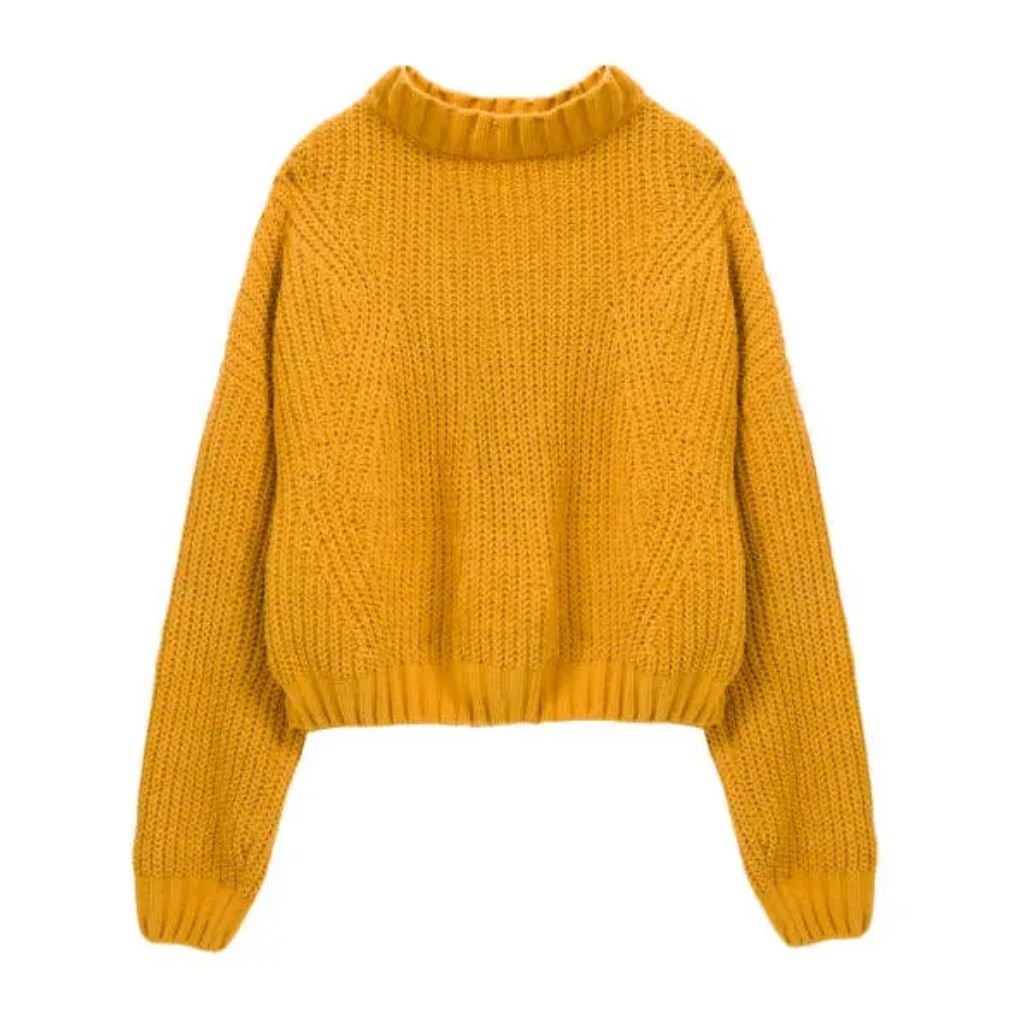
A mustard yellow knitted sweater with long sleeves, a ribbed crew neckline, and ribbed cuffs and hem.cozy winter outfits
Mustard yellow chunky knit sweater with a ribbed neckline and relaxed fit.

The Cozy Winter Clothing History.

Comfy winter wear has been developed in several centuries. Even the ancient civilization relied on an animal skin and wool layers, which kept them warm in the cold winters. With the course of time, individuals started bending the fabrics into comfortable clothes, which were more structured. With the creation of spinning tools, more people were able to manufacture wool and warm clothing was made available to the masses. The winter fashion was rapidly developed in the industrial era as mills started to manufacture more fleece, flannel, and knitted fabrics in large quantities.

As civilizations advanced, weaving techniques improved. Wool became one of the most valuable winter materials during the Middle Ages because it stayed warm even when damp.cozy winter outfits. People wore wool cloaks, thick tunics, and knitted socks to stay comfortable through long winters. Cozy clothing was still mostly functional, but society slowly began appreciating beauty in textiles. Patterns, colors, and new stitching styles appeared, influencing how winter clothing looked and felt.Puffers Jackest wear winter season

Why Cozy Winter Outfits Are Important

Cozy winter outfits matter because they protect your body from cold and keep you comfortable. They help you stay warm even when temperatures drop quickly. They also let you move freely without feeling stiff or restricted. Moreover, they boost your confidence because you look stylish while staying comfortable. These outfits also help prevent common winter issues like chills or dry skin. In addition, they allow you to enjoy both indoor and outdoor activities with ease. Overall, cozy winter outfits support your health, warmth, and style through the cold months.
A mustard yellow knitted sweater with long sleeves, a ribbed crew neckline, and ribbed cuffs and hem.cozy winter outfits
Mustard yellow chunky knit sweater with a ribbed neckline and relaxed fit.

What Makes an Outfit Cozy? (Definition + Key Elements)

A comfortable clothing is very warm, soft, and comfortable on cold days. It must be soft on the skin as well as provide thermal protection. Individuals tend to invest in loose clothing due to ease of movement and free flow of air. Warm winter clothes also connote the ability to be loosely layered, thus being able to cope with variations in temperature. The significant role is also played by soft textures such as fleece, wool, and knits.cozy winter outfits. These are fabrics that retain heat and leave the body comfortable. A combination of these features produces warm, trendy, and convenient cold-weather looks.

Moreover, cozy winter outfits matter because they create a balance between practicality and fashion.cozy winter outfits. Many people face cold winds, chilly mornings, and low temperatures, so warm layers become everyday basics. Soft fabrics, heat-retaining materials, and smart layering help you stay comfortable all day.cozy winter outfits.Tuxedo Jacket Guide: Timeless Styles for Modern Formal Wear Instead of shivering outdoors, you feel relaxed and ready for tasks, which improves your mood and energy. Consequently, a cozy wardrobe becomes a lifestyle need rather than a seasonal luxury.

Soft Fabrics

Cozy winter fashion is characterized by soft cloth as it is warm and relaxing. Comfort is also enhanced with the use of knits, wool blends, and brushed textures. These fabrics do not irritate and are used to keep the body warm.

Warm Layers

The layers provide insulation and regulation of temperature. Outer layers, mid, and base are used by people to create warm winter attire. Such an approach also avoids unneeded bulk.

Thermal Comfort

Thermal comfort maintains body warmth and does not overheat. Porous fabrics allow the heat to pass out and yet the warmth is retained close to the body.

Relaxed Silhouettes

Layers can be loosely fitted. These shapes contribute to the creation of a snug softness without restriction in movement.
A mustard yellow knitted sweater with long sleeves, a ribbed crew neckline, and ribbed cuffs and hem.cozy winter outfits
Mustard yellow chunky knit sweater with a ribbed neckline and relaxed fit.

Best Fabrics for Cozy Winter Outfits

The fabrics play a significant role in making winter clothes comfortable. The appropriate materials are insulated, breathable, and soft. Natural and synthetic fibers are other fabrics that are compared by many individuals to select the most suitable ones to wear on a daily basis.

Wool

Wool is thermal, natural and moisture wicking. It makes the body dry and warm in cold days. Wool is also very suitable at retaining heat without being heavy.

Fleece

Fleece is soft and very light. It does not take too long to dry and it gives a lot of insulation. Fleece layers are many and are used to make cozy winter outfits as they are warm and comfortable.

Sherpa

Sherpa is a cushy and cozy texture. It resembles sheep wool and adds additional coziness. Sherpa jackets and other linings are popular with people as they are so snug.

Cashmere

Cashmere is a soft luxurious fabric. It is also cozy and yet lightweight. Most people use cashmere sweaters as fashionable warm winter accessories.

Flannel

Flannel is brushed and warm. It offers a tender feel that is pleasant to touch in shirts and pajamas. The flannel is breathable, which maintains a high level of comfort on the daily basis.

Thermal Knits

Knits are thermal and help in keeping the body warm. The knits make ideal foundation clothes to warm winter outfits.

Natural and Synthetic Fabrics.

The fabrics of nature such as wool and cashmere are very warm and breathable. Artificial materials such as fleece and acrylic are usually cheaper and dry quicker. A wide range of warm winter clothes is combined to work together to perform better.
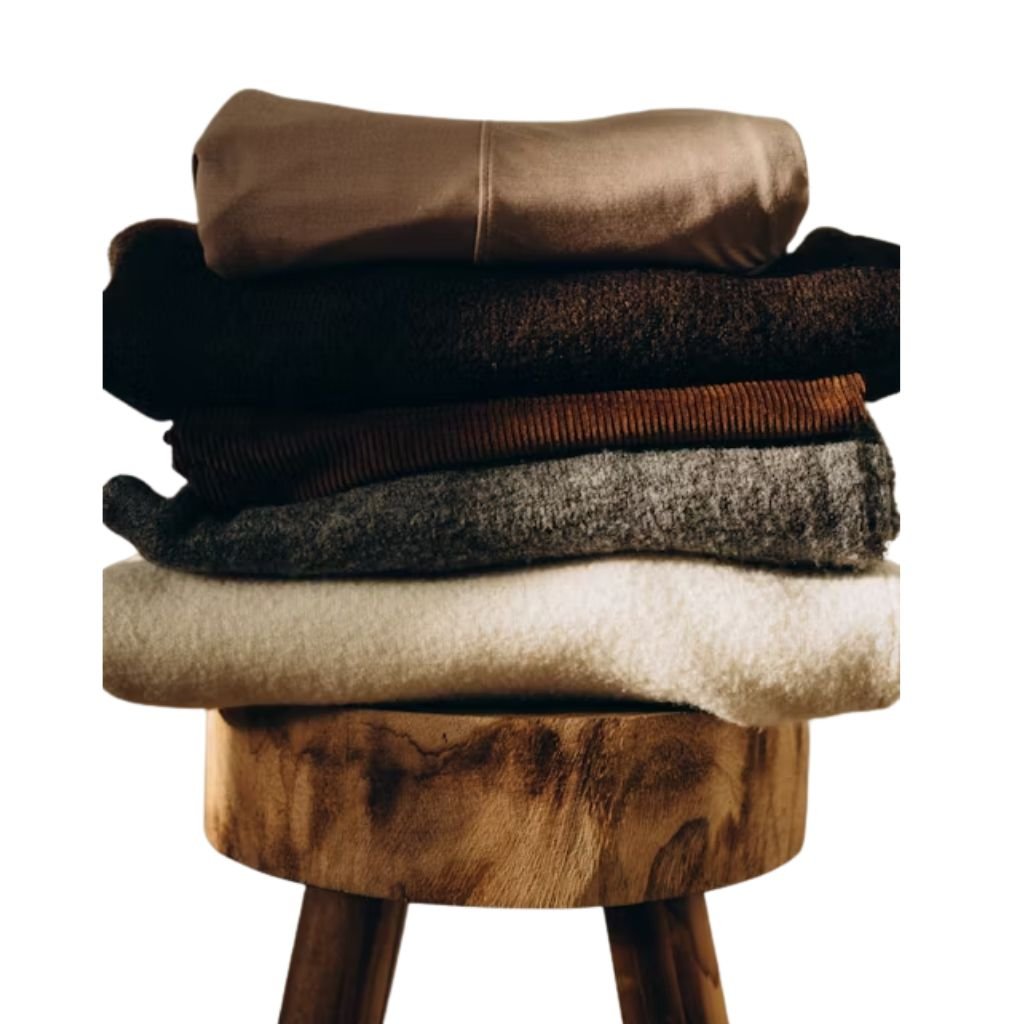
A mustard yellow knitted sweater with long sleeves, a ribbed crew neckline, and ribbed cuffs and hem.cozy winter outfits
Mustard yellow chunky knit sweater with a ribbed neckline and relaxed fit.

Layering Guide: The Simple How To Guide to a Warm and Stylish Cozy Winter.

The layering is a way to keep you warm and at the same time make your outfit trendy. It is also flexible since layers can be modified with ease. Warm winter clothing is based on clever layering in order not to become voluminous and retain the comfort.

Base Layer Ideas

Base layers are the nearest ones to the skin. Topics in thermic colors, merino wool tops, or stretchy knits are the best. The layers make the body warm as the heat is trapped in these layers.

Mid-Layer Options

Mid-layers add insulation. Light sweaters, cardigans and fleece jackets are good. They are comfortable without necessarily limiting motion.

Outerwear Choices

A jacket protection against cold and wind. Puffer jackets, wool coats and teddy coats are ideal. These works are the final protection to warm winter outfits.

How to Hint Without Being Discoursed.

Choose thin but warm fabrics. Follow proportions of balance and outer wear that is structured. The layers should be always smooth to prevent excessive bulkiness.
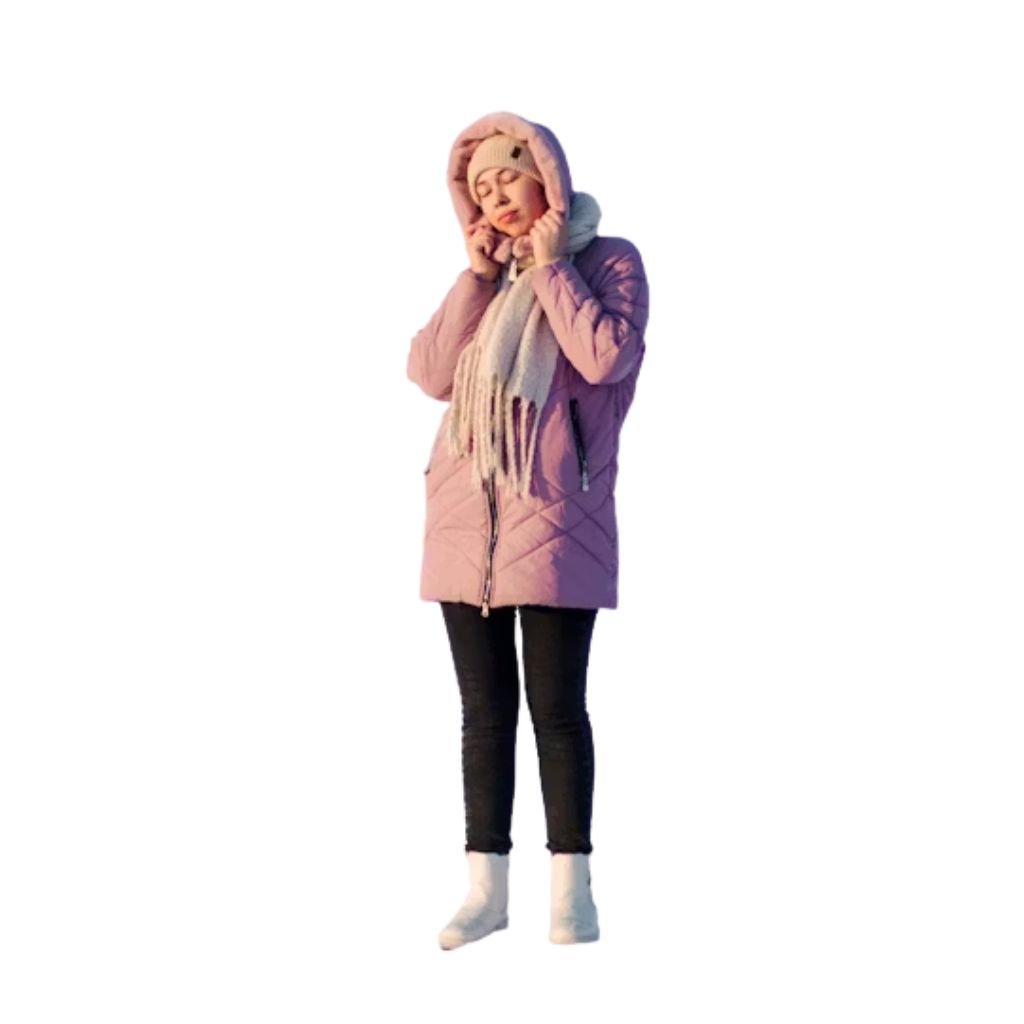
A mustard yellow knitted sweater with long sleeves, a ribbed crew neckline, and ribbed cuffs and hem.cozy winter outfits
Mustard yellow chunky knit sweater with a ribbed neckline and relaxed fit.

Top Cozy Winter Outfit Ideas

Such concepts will assist you to establish elegant and cozy looks in any environment.

Cozy Winter Outfits for Work

Experiment with custom wool pants and tight-knit sweater and a structured coat. This combination appears lacquered and yet inviting.

Warm Winter Travel Clothes.

Wear leggings, fleece hoodie and puffer jacket. These layers will make you warm and flexible when you are on a long trip.

Bright Winter to School or College Outfits.

Combine pair of jeans with a sherpa jacket and a beanie. Such an appearance is relaxed, cozy and fashionable.

Cosy Winter Wardrobes to Wait at Home.

Wear flannel pajamas, thermal socks and soft cardigan. A combination of this gives utmost comfort.

Cosy Winter Dresses and Jumpsuits.

Use thermal underwear, fleece jackets and snow boots. These articles can make you warm when you are out in the field.
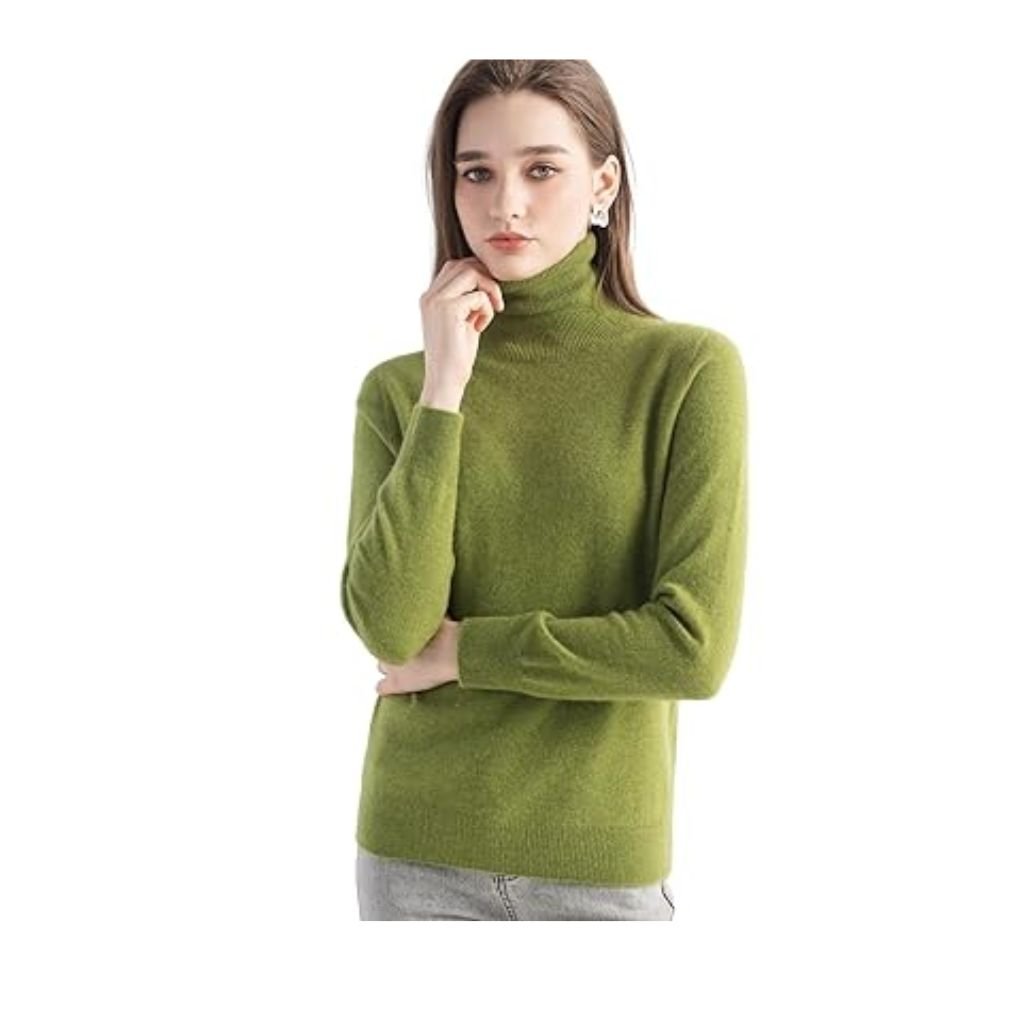
A mustard yellow knitted sweater with long sleeves, a ribbed crew neckline, and ribbed cuffs and hem.cozy winter outfits
Mustard yellow chunky knit sweater with a ribbed neckline and relaxed fit.

Fashionable Comfy Winter Apparel 2025.

The winter 2025 proposes new and fashionable cozy trends. These articles provide a way of updating your wardrobe and keeping you warm.

Oversized Sweaters

Monstrous sweaters are comfortable and stylish. They are easily layered and provide an additional warmth.

Puffer Jackets

Puffer jackets have not yet gone out of fashion because of their insulation. They design contemporary and comfortable winter clothes of any age.

Teddy Coats

Teddy coats are comfortable and soft. They are soft to touch, and are a favorite during the winter.

Chunky Scarves

Big scarfs are textured and warm. They even raise plain winter appearances.

Knit Matching Sets

Knit sets are easy to wear and easy to be comfortable. They transform warm-up winter clothes into a cool and stylish appearance.

Cozy Winter Outfit Ideas for Different Body Types

An infographic titled “Cozy Winter Outfit Ideas for Different Body Types,” showing outfit suggestions for petite, plus-size, and tall individuals, with small illustrated clothing icons next to each section.cozy winter outfits
Infographic showcasing cozy winter outfit ideas tailored for petite, plus-size, and tall body types.

Petite Cozy Outfits

Little people tend to wear tight sweaters or fitted overcoats. These works do not burst the frame.

Plus-Size Cozy Outfits

The plus-size shoppers are very handsome in knitted coats and soft knits. The balanced layers produce flattering cozy winter outfits.

Tall Cozy Outfits

Long coats and long knits are made up of tall people. Such works emphasize height in a fashionable way.

Winter Colour Trends to Cozy Up.

The color preferences determine the atmosphere of winter outfits in cozy style. These colors are in demand during this season.

Cream

Cream gives it a soft and elegant look. It pairs well with warm tones.

Camel

Camel is very traditional and expensive. It enriches jackets and sweaters.

Charcoal

Charcoal is deep and can be used during basics in winter.

Sage

Sage provides a very relaxed and cool touch to warm winter wear.

Burgundy

Burgundy makes cold weather outfits look warmer.

Chocolate Brown

Chocolate brown is a warmneutral addition, which is cozy to the earth.

Fashionable Winter Accessories to Add.

Beanies

Beanie makes your head warm and make you look cool.

Gloves

Gloves keep your hands warm. Select either thermal or wool.

Scarves

Scarfs are warm and appealing to the eye. Extra coziness is provided by chunky knots.

Thermal Socks

During cold days, your feet are warm in thermal socks.

Snow Boots

Snow boots will make your footsteps warmer. They also do lots of warm winter dresses.

Budget-Friendly Cozy Winter Outfits

You do not have to waste money in order to appear fashionable. There are quite a number of brands which provide low costly comfortable clothes which are nevertheless warm and comfortable.

Affordable Brands

The affordable winter items are found in such brands as Uniqlo, H&M, and Old Navy. These collections will assist you in creating warm outfits in winter with ease.

Capsule Wardrobe Tips

Select multi-purpose colors and plain silhouettes. These items are well coordinated and minimize the clutter of the wardrobe.

How to Be Comfy (and not Over)spend.

Combine layers in an inventive manner. Pay attention to warm clothes as opposed to fashionable ones.

A mustard yellow knitted sweater with long sleeves, a ribbed crew neckline, and ribbed cuffs and hem.cozy winter outfits
Mustard yellow chunky knit sweater with a ribbed neckline and relaxed fit.

Common Uses of Cozy Winter Outfits

Cozy winter outfits serve many practical and everyday purposes. People reach for these warm looks whenever temperatures drop and comfort becomes essential.cozy winter outfits. These outfits help you stay warm, stylish, and protected from cold winds while still fitting into your daily routine. Because cozy styles are versatile, they work well in many settings and keep you prepared for different winter activities.

Daily Errands and Casual Outings

Cozy winter outfits work great for grocery runs, shopping trips, or casual meet-ups. Soft sweaters, fleece jackets, and warm leggings help you stay comfortable as you move around in the cold. These outfits are simple, warm, and easy to style without much effort.

Work and Office Wear

People often choose cozy looks for winter office days. Wool coats, turtlenecks, and smart knitwear help you stay polished and warm. Cozy office outfits maintain professionalism while making long working hours more comfortable.

School or College Wear

Students rely heavily on cozy winter clothing because it allows easy movement and warmth during long days. Hoodies, puffer jackets, joggers, and thermal layers are popular choices for comfort around campus.

Home and Lounge Use

Cozy winter outfits are perfect for staying warm at home. Soft pajama sets, fleece robes, and knitted socks help you feel relaxed during indoor activities. These outfits are ideal for work-from-home days, movie nights, or peaceful evenings.

Travel and Commuting

Travelers love cozy outfits because they offer warmth and comfort during long flights or road trips. Layered clothing, warm scarves, and puffer jackets help you adjust to temperature changes easily. These outfits also reduce fatigue during travel.

Outdoor Winter Activities

Cozy winter outfits are essential for outdoor fun. Whether you walk your dog, hike, or enjoy light snow activities, warm layers protect you from cold winds. Snow boots, wool socks, beanies, and thick jackets help you stay active and safe.

Social Gatherings and Festive Events

People also wear cozy winter outfits during holiday parties and family gatherings. Stylish knit dresses, cardigans, and soft scarves create warm and festive looks. These outfits add charm to your winter celebrations.
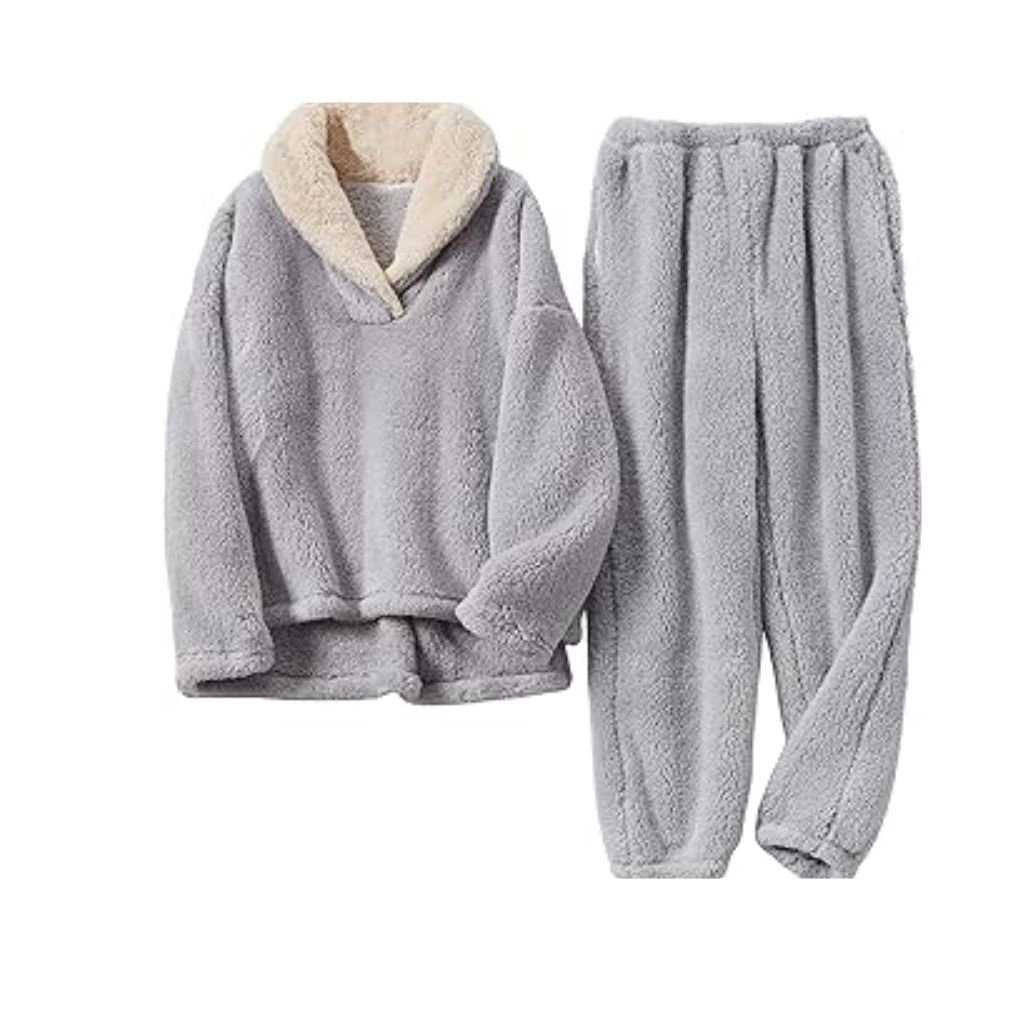
A mustard white knitted sweater with long sleeves, a ribbed crew neckline, and ribbed cuffs and hem.cozy winter outfits
Mustard yellow chunky knit sweater with a ribbed neckline and relaxed fit.

Cosy Winter clothing Care and Maintenance.

Winter leather lasts longer and keeps its good shape when well maintained.
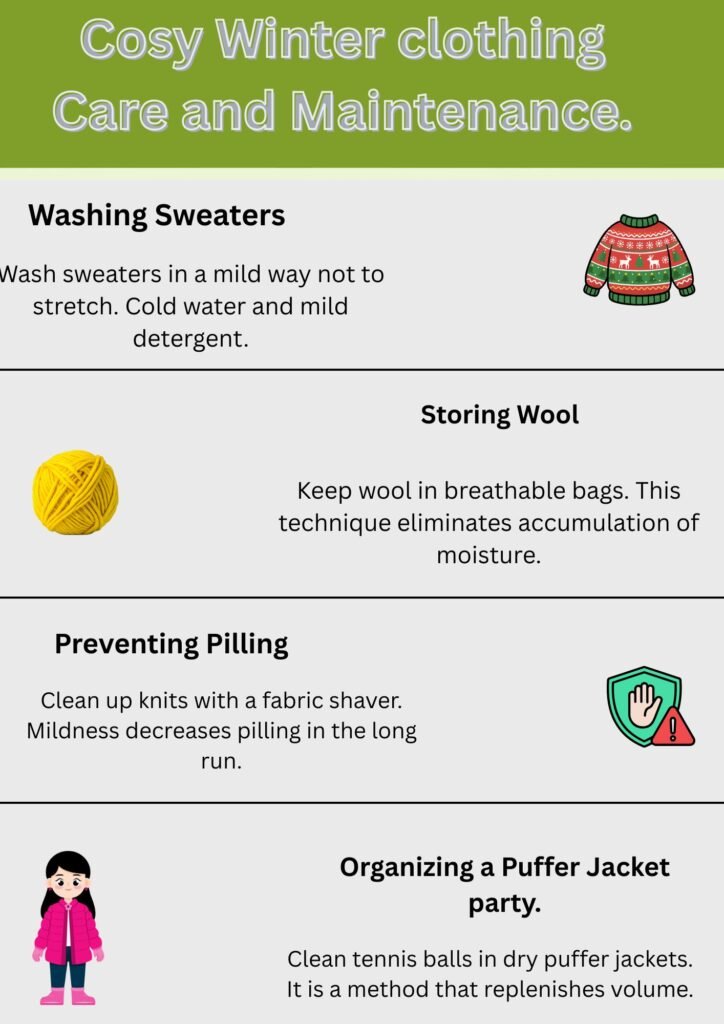
A winter-themed infographic titled “Cosy Winter Clothing Care and Maintenance” featuring sections on washing sweaters, storing wool, preventing pilling, and organizing a puffer jacket. Each section includes a small related illustration, such as a sweater, ball of yarn, shield icon, and a girl in a pink puffer jacket.cozy winter outfits
Infographic outlining simple tips for caring for winter clothing, including sweaters, wool items, knits, and puffer jackets.

Washing Sweaters

Wash sweaters in a mild way not to stretch. Cold water and mild detergent.

Storing Wool

Keep wool in breathable bags. This technique eliminates accumulation of moisture.

Preventing Pilling

Clean up knits with a fabric shaver. Mildness decreases pilling in the long run.

Organizing a Puffer Jacket party.

Clean tennis balls in dry puffer jackets. It is a method that replenishes volume.

Conclusion

Cozy winter outfits offer the perfect balance of warmth, comfort, and style during the cold season.cozy winter outfits. They help you stay protected from low temperatures while still expressing your personal fashion sense. When you build outfits with the right fabrics, thoughtful layers, and trending silhouettes, your winter wardrobe becomes both functional and fashionable. These looks make every cold day easier because they bring softness, insulation, and confidence together.

Choosing the best fabricssuch as wool, fleece, sherpa, cashmere, and thermal knits ensures reliable warmth without needing heavy layers. Meanwhile, smart layering techniques help you create stylish, streamlined outfits that never feel bulky. Whether you dress for work, travel, school, or outdoor adventures, cozy winter outfits fit every lifestyle and body type.

FAQs

What do you wear to stay cozy in winter?

Wear layered outfits, warm knits, and insulated outerwear. Soft fabrics keep you comfortable all day.

What is the warmest outfit for winter?

Thermal layers, wool sweaters, and insulated jackets create the warmest cozy winter outfits.

How do you layer clothes for warmth?

Start with thermal base layers, add fleece or knits, then finish with a warm coat.

Which fabrics keep you warmest in winter?

Wool, cashmere, fleece, sherpa, and thermal knits keep your body warm.
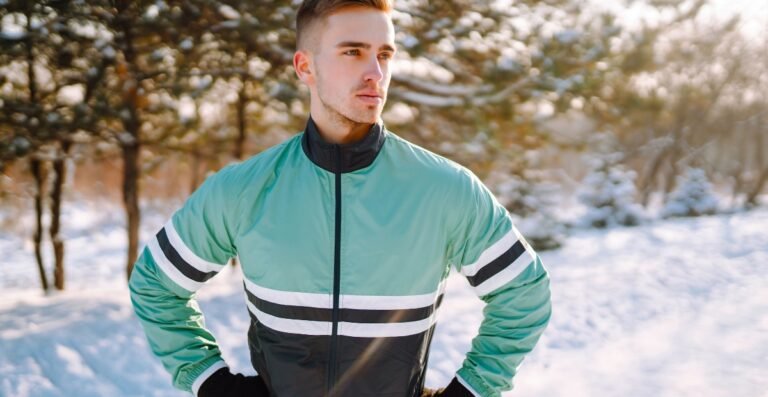
Track Jacket for Men: The Ultimate Style & Performance Guide

0

Segmenting track jacket for men within streetwear is one of the greatest examples of the clothing evolvement that takes place. Once considered nothing more than an essential part of an athlete’s training uniform, the track jacket was slowly accepted into the realms of everyday casual clothing, and streetwear, and slowly into the even semi-formal styles. The track jacket strikes a rare combination of versatility that allows it to find its place across a plethora of events, seasons, and styles. It’s just that comfortable and fashionable to find.

Sporty heritage aside, track jacket for men are no longer just clothing for the athletes. The shift towards more fashionable loungewear and spritzed performance apparel has not only assisted the merging of track jackets into lifestyle clothing. It has also provided the jacket with a shift in prominence. Style communities have accepted track jackets into mainstream along with the rest of athleisure, and performance apparel. Countless updates to jackets in styles, details, and fabrics have helped jackets find a place in the self-expression of their owners. Confidence has also become a trait of track jackets.

Understanding why men keep selecting this jacket can be linked to its construction, its cultural impact, its stylistic versatility, and its everyday utility. Most contemporary track jackets are made of cutting-edge materials designed to be breathable, flexible, and durable. Because of these materials, the jacket serves function and practicality even while being very bold in its style choices.

The Evolution of the Men’s Track Jacket

A stylish white and gray zip-front athletic jacket with bold black and green diagonal stripes across the chest and sleeve, set against a wooden background.
Modern color-block athletic jacket with black and green stripe accents.

The narrative of the track jacket started in athletics. Athletes would wear the track jacket for men to keep warm and to avoid injury when training, while still being able to move. However, the design and elegant fit of the jacket helped it cross over into everyday use and popularity in casual wear. It was eventually adopted into street style and hip hop fashion.

Fashion houses started to rework the track jacket for men to include more high fashion design elements. Increasing the range of materials, modern color blocking, and a variety of design elements helped the jacket complete its journey from track warm up to street style and effortless style statement. The track jacket for men was eventually adopted mainstream fashion thanks to the styling of high profile celebrities, fashion influencers, and style trend leaders.

The popularity of athleisure created a demand for outfits that are both comfortable and stylish, which made the track jacket a fashionable, everyday sporty layer. Trends do change, but this piece slowly and steadily became a staple for its timeless and adaptable designs.

Key Features That Define a Great Track Jacket

Person wearing a light green zip-up bomber jacket with ribbed cuffs and hem, layered over a navy turtleneck, standing outdoors with pine branches and a wooden background.
Soft mint-green bomber jacket layered over a navy turtleneck — cozy autumn vibes.

There are a few classic track jacket identity markers, and while brands add their own touch, most, if not all, include them. Most track jacket for men are made with lightweight breathable materials like polyester, nylon blends, elastane, and sometimes technical knits. Uniform fabrics allow for flexible movement with a smooth texture. Features like slim zippers, ribbed cuffs, and high necklines are common. All of these add to the comfort, whether you are working out, traveling, or just trying to relax.

The fit of the track jacket for men will never go unappreciated. It’s not too loose to the point of falling off but not too tight that it hugs your body, which is a desired fit for a lot of the male population. The balance promotes confidence and comfort, which this jacket, along with the rest of its simple construction, will have no problem layering up with.

Color blocking, logos, and even subtle striping are some details that are added to jackets to make them more interesting. While some folks go for a more vibrant style, others like to stick to neutral colors to make sure everything matches. In all cases, track jacket for men are incredibly versatile.

Why Men Love Wearing Track Jackets

Young man wearing a light gray zip-up hoodie with black accents and pockets, standing outdoors in a park.
Casual comfort meets street style in this gray zip-up hoodie with bold black pockets.

One reason many men prefer track jackets is that they go along well with their daily activities. Because it’s so lightweight, it’s easy to just throw it on to go outside. Also, a lot of track jackets are wrinkle free, which is great for road trips.

The reason that track jackets are so popular is also the comfort. These jackets are made with breathable materials so they can be worn comfortably for long periods of time. Wearing it to run errands, to the gym, or just chilling with some friends, you can stay comfortable and stylish at the same time.

The track jacket is also very good at being versatile. Pair it with some joggers for a sporty outfit, or some jeans for a more relaxed streetwear look. Because of that, it works great for all different times of the day.

These guys get the jacket for how functional it is. This jacket is made of moisture-wicking fabric keeping you fresh throughout the day. Active people love the flexible material, and people who like looking nice and put together every day love how it elevates any outfit.

Fabric Innovations and Their Impact

The very first track jackets were made of very basic utilitarian materials, but now, theres a wide array of advanced fabrics used for maximum comfort and durability. Now, because of advanced textile technology, a lot of jackets have climate control, stretch, and even have advanced water resistance.

The smooth fabric of polyester makes it a top choice, because of its durable, quick-dry, and moisture-wicking properties. Adds durability and structure, and some brands use spandex or elastane for stretchable fabric to be used in mobility-critical areas.

For active use, jackets often have mesh lining to prevent the insulation (used for warmth in the colder months, to keep it functional year-round) from overheating the body. Even if they were intended to be sporty, because of these improvements, track jacket for men have become versatile clothing.

Another exciting development is the use of eco-friendly materials! Improvements in recycled fibers, responsibly sourced fabrics, and sustainable dyeing practices is now in use by some track jacket manufacturers. Thanks to these improvements, track jackets feel and look good while helping the planet.

The Influence of Streetwear Culture

We cannot discuss global fashion without talking about the role of the track jacket for men in streetwear. It’s relaxed fit, bold color choices, and sporty design made it an instant streetwear staple. Along with a blend of skate, hip-hop, and youth culture, the track jacket became a go-to layering piece.

The streetwear culture did more than the hoodie revival. It did a complete jacket makeover. Oversized cuts became a norm, and bright color prints, and new palettes became everyday sights. Limited edition jackets shot to popularity when music and art collaborations happened.

The track jacket is a streetwear staple, an identity. It allows men to individually express themselves with comfort. It’s popular, so it doesn’t matter no matter how other fashion trends shift. The track jacket is always a beloved streetwear essential.

How to Style a Track Jacket for Men

Men styling a track jacket is easy. Since they work with numerous looks, track jackets can be paired with a lot of items in your wardrobe. Every man has his own style, but this track jacket can work with minimal looks, bold looks, sporty looks, or even relaxed looks.

Wearing track jackets with fitted jeans and fresh sneakers is a combination that many men use. This combination gives a casual streetwear vibe which is good for going out, coffee runs, or for any plans during the weekend. Other men like using the track jacket with a graphic tee or hoodie which gives a more expressive youthful look.

A classic usge of joggers still remains for the track and jacket. These two pieces match well with each other and create a sporty fit. Even if this fit was originally based around athletic wear, it has evolved into a fit that a lot of people wear and style in their daily lives.

Men like pairing track jackets with jogger style trousers which look more tailored and some simple sneakers. The look is modern, but a bit more refined and polished. The jacket still has its sporty looks, but with its lines and overall sharp look, it makes it easier to elevate the look without having to sacrifice your comfort.

Other accessories are important too. Clean, subtle style, with backpacks, hats, and jewelry, elevate the look even more. And while the track jacket is itself a statement piece, a few more little, additional accessories bring the whole ensemble together.

Choosing the Right Track Jacket

A black and beige varsity-style jacket with a front zipper, beige sleeves with black piping, and black cuffs and waistband. The collar has beige and black stripes.
Stylish two-tone bomber/varsity jacket with contrast sleeves and stripe detailing.

Personal style, use case, and comfort all dictate the ideal track jacket for men. While some men may like the classically fitted style, others may prefer a more modern and slim fit jacket. Other the jacket your jacket is made of will also be a part of your decision.

The right material is also important. For an overall active use, moisture wicking and lined meshes will help with keeping cool and dry. For those more into streetwear, bold, colorful, and patterned jackets may be more exciting. Though, minimal use and streetwear jacket style typically call for plain colors.

Fit is also important with a track jacket. Even though track jackets are designed for optimal movement and mobility, a fit that’s too big, or too small, shouldn’t be the case. The right fit should also help with keeping proper posture and standing out.

Lifestyle color also matters. Dark colors, like navy, are easy to mix, and pair well. Lively, and bright colors bring out strong personality, and help with standing out. Track jackets have such a wide variety, and so do color styles too, so finding the right fit with your personality, and lifestyle should be easy.

Why the Track Jacket Will Always Stay Relevant

Why the Track Jacket Will Always Stay Relevant
Vintage-style color-block windbreaker in navy, white, and gray. Lightweight jacket with bold color blocks and zip-front closure. Sporty navy windbreaker with white and gray panels, laid on a white-washed floor.

The track jacket for men has endured a lot of different fashion styles. This is because the track jacket has always been able to meet different needs. As long as people are incomparable. This jacket is always gonna be a classic.

Although there are new fashion trend styles released every year, the track jacket does have an equal timeless appeal. The track jacket does not lose it’s versatility. This quality features track jacket for men from a different generation with new track jacket for men.

The track jacket features new styles that appeal to men from different generations. The track jacket for men is great for men who have a work from home, quick errands, traveling, or a casual weekend. The track jacket features great style.

The Perfect Balance of Fashion and Function

A stylish young man wearing a tan track suit with burgundy and dark brown trim, large round glasses, and retro over-ear headphones stands outdoors in a modern courtyard with greenery and buildings in the background.
Casual cool in tan: a young man rocks a retro-inspired tracksuit and headphones for a laid-back outdoor look.

The track jacket for men ability to merge fashion and function is what makes it stand out in a crowd. It keeps getting better and better. This is because a large audience of men are able to keep their personal style while having a practical wardrobe.

The track jacket for men does fashion in a new way to prove a point. Most designed styles that look good lose utility, but the track jacket does the exact opposite. This track jacket is always gonna look good and be useful.

Men appreciate the versatility of this jacket and keep coming back to it. It can be worn to the gym, on a trip, to a social event, or lounging indoors. Although it started as a piece of sportswear, it has become one of the most versatile pieces of outerwear in a man’s closet.

Conclusion

A men’s track jacket is more than a piece of outerwear. It is a symbol of style, comfort, and freedom of movement. It originally was a piece of clothing worn for athletics, but now it is a go-to wardrobe staple for every man and a standout piece in streetwear or everyday clothes. It’s popularity stems from its ideal combination of style, versatility, and function.

The track jacket is one of the most timeless pieces of clothing in today’s fast-changing world. It’s ability to combine style and function make it a great choice for any situation. It will easily fit a sporty, urban, or smart casual style.

In the end, a men’s track jacket is a smart piece of clothing to buy because it can be worn all year round, it’s easy to put in any outfit, and it will add a nice touch to your style. For all of these reasons, it is a piece of clothing that men all over the world will continue to buy.

FAQs

What makes a track jacket suitable for everyday wear?

A track jacket is lightweight, breathable, and flexible, making it comfortable enough for daily activities while still looking stylish and polished.

Can a track jacket for men be worn in all seasons?

Yes. It works well in mild weather on its own, and it can be layered during colder seasons, which makes it a year-round essential.

Are track jackets good for workouts?

They are. Because they are made with moisture-wicking and stretchable fabrics, they offer comfort and movement support during light to moderate exercise.

Waterproof or Water-Resistant Puffers: What You Should Know

Waterproof or Water-Resistant Puffers have been a necessity in the winter wardrobe these days. They are pleasant, protect you against bad weather and facilitate active movement. The increased popularity is due to improved materials and improved insulation technology. With the change in weather to be unpredictable in winter, people desire jackets that can deal with rain, snow, and wind comfortably. Hence it is worthwhile to know what kind of type best suits your lifestyle. This guide reveals the key distinctions and allows you to make the correct choice,Waterproof or Water-Resistant Puffers

History of Waterproof or Water-Resistant Puffers

The earlier puffer jackets were merely basic down-filled coats primary to keep one warm. Gradually, designers came to the understanding that warmth was not sufficient. Early puffers were frequently damp due to winter rain or wet snow, and thus lost their insulation ability. Light coatings, tight weaves and synthetic fillings were then added to the brands.Waterproof or Water-Resistant Puffers.A Tuxedo Jacket is an evening jacket that is made of black-tie. Along with the development of outdoor sports, the necessity in the improvement of protection increased.
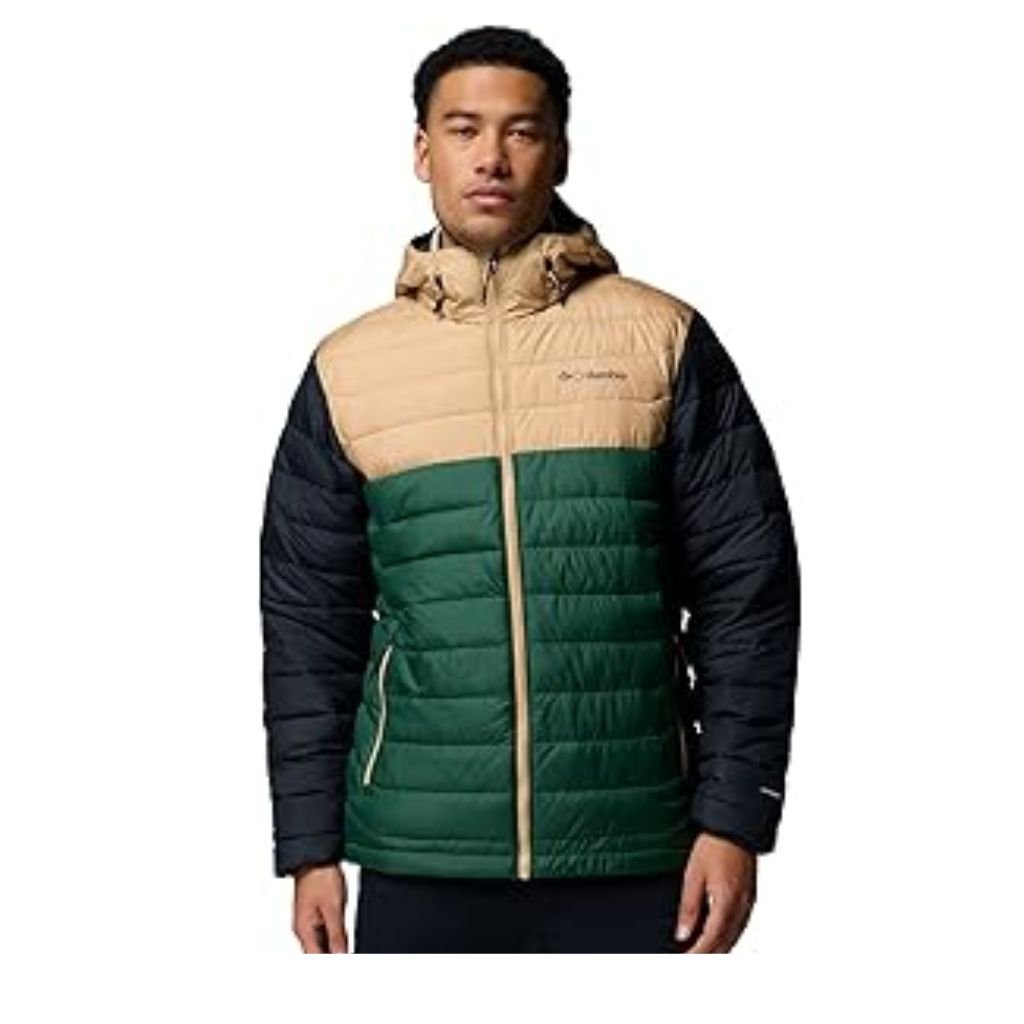
A man wearing a color-blocked puffer jacket with a beige hood and shoulders, green body, and black sleeves, standing against a plain white background.Waterproof or Water-Resistant Puffers
Color-blocked winter puffer jacket featuring beige, green, and black panels for a modern cold-weather look.

Why Waterproof or Water-Resistant Puffers Are Popular Today (Expanded Version)

Waterproof or Water-Resistant Puffers have become extremely popular today because people want jackets that handle unpredictable winter weather with ease.Waterproof or Water-Resistant Puffers Winters are no longer simple or stable. Temperatures rise and fall quickly, and sudden rain or wet snow appears without warning.Waterproof or Water-Resistant Puffers. Because of this constant change, people look for jackets that offer both reliable warmth and strong weather protection. Waterproof and water-resistant puffers deliver this balance in a simple and comfortable way. They keep you warm, dry, and ready for daily life.

Fashion trends also influence this rise in popularity. Modern puffers look sleek, stylish, and minimal. They pair well with casual or semi-formal outfits. Brands now design puffers that feel light yet strong, so people can wear them anywhere. Since consumers want clothing that fits travel, work, and outdoor activities, these jackets offer impressive flexibility. They blend everyday style with outdoor performance, which increases their appeal even more.

A man wearing a color-blocked puffer jacket with a beige hood and shoulders, green body, and black sleeves, standing against a plain white background.Waterproof or Water-Resistant Puffers
Color-blocked winter puffer jacket featuring beige, green, and black panels for a modern cold-weather look.


What Is the Difference Between Waterproof and Water-Resistant Puffers?

Search term: waterproof vs water-resistant puffer jacket.

Waterproof or Water-resistant puffers do not act the same way during rain and snow. Waterproof puffer will not allow any water to penetrate it as the shell, seams and zippers form a closed system. You are able to walk in long hours of heavy rain and still stay dry.Waterproof or Water-Resistant Puffers. This complete protection is provided through special membranes and seam-sealing tapes.Waterproof or Water-Resistant Puffers. A puffer is waterproof and it repels light moisture. It operates during drizzles and light snowfall but it does not operate in a heavy storm.
Waterproof jackets deal with snow fall, wet ice and heavy rains. Puffers are lighter, breathable yet when it rains constantly they absorb the water.

Explain the meaning of waterproof and water-resistant.

Coated fabrics and closed seams prevent entry of water in waterproof puffers. Puffers that are waterproof are made of treated fabrics that do not absorb water very fast.

Driving in the rain, snow, and wet conditions.

The puffers are easy to wear and can resist the heavy rain. Waterproof puffers are taken on brief showers. Waterproof shells melt the snow slower, and water-resistant shells melt at a faster rate.

How Waterproof Puffers Are Made (Materials & Technology)

Keywords: waterproof puffer jackets materials, DWR coating.

Waterproof or Water-Resistant Puffers have other methods of construction. The waterproof puffers are relying on heavy shell material like nylon, polyester, and ripstop. Such fabrics do not tear and they keep off water. A DWR coating makes the surface have a slippery feel, hence water slides off. Waterproof puffers have a breathable membrane underneath the shell in many of them.Waterproof or Water-Resistant Puffers. This membrane membrane regulates the sweat and keeps the rain out. Another important step is seam taping. It seals miniature stitches which would leak away water.
Combined, these are elements that result in weather-proof performance.

Outer shell fabrics

Nylon and ripstop are tear resistant and increase durability. Polyester shells are both soft and highly protective. Every shell is strengthened after lamination.

DWR coating

One of the fabrics is dry with a DWR coating. It eliminates overcrowding and enhances comfort during wet weather. After extensive use, you might have to refresh it.

Seam sealing

Sealed seams are used on fully waterproof puffers. These seals prevent lurking leaks as well as provide complete dryness on all sides.

A man wearing a color-blocked puffer jacket with a beige hood and shoulders, green body, and black sleeves, standing against a plain white background.Waterproof or Water-Resistant Puffers
Color-blocked winter puffer jacket featuring beige, green, and black panels for a modern cold-weather look.

How Water-Resistant Puffers Work

Keywords: water resistant puffer, sufficient in winter.

Waterproof puffers are based on the density of the fabric and the light coats. They do far better in soft snow and light rain. The cover reaches down the fabric that prevents the entry of water but is not completely blocked. This shape enhances the breathability since moisture vapor can get out more quickly. The preferred feature among many brands is water resistance as it makes jackets light. Waterproof or Water-Resistant Puffers.These jackets are appropriate in urban weather, in short distance commuting or mild weather in winter.
Nonetheless, during heavy rainfall, they become wet so they cannot be used extensively in wet conditions.

A man wearing a color-blocked puffer jacket with a beige hood and shoulders, green body, and black sleeves, standing against a plain white background.Waterproof or Water-Resistant Puffers
Color-blocked winter puffer jacket featuring beige, green, and black panels for a modern cold-weather look.

Light rain protection

They deal with drizzle, short showers and mist. The water will get on the surface and can take up.

Breathability benefits

They enable heat to be lost rapidly in the body. This will minimize sweat and increase comfort in movement.

The reason why certain brands will opt to be waterproof.

Puffers that are water resistant are cheaper to manufacture. They are lighter, soft and can be used on a daily basis.

A man wearing a color-blocked puffer jacket with a beige hood and shoulders, green body, and black sleeves, standing against a plain white background.
Color-blocked winter puffer jacket featuring beige, green, and black panels for a modern cold-weather look.

Which One Is Better for Winter? (Waterproof vs. Water-Resistant)

Keyword: best puffer jacket for winter rain

Water-Resistant or Waterproof Puffers do not work the same in the winter. A puffer jacket is waterproof and is ideal in snowy or wet areas. It keeps safe in long storms, icy winds and slushy weather. In the meantime, puffer with water-resistance is used on cold days that are dry but not in winter rain. It is also less stuffy and comfortable in the house.Waterproof or Water-Resistant Puffers.
Either of the two types is good with city winters or mild snow. Waterproof puffers are more useful in serious winter rain or travelling to wet areas.

Compare performance

Puffers are waterproof to keep off a heavy snow and cold rain. Puffers that are waterproof should be used in dry cold or when the rain is brief.

Ideal use cases

Select puffers that are waterproof so that they can be used during hiking, traveling, and wet weather. Select puffers that are waterproof when going to work and wearing day to day.

Insulation Types: Down vs. Synthetic in Waterproof Puffers

Query: down vs. synthetic waterproof puffer.

Puffers which are waterproof or water-resistant employ two types of insulation. Down insulation is very warm yet it loses its loft when wet. The water-resistant down of modern times solves part of the problem. Synthetic insulation is warm even in wet conditions. Waterproof or Water-Resistant Puffers.PrimaLoft and Thinsulate brands are brands that remain warm when it rains and melts.
Synthetic insulation works better in very wet conditions. Down is the warmest in the case of dry cold.

Water-resistant down

This type remains fluffy more. Compared to untreated down it dries quicker and it is more resistant to moisture.

Synthetic insulation

Even in the wet season, synthetic fill traps heat. It is appropriate in rainy winters and in outdoor activity.

Warmth retention

Synthetic insulation will keep you warm when you spend long periods of time in wet weather. Down is best in cold dry and deep freeze.

A man wearing a color-blocked puffer jacket with a beige hood and shoulders, green body, and black sleeves, standing against a plain white background.Waterproof or Water-Resistant Puffers
Color-blocked winter puffer jacket featuring beige, green, and black panels for a modern cold-weather look.

Key Features to Look For in a Waterproof or Water-Resistant Puffer

Keyword: characteristics of puffer jacket with waterproof.

There are features that enhance performance during wet winter. Seam sealing keeps water out. A nice hood prevents the wind and eliminates the rain on your face. Higher hydrostatic rating exhibits great waterproofing. The zippers are storm-resistant and roll out water.Waterproof or Water-Resistant Puffers. Breathability panels enhance the movement of air.
These characteristics make it more comfortable and safeguarded during unanticipated weather.

Seam sealing

Seam tapes provide maximum water protection. Medium protection is provided by partial taping.

Hood design

Adjustable hoods have more coverage. Stiff brims sweep the rain off your eyes.

Hydrostatic rating

The closely rated the waterproofing. Good waterproof puffers begin at 5,000 mm.

Zippers and closures

Zipper areas are covered by storm flaps. Zips which are resistant to water are another safety measure.

Breathability

Mesh panels and under arm vents enhance air circulation. This decreases sweat when walking or trekking.

A man wearing a color-blocked puffer jacket with a beige hood and shoulders, green body, and black sleeves, standing against a plain white background.Waterproof or Water-Resistant Puffers
Color-blocked winter puffer jacket featuring beige, green, and black panels for a modern cold-weather look.

Best Situations to Wear Each Type

Waterproof and water-resistant puffers work well in different winter conditions. Choosing the right one depends on weather, activity level, and comfort needs. Below are the best situations for each type.

City Weather and Daily Commutes

A water-resistant puffer works great for city life. It handles cold winds, light drizzle, and short snow flurries. Because it breathes well, it feels comfortable during indoor-outdoor movement. It also pairs easily with casual or work outfits.

Rainy Winter Days

A waterproof puffer is the best choice for strong winter rain. It blocks heavy moisture and prevents the insulation from getting wet. This makes it ideal for unpredictable rain, wet streets, and humid winter climates.

Snowy Conditions and Slushy Roads

Choose a waterproof puffer when snow turns wet or heavy. It keeps you dry as snow melts on the surface. This protection matters when walking through slushy sidewalks or deep snow.

Outdoor Activities and Sports

A waterproof puffer works well for hiking, trekking, or long walks. It handles sweat, cold wind, and sudden showers. Many waterproof puffers use synthetic insulation, which stays warm even when damp.

A man wearing a color-blocked puffer jacket with a beige hood and shoulders, green body, and black sleeves, standing against a plain white background.Waterproof or Water-Resistant Puffers
Color-blocked winter puffer jacket featuring beige, green, and black panels for a modern cold-weather look.

Pros and Cons of Waterproof Puffers

Keyword: waterproof puffer jacket pros and cons

Waterproof or Water-Resistant Puffers offer different benefits. Waterproof puffers shine during heavy rain and deep snow. They protect you longer and offer strong wind resistance.Waterproof or Water-Resistant Puffers. However, they feel heavier and breathe less. They also cost more due to advanced materials and seam sealing.

Advantages

Great for storms and wet regions. Long-lasting protection and strong durability.

Disadvantages

Heavier weight and lower breathability. Prices often fall on the higher side.

Pros and Cons of Water-Resistant Puffers

Keyword: water resistant puffer advantages

Water-resistant puffers feel light, comfortable, and breathable. They offer good warmth for urban winter weather. However, they do not protect well in long rain. Heavy snow can also soak the insulation.
They are ideal for everyday use but not serious winter storms.

Advantages

Lightweight and easy to wear. Better indoor comfort and quick drying.

Disadvantages

Limited rain protection. Not suitable for strong winter storms.

Best Situations to Wear Each Type

Waterproof or Water-Resistant Puffers work best in different settings. Waterproof puffers suit travel, hiking, camping, and wet cities. Water-resistant puffers suit office commutes, city strolls, and mild climates.
Your lifestyle decides which jacket fits better.

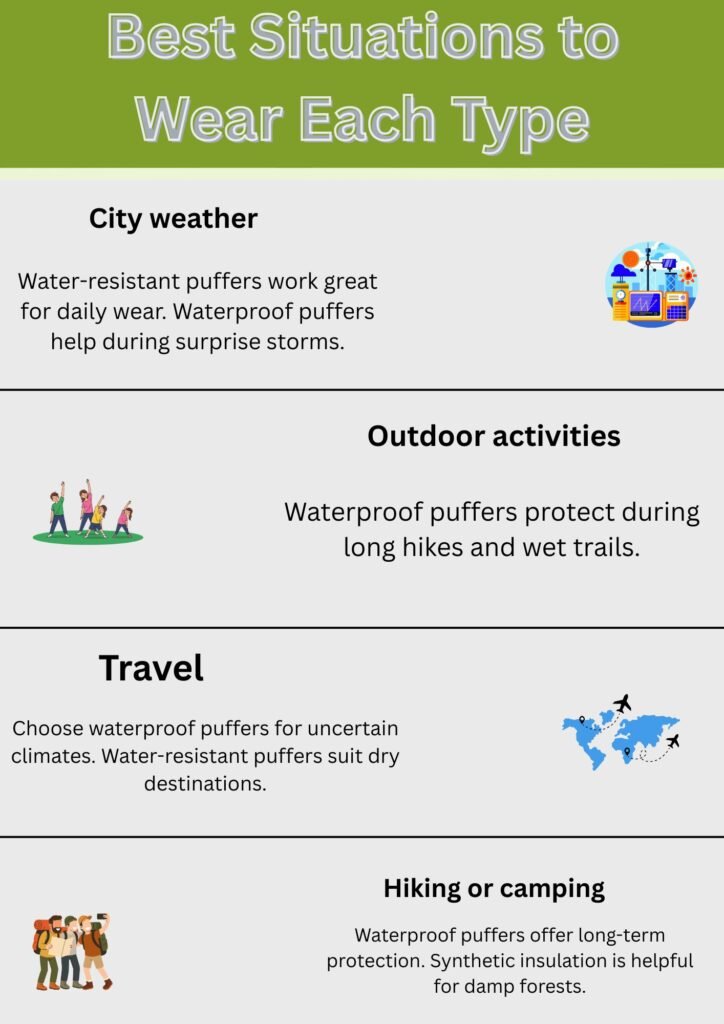
“Infographic titled ‘Best Situations to Wear Each Type’ explaining when to use water-resistant vs. waterproof puffer jackets, with sections for city weather, outdoor activities, travel, and hiking or camping, accompanied by small illustrative icons.”Waterproof or Water-Resistant Puffers
Best situations to choose water-resistant or waterproof puffer jackets for city use, outdoor activities, travel, and hiking.

City weather

Water-resistant puffers work great for daily wear. Waterproof puffers help during surprise storms.

Outdoor activities

Waterproof puffers protect during long hikes and wet trails.

Travel

Choose waterproof puffers for uncertain climates. Water-resistant puffers suit dry destinations.

Hiking or camping

Waterproof puffers offer long-term protection. Synthetic insulation is helpful for damp forests.

A man wearing a color-blocked puffer jacket with a beige hood and shoulders, green body, and black sleeves, standing against a plain white background.Waterproof or Water-Resistant Puffers
Color-blocked winter puffer jacket featuring beige, green, and black panels for a modern cold-weather look.

How to Maintain Waterproof Puffers

Keyword: how to maintain waterproof puffer jacket

Maintenance keeps your puffer effective. Reapply DWR coating once the surface stops beading water. Wash with gentle detergents made for outdoor gear.Waterproof or Water-Resistant Puffers. Avoid fabric softeners because they weaken coatings. Store puffers in a cool, dry place. Keep them uncompressed to maintain loft.
Proper care ensures long-lasting performance.

Reapplying DWR spray

Refresh the coating every season. It boosts water beading and improves comfort.

Washing instructions

Use cold water and mild detergent. Rinse well to remove residue.

Storage

Hang puffers in open spaces. Avoid compression for long periods.

Brand Comparisons (High Search Volume)

Keyword: best waterproof puffer jacket brands

Many brands offer great Waterproof or Water-Resistant Puffers. The North Face provides strong durability and technical features. Patagonia focuses on eco-friendly materials with great performance. Columbia offers affordable waterproof puffers. Uniqlo provides light and simple designs for everyday use. Arc’teryx delivers premium-level waterproof puffers with advanced membranes.
Each brand fits different budgets and needs.

A man wearing a color-blocked puffer jacket with a beige hood and shoulders, green body, and black sleeves, standing against a plain white background.Waterproof or Water-Resistant Puffers
Color-blocked winter puffer jacket featuring beige, green, and black panels for a modern cold-weather look.

Budget vs. Premium Waterproof Puffers

Keyword: affordable waterproof puffer jackets

Affordable waterproof puffers offer basic protection and light seam sealing. They suit mild rain and city winters. Premium waterproof puffers include full seam taping, advanced membranes, and long-lasting insulation.Waterproof or Water-Resistant Puffers. They cost more but perform better during harsh winter weather.
Your choice depends on your climate and lifestyle.

Follow the Washing Instructions Carefully

Always read the care label before washing your puffer. Each jacket uses different fabrics and coatings. Gentle cleaning keeps the insulation fluffy and the outer layer strong. Use cold water and a mild detergent to protect the fabric.

Common Uses of Waterproof or Water-Resistant Puffers


People use these jackets for daily commutes because they offer quick warmth. They work well for walking, travel, errands, and casual outings. Hikers use waterproof puffers for wet trails. Families use them for snow days and winter road trips.

Care for Waterproof or Water-Resistant Puffers

Taking proper care of Waterproof or Water-Resistant Puffers helps them last longer and perform better. Winter jackets need gentle cleaning, correct storage, and regular waterproofing. With the right steps, your puffer stays warm, dry, and comfortable every season.

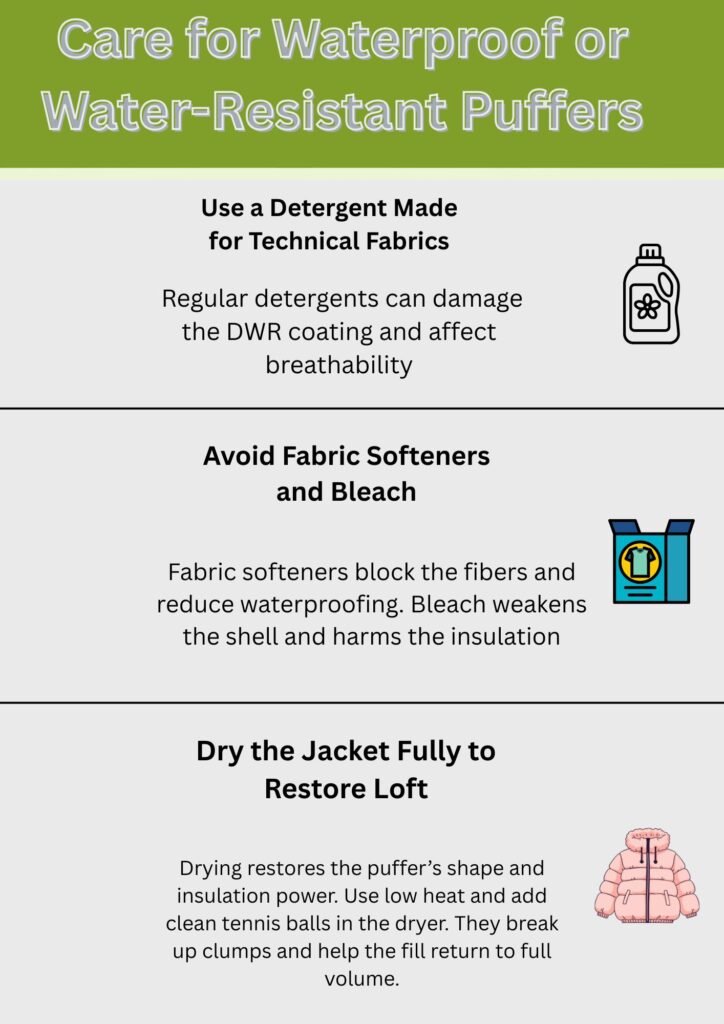
Infographic explaining how to care for waterproof or water-resistant puffer jackets, including using technical detergents, avoiding fabric softeners and bleach, and fully drying the jacket to restore loft.Waterproof or Water-Resistant Puffers
Care tips for waterproof or water-resistant puffer jackets, highlighting proper washing, avoiding harsh products, and restoring loft through correct drying.

Use a Detergent Made for Technical Fabrics

Choose a cleaner designed for waterproof or insulated clothing. Regular detergents can damage the DWR coating and affect breathability. Technical detergents keep the jacket fresh without harming the fabric.

Avoid Fabric Softeners and Bleach

Fabric softeners block the fibers and reduce waterproofing. Bleach weakens the shell and harms the insulation. Avoid both to protect the jacket’s performance.

Dry the Jacket Fully to Restore Loft

Drying restores the puffer’s shape and insulation power. Use low heat and add clean tennis balls in the dryer. They break up clumps and help the fill return to full volume.

A man wearing a color-blocked puffer jacket with a beige hood and shoulders, green body, and black sleeves, standing against a plain white background.Waterproof or Water-Resistant Puffers
Color-blocked winter puffer jacket featuring beige, green, and black panels for a modern cold-weather look.


Conclusion


Waterproof or Water-Resistant Puffers play a major role in today’s winter wardrobes because they offer dependable warmth, flexible weather protection, and all-day comfort.Waterproof or Water-Resistant Puffers. As winter conditions continue to change, people need jackets that manage cold winds, light rain, and unexpected snow with ease. Waterproof puffers deliver powerful protection for harsh climates, while water-resistant puffers support daily use with better breathability and lighter weight.

These jackets also blend modern style with advanced materials, so they fit both fashion needs and outdoor lifestyles. With better insulation, smart features, and improved durability, they help you stay warm and dry in many different situations. Whether you travel, hike, commute, or simply walk through the city, these puffers remain practical and reliable choices.

FAQs

1. Is a water-resistant puffer jacket enough for snow?

It works for light snow only. Heavy snow melts and may soak the jacket.

2. Can you wear a water-resistant puffer in the rain?

You can wear it in drizzle or short rain. Heavy rain will soak through.

3. Are puffer jackets waterproof?

Some are fully waterproof while others are water resistant only.

4. How long do waterproof coatings last?

DWR coatings last a few months with heavy use. Reapply when water stops beading.

5. Are polyester puffers waterproof?

Not always. Polyester shells need coating or lamination for waterproofing.


1. What Is Fleece Made Of? Polyester vs Cotton vs Wool Compared

Introduction-

What is fleece made of? This is among the questions that are most frequently posed by the buyers who adore soft and warm clothes. Fleece is a lightweight, warm and durable material that keeps one warm without any extra weight. It resembles the insulating touch of natural wool, but it is easier to maintain, cheaper and quicker to dry. Due to these attributes, fleece has been highly used as a fashion in jackets, blankets, activewear, and winter accessory.

Fleece is famous in the modern world because it is a warm fabric, soft, and versatile. Numerous consumers, textile students, and environmentally conscious consumers desire to find out what fleece is composed of and which are the best types of this garment. The majority of the fleece is produced using polyester; however, cotton fleece, as well as wool-blend fleece, is available. All these types have their own differences and their needs. This guide provides all the needed information in a way that you can select the proper fleece to your lifestyle and environment.

What Is Fleece Fabric?

Fleece fabric has a plush, soft feeling, and a fluffy surface. While it can be compared to warm wool, it is not real animal wool, and is not itchy. Unlike wool, fleece is smoother, lighter, and warmer. It is commonly used in casual clothing such as jackets, hoodies and hats. It is a staple in outdoor and athletic wear. Because of these qualities, fleece is used mainly in clothing, and warm, cozy household items. It is used in everyday items.

fleece fabric

What Is Fleece Made Of?

Polyester Fleece (Most Common)

The most prevalent fleece is polyester fleece. It consists of polyester fibers which are artificial petroleum-based polymers. These strands are turned into as much thread as possible and then knitted or woven into fleece fabric. It has a reputation of being very warm to the touch, as well as being relatively cheap. Polyester fleece is a thermal retention, hydrophobic (water-resistant), but not completely waterproof material. Most of the cheap fleece jackets and blankets consist of 100% polyester because it is warm and it lasts.

Recycled Plastic (PET Bottles)

Fleece is more and more produced with recycled plastic material, particularly, bottles of PET (polyethylene terephthalate). Under this process, plastic bottles that have been discarded are cleaned and shredded before they are melted and then turned into yarns. In case of an example, 5 plastic containers can be recycled into the fiber required in a t-shirt. Recycled polyester makes it easier to avoid the landfills and limit the usage of new materials based on oil. Recycled fleece is almost similar to virgin polyester in quality but it uses much less energy to make.

Fleece Made of Natural Fibers (Cotton, Wool Blends)

Other fleece fabrics utilize non synthetic materials such as cotton or wool. Cotton fleece is normally produced by weaving cotton fibers into a cloth and brushing the surface to produce a fuzzy touch. It is cozy and pleasant as the interior of a sweatshirt. Wool blends fleeces include wool, cotton or synthetic fibers. As an example, one of the popular cotton fleece yarns is a 80 percent cotton and 20 percent wool. The cotton makes it cool and strong and the wool brings bounce and warmth. Fleece made of wool blend is also warmer and may be colder than wool fleece as cotton serves as a wick.

Comparison of Synthetic and Natural Fleece.

Synthetic fleece (polyester or acrylic) is produced by using fibers that are derived by petroleum products, and natural fleece is produced by using plant or animal fibers. The artificial ones weigh little, dry fast, and can be immersed in water, and they are dyeable to bright colors. Natural fleeces, such as cotton and wool, are breathable and hypoallergenic, and moisture does not go through them (cotton absorbs, wool wicks).

As an example, synthetic fleece will not absorb moisture but it will allow it to evaporate, which makes it feel dry. On the contrary, when wet, cotton fleece may be damp. There are trade-offs in terms of the environment and comfort synthetic fleece sheds microplastics and is not biodegradable, whereas natural fleece may be heavier and pricier.


How Fleece Is Made (Manufacturing Process)

 Infographic showing the steps of how fleece is made
How fleece is made

Raw Material Sourcing

Manufacturers will get polyester pellets, recycled PET flakes or natural fibers to produce. The materials used are chosen according to the purity, strength, and the environmental objectives. The quality of raw materials can be improved, and it will result in finer, warmer, and more sustainable end fleece.

Fiber Spinning

The raw materials are melted and directed through spinerets into filaments by means of controlled heat. These fine strands become cooled very fast and are then stretched to lend more strength. The resulting fibers are made the building blocks of the yarn fleece.

Knitting Process

Circular knitting machines are used to knit the fibers that have been spun into a uniform sheet of fabric. The knitting of this pattern forms loops making it flexible and soft. The result is a stable textile structure which is prepared to be enhanced at the surface level.

Brushing to Create Softness

The sheet of knitting goes through metal brushes which lift the ends of the fibers. This fluffy plush texture is made through this brushing process which is effective in trapping heat. It enhances volume on the surface as well, rendering the fabric warm and soft.

Finishing Treatments

Anti-pilling, dyeing or water-resistant coating are some of the treatments that the brushed fleece receives. These measures enhance durability, stabilize coloration as well as enhance performance. Once completed, inspection of the fleece is carried out, rolled and ready to be made into a garment.


Types of Fleece Fabric

Polar Fleece:

A fleece of average thickness, fabricated of polyester. Polar fleece is insulating and light and warm, with medium pile. It is also typically applied in jackets and blankets. Polar fleece is available in 100gsm, 200gsm and 300gsm (greater the number the heavier and warmer).

Microfleece:

It is a fleece which is made of extra-lightweight. Microfleece is extremely fine (usually less than 200gsm) and with a fine pile. It is soft and stretchy but it does not give as much warmth as the thicker fleeces. Microfleece is suitable due to its ability to breathe freely and compress into a small size, thus making the material ideal in the process of layering during physical activities or when it is hot.

Sherpa Fleece:

Sherpa is another name that is known as boa fleece or faux-shearling, this thick, shaggy, fleece that imitates the wool of a sheep. It has a single side that is smooth knitted and the other side is fluffy and wool-like. Sherpa is most comfortable and plush and can be used to make coats, vests, hats and lining. It is well insulating and tough (can resist crushing, even after washing).

Cotton Fleece:

This is made of cotton and brushed as polyester. Cotton fleece is most often knitted cotton face (the outer side) and brushed back. It is breathable and soft as it is natural and feels like the inside of a sweatshirt. Polyester is light and quick to dry, unlike cotton which is much heavier and slow to dry.

Wool-Blend Fleece:

Blends such as cotton/wool (e.g. 80% cotton, 20% wool) are a combination of these two types of fibers. A blend of wool feels soft and warm and has some touch of wool that is natural. Fleece made of pure wool (also referred to as wool fleece) has been in use since time immemorial and is touted as warm and naturally water repelling.

Anti-Pill Fleece:

This is a polyester fleece that has been treated and prevents pilling (fleece balls). Anti-pill fleece fibers are more densely twisted or packed thus shed less. It means that the surface remains cleaner and smoother, and that is why no-pill fleece is frequently applied to printed or promotional jackets. Practically, anti-pill fleece is longer-lasting and has a better appearance compared to the ordinary fleece.


Is Fleece Made From Plastic?

There is a question many people ask; Is fleece plastic? The response is yes, in the majority of cases. Fleece is polyester made of PET as a material used in the production of beverage containers. This is a plastic melted and twined into soft fibers which are light and warm.

There is however the concern of polyester production to the environment. The petroleum is used in producing the material thus causing depletion of resources. Fleece made out of polyester also releases microplastics into the water body when washed. The problem of microplastic is one of the largest disadvantages of synthetic fleece. Thousand and thousands of small particles are lost in every wash cycle. These particles are deposited in waste water systems and they find their way to oceans and soil.

Fleece that is recycled is a green option. Old plastic bottles and textile wastes are utilized by the manufacturers to produce new fibers. The process also minimizes the amount of waste in landfills and decreases carbon emission thus recycled fleece is a responsible solution.

Is Fleece Natural or Synthetic?

FeatureSynthetic Fleece (e.g. 100% Polyester)Natural Fleece (Cotton, Wool, Blends)
OriginMade from petroleum-based polymersMade from plant (cotton) or animal (wool) fibers
WarmthVery warm and insulating for weightWarm, but heavier (wool is very warm with less bulk)
DurabilityDurable, resistant to rot and mothsSofter, can wear out or shrink (wool can degrade if not cared for)
Moisture HandlingWicks moisture and dries fastWool wicks well; cotton absorbs moisture (can feel damp)
Eco ImpactNon-biodegradable, causes microplastic pollutionBiodegradable, but farming (cotton/wool) has its own impacts
  • Synthetic Fleece Pros: Extremely lightweight, warm and fast drying. It is moth and mildew resistant and has high weight insulation. It is usually less expensive.
  • Synthetic Fleece Cons: It releases microplastic during the laundering process, is nonbiodegradable, and may cause a statical cling. It will be less breathable and will melt in extreme heat (e.g. fire or hot irons).
  • Natural Fleece Advantages: Cotton and wool are non-slippery and soft to touch. They have the capability of absorbing or wicking moisture. Wool is a nice blanket and cotton is smooth. Natural fibers are decomposing. As an example, the cotton/wool fleece is breathable and comfortable.
  • Natural Fleece Cons: This is normally heavier and more expensive than polyester. Some may be allergic or itchy with wool. These materials are usually hard to wash (e.g. wool shrinkage risk). When wet they do not insulate so well (cotton takes in water).

Is Fleece Fabric Warm?

Fleece is used as it traps heat remarkably well. The brushed fibers make air pockets which retain warm air near the skin. This construction is similar to the wool and lighter and quicker drying.

When the fleece is thickened or double brushed, it becomes more insulated. Due to this fact polar fleece is suitable to use in winter jackets and hiking layers. Fleece is one of the best materials to use in cold weather due to the warmth-to-weight ratio.

Fleece works far better in cold weather compared to cotton. Cotton is the one that absorbs moisture and loses heat, whereas fleece is the one that insulates even when a bit wet. The wool is also a good source of warmth, however, fleece is drying and lighter.

Is Fleece Breathable?

Yes, fleece is breathable. The knitted fabric enables passage of air through the fabric. This ventilatory lowers the overheating and aids in maintaining a normal temperature during exercise.

Fleece also takes away moisture on the skin. It sweeps sweat out of the body and evaporates it over the fabric surface in a manner that it will dry much quicker. Due to this reason, microfleece is the best when it comes to sports and hiking.

Fleece is popular among outdoor athletes as it helps them stay warm without overheating the skin. It is more effective in cool or cold climates and moisture control is needed.

Is Fleece Waterproofed or Water-Resistant?

Fleece is not waterproof in nature, although it is able to withstand light moisture. Small quantities of water are repelled by the fibers, owing to the fact that polyester is not an easy liquid absorbent. This renders the fleece to be applicable in cold or slightly rainy weather. Fleece is however not good in heavy rain. The knit structure can be penetrated by water and leave the wearer wet. That is why fleece jackets are frequently combined with the waterproof shells.

A portion of the fleece has DWR (Durable Water Repellent). Treated fleece is more effective in keeping off moisture, and it is also able to remain dry. Nevertheless, it is water-resistant, but not waterproof.

Is Fleece Safe for Skin?

Fleece is not particularly harmful to the skin. Polyester fibers do not contain allergens and are soft-feeling. This renders fleece appropriate to individuals who are sensitive to wool or coarse materials.

But there may be some poor quality fleece, which may irritate. Bad dyeing or chemical finishes can cause someone to be sensitive. These risks can be avoided by selecting certified or natural fleece. Fleece is a good cloth to use with babies and a sensitive skin, provided that it is of good quality, free of toxins, and breathable. In most cases, cotton fleece is the most appropriate fabric to be used on babies since it is natural and devoid of chemicals.


Common Uses of Fleece Fabric

Collage showing common uses of fleece including hoodies, jackets, baby clothing, blankets, sports apparel, and bedding.
Common uses of fleece
  • Hoodies and Jackets
  • Best choice for comfort and warmth and easy to layer.
  • Blankets
  • For cozy throws and for bedding in winter.
  • Baby Clothing
  • For extra delicate skin, soft and gentle to use.
  • Sports Apparel
  • For running, cold weather training, and great for hiking.
  • Home Textiles & Bedding
  • For the most common use with pillow and cushion covers, to fill with cushion and for sheets.

Pros and Cons of Fleece Fabric

Pros

  • Warm and super insulating.
  • Lightweight and easy to move with.
  • Really soft to the touch.
  • Quick to dry and moisture-wicking.
  • Low cost and easy to find.

Cons

  • Releases microplastics into water and lakes.
  • Non biodegradable, especially polyester.
  • Can pill without an anti-pill treatment.
  • Can melt under high heat or open flame.

Fleece vs Wool vs Cotton

Warmth Comparison

Fleece does a great job at keeping you warm without being bulky. Wool insulates well even when it gets wet. You lose heat faster when wearing cotton because it stays cool in cold weather.

Breathability

Fleece has a good balance of heat retention and airflow. Wool breathes well but it can be heavy when damp. Cotton absorbs moisture quickly so it can get damp but it breathes well.

Price

Fleece is the least expensive winter option. Wool is the most expensive because it is natural. Cotton is mid range in price and depends on the quality of cotton.

Durability

Fleece is the strongest and can last the longest. Wool also lasts the longest but it needs more attention. Cotton can lose it’s shape more easily and can thin out faster.

Sustainability

Recycled fleece helps reduce plastic waste and is good for the planet. Wool is also good for the planet as it biodegrades but make sure to use it ethically. Cotton farming is also natural but it uses a lot of water.


Is Fleece Eco-Friendly or Sustainable?

Synthetic fabrics have gained more sustainability status due to recycled fleece. By recycling plastic bottles into useful fibers, the producers will minimize the number of wastes and reduce the use of new petroleum in landfills. Thus, recycled polyester is a greener substitute of virgin polyester.

Nevertheless, even polyester fleece releases microplastics. These minute fibers are carried into oceans and lakes as well as soil and they have an impact on the ecosystems all around the globe. This is a very crucial problem even though the recycled materials have immense advantages.

Sustainability certifications aid in buyers making responsible purchases. Such certifications as GRS (Global Recycled Standard), OEKO-TEX and Bluesign prove that the fleece is safe with regard to chemicals and environment. Recycled fleece, low-impact dyes, and certified materials are some of the options that can be chosen in favor of green.


How to Care for Fleece Fabric

  • Washing Instructions: Wash fleece in cold water on a gentle cycle. Wash with a mild, non-bleaching, non-fabric softener (softener could also coat fibers and decrease loft). Wash clothes of the same color. The brushed surface can be shielded by turning the garments inside-out. Less frequent washing is also beneficial in terms of wear and shedding of fibers.

  • Drying instructions: Tumbler dry on low power or better still air dry. Dryers are also likely to damage the pile and shrink fleece due to high heat. When machine drying, turn it on the lowest level. Wipe fleece when a little wet and allow to dry flat in order to allow it to retain its shape.

  • Pilling Prevention: To reduce pills, it is better to wash fleece inside-out in cold water and not to load the rough washer machine with velcreo or zippers that may snag fleece. Do not use high spin cycles. Pills may also be clipped by hand or by a fabric shaver and it appears. To minimize pilling, one can use an anti-static dryer sheet or dryer ball to eliminate the friction and static.

  • Storage Instructions: Store folded fleece in a dry location. Fleece of very heavy weight should not be left hanging long, as it tends to stretch. Store it in the shade (UV may cause colors to be faded). Moreover, it is important to ensure that fleece is clean before it is stored to prevent pests (wool blends in particular). In long term storage, fabric bags can be used, which will allow air to circulate and avoid mustiness.

How to Identify High-Quality Fleece

  • Fleece Fabric Weight (GSM)
  • Fleece of higher GSM offers better warmth and quality.
  • Pilling Resistance
  • If you want to keep the fleece smooth for long time, choose anti-pil fleece.
  • Softness
  • Fleece of good quality is super smooth, thick and brushed evenly.
  • Stretch Recovery
  • Good fleece does not lose shape after being worn and bounces back.
  • Brand Quality Indicators
  • Reputable brands that have certificates of the materials and keep same standards of production can be trusted.

Conclusion-

Fleece is a great material of warmth and comfort particularly during cool or cold environments. It is lightweight and breathable, which gives it the best use in outdoor lovers, sports people and people, who require insulation but do not need it to be bulky. It is also cheap, simple to manage and highly tender. Fleece will appeal to those who desire warmth, speed, and quickness in their dressing.

Nonetheless, fleece has its negative aspects. Unless recycled materials are applied, it is not very eco-friendly. It should not be worn as a jacket alone during wet weather (waterproofed layer) or in areas around flames. Individuals having very sensitive skin may like natural fibers.

Read More>> About Merino fleece fabric.


FAQs

Is fleece made from wool?

No. The vast majority of the fleece is produced out of the polyester, rather than wool. There is wool fleece, although it is not that prevalent and is typically mixed with synthetic ones.

Is fleece bad for the environment?

Fleece made of polyester may be harmful to the environment since it sheds off microplastics. Recycled fleece will reduce waste, and washing bags might help trap microfibers.

Is fleece flammable?

Yes. Polyester fleece melts in high temperatures hence it is flammable around the burning flame. Fleece should not be exposed to heaters, stoves, or campfires.

Can fleece be recycled?

Yes. Fleece made of Polyester can be used again as a fiber, insulation or industry products. Fleece products that are recycled are valuable to the circular sustainability.

Designer Track Jacket: Your Ultimate Guide to Luxury Style.

0

today, it’s hard to overstate the impact of the designer track jacket as an emblem of contemporary luxury fashion. Having evolved from sportswear as an old staple of the fashion very genre, it has been transformed to a wholly unique item combining elements of sophistication, comfort, as well as a street – ready attitude. Contemporary designer jackets can therefore be described as fashion’s kin as they encapsulate fully the on – going trend of combining high-end. It is for these reasons that the designer track jacket is the epitome of the contemporary transcending fashion. With its ability to express a fully refined and sophisticated identity without compromising convenience and comfort, it is no wonder it’s a favourite amongst trend set and street stylers, modern jet setters, and people of all styles.

Fashion is a fast-moving industry that goes with the current trends and the love for the moment, but there are a few pieces that are able to withstand the test of time. One such iconic piece is the designer track jacket. Originally, the jacket held a place in sports and athletics, but its now an elevated wardrobe staple designed by high-end luxury brands. Through great attention to detail, artistic craftsmanship, and the use of premium materials, a jacket is created that shows a certain level of prestige and resonates with fashion collectors and consumers alike.

Understanding the current value and prestige of the track jacket involves a look at its materials, cultural significance, and versatility to go with contemporary styles. With a large influence from activewear, the designer track jacket is now a blend of high fashion and sports heritage with no other competitors in the field.

The Evolution of the Designer Track Jacket

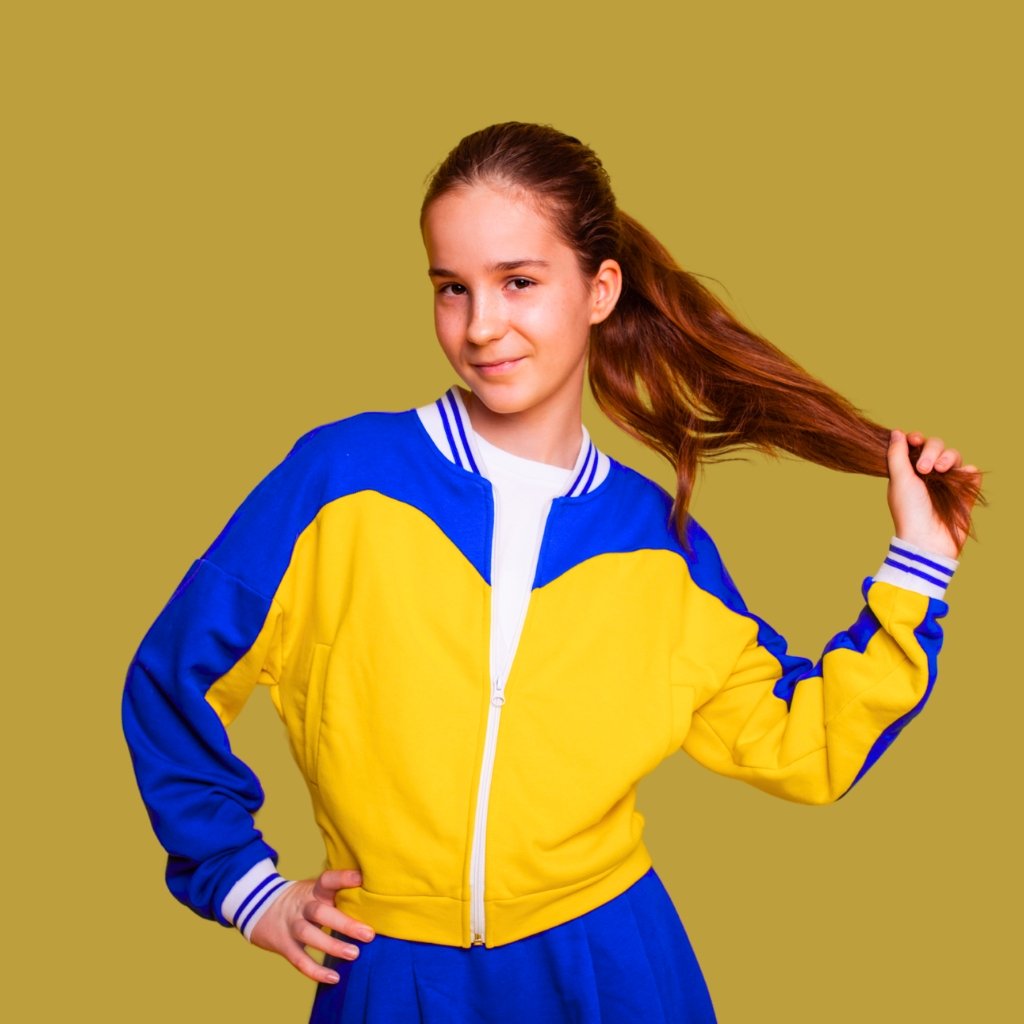
A young woman with long brown hair tied back, wearing a bright blue and yellow varsity jacket and smiling confidently while tugging her ponytail.
Confident and colorful: a student rocking a blue-yellow varsity jacket.

The track jacket was once a simple and functional piece designed to be a warm-up layer for athletes. Made from a basic design and materials, track jackets were designed to help athletes maintain their body temperatures while staying warm. Over time, they were designed at the intersection of sport and fashion, and were produced for the convenience of the casual wear market. By this time, the track jacket was able to gain attention in the fashion world and establish itself as an iconic piece of streetwear.

In the beginning, big-name designers ignored the trend until they decided to adapt and innovate the original athleisure style. Thus, the designer track jacket was created. While the overall shape of the jacket remained the same, the drafting, colors, and embroidery became of higher quality. Added to the jackets were premium materials, big branding, and polished details. This turned the track jacket into a high-end fashion piece worn in both formal and relaxed settings.

No matter what other clothing goes in and out of style, the designer track jacket will always keep its place in the fashion world. With its perfect balance between luxe and the easy feel of athletic clothing, it truly is one of a kind. It has been updated many times to fit the style of the current time, but the track jacket keeps its original essence.

PREMIUM FABRICS THAT SYOMPOLIZE HIGH END DESIGN

Navy blue bomber jacket with white trim, white collar and cuffs, full front zipper, and two side pockets.
Classic navy bomber jacket with contrasting white trim and ribbed collar, cuffs, and hem.

There is a big difference between a designer track jacket and a regular one, and that is the quality of the materials used. Luxury brands use materials that pallet to the eye while also being breathable, flexible, and able to withstand a good amount of wear and tear. This not only keeps the jacket high quality, but also elevates its status and longevity.

Advanced poly-blends feel smooth and sleek while keep a deep color saturation to last a long time. Many branded track jackets include stretch fibers to improve ease and comfort. This is made to enable the jacket to flow naturally and not against the contours of the body. Unlike the original track jacket that has a soft flexible feel, the branded jacket has stiff and off-putting wear.

Some use very lightweight techy fabric that regulates the temperature. These specialized fabrics focus more on appearance while blocking moisture. To improve breathability and wearability, designers sometimes add a mesh liner to the interior.

Sometimes, more luxurious brands will add rub velvet, satin, and silk blends to enhance the polished look of the track jacket. All of these materials give the track jacket and polished look that is very easy to notice. If crafted correctly, the materials give depth and a lot of interest while not being too bulky.

In these ways, the designer track jacket is able to differentiate itself from others. It blends comfort with high-end materials to give a polished look.

Attention to Detail: Design Features of High-End Track Jackets

A stylish men's color-block windbreaker jacket with a front zipper, chevron white and gray panels, and dark gray sleeves. It features zippered pockets and ribbed cuffs.
Modern color-block windbreaker with chevron design and zip pockets.

What really sets high-end designer track jackets apart from the rest is the attention to detail. High-end luxury brands pay attention to the different craftsmanship of the track jackets.

A lot of high-end track jackets have reinforced stitching that is both double stitched and reinforced in certain areas. Designers don’t just think of simplicity when sewing the different seams. They consider the ease of movement, flexibility, and the overall shape.

A lot of luxury track jackets have unique metallic zippers that are more expensive and come in different colors, giving the jackets a unique spin.

A lot of high-end designer track jackets have stripes and ornate detail. These details are from the designer label and are intentionally featured in order to increase the overall value of the track jacket. Even minimalistic high-end track jackets look expensive and luxurious from the simplicity.

High-end designer track jackets are, and should be, expensive due to the time that the companies and brands put to finishing the final product.

Comfort and Fit Designed for Luxury Living

A woman wearing a white zip-up varsity jacket with black trim, black jeans, and a black crossbody bag. The jacket has ribbed cuffs and hem, and she is holding the bag strap.
Sleek varsity-inspired white jacket with black trim paired with black denim and a chic crossbody bag.

One of the most captivating features of the designer track jacket is its comfort level. It looks classy, yet still keeps the comfort and breathability of a traditional track jacket. Since designers think of wearability first and foremost, the jacket is made to be active with your body, whether you are walking through the city, on the go, or socializing.

The designer track jacket is made with a tailored fit that strikes a great balance and is not too restrictive. This is possible to make because of the jacket’s body contouring without stiffness. Because of this great juxtaposition of comfort, the track jacket is ideal for streetwear jacket and upscale casual wear.

The temperatures at the time can change your comfortability. Many active jackets are made with blends of breathable fabrics that keep the body temperature controlled. Warm weather and even cooler ones that you are active in. For the cooler temperatures, the jackets can be layered with hoodies, knit sweaters or really any long sleeved top that fits underneath, so you stay stylish and move freely on the go.

The luxurious jacket is soft, easy to wear, and designed for everyday wear, yet wouldn’t be out of place in an upscale setting.

The Cultural Impact of Designer Track Jackets

A stylish denim jacket with cream-colored faux shearling lining and exterior, featuring a zip front, two front pockets with flaps, ribbed cuffs and hem, set against an orange background.
Timeless warmth: a denim jacket with plush shearling lining and pockets.

Designer track jackets hold a powerful place in contemporary culture. Their influence extends beyond high fashion, touching music, film, sports, and global streetwear movements. As luxury and streetwear began merging in recent years, the designer track jacket became a symbol of this convergence.

Musicians, particularly in hip-hop and pop culture, played a major role in elevating the jacket’s status. When celebrities started wearing track jackets from luxury houses during performances and public events, they quickly became aspirational pieces. Because these jackets represent individuality and prestige, they became a core part of modern celebrity style.

Urban culture embraced the designer track jacket as a statement of confidence, success, and identity. Its bold logos, signature patterns, and polished silhouettes made it a centerpiece in street fashion. At the same time, athletes and sports icons influenced the jacket’s return to mainstream popularity.

Because of these influences, the designer track jacket became a powerful symbol that merges performance jacket, fashion, and elevated lifestyle.

Designer Track Jacket Styling for a Modern Luxury Look

A person wearing a white cropped jacket over a black crop top, with white high-waisted pants and a silver chain necklace, standing against a warm yellow background.
Clean, minimal, and bold: “Monochrome vibes, maximum edge.” Streetwear basics, elevated: white jacket + black crop top + white pants. Effortless chic: crisp white ensemble with a subtle belly jewelry accent.

The versatility of the designer track jacket makes it easy piece for styling. Its sporty and sophisticated feel makes it easy to dress and layer with either a casual of semi-casual outfit.

Combining the jacket with fitted jeans results in a polished and put together outfit for the day. If you’re looking for a more street style fit, you can style it with a pair of cargo pants or relaxed trousers for some extra personality and depth. Sneakers remain the most common shoe to wear, especially luxury sneakers with simple or bold branding. But for some more formal looks, minimalist black or white leather shoes are a good fit.

The style effect of the track jacket can be enhanced through further layering. During the winter a designer hoodie can go under the jacket for some extra warmth and outline layering. A more polished look can be attained with a slim fitted sweater or long sleeve knit. A good selection of bags along with the cap or some sunglasses can help finish the fit without overshadowing the jacket.

Creating a cohesive look can be enhanced significantly through color coordination. Monochrome styling gives off a simple and elegant look, while a more bright color style gives off a retro jacket vibe. Designer track jackets often showcase, along with a statement.

Designer track jackets look great whether they’re worn to a fashion show, being used for daily activities, or are being used for traveling.

Durability and Long-Lasting Appeal

Jackets made by designers are created to last a long time due to the premium materials used, reinforced stitching, high-quality fabrics, and durable zippers that are used to ensure that the jackets will not fall apart and will maintain their shape. Jackets that are designed will keep their shape for a long time, even with frequent use. As long as high quality/ high end construction is invested in a jacket, the jacket will not lose its shape over time.

The color and texture of the fabric will not fade with time. Thanks to innovative dyeing processes and high-quality materials, jackets designed by top brands will not fade in color and will not lose their plush texture over time.

Designer jackets are fashionable for many years. The jackets keep their fashion with time even though a lot of trends fade, and designers track jackets remain timeless. The influence of its culture and versatility keep it. because jackets keep the balance of timeless athletic roots with a luxury design, it remains popular over the years.

These jackets are designed to last and that makes them a great addition to a wardrobe and keep the jacket going for several outfits and fashion seasons.

Sustainability and the Future of Luxury Track Jackets

A stylish white and navy varsity-style jacket with a navy yoke and diagonal navy stripes on the chest, full-zip front, and navy cuffed sleeves.
Navy-and-white varsity jacket with chevron chest design and ribbed cuffs.

The focus of the world of fashion is gradually shifting towards sustainable practices and applying that to the more luxurious side of fashion is no exception. Track jackets designed by various brands fall under this category of fashion. Many brands have started using recycled polyester, eco-friendly dyes, and sustainable energy utilization. While the luxurious side of fashion used to incorporate fabrics that consumed massive resources, sustainable practices in design are finally being embraced.

Biodegradable coatings, water saving dye methods, and low waste manufacturing practices are the innovations of the future in track jackets. Nowadays, people are more concerned about the environment and more value about sustainability.

More designer track jackets in the future will also incorporate smart textiles. There are already testing materials that adapt to temperature, resist odors, and are more breathable. Blending fashion with wearable technology is something some brands are Already are exploring.

The innovations that have been made, resulted in the designer track jacket keeping the same silhouette. Many eras of fashion have evolved because of this piece and that is why the silhouette will not change.

Conclusion

A designer track jacket defines the essence of true luxury and culture and is perhaps most modern of all. Though it is athletic wear at is roots like most track jackets. However, it is now more of a top fashion piece as it is made of expensive materials, and has been intricately and artistically detailed. Now, it is a fashionable part and necessity of clothing as it has been the expensive good and is now the also the cheap good of modern fashion.

Its impact also crosses the luxury, street, and sport fashion worlds as well as the music and sport worlds. This is an iconic piece of modern fashion. It can also be worn well with a lot of things. Due to the trends surrounding the jacket a lot modern fashion pieces can be worn with it, or none at all to showcase the modern track jacket.

This makes it more than a piece of clothing as it now also defines a whole lifestyle and the ideology surrounding modern fashion and lifestyle.

FAQs

What makes a designer track jacket different from a regular one?

A designer track jacket is crafted with premium fabrics, elevated detailing, and luxury branding, offering a more refined and fashion-forward look compared to standard athletic versions.

Are designer track jackets worth the investment?

Yes. Because they combine durability, craftsmanship, and timeless style, designer track jackets often last longer and remain fashionable across seasons.

Can a designer track jacket be worn casually?

Absolutely. Although it features luxury elements, it is still versatile. It pairs effortlessly with jeans, tailored pants, joggers, or layered streetwear outfits.

1. What Is Poplin Fabric? A Complete Guide to This Smooth, Breathable Textile

0

Introduction-

One of the widely used fabrics in the modern clothes is poplin. It is smooth to touch, crisp to look at and breathable in hot seasons. Poplin is used in many brands in the form of shirts and dresses, uniforms and light bedding. In addition, poplin is in demand due to the fact that it is comfortable, durable and versatile but at a moderate cost. Consequently, the question that arises a lot is what is poplin fabric and why it has stayed such an important area in fashion and textiles.

This guide covers all the details of poplin including its origin, structure, its nature, its varieties, its applications and its maintenance. You will get to know precisely what is special about this fabric and when you should use it.

What Is Poplin Fabric?

Poplin: is a plain-weave piece of tightly woven fabric made using fine warp yarns and then a heavier weft yarn. It is created in a weave that yields a tight and smooth yet crisp cloth. Notably, the term poplin is used to refer to the interweaving and not the fiber. Poplin may be 100 percent cotton or a mixture of such fibers as polyester, silk, or wool. In general, poplin is a fabric, which is characterized by smoothness, lightness and coolness.

History and Origin of Poplin Fabric

Poplin was created in France, particularly in Avignon, in the 15 th century. It is named after the term papelino which is a cloth that was associated with papal residence that was previously there. Initially manufacturers worked poplin with a mixture of silk warp yarn and wool weft yarn giving a powerful but classy fabric with gentle shine.

With the development of the textile industries, poplin changed to less expensive fibers. Cotton poplin is the main rule in the world markets nowadays due to its breathability and low prices. Artificial fabrics such as polyester poplin also became popular because of their resistance to wrinkles as well as their longevity.


How Poplin Fabric Is Made

"Infographic showing five steps of how poplin fabric is made
“How Poplin Fabric Is Made – A simple five-step guide”

Plain-Weave Construction

Poplin is plain weaved, or, in other words, each warp thread passes under and over each weft thread alternately. The grid-like pattern produced by this simple crisscross pattern is stable. The outcome is a tough fabric that does not tear easily and at the same time is light and flexible.

Differing Yarn Thickness

The warp (vertical) as well as the weft (horizontal) yarns are thinner and thicker in poplin respectively. This variation in the weight of the yarn creates the typical fine ribs on the surface of the fabric. The reason the poplin is durable is because of the thicker weft yarns and the reason it is smooth is because of the thinner warp yarns.

Smooth Yet Strong

The poplin due to even plain-weave is extremely smooth to the touch, and its hand-feel is crisp. Poplin despite the smooth finish is a hardwearing fabric, even though it has a tight interlacing of the threads, it is hardwearing and long-lasting.

Lightweight-to-Medium Weight

Poplin cloth is usually light- to medium-weight, usually between 90 and 130 g/m 2. This renders the draping easy and breathable. It is lightweight and durable and this is why poplin is preferred in making summer attire and shirts.


Key Characteristics of Poplin Fabric

Smooth Surface

Poplin is made of fine and plain weave and has a very smooth and uniform surface. The small ribs can hardly be seen by the eye, which makes poplin look clean. This smooth finish makes poplin perfect to wear when the garment has to look elegant.

Plain weave Pattern
Plain weave Pattern

Lightweight but Durable

Poplin is light in weight but surprisingly tough. Poplin is made of plain weave that is tight and has a high thread count, which makes it strong. Practically, the poplin clothes are durable in terms of regular use and washing.

Slightly Crisp Feel

Poplin is a little bit crisp and stiff as opposed to soft or fuzzy. Such a sharpness of the hand-feel is provided by the contrast between the size of yarns and tight weave. What is obtained is a garment which folds well and forms clean lines in garments.

Breathable Fabric

Breathability is one of the characteristics of poplin. The plain weave enables the air to pass freely, and the fabric is therefore cool. Consequently, poplin can be worn in a warm climate since the moisture will be able to evaporate rapidly.

Minimal Texture

Surfaces of Poplin are very smooth or do not have any irregularities. It is not raised in a pile or fuzzy, but has a slight kind of ribbing at the joining of the yarns. This is a soft material that ensures clothes produced using poplin look clean and wrinkle less.

Matte to Slight Sheen

Poplin could be finished with either matte (particularly cotton poplin) or to a small degree of sheen (particularly silk poplin). Any glossy beauty is tend to be faint. Either way, poplin is not as glossy as some of the satin fabrics; the poplin has a more dull, classy surface.


Types of Poplin Fabric

Cotton Poplin

The most widespread one is cotton poplin which is produced using 100 percent cotton yarns. It is extremely airy, readily dyed and smooth. The use of cotton poplin shirts and dresses are so popular due to the natural softness and paint-like structure of the fabric.

Polyester Poplin

Polyester poplin is a textile that is a synthetic counterpart of polyester fibers, though in many cases they are combined with cotton. This combination contributes to the fabric being less prone to wrinkles and being tougher. But, most of the time, polyester poplin is not as breathable as pure cotton poplin. It is relatively cheaper and retains color easily hence it is applicable in uniforms and low cost clothes.

Silk Poplin

Pure silk yarns are used to create silk poplin (also known as tabbinet). It is made of a very luxurious drape and has a slight natural shine, which is missing in regular poplin. Silk poplin is light and smooth and is frequently adopted in luxury summer clothing or scarves. It is more tender and costly compared to cotton poplin.

Wool Poplin

The wool poplin is made of wool using wool strands, which makes it heavier and warmer. The version utilizes the same basic poplin weave, but is heavier and more dense. Wool poplin could be applied in warm skirts, suits or uniforms. This is not as popular in regular clothing but it works in cold garments.

Stretch Poplin (contained Elastane)

Stretch poplin contains low content of elastane (spandex) incorporated in the yarns. This gives the fabric stretch and elasticity. The poplin is still plain, but the garments done with stretch poplin are more comfortable and stretchy. This kind is best suited to fitted shirts or activewear type dresses.

Printed vs Solid Poplin

Poplin may either be plain or printed in patterns. The fabric is non-slippery therefore it can be printed; most popular patterns are stripes, checks or flowers. Dress shirts and dresses or tops with decorative qualities are both likely to be made of solid poplin, whereas printed poplin is used to make dresses or casual tops.


Poplin vs Regular Cotton Fabric

FeaturePoplin FabricRegular Cotton Fabric
TextureSmooth with fine horizontal ribsSoft, plain surface (varies by weave)
BreathabilityHigh (plain weave)High (natural fiber)
DurabilityVery durable (tight plain weave)Durable (depends on weave)
WeightLightweight to mediumVaries from lightweight to heavy
Best UsesShirts, dresses, uniforms, beddingCasual wear, denim, bedding

Poplin vs Broadcloth

The poplin and broadcloth are alike in weave. Nevertheless, poplin is woven with heavier weft strands thus it has small ribs. Broadcloth is silkier and smoother. Both are good with formal shirts, but poplin is a little bit sturdier.

FeaturePoplin FabricBroadcloth Fabric
Yarn/WeavePlain weave using fine warp and heavier weftPlain weave with thicker yarns
Texture/FinishSoft and smooth with subtle ribsSmooth, uniform, almost glossy surface
Hand-FeelLight, crispStiffer and more robust
Typical UseVersatile (shirts, dresses, blouses)Often used for dress shirts and formal wear
Are They The Same?Not exactly – poplin is lighter and softerNot the same – broadcloth is thicker and stiffer

Poplin vs Twill

Twill is characterized by diagonal lines whereas poplin is flat and smooth. Twill is more strength and wrinkle resistant whereas poplin is lighter and breathable. This renders poplin to be more suitable in warm seasons.

FeaturePoplin FabricTwill Fabric
Weave PatternPlain weave (fine, over-under)Diagonal twill weave with visible ribs
Texture/GrainVery smooth with slight ribbingTextured diagonal pattern (as in denim)
StrengthStrong but lighterVery strong and heavy-duty
Wrinkle ResistanceModerate (cotton poplin wrinkles fairly easily)Higher (diagonal weave hides wrinkles)
Best SeasonWarm weather (breathable)Cool weather (thicker)
Common UsesShirts, blouses, summer dressesJeans, chinos, jackets, work uniforms

Benefits of Poplin Fabric

  • Breathable: The plain weave of Poplin lets the air flow in to keep the wearer cool. People are advised to wear it most of the time during hot weather because it evaporates the sweat.
  • Lightweight: The garment is thin and light in nature, thus resulting in a drapeable garment that is airy in nature. Poplin is lightweight and thus comfortable to wear in summer.
  • Smooth and Soft: Poplin is smooth and soft, with neither fuzz nor pile. This makes it very comfortable and luxurious to the skin.
  • Wrinkle-Resistant: Poplin is not susceptible to wrinkling, particularly when it is combined with cotton. The hefty twist is that clothes appear to be crisp and any small wrinkles tend to come off easily.
  • Durable: On the one hand, Poplin is also strong because it has many threads. It is very strong against repeated washing and wear hence clothes last long.
  • Easy To Sew: This is a stable plain weave of poplin; the type of fabric that does not move or stretch once it is sewn. Its fine weave and durability give it an edge in that it is forgiving due to its sewing machine.
  • Affordable: Poplin generally is cost effective. Particularly, cotton poplin is cheap as compared to most specialty fabrics and of high quality.

Drawbacks of Poplin Fabric

  • Little Stretch: normal poplin has practically no elasticity. It does not stretch unless it contains spandex (e.g. stretch poplin).
  • Wrinkles Easy: Pure cotton poplin can easily wrinkle. The crisp fabric will have creases once it has been seated or packed without any special blends or finishes.
  • Not Warm: Poplin is lightweight and permeable and, therefore, it does not insulate a lot. It is not an appropriate warm winter clothing.
  • Sheerness (in certain instances): Light poplin skin can be relatively transparent particularly the white one. A lining or a heavier weave can often be used to solve this.

Common Uses of Poplin Fabric

Infographic explaining five steps of how poplin fabric is made
“How Poplin Fabric Is Made – A quick five-step production guide”

Male and Female Shirts: The smooth lay and crisp appearance of Poplin make it the best choice of dress shirt and blouse. It is durable so shirts can be worn on a daily basis.

Summer Dresses and Tops: Summer dresses, skirts and blouses are made of lightweight cotton poplin. Crisp, breathable material makes the garments to not be heavy.

Uniforms: Poplin is very strong and easy to care, which makes it a favorite choice of school uniforms, work uniforms, and scrubs.

Bedding and Linens: The bed sheets and pillow cases are made of high quality cotton poplin. These linens are plush to the skin and also crisp after washing.

Curtains and Upholstery: Poplin is not as heavy as canvas, therefore it can be used in lightweight drapes and slipcovers. It also brings a color and a pattern to the house decor because it is easily printed.

Lining Fabric: Poplin is used mainly as the lining in jackets and coats. It is smooth, which eliminates friction between the garments and gives it an added structure without having to be bulky.

Children Clothing: Poplin is the popular choice of children clothing because it is soft and breathable. It is applied to shirts, rompers and light outer clothes on children.


Is Poplin Fabric Breathable?

Poplin is quite breathable, yes. Its high structure is the plain weave, and it is easy to allow air to move in and out. Cotton poplin is the most breathable as it absorbs the moisture and evaporates very fast. Polyester poplin is not so breathable but still it works in hot weather.

Since poplin is light and airy, individuals who ask what is poplin fabric? will wear it in shirts and other clothes they frequently use during summer.

Is Poplin Good in Hot Weather?

Poplin is appropriate in hot weather as it is cool, light and absorbs. Cotton poplin assists in evaporation of moisture on the skin. This makes the body comfortable when at outdoor. Poplin also remains fresher longer as opposed to heavier cotton fabrics.

In this way, poplin will be one of the best offers to those residing in humid or tropical conditions.

Is Poplin Fabric Durable?

The tightness of the weave has made Poplin durable. The thin warp yarns and the heavier weft yarns form equal strength. Poplin uniforms and shirts can last a few years when well taken care of. The fabric can not be torn easily as compared to other lightweight cotton. Poplin is an option that is reliable in the daily wear or workwear.

How Does Poplin Fabric Feel?

Crisp vs Soft

Poplin is usually crisp and not plush. The shirt is made of pure cotton poplin and is cool and to some extent stiff, which gives the garment some structure. When composed of silk, or of a fine mix, poplin may be softer, more fluid, yet it retains a slightly hard-to-the-hand quality. This provides poplin with its typical crisp and smooth feel.

Cotton vs Polyester

Cotton poplin is of natural, mat, soft fabric that is breathable. Contrarily, polyester poplin (which is frequently used in mixtures) is more likely to be smooth and can have a small sheen. Polyester blends also make the fabric feel warmer and do not as cool as natural fabric and they tend to be better wrinkle-resistant.

Cooling Sensation

Poplin is lightweight and breathable and therefore tends to feel cool against the skin. The small ribs do not trap heat and therefore a cotton poplin shirt will usually keep you cool during a hot day. This is one of the reasons why poplin is preferred as a summer dress.


How to Care for Poplin Fabric

Care tips for poplin fabric
  • Washing: Poplin can be washed in cold/lukewarm water in a gentle cycle in the machine. Wash with a light detergent and bleach is not recommended because tough chemicals can deteriorate fibers. To be on the safer side, poplin should be washed together with similar colors so that there is no transfer of dye.
  • Drying: Tumble-dry at low setting and take the items to be slightly damp so as to minimize wrinkles. Instead, it is better to dry the fabric using air (line drying) so that the material is not shrinking and its shape remains unchanged.
  • Ironing: Iron poplin on medium heat level, when necessary. Cotton poplin can be ironed, add steam or spray mist to iron wrinkles. Never forget to look at the label of the garment.
  • Avoiding Shrinkage: Shrinkage can be minimized by prewashing poplin fabric prior to sewing or by washing in cold water. The heat should not be high in the dryer and the fabric should not be left there. When working with poplin it is better to make it shrink and settle then sew.
  • Color Care: Poplin takes on dye. Poplin in bright color is best washed inside out to keep it colorful. Colored fabrics should not be kept under the sun for long periods because the UV light may fade the color of the fabrics.

How to Identify Good Quality Poplin Fabric

  • High Thread Count: Quality poplin contains a high number of threads, and this is why it is strong and smooth to touch. When the cloth is light and it feels hard, then probably it has a good content of threads.
  • Even, Smooth Weave: Check the weave carefully poplin premium is a perfectly even plain weave, no visible gaps or discontinuities. The ribs should be uniform.
  • Minimal Imperfections: Good poplin contains a few or no slubs, pulls or knots. The surface must not be thin in areas.
  • Proper weight; On poplin made of cotton, the weight of 100-130 g/m 2 is a sign of quality. Poplin of very light weight can be either transparent or flimsy.
  • Check Fiber Label: Observe the label and check the content of the fiber. Poplin that contains a hundred percent of long-staple cotton is generally better than blends. Otherwise also seek out descriptions such as sanforized (pre-shrunk) to be stable.

Is Poplin Fabric Sustainable?

The sustainability of poplin lies on the fiber. Cotton poplin may be sustainable in case it is produced using organic cotton, which has less chemicals and promotes environmental friendly agriculture. Polyester poplin is not as sustainable as it is petroleum-based fiber.

But, the poplin clothes are durable and hence long lasting. Extended life span will reduce wastage and this is in line with sustainability. Poplin can also be recycled in case the type of fibers permits it.


Conclusion-

Indeed, poplin fabric is one of the most useful and multi-purpose materials in the textile industry. Its smooth, lightweight, and breathable qualities make it easy and comfortable enough to wear every day. Great poplin shirts maintain a crisp appearance, poplin dresses keep their shape, and poplin uniforms last a long time.

If you are looking for comfort in hot climates, need long-lasting durability, or want to save some money without getting a product of lesser quality, poplin becomes a clear choice. While the fabric is not highly stretchy and it can wrinkle somewhat, it is a great fabric for many uses.

When people ask what is poplin fabric ?, it is clear that the answer is nothing other than poplin’s smooth, breathable, and stretchy qualities that make it very beneficial for dresses, shirts, uniforms, bedding, and other uses. The answer is clear to all who are familiar with this so what are you waiting for?

Read More>> What is chambray Fabric?

FAQs

Is poplin 100% cotton?

Poplin originates from a cotton fabric, but it is also made with other materials, such as polyester, silk, wool, or other synthetic fibers. Regardless of material, the signature of a poplin is its weave.

Is poplin better than cotton?

When made of cotton fibers, poplin is a cotton fabric. Compared to other cotton fabrics, poplin is smoother and crisper, making it a good choice for uniform or shirt production.

Is poplin fabric stretchy?

Because of the tightly woven structure of poplin, it is not stretchy. On the other hand, stretch poplin has some elastane woven in to give is some stretch.

Does poplin shrink?

If cotton poplin is washed in hot water or dried on high heat, it may shrink a little. To combat this, poplin can be pre washed with gentle cycles to avoid shrinkage.

Is poplin good for summer?

In the summer, poplin is great since it is very cool, lightweight and stays breathable. Out of all cotton fabrics, poplin is the best for keeping performance in hot climates.

Is poplin breathable?

Poplin fabric is very breathable, especially cotton poplin. Primarily, the material is favorable for its high airflow to the wearer and thus it is mostly made in warm weather.

Corduroy Overshirt Jackets: A Stylish Layer for Every Season

0

The overshirt jacket is a versatile piece that has evolved from a simple layer for the season to a statement of style. This versatile piece is a favorite of those who love texture, warmth and personality. Its ability to bridge between casual and refined style makes it perfect for any setting. This comprehensive guide will teach you everything about corduroy overshirt jackets. It includes styling tips, fabric benefits, instructions for care, and the reasons why they are so popular.

What makes corduroy special?

A close-up shot of soft brown corduroy fabric with pronounced ridges; a smaller inset shows a yellow-green corduroy fabric draped in folds.
What Exactly is ‘Corduroy’?

Corduroy has a ribbed texture with a soft finish. Despite being considered vintage, this fabric is still a popular choice for modern fashion. Corduroy’s distinctive ridges (also known as Wales) give it a visual depth and enhance any outfit. The fabric is associated with creativity and effortless style.

The material is made of cotton or cotton blends, ensuring comfort, breathability and durability. Cotton corduroy is the most popular, despite wool and polyester versions also being available. This is due to its luxurious feel and ease of maintenance.

Why choose a corduroy overshirt jacket?

Corduroy jackets combine the relaxed feel of an overshirt with the structure of jackets. Its slightly heavier weight than a regular shirt offers warmth, while remaining flexible for layering. Corduroy is a fabric that offers comfort and style.

Infographic explaining why to choose a corduroy overshirt jacket, featuring icons for versatility, texture, comfort and durability, style options, and color choices.
Why choose a corduroy overshirt jacket?

This timeless piece is a great choice for many reasons.

1. Versatility in Every Season

Corduroy, despite being thick and warm, is still suitable for layering during the day. It is therefore perfect for autumn, mild winters, and early spring. Wear it over a t-shirt to give a casual appearance or over a jacket for warmth.

2. Texture that elevates style effortlessly

Texture is an important part of fashion. Corduroy’s ribbed surface adds depth to simple outfits. The combination of a simple white tee with a corduroy jacket instantly adds style.

3. Comfortable Yet Durable

Corduroy jackets made from cotton are soft and breathable. The ridges on the fabric make it durable for long-term wear.

4. The Perfect Balance between Casual and Smart

Corduroy is a unique fabric. Denim and flannel are also available. The semi-formal style allows you to wear the corduroy to lunches, weekend outings, or coffee dates.

5. Available in Rich Earthy Shades

Corduroy jackets are available in earthy shades such as camel, brown, olive, burgundy and charcoal. These colors are easy to pair with neutrals, jeans, chinos and neutral layers.

Corduroy: A Brief History

Corduroy’s roots can be traced back to ancient Egypt. It was, however, perfected in the Industrial Revolution. The fabric was once a symbol of luxury and royalty. Corduroy was once a luxury fabric, but as manufacturing improved, it became more affordable. In the 1970s it was a huge fashion trend, particularly in jackets and pants.

Although its popularity had slowed for a time, the rise in vintage and retro style brought it back. Corduroy jackets today are valued not just for their retro charm, but also because of their adaptability and durability.

How To Style A Corduroy Overshirt Jacket

It’s easier to style a corduroy jacket than most people think. Its unique structure makes it easy to combine with casual or smart-casual looks.

An infographic titled ‘How To Style A Corduroy Overshirt Jacket’ showing five style steps with small circular illustrations: (01) Casual Everyday Look, (02) Smart Casual Work Outfit, (03) Layering Up For Colder Days, (04) Weekend Relaxed Vibes, (05) Street Style Inspired, each with bullet points describing suggested outfits.
How to style a corduroy overshirt jacket in five looks: casual, smart casual, layered for cold days, weekend relaxed, and street-inspired.

1. Casual Everyday Look

Pair your jacket with

  • Simple crew neck T-shirt
  • Blue or black denim jeans
  • White Sneakers

The combination is effortless and refined.

2. Smart Casual Work Outfit

If you are looking for a polished appearance:

  • Overlay the jacket with an Oxford shirt
  • Add slim chinos
  • Leather loafers and Chelsea boots are a great alternative.

This outfit is a great way to feel confident without being too formal.

3. Layering up for colder days

Winter:

  • Wear a thermal shirt or hoodie inside
  • Pair with straight-leg denim
  • Finish with boots

The warmth of the fabric will keep your clothing in place.

4. Weekend Relaxed Vibes

For weekend plans:

  • Combining the jacket with joggers
  • Add a henley t-shirt
  • Select comfortable sneakers

The corduroy texture adds style to the casual look.

5. Street Style Inspired

If you enjoy trending streetwear:

  • Oversized corduroy shirts are a great choice
  • Add baggy pants
  • Finish off with high-top sneakers

The ribbed material adds an urban style identity.

Color Guide: Selecting the Best Shade

Stack of folded corduroy polo shirts in autumn colors, from top to bottom: mustard, ochre, olive, teal, navy, and burgundy, each with two dark buttons visible on the placket.
A neat stack of corduroy polo shirts in warm fall tones.

The color of the corduroy jacket you choose will have a big impact on the overall look.

1. Brown & Camel

Classic, warm and elegant. Corduroy is a classic fabric that looks great in these shades.

2. Olive Green

Perfect for outdoor and fall looks. Olive has a rustic, earthy feel.

3. Navy Blue

Modern, clean, and versatile. Navy is a great choice for smart-casual looks.

4. Burgundy

Bold, stylish and elegant. Ideal for making an impact without being too loud.

5. Charcoal or Black

Elegant and minimalistic. Ideal for winter and evening styling.

The Benefits of Owning Corduroy Overshirt jacket

Infographic titled ‘The Benefits of Owning Corduroy Overshirt jacket’ with five sections and circular illustrations: 01 Warm without Bulk, 02 Breathable, Soft and Comfortable, 03 Long-Lasting Fabric, 04 All Age Groups Can Benefit, 05 Enhances Any Wardrobe; each section contains a short description.
The Benefits of Owning a Corduroy Overshirt Jacket

This jacket is functional and stylish.

1. Warm without Bulk

Corduroy is a lightweight material that provides insulation.

2. Breathable, Soft and Comfortable

Corduroy made from cotton is comfortable all day long.

3. Long-Lasting Fabric

Corduroy, with the right care, can last many years.

4. All Age Groups Can Benefit

Corduroy jackets are suitable for almost any style, whether you’re an adult or a teenager.

5. Enhances Any Wardrobe

Corduroy is a timeless investment. Corduroy is a timeless fabric.

Fabric Types: Understanding Corduroy Better

Close-up of diagonal corduroy fabric swatches in multiple colors (cream, beige, peach, brown, yellow) with bold yellow and black caption reading 'types of CORDUROY FABRIC'.
Types of Corduroy Fabric

Corduroy comes in different wale sizes:

Wide-Wale Corduroy

Warm and suitable for the winter.

Mid-Wale Corduroy

The most common and balanced – excellent for overshirts

Fine-Wale Corduroy

Soft, flexible and lightweight. Used for kids’ clothing and shirts.

Corduroy with a mid-wale is often preferred for overshirt jackets because they require durability.

How to Care for your Corduroy Overshirt Jacket

Corduroy, despite its strength, retains its beauty if it is properly cared for.

 A three-panel display showing text that reads “How to Wash Corduroy” and “Plus Stain Removal Tips” above a row of hanging corduroy shirts in tan, olive, and navy colors.
How to Wash Corduroy (Plus Stain Removal Tips)

Washing Tips

  • Use a gentle cold wash
  • Turn the jacket inside-out
  • Avoid harsh detergents

Drying

  • Dry the jacket by air
  • Avoid twisting or squeezing
  • Use a low-heat hair dryer instead

Ironing

For ridges to remain, use a steamer or a light iron.

Storing

Avoid crushing the ridges by hanging your jacket.

The fabric will remain soft and retain its texture when handled properly.

Corduroy Overshirt Jacket for Men

A man with a trimmed beard and wavy brown hair stands facing the camera, wearing a light beige corduroy jacket over a white tee. He has a relaxed smile and his hands clasped in front.
Casual style: man in corduroy jacket with a warm, relaxed smile.

Men tend to prefer structured clothing. Corduroy overshirts are a great option for men because they provide structure as well as comfort. The ribbed style is masculine without being too rough. These jackets go with jeans, chinos and sweaters.

Corduroy Overshirt Jacket for Women

A smiling woman with long blonde hair wearing an orange blazer and a pink scarf, standing with hands in pockets against a white background.
Confidence in orange: a bright, friendly portrait of a woman in a tailored blazer.

Corduroy jackets for women are available in a variety of styles, including fitted, cropped and oversized. They can also be belted. The material is stylish and warm, so it goes well with dresses, skirts and trousers. The jackets can be styled to create vintage or modern looks depending on the look you want.

Who should wear a Corduroy overshirt jacket?

This jacket is perfect for:

  • Fashionable individuals
  • Students and professionals
  • Travelers
  • Vintage aesthetics is a passion for many people
  • Who loves warm, textured garments?

The jacket can be styled easily and is suitable for everyone, regardless of their age or style.

What to Wear

This jacket can be worn to:

  • Cafés
  • Offices
  • The following are some of the Universities that you can contact
  • Travel trips
  • Dinners
  • Casual hangouts
  • Weekend outings

The versatility of this outerwear makes it a practical choice.

The Corduroy Overshirt Jacket: Growing in Popularity

Simple object: “A red bicycle leaning against a brick wall on a sunny day.”
Action: “A person riding a bicycle along a tree-lined park pathway.”
Conceptual: “A graphic infographic showing the steps of a workout routine.”
“Cyclists enjoy a sunny afternoon ride along Riverside Park, with the city skyline in the background.” “Step 3 of the routine: warm-up stretches to improve flexibility.”

Corduroy has made a huge comeback, as people want clothes that are warm, stylish and have personality. Corduroy was revived by minimalist fashion trends, as its subtle ridges added natural detail to the fabric without requiring flashy prints.

Corduroy jackets have also become more popular worldwide due to the resurgence in vintage fashion, retro looks, and earthy colors.

Final Thoughts

overshirt jacket with corduroy is more than a simple layer. It is a statement in comfort, texture and style. Few jackets offer the same balance of warmth, aesthetics and practicality. Corduroy is a fabric that will never go out of style.

A corduroy jacket will be a purchase you’ll never regret. It is durable, versatile, and charming. This iconic piece is timeless, even though fashions are constantly changing.

FAQs

What is a corduroy overshirt jacket?

A corduroy overshirt jacket is a lightweight, textured outerwear piece made from ribbed corduroy fabric. It combines the relaxed feel of an overshirt with the structure of a jacket, making it ideal for layering.

Is corduroy warm enough for winter?

Yes, corduroy provides good warmth because of its ribbed texture and cotton base. However, for very cold winters, it is best layered over a hoodie or thermal shirt.

How should I style a corduroy overshirt jacket?

You can style it with T-shirts, chinos, jeans, hoodies, or sweaters. Its textured look makes even simple outfits appear polished and fashionable.

1. What Is Chambray Fabric? A Complete Guide to This Lightweight Textile

0

Introduction-

It’s completely understandable to wonder what is chambray fabric. Chambray is woven fabric typically in lightweight shade and soft blue. Its simple woven structure makes it smooth and airy. Although the fabric is similar to denim in appearance, chambray is much lighter and more breathable.

Chambray fabric is not new. It started in Cambrai France where linen weavers manufactured lightweight cloth for use in shirts and dresses. However, the chambray we know today is a cotton-based cloth, a textile that became popular once linen was made out of use.

Both chambray and denim have the same type of colored warp and white weft which is where the confusion comes in. However, denim is made out of a twill weave, and chambray is plain woven making chambray fabric much more drapey and smoother.

How Chambray Fabric Is Made

Infographic explaining the five-step process of how chambray fabric is made
How chambray fabric is made—from cotton fiber prep to weaving and finishing

Weaving Method (Plain Weave)

Chambray has a simple structure, woven in a 1×1 plain weave. Each colored warp thread, moving in one direction, goes over one white weft thread and then under the next. This pattern gives the cloth a softer feel and a lighter weight. But unlike twill fabrics like denim, chambray is still tightly woven and durable.

Yarn-Dyed vs Piece-Dyed

Typically chambray’s warp yarns get dyed before the weaving simultaneous process. This technique gives chambray a more pronounced contrast between the colored warp and white weft. But chambray can be colored with the fabric piece dyed after the weaving, and this technique is less common since it tends to dull the fabric’s bright colored contrast.

Warp vs Weft Color

Chambray’s signature look stems from the warp with colored thread and the weft with white thread. In the loom, the lengthwise warp threads (usually blue) are dyed, and crosswise the weft threads are white. This gives the fabric a heathered appearance from the face and since it is colored from both sides, with the exception of denim which has a white reverse.

Natural vs Blended Fibers

Currently most chambray is cotton as it is soft, but there are chambray linen-cotton blends for more texture and cheaper options with modern chambray. Cotton chambray is the most natural feeling, but blends often do a better job of withstanding wrinkles and shrinkage.


Chambray Fabric Characteristics

Texture and Feel

Chambray has a smooth, soft, and gentle hand, which makes it even more gentle than denim and more comfortable to wear in high temperatures. The fabric has a two-toned texture which, combined with plain weaving and fine yarns, produces a soft and slightly irregular surface.

Weight and Drape

Just like denim, chambray flows and drapes nicely, although it is much lighter. It can feel like you do not have anything at all. This is why champrah drapes nicely even in the case of large constructions such as dresses and shirts. Contrary to popular belief, chambray is even more lightweight, which results in it hanging fluidly.

Breathability

Because of the plain over-under weaving and its cotton fibers, chambray is very breathable. The fabric allows air to flow freely, preventing the wearer from heat-stroke even in very humid and hot environments. This is the reason why chambray fabrics are highly praised in fashion and clothes compared to thick and unbreathable fabrics.

Durability

Due to the tight plain weaving structure of the fabric, chambray possesses a decent amount of strength. Although it has been stated in historical records as very lightweight and durable. Although a chambray shirt or dress can withstand a lot of wear plus washing, it is very lightweight compared to denim and will not be as durable in the long run, which will cause it to wear out faster.

Softness After Washing

Softness is a blessing of cotton chambray that improves with repeated washings! After a couple rounds of wash, the chambray material becomes worn in, especially if it is a newly purchased piece of clothing! This is a characteristic that many individuals love.

Wrinkle Resistance

Chambray is a thinner fabric, which means it is more prone to wrinkles as compared to a thicker material. After a wash, chambray clothing does need some ironing, but many people appreciate the relaxed look of the wrinkles, so keeping it casual charming.


Is Chambray Cotton?

The majority of chambray fabric is 100% cotton. Summertime is great for wearing cotton chambray since it’s soft and breathable. However, blended chambray is also available. For example, some brands combine cotton with polyester to prevent wrinkles. Others combine it with rayon to improve the fabric’s drape.

Real cotton chambray can be identified through its texture and breathability. Cotton chambray has a cooler feel and is more soothing to wear. Another option is checking the label, which is the more efficient method of the two. Phrases like “100% cotton,” “cotton chambray” and “cotton-rich blend” can be useful indicators. Don’t forget to check the care label.

Chambray vs Denim: Key Differences

FeatureChambrayDenim
WeavePlain 1×1 weaveTwill weave (diagonal)
WeightLightweight (e.g. ~3–5 oz shirting)Heavy (typically 8–14 oz for jeans)
BreathabilityHigh (airy, cotton)Low (dense twill)
Typical UseSummer shirts, dresses, casual topsJeans, jackets, heavy workwear
PriceGenerally inexpensive to moderateModerate (depends on brand and finish)

Different Types of Weaves

Plain weave Pattern
Plain weave Pattern

Denim has a twill weave while chambray is a plain weave. This is why you see diagonal lines on denim while chambray is a bit smoother and lighter.

Weight

Denim has thicker yarns, making it heavier. In contrast, chambray is lighter and a bit airy, which makes the movement a bit more comfortable.

Breathability

Between the two, chambray breathes a lot better as the weave has a bit more airflow. Denim tends to keep the heat in, making it feel a bit warmer.

Best Uses

You would most likely see chambray in summer tops, dresses, and lighter clothing. Denim is better suited for winter jackets, jeans, or any heavier clothing. Each fabric has a designed purpose.

Price

Chambray is also generally cheaper than denim. But if it is a premium chambray, it can get more expensive. This is usually due to the quality of the fabric and the brand.
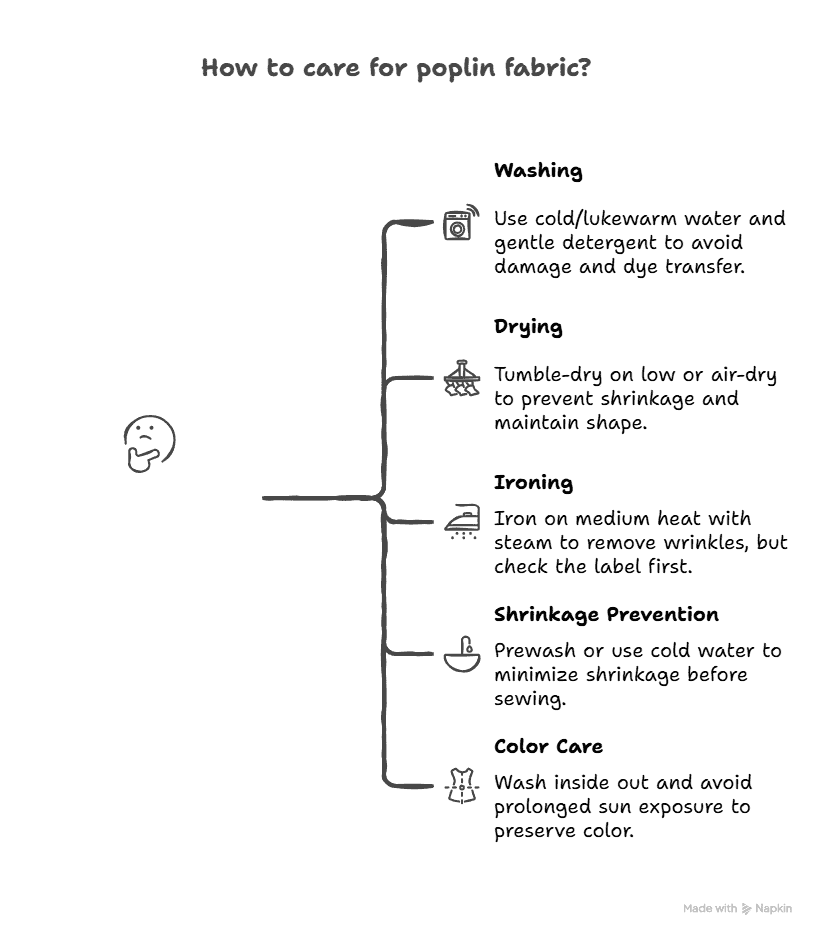
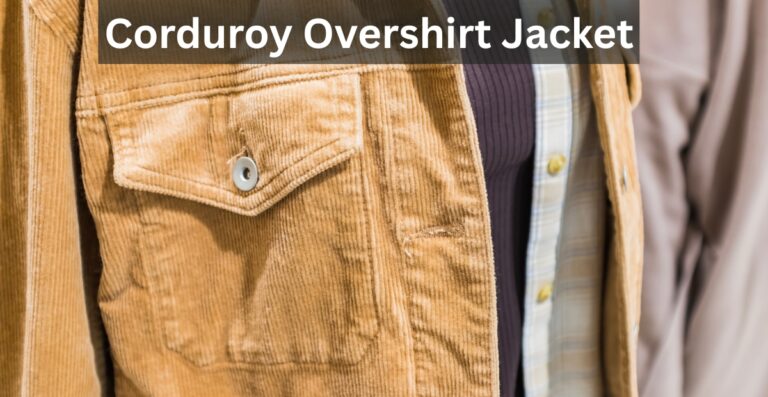
Which is Better for Summer?

Chambray keeps you a lot cooler than denim which feels heavier and warmer, even if it is thinner. This is ultimately why chambray is the better summer fabric.


Chambray, Poplin, and Oxford Fabric: What’s the Difference?

Feel

Poplin (also called broadcloth) feels smooth and crisp because it’s made with a simple, tight weave. Oxford cloth has a thicker, textured feel because of its basket weave. Chambray has a slightly rough look because it’s made with thicker threads in a plain weave. It’s softer than Oxford but a bit heavier than poplin.

What They’re Usually Used For

You can find all three in shirts. Poplin is for fancy dress shirts and shirts for work. Oxford (and pinpoint) is for everyday, strong shirts. Chambray is a mix of both as it’s often for casual clothes for work or summer shirts.

How Well They Breathe

Poplin and chambray let air through because of how they are woven, though poplin can feel a little cooler. Oxford is thicker, so it doesn’t let as much air in. Generally, chambray is more airy than Oxford.

Shirts: What to Use

Poplin is good for sharp-looking dress shirts. Oxford is for tough, casual shirts. Chambray is best for light, easygoing shirts or work shirts – you get the look of denim but with cotton.


Is Chambray Fabric Breathable?

Chambray is the most breathable woven fabric. It is the most breathable woven fabric. Heat escapes cotton fibers rapidly. The plain weave construction permits heat to escape rapidly and air to flow more freely. Chambray is great for warm weather. In the mild winter, ya it can be wore but it is not heat trapping like flannel and wool.

Chambray is softer and less crisp than poplin. Chambray is smoother but airier than linen. In oxford, chambray is lighter and cooler. With with reason, chambray is one of the best options for summer wear.

Is Chambray Fabric Good for Summer?

Chambray is great for summer due to heat regulation. It helps cool the skin and prevents discomfort. This helps prevent sticky skin that most people don’t like.

Chambray is light and not heavy on the shoulders. Those best summer wear that chambray can be made are shirts, blouses, and casual dresses, not forgetting skirts, summer rompers.


Common Uses of Chambray Fabric

Infographic showing common uses of chambray fabric
Common uses of chambray fabric for clothing, home textiles, and accessories

Shirts: Chambray fabric is most frequently seen in casual button-up shirts. The fabric’s denim-like aesthetic is very trendy for summer and work shirts for both men and women.

Dresses: Bolero and sundresses, along with lightweight skirt and top sets, are frequently seen in warm-weather style. The soft and draped fabric of chambray makes it preferable for flowy silhouettes in order to stay cool.

Baby & Kids: Children’s shorts and rompers are often made in chambray because it is very soft and breathable, but most importantly gentle on the skin so it’s great for warm weather.

Workwear: Appropriate for work and utility shirts, chambray has been used in work uniforms for decades. Most utility and lab coats have chambray used for them to this day.

Home Decor: For the same reasons it can be found in chambray-covered pillows, table cloths, curtains, and light throws, chambray is popular in relaxed home decors for its soft, woven style.


Pros and Cons of Chambray Fabric

Pros:

Light: Lightweight which provides extra comfort. It also warmer than denim.

Soft: It is soft to the touch and will improve with repeated washes.

Breathable: It is good material to wear in the heat because of good airflow.

Versatile: Many colors and different weights allow for different uses of chambray.

Stylish: Looks very stylish and has the appearance of denim although is less heavy.

Cons:

Wrinkles: It will most likely wrinkle because it is pure cotton.

Not Warm: It does not keep one warm because it is thin.

Fade: Darker colors will become faded after washes.


How to Care for Chambray Fabric

Care tips for chambray fabric
  • Wash: Use cold water on a gentle cycle to prevent excess microwave and fading. Use a mild detergent and turn the garments inside out.
  • Dry: To smooth deep wrinkles, tumble dry for a low cycle or air dry and remove promptly. To keep the shape, it is recommended that the fabric is hung on a line or dried flat.
  • Iron: To eliminate wrinkles, use steam on the iron’s cotton setting and iron the fabric while it is still slightly damp, or add steam.
  • Prevent Fading: When drying, avoid prolonged sun exposure and use cold water to wash the chambray inside out. To help set the dyes, a small mixture of white vinegar would help.
  • Storage: To keep the fabric fresh, store chambray in a dry place either hung or folded. Avoid tight plastic, and let it breathe a bit.

Is Chambray Sustainable or Eco-Friendly?

Chambray made with organic cotton is good for the planet. Organic cotton needs less water and fewer chemicals to grow. Regular cotton chambray still needs more water than materials like polyester, but it breaks down naturally and isn’t bad for the environment.

Chambray is often better for the environment than denim. It usually uses less dye and water to make. If you pick certified chambray, you’re helping cotton farmers who care about the environment and use cleaner ways to make fabric.

How to Identify High-Quality Chambray

  • Thread Count: Look for a high count. Higher quantity means a tighter, smoother surface.
  • Weight: Quality chambray has a medium heft. Very light chambray can tear easily. A good chambray should drape well without being flimsy.
  • Colorfastness: Check the dye. Yarn-dyed chambray is more colorfast. Use a damp cloth to rub the fabric; high-quality chambray will not bleed.
  • Shrinkage: Quality chambray is sometimes preshrunk. Look for the label “preshrunk” or sanforized” to ensure it retains its size after washing.

Conclusion-

Chambray is awesome if you want material that’s light, lets your skin breathe, and looks good. It’s perfect for summer clothes, everyday outfits, and comfy stuff around the house. Most people like wearing chambray because it’s comfy and can be worn with anything.

If you want clothes that are warm or heavy, chambray might not be what you need. It’s not for cold weather.

Basically, chambray is a great buy for anyone who wants fabric that’s soft, lets air in, is easy to match with other clothes, and is good for hot weather.

Read More>> What is Poplin Fabric?


FAQs

Is chambray the same as denim?

No. Chambray uses a plain 1×1 weave with colored warp and white weft, while denim uses a twill weave. This makes chambray lighter and softer, whereas denim is heavier and more rugged.

Is chambray see-through?

Usually not. Chambray woven at normal weights is opaque. Only very lightweight or loosely woven chambray might be slightly translucent in bright light.

Is chambray formal or casual?

Chambray is generally casual. It looks like denim, so it’s used in relaxed clothing like work shirts. A very fine chambray shirt can be dressed up slightly, but it’s rarely formal.

Can chambray be worn in winter?

Chambray is thin and provides little insulation. By itself it’s best for spring and summer. In winter, chambray is usually layered under warmer garments or replaced by heavier fabrics.

Timeless Trench Coats: Style, Comfort, and Elegance Guide

0

The trench overcoat is one of the most iconic outerwear items in fashion history. This classic coat is still a favorite because of its versatility, elegance, and practical design. The trench coat can be worn in a formal or casual setting.

This comprehensive guide will teach you about the origins of the trench coat, its importance as a wardrobe staple, how to wear it, the different types, and the key features that make it so unique. You will also learn how to choose the right trench coat for your body type and climate. You’ll learn why the trench coat is a timeless fashion piece that never goes out of style.

1. The History of the Trench Coat

A woman wearing a beige trench coat standing to the right of a block of large black text about the history of the trench coat.
The History of the Trench Coat: From military roots to modern fashion.

The trench coat has its roots in the military, more specifically World War I. Soldiers needed a durable, weather resistant, and comfortable garment. The original trench coat was made of gabardine, a tightly-woven fabric that is water-resistant and developed by Thomas Burberry. As time went on, other brands began to adopt the design.

The coat was originally designed for soldiers but quickly became popular among civilians. After the war, both men and women began wearing trenchcoats as a sign of sophistication. Hollywood also played a role. The popularity of trenchcoats increased when actors began wearing them in classic films. The trench coat was a part of Western and global fashion identity.

The classic silhouette is still largely unchanged today, proving its influence. Designers continue to introduce new versions of the classic coat, which keeps it fresh and current.Read more….

2. Why the Trench Coat is a Wardrobe Must-Have

The trench coat is a versatile piece that can be easily incorporated into any wardrobe. The trench coat is a great way to elevate your appearance, whether you’re looking stylish at work or casually on a day out. Its lightweight and protective qualities make it perfect for the transitional seasons of spring and fall.

Here are some of the main reasons trenchcoats are essential.

2.1 Versatility for Every Season

Originally designed for rainy days, trenchcoats are now suitable for many climates. Designers can also create versions that are suitable for hot, cool or windy weather by using different fabrics, from cotton to leather.

2.2 Perfect for Layering

Layering is easy with trenchcoats, as they have a spacious cut. Wear them over shirts, T-shirts or sweaters. You can even wear them with blazers. The open-front design allows you to experiment with different outfits.

2.3 Timeless Look

Trenchcoats are timeless and never go out of style. Its timeless design ensures that it will never feel outdated. It also perfectly fits in with current fashion trends.

2.4 Suitable for All Body Types

The clean lines, the long length and the adjustable waist belt create a balanced appearance. The coat can also be styled in a way that emphasizes or minimizes certain features depending on your preferences.

3. Original Trench Coat Features

The classic trench coat has certain design signature elements, even though there are many modern versions. Although the design may differ, the basic structure remains the same.

Infographic titled ‘Original Trench Coat Features’ listing five features with circular images: Double-Breasted Front, Epaulets, Storm Flap, Waist Belt, and Waterproof Fabrics, each with a brief description.
Original Trench Coat Features: Double-Breasted Front, Epaulets, Storm Flap, Waist Belt, and Waterproof Fabrics with brief explanations.

3.1 Double-Breasted Front

The majority of trenchcoats have a double-breasted closing. It not only adds to the style, but it also increases warmth and coverage.

3.2 Epaulettes

Originally, these shoulder straps were designed to carry military equipment. They add sophistication to any outfit.

3.3 Storm Flap

Originally, the extra layer on the chest or back was to protect from rain. It is still included to add visual appeal as well as partial functionality.

3.4 Waist Belt

The belt is what sets trenchcoats apart from other outerwear. The belt gives a slim and elegant look.

3.5 Waterproof Fabrics

Many modern versions still use fabrics that repel water, even though they are not waterproof. They are therefore practical for all weather conditions.

4. Trench Coats Types

Designers are introducing new colors, cuts, and materials to suit different preferences. Here are some of the most popular types.

Infographic titled ‘Trench Coats Types’ showing six trench coat styles with circular green icons and descriptive text for Classic Beige, Long, Short, Leather, Oversized, and Modern Tailored Trench Coats.
TrenchCoats Types: Classic Beige, Long, Short, Leather, Oversized, and Modern Tailored styles with brief descriptions.

4.1 Classic Beige Trench Coat

It is usually neutral in tone, such as beige or Khaki. This universally appealing style goes with almost everything.

4.2 Long Trench Coat

This version is designed for colder temperatures and extends below your knee. It also gives a bold and dramatic appearance.

4.3 Short Trench Coat

This type falls around the hip and is ideal for a casual or sporty look.

4.4 Leather Trench Coat

Modern, stylish and edgy. It is heavier but still makes a fashion statement.

4.5 Oversized Trench Coat

This version, with its relaxed shoulders and wider cut, taps into street fashion trends.

4.6 Modern Tailored Trench Coat

This style is more fitted and sleeker. It’s perfect for formal occasions or office wear.

5. How to Style Trench Coat

It is fun to style a trench because it goes with so many outfits. Below are some outfit ideas for both men and women to make the process easier.See more…

5.1 Styling for Women

  • Casual look: Wear a beige trenchcoat with jeans, white tee and sneakers.
  • Office look: Wear this over a slim pair of trousers, a blouse and heels to create a professional, clean outfit.
  • Evening look: Pair it with a dress, ankle boots and a stylish night outfit.
  • Winter look: For warmth and elegance, add a sweater dress and knee-high booties.

5.2 Styling for Men

  • Casual Style: Jeans with a polo t-shirt and loafers underneath a trenchcoat create a stylish everyday look.
  • Formal look: An slim-fit trench over a suit creates a powerful and polished impression.
  • Streetwear Style: Wear it with joggers and hoodies. Pair high-top sneakers to give it a modern touch.
  • Winter look: Add a scarf, leather shoes, a sweater and gloves to your outfit for added warmth.

6. The Right Trench Coat

The trench coat is available in many different styles, so choosing the best one can be difficult.

6.1 Consider Your Body Shape

  • Slim Body: Try tailor-fit or regular-fit versions.
  • Curvy Body: Choose belted styles to highlight the waist.
  • For taller people: Long trenchcoats are best.
  • Choose a coat that is mid-length, or shorter.

Selecting the Right Fabric

  • Gabardine: Lightweight and water-resistant–ideal for rain.
  • Cotton: Breathable cotton, perfect for spring and fall.
  • Leather Elegant and luxurious, but heavier.
  • Blended wool: Warmer in winter

Choose the perfect color

  • Neutral colors: Beige is timeless, as are tan and camel.
  • Bold colours: Red navy blue and green to make a statement.
  • Soft pastels. Cream blush and light gray for a delicate look.

7. Trench Coats for Men and Women in High Fashion

The trench coat has been transformed in many ways by high fashion. Luxury brands elevate coats into art pieces by adding unique materials, cuts and details. Fashion shows also often feature trenchcoats in their signature looks.

Celebrities also continue to promote trenchcoats. The public will quickly follow, whether they wear it in a casual or glamorous way.

8. Why Trench Coats are still popular today

The trench coat has been around for over a hundred years, but it is still as popular as ever. This popularity is due to several factors:

Infographic titled ‘Why Trench Coats Are Still Popular Today’ with six sections: Social Media Influence, Seasonal Flexibility, Gender-Neutral Design, Modern Customization, and corresponding illustrations showing people with trench coats and activities.
Why TrenchCoats Are Still Popular Today: Social media influence, seasonal flexibility, gender-neutral design, and modern customization.

8.1 Social Media Influence

Every day, fashion creators showcase trench coat style ideas on Instagram, TikTok and YouTube. This has led to younger generations adopting this timeless garment.

8.2 Seasonal Flexibility

The coat is a great piece to have for the transitional season because it works in all weather conditions.

8.3 Gender-Neutral Design

Trenchcoats are suitable for all genders, age groups, and fashion preferences.

8.4 Modern Customization

New silhouettes–oversized, cropped, bold colors, and mixed materials–keep the trend exciting.Read more…

9. How to Care and Maintain Your Trenchcoat

For your trench coat to last longer, it is important that you take care of it properly.

A woman wearing a beige trench coat with hands in pockets, standing next to bold, black text that reads “HOW TO CARE AND MAINTAIN YOUR TRENCHCOAT” followed by bullet points: “Cleaning,” “Storing,” an
How to care and maintain your trench coat: Cleaning, Storing, Weather Protection. Essential tips for keeping your trench coat looking great: Cleaning, Storing, Weather Protection.How to care and maintain your trench coat: Cleaning, Storing, Weather Protection. Essential tips for keeping your trench coat looking great: Cleaning, Storing, Weather Protection.How to care and maintain your trench coat: Cleaning, Storing, Weather Protection. Essential tips for keeping your trench coat looking great: Cleaning, Storing, Weather Protection.How to care and maintain your trench coat: Cleaning, Storing, Weather Protection. Essential tips for keeping your trench coat looking great: Cleaning, Storing, Weather Protection.How to care and maintain your trench coat: Cleaning, Storing, Weather Protection. Essential tips for keeping your trench coat looking great: Cleaning, Storing, Weather Protection.How to care and maintain your trench coat: Cleaning, Storing, Weather Protection. Essential tips for keeping your trench coat looking great: Cleaning, Storing, Weather Protection.How to care and maintain your trench coat: Cleaning, Storing, Weather Protection. Essential tips for keeping your trench coat looking great: Cleaning, Storing, Weather Protection.

9.1 Cleaning

  • Care instructions are on the label.
  • Wool and leather garments should be cleaned with a dry cleaning method.
  • Mild washing is acceptable for cotton trenchcoats.

9.2 Storing

  • To maintain the shape of your trench coat, hang it on a wide hanger.
  • To avoid dust, store in a garment bag that is breathable.

9.3 Weather Protection

  • If you live in an area with a lot of rain, use a water repellent spray.
  • Avoid prolonged exposure to direct sun, especially if you have light colored clothing.

10. Final Thoughts – The Eternal Appeal of the Trenchcoat

The trenchcoat is more than just a piece clothing. It’s a symbol for elegance, intelligence and timeless style. The trenchcoat is a timeless classic that can be worn in a variety of styles.

Due to all of these features, buying a trenchcoat will not only be a short-term purchase, but a decision that will add beauty, sophistication and practicality into your daily life. If you’re looking to add a versatile outerwear item to your wardrobe, then a trench is the best choice.

Conclusion

The trenchcoat is one of the strongest style statements available in fashion. It began as a military garment that was practical, but soon became a wardrobe staple. Designers and fashion enthusiasts continue to be inspired by it. The trenchcoat is a wardrobe essential for any season because of its versatility and elegant silhouette. It can be worn with both formal and casual outfits.

FAQs

What is a trenchcoat?

A trenchcoat is a long, lightweight, waterproof or water-resistant coat designed with a belted waist, storm flaps, and double-breasted buttons. It is known for its timeless and elegant style.

Why is a trenchcoat called a trenchcoat?

It was originally designed for soldiers during World War I, who wore it inside the trenches. Because of this military origin, the name “trenchcoat” was given.

Are trenchcoats waterproof?

Classic trenchcoats were made from gabardine, which is water-resistant. Many modern versions are water-repellent, but not all are fully waterproof.

Streetwear Track Jacket: Your Ultimate Guide to Urban Style.

0

The streetwear track jacket is a fashion statement in today’s society and a symbol of movement, expression, and sleek urban identity. As a warm-up jacket, track jackets are used as a simple athletic layering piece. Track jackets have now become an urban style statement, with the blend of fashion, comfort, and versatility. Owing to the streetwear culture, that is still marching on, track jackets have earned their deserved place in the culture.

The streetwear track jacket is a unison track piece that is also an urban fashion piece. It is also a relaxed intentional piece that is appreciated by all. Track jackets have become a piece that never fully goes out of style all thanks to their high popularity. It is a piece that you can switch out of and wear to many different places. They work for casual needs, work out needs, they work for a relaxed/outdoors type of place all the way to a night out place.

To understand why this jacket has been a staple in everyone’s closets, we must talk about its history, materials, construction methods, its impact on society, and its versatility in fashion. These components help us understand why this apparel item has become a fundamental aspect of today’s urban fashion culture.

The Evolution of the Streetwear Track Jacket

Black varsity-style jacket with a silver front zipper, white-striped ribbed collar, cuffs, and hem, shown against an orange gradient background.
Classic black varsity jacket with contrasting white trim and a silver zipper.

Track jackets originated from warm-up attire used by athletes. They needed apparel that kept them warm and allowed them to stretch and move around easily. Warm-up gear that was lightweight and comfortable became popular outside of the sporting world. The relaxed fit, smooth fabric, and sporty silhouette became popular in many fashion trends.

The track jacket became popular in fashion styles around the same time that youth culture and hip-hop was revolutionizing global fashion. The jacket was used in music videos by popular artists, dancers appreciated the easy movement, and it became a staple apparel item in everyday street culture. The jacket kept its athletic vibe while switching from performance use to style use.

As time went on, companies began to be more artistic. They started to use color blocking, bold stripes, and other different materials and designs. They also created other new designs. All this to eventually create the streetwear version of the track jacket,which became a fashion classic to many looking to match comfort with style.

Today, the streetwear track jacket is a fashion classic. It is one of the many items that stand the test of time in a world where fashion changes quickly. The track jacket is a perfect balance of vintage and new style.

Fabric Innovations That Make It a Standout Piece

A stylish color-block bomber jacket with teal sleeves and teal and black geometric patterns, featuring a white diagonal stripe on the front and a zipper down the center against a gray background.
Modern geometric bomber jacket in teal, white, and black with bold diagonal accents.

Although style is important, the construction of a streetwear track jacket often plays an even bigger role in its appeal. Modern fabrics enhance comfort, breathability, and durability, making the jacket practical for everyday wear.

Polyester blends are commonly used because they resist shrinking, dry quickly, and maintain shape. A smooth, soft texture gives the jacket a relaxed yet polished feel. Many jackets include elastic fibers that allow natural movement. With this combination, wearers enjoy longtime comfort without sacrificing structure.

Moisture-wicking properties have become more common as well. Sweat can be pulled away from the skin and evaporated more effectively. Although this feature originated in sports apparel, it has become an essential part of streetwear because it keeps the jacket comfortable across many climates.

Mesh lining is another advantage. It increases airflow inside the jacket, helping regulate temperature during warmer days or active moments. Through these thoughtful fabric choices, the streetwear track jacket becomes suitable for a wide range of environments.

Some designs incorporate lightweight insulation for cooler weather. The insulation is thin enough to maintain a sleek silhouette while still adding warmth. Because streetwear often merges function with style, this innovation helps the jacket remain useful during shifting seasons.

Design Features Shaped for Urban Movement

Lightweight color-block bomber jacket with blue sleeves and trim, white front panel, zip front, and two blue diagonal pockets.
Two-tone bomber jacket in blue and white with contrasting blue pockets and cuffs.

With a streetwear track jacket, you can certainly keep the urban style while being super comfortable and having full range of motion. It is one of the most comfortable style pieces, and is designed in a way to give you full range of motion. Designers will watch how people move in their day-to-day lives to see how to best design the cut and seams in a way to still allow for movement.

A common design is raglan or articulated shoulder designs. They allow for full range of motion when it comes to the arms. They can keep moving their arms in all different directions and won’t feel restricted. This design is super useful for everyday comfort.

Zippers make it easier to customize clothing. Being able to quickly full zip or unzip lets the wearer adjust ventilation by closing or opening the jacket, especially during activities with varying weather or different levels of exertion. A fashion statement high collar keeps the wind off the neck. Styled zippers on pockets allow for the safe storage of items such as phones or keys.

Elastic material on the cuffs and waists help hold the jacket to the wearer’s body while also helping to seal off the sleeves and hems from wind, snow and rain. The cuffs and waists also help with movement, letting the most athletic of wearers freely walk and run as needed. Balance and comfort of the jacket set it apart from the competition. While other brands make the cuffs, waists, and hems of their jackets and other clothing items from woven or braided material, the wrist and ankle material of this brand jacket set it apart.

Another set of the brands distinctive features are the patterns. Using bold stripes combined with color blocking to create a track jacket keeps the overall style of the track jacket classic and retains a timeless quality. Streetwear track jackets are truly a canvas for the individual. The bold stems from the streetwear style while the color patterns block to the individual. Towards keeping the brand jacket interesting, these features offer a lot of room for customization, keeping the jacket choice relevant.

The carefully made streetwear track jacket visually striking style and some of the most performance inspired features. Top of the line fabric and track style features offer the wearer a multitude of ventilation features, allowing the wearer to control the temperature quite a bit.

Comfort and Climate Adaptability

A bold color-blocked bomber jacket with a red upper section, white chevron panel, and navy lower panel. It features a full front zipper, red sleeves, black cuffed wrists, and a black waistband.
Modern color-block bomber jacket with red sleeves, white chevron body, and navy hem.

Another one of the better features of the streetwear track jacket is the insulation it provides. As part of a layered outfit, this jacket provides insulation while also being lightweight. The jacket also allows the wearer to layer underneath it without added bulk adding to the high quality insulation and lightweight fabric of the jacket. The fabric is also made of high quality materials that are breathable, another material to help with keeping the wearer from overheating.

Resistance to wind is a common thing. A lot of jackets are made of tightly woven fabric that blocks air but does not feel like a heavy winter coat. These jackets do not fully replace heavy winter coats, but do give enough protection for breezy and cool days and evenings.

In warmer weather, the jackets do have ventilated zones and moisture-wicking fabric is used to keep comfort. These jackets can be worn open or to be fully or partially zipped for air to flow. This is an excellent transitional piece for the in-between of seasons.

For cooler conditions, layering becomes an easy task to do. A hoodie or thermal top is worn under the track jacket to add insulation without adding too much bulk. The value of layered looks is often streetwear, so this flexibility fits perfectly with the culture.

The streetwear track jacket then is a reliable choice for all seasons due to this flexibility and adaptability.

 Why the Streetwear Track Jacket is a Winner of Urban Culture

Ease, self expression, and identity are all words that describe the culture of streetwear. The track jacket is fully in line with this. It has a deep socio emotional value with music, youth culture, athletics, and dance. It is worn not only for style, but also to express the value that it stands for.

Performers in the music industry helped the jacket gain notoriety. Whenever they wore track jackets to events, concerts, or in music videos, their audiences would soon adopt the look. The authenticity and individualistic nature of streetwear made the track jacket an ideal choice for many of the cultural movements of the time.

The jacket’s history in sports also made it comforting to many wearers. Athletes and other active people appreciate the history, while other people who wear it to be trendy appreciate the clean look, along with the vibrant patterns of the design. Because of the blend of culture, the track streetwear jacket also stands to represent in genuineness and creativity.

The jacket has also come to represent the hustle and confidence of the people in the neighborhood. The track jacket also represents an active lifestyle, where every motion is free, while the person is standing still. The cultural significance of the jacket also stands to keep it relevant to all generations, despite its changing design through the eras.

A Balance of Effortless Style and Everyday Function

A stylish young woman leans against a graffiti-covered alley wall, wearing a black crop top, black jeans with a belt, a plaid shirt layered under a black jacket, round sunglasses, and dark lipstick. An orange traffic cone is visible in the background. A green bomber jacket with an orange lining appears as a separate image inset on the right.
Urban chic: a fearless street style moment in a moody city alley.

The track jackets not only stylish, it is also very practical. It has the rare combination of effortlessness with gracefulness. It creates a relaxing look with its clean lines and smooth fabrics. The jacket also becomes very trendy when worn with basic joggers or denim, elevating the entire look.

Its very ease is why people like this style so much. You do not have to do anything extreme with how you style or accessorize. You can even wear it with just a basic T-shirt.

There are practical everyday perks too. It has pockets to hold your small items, it’s smooth so it feels good against your skin, and, it’s made with light material so you can wear it or bring it with you anywhere. It can be used for any purpose like errands, hang out with your friends, or to go out later at night and, it’s ready to go when you are.

These are main reasons it is good for casual wear. It champions close-fit and smart fashion. You can get a good look no matter the event size, so you can wear it anytime, anywhere.

Most versatile styles can be made to look more appealing and so can the streetwear track jacket. It’s most impactful when paired with slim-fit pants for a neater look. You can also go for a more chilled look by wearing it with cargo pants or a wider streetwear bottom.

Styling a Streetwear Track Jacket for Modern Looks

A stylish young woman with a high ponytail wearing a navy sports bra and a white-and-navy tracksuit jacket, looking to the side while touching her sleeve.
Confident and chic in athleisure, ready to hit the gym or street workouts.

With this outfit, sneakers continue to be the most loved footwear. Sneakers, whether high tops or runners, go with the sporty look of the jacket. Since streetwear loves texture mixing, there’s usually a smooth track jacket, topped with some chunky or structured sneakers for an interesting contrast to the outfit.

There’s a good chance with all depth adding there’s going to be angling with layering. A hoodie under the jacket gives warmth and a pretty cool layered neckline, as well as, pleasing to the eye. A graphic tee usually gives more of a sense to the outfit, or more of a plain tee gives a place. Other adding pieces that a look can off set without outshadowing the outfit can include beanies, side bags, or caps.

Also, the color combining if equally as key. A monochrome outfit can give off a look that’s both sleek and modern, however, if bold color blocking is more so the vibe for an outfit, it gives off more of an old streetwear look. the strong visuals of the jacket give it the opportunity to be used as the main point of an outfit or used as a background piece for a more layered look.

No matter what exact combinations people want to go with, the streetwear track jacket fits with any and all personal style combinations and gives an infinite amount of combinations for any closet.

Durability and Long-Lasting Appeal

There’s a good chance with all depth adding there’s going to be angling with layering. A hoodie under the jacket gives warmth and a pretty cool layered neckline, as well as, pleasing to the eye. A graphic tee usually gives more sense to the outfit, or more of a plain tee gives a place. Other adding pieces that a look can off set without outshadowing the outfit can include beanies, side bags, or caps.

The fabrics of the jackets stand up to bulk wear, as the colors and patterns stay bright, and the jackets stay looking new, due to modern dyeing techniques that allow long-lasting saturation, resulting in the jackets always looking fresh and new even after regular wear.

The track jackets have also outlasted most of the styles that accompany them in modern times. Fashion cycles constantly lead to new styles being released, but this track jacket continues to be a top choice due to the perfect union of modern energy and nostalgia in the design.

This track jacket has met the popularity of its streetwear counterparts consistently, as the track jackets have also outlasted the most styles to accompany them.

Sustainability and the Future of Streetwear Track Jackets

A woman with platinum blonde hair wearing a two-tone beige and white windbreaker over a white crop top, posing with one hand near her head against a white background.
Minimalist athletic chic: a beige-and-white windbreaker paired with a white crop top and joggers.

As the world revolves and changes, the streetwear world also creates new styles and in this cycle new brands collapse due to the lack of creativity. In the streetwear community there is also a growing appreciation for responsible production. Recycled polyester and other organic fibers than low impact dyes in modern track jackets. The streetwear community has also backed creativity and individuality, but also backed responsible production more than ever.

Innovations are helping shape what the future of track jackets will be. New technologically advanced materials have developed to be even more temperature responsive and breathable than jackets of today. More advanced materials than what most brands today have are expected in the out coming future.

Given how fast fashion moves, the streetwear track jacket will likely have even more cutting-edge features. But even as these innovations happen, the track jacket’s classic silhouette will likely remain the same. The track jacket’s silhouette will also remain the same as other components are modernized.

Conclusion

The streetwear track jacket stands as one of the most iconic pieces in modern urban fashion. It merges comfort, movement, cultural identity, and bold visual appeal. Although it began as athletic wear, it evolved into a versatile fashion essential embraced by athletes, musicians, creatives, and everyday individuals.

Through innovative fabrics, thoughtful construction, and expressive design, the jacket remains both functional and stylish. Whether worn casually, layered for warmth, or styled for impact, it adapts effortlessly to personal taste. Its cultural significance continues to grow, and its future remains bright with new advancements on the horizon.

Ultimately, the streetwear track jacket captures the spirit of modern style: confident, dynamic, expressive, and always evolving. If you want, I can also create a meta description, FAQ, SEO keywords, or social media captions for this article.

FAQs

What makes a streetwear track jacket different from a regular track jacket?

A streetwear track jacket blends athletic design with urban fashion elements, offering bolder colors, modern fits, and style-focused details suitable for daily wear.

Can a streetwear track jacket be worn year-round?

Yes. Its lightweight, breathable materials make it ideal for mild weather, while layering allows it to work comfortably in cooler seasons.

Is a streetwear track jacket suitable for both casual and semi-casual outfits?

Absolutely. It pairs well with joggers, jeans, cargos, or even tailored streetwear pieces, making it versatile for many occasions.