If you’ve researched denim manufacturing, you’ve likely come across OEM vs ODM Denim Apparel. Some factories use these terms interchangeably, which can create confusion for brands trying to understand what services are actually being offered.
However, OEM and ODM are two very different manufacturing models, and choosing the wrong one can cost both time and money.
This guide explains the difference between OEM vs ODM Denim Apparel so you can make informed decisions when selecting the right manufacturer for your next denim collection.
What is OEM Denim Manufacturing?
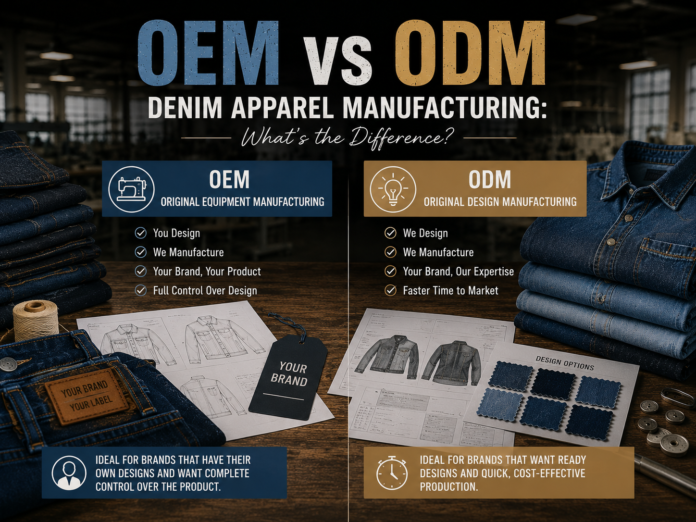
Original Equipment Manufacturer is the acronym for Original Equipment Manufacturer. OEM in denim clothing means that you, the brand, provide the design. You provide the specs, the tech pack and fabric directions, as well as the construction requirements. It is the manufacturer’s responsibility to produce your design consistently and accurately.
You are responsible for every detail. Your team will define the silhouette, wash, hardware, fit, and other details. The factory will then execute them. The factory contributes only production capabilities, not creative input.
OEM is the best model for brands that have a clearly defined product vision, in-house design capabilities or freelance designers, and technical expertise to fully specify a garment. This gives you full ownership and differentiation, but requires more upfront preparation.
What is ODM Denim Manufacturing?
ODM is the acronym for Original Design Maker. ODM in denim clothing means that the manufacturer has already developed a variety of styles. You then choose from these existing designs, add your branding, and take them to market.
Design work is already done. The samples are ready, and there are already patterns. By customising the hardware, packaging, and labelling, you can make your product unique.
ODMs are the best option for brands that want to move fast, do not have the in-house design capabilities, or want to test the market before investing in custom denim development.
A denim private label manufacturer often operates on an ODM model — providing a variety of denim styles that brands can customize and brand.
The Differences in Key Terms
The difference is simple in OEM vs ODM Denim Apparel manufacturing. In OEM, you create the design and the factory produces it. In ODM, the factory creates the design, and you apply your branding.
This distinction shapes the entire production process. OEM allows brands to develop unique denim apparel that cannot be duplicated because the design is original. ODM offers speed and convenience, but the base denim designs may also be used by other brands working with the same manufacturer.
OEM production usually requires a longer lead time because design development, tech packs, and multiple sampling stages are completed before manufacturing begins. ODM denim apparel can reach the market much faster—sometimes within weeks after selecting a style and confirming branding.
What model suits different types of denim products?
Within a denim line, the choice between OEM or ODM can vary by product category.
OEM is often preferred for denim Jeans, where fit is the key factor and brands have specific requirements on silhouette. Fit is an important brand differentiator. To get it right, a custom-developed process is required.
ODM is a great option for denim shirts or denim vests. ODM can be a great option for these styles because they are less fit-critical. Custom branding and washing combined with an ODM base design can create a unique product without investing in OEM development.
ODM is often preferred for kids’ jeans — especially by brands new to the category. The established size ranges and tried-and-tested constructions help reduce the likelihood of fit problems, which are especially problematic for children’s clothing.
Can you use both models together?
Many successful denim brands have done so. It is common to use ODM for seasonal or entry-level styles, while OEM is used for hero pieces.
The brand can benefit from the commercial flexibility and speed of ODM, while also retaining the ownership and differentiation of OEM. The ODM products fill out the range, generating revenue. Meanwhile, the OEM pieces – which take longer to create – become the brand’s signature pieces.
The ability to expand their product range without having to change production partners is possible with a denim jacket or a full-range factory that supports both models.
You can ask any manufacturer about their model
Be sure to ask which denim model the manufacturer uses and how flexible they are.
Some factories claim to be OEMs, but prefer to steer brands towards their own designs. Some factories claim ODM capabilities, but their sample range is limited or outdated and doesn’t reflect the current market trends.A
streetwear manufacturer who has genuine OEM capabilities will be able to work from your tech package and produce a prototype that accurately reflects the design you have created — not just a modified version. A strong ODM range will include current samples with high-quality finishes that reflect a genuine understanding of the market.
Here are some key questions you should ask:
- You can use brand tech packs to help you guide your design or you can work with the original designs.
- How current is your sample range?
- Can you support both OEMs and ODMs within the same brand?
- How can you protect the intellectual property of OEM designs?
- How much is the minimum quantity to order for each model?
Conclusion
The OEM vs ODM Denim Apparel decision is not about which model is better, but which fits your brand’s current needs. OEM gives you customization, differentiation, and ownership, but requires more preparation, development time, and investment. ODM offers faster production and a simpler process, but with less uniqueness and flexibility.
Understand where your brand stands, choose accordingly, and work with a manufacturer that can support both OEM and ODM as your denim apparel business grows.
Explore the entire range of denim clothing manufacturing and find the best fit for your production needs.
FAQs
What is OEM in denim manufacturing?
OEM means Original Equipment Manufacturer – the brand provides the design, and the factory manufactures it. The brand has created the product.
What is Original Design Manufacturer in denim manufacturing?
The factory already has designs that brands can select, brand, and market as their own.
Which model will be faster to market?
ODM, because the design is already in place, and sampling is minimal. OEM requires a full design and multiple rounds of sampling before production can begin.
What is the best way to protect my OEM design from a manufacturer?
Sign a nondisclosure contract before you share design files or tech packs. Before any development work starts, discuss intellectual property terms.