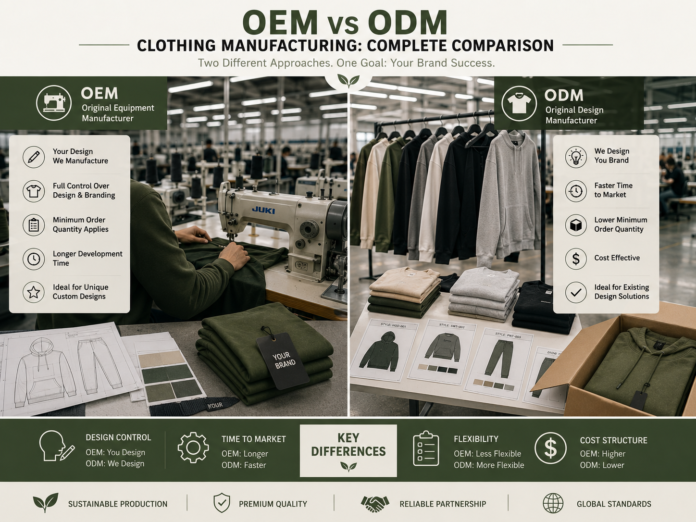
OEM and ODM clothing production can help brands choose the best production path. OEM is when you provide the full design and factories produce it. ODM is a ready-made design that you can brand. Each is tailored to different budgets and needs. Knowing these differences can save you time and money.
What is OEM Clothing Manufacturing?
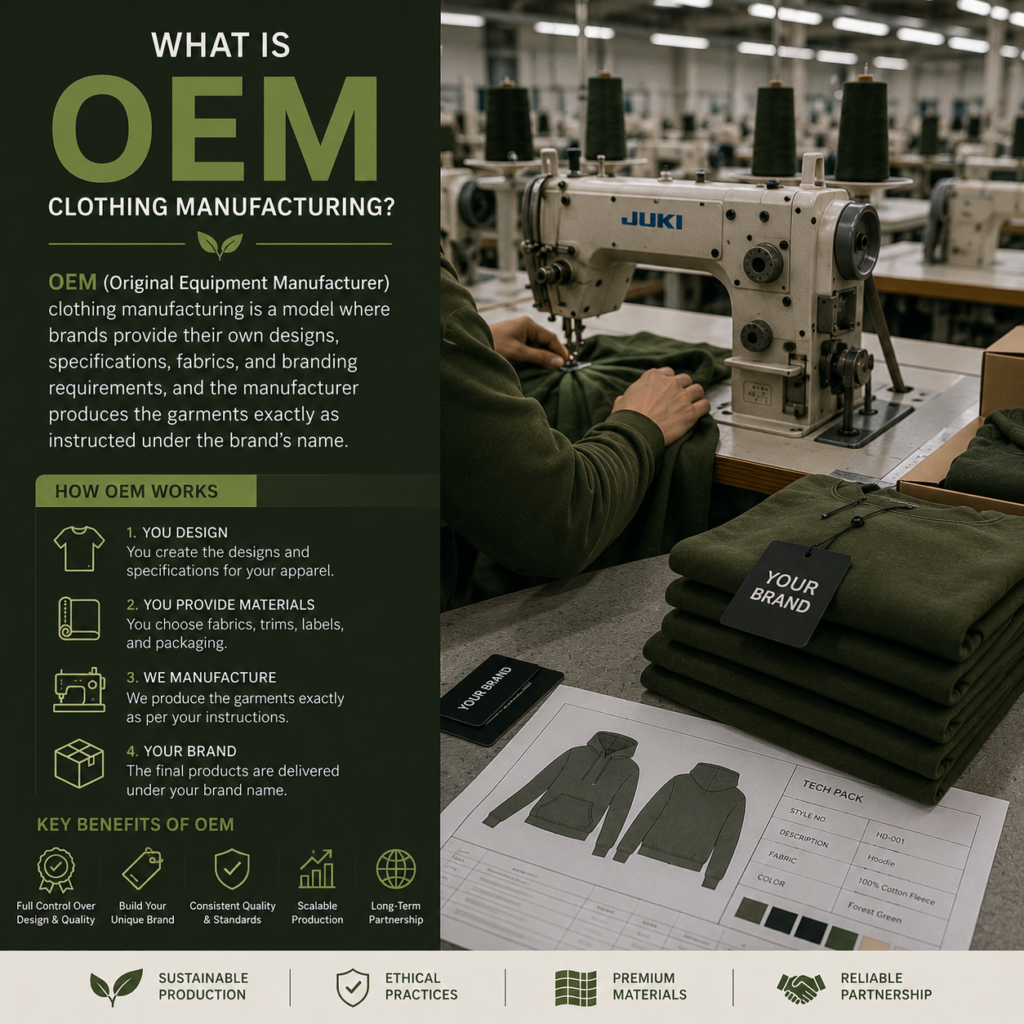
Your blueprints are followed to the letter in OEM clothing production. Sketches, tech packs and fabric selections are completely yours. The factories produce only according to your vision. For example, design unique sleeve cuts yourself. You can also control each stitch and every seam detail. You have complete creative freedom.
What is ODM Clothing Manufacturing?
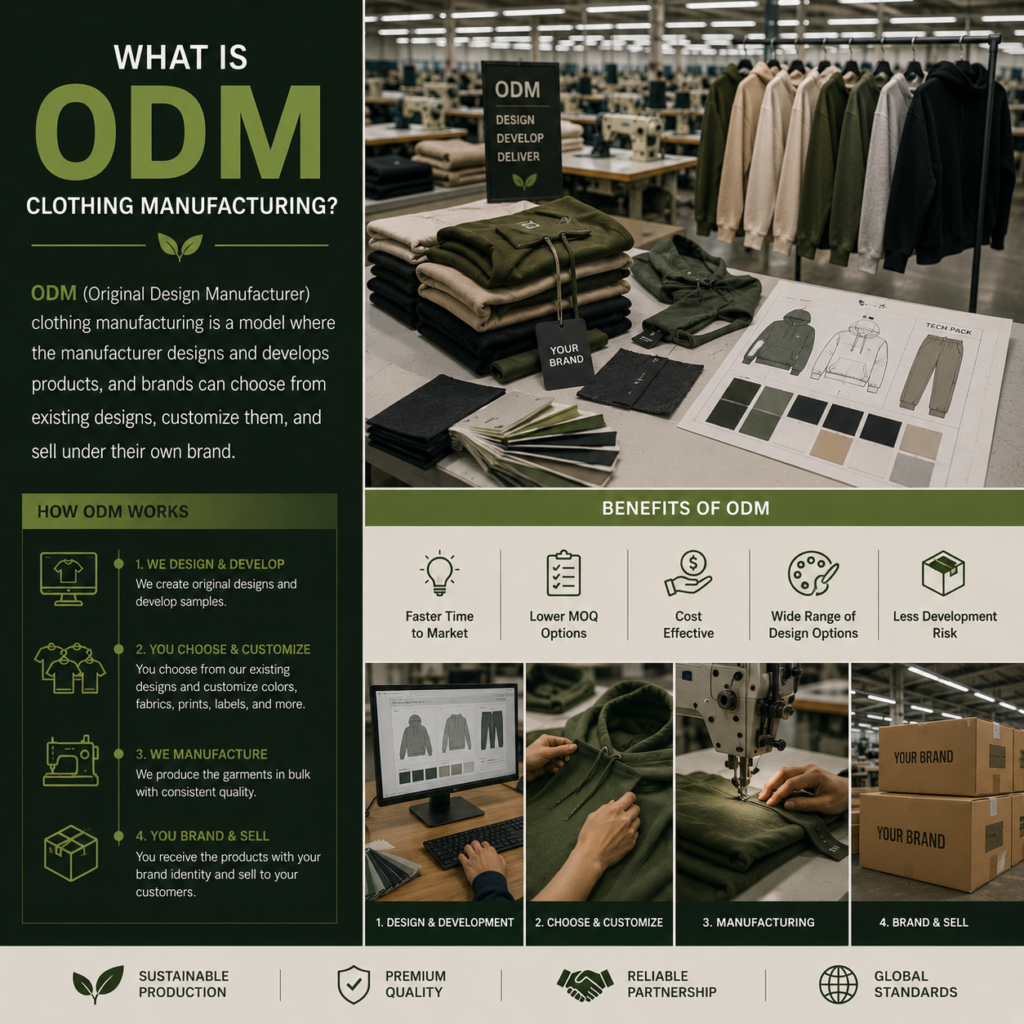
ODM clothing production begins with factory designs. Style catalogs are available with the latest seasonal trends. Choose the items, add your brand, and then sell them fast. You can, for example, brand their hoodie collection. The factories will handle the design and production smoothly. Here, speed beats custom work.
Design Control in OEM Clothing Manufacturing vs ODM Clothing Production
OEM clothing manufacturing is different from ODM clothing production in terms of creativity. OEM allows you to control every aspect of the product, from the fabric to the fit. You can change patterns whenever you like. ODM restricts choices to only factory collections. ODM designs are already trend tested. OEM is best for unique visions, while ODM is better for quick launches.
Production Speed Comparison
OEM and ODM clothing production show clear time gaps. Samples and approvals for OEM take months. You iterate designs multiple rounds slow. ODM can ship in a few weeks, since the patterns are already available. There is no need to wait for development. ODM is the winner of all races to market.
Cost Structure Differences
OEM and ODM clothing manufacturers affect wallets in different ways. The upfront costs of OEM are higher for the design work and sample production. Even small runs can increase the price per piece. ODM is cheaper when development costs are shared. Factories spread design expenses across clients. Startups can save a lot with ODM.
Minimum Order Requirements
OEM and ODM clothing manufacturers have different order sizes. Custom setups are more expensive in OEM factories. Expect to see 500+ pieces per design. ODM offers lower starting prices since patterns are ready. Most manufacturers are willing to accept orders of 100 pieces. ODM is a cheaper way to test markets.
The level of quality and consistency
OEM and ODM clothing production both deliver high-quality work. You are the one who guides everything. ODM maintains standard across all their proven lines. OEM risks can sometimes increase with complex designs. ODM has a proven track record.
| Features | OEM Manufacturing | ODM Manufacturing |
|---|---|---|
| Design Control | Ownership | Catalogue of Factory Products |
| Production Time | 3-6 Months | Two to four weeks |
| The Cost of Upfront Payment | High-quality | Low-cost |
| Minimum Orders | 500+ pieces | 100+ pieces |
| Best for | Unique styles | Fast market entry |
Risk and Flexibility Factors
OEM clothing production vs ODM apparel manufacturing. OEM carries higher design failure chances. The wrong fit can quickly waste large investments. ODM reduces risk by using styles that have been tested. OEM, on the other hand, builds brand identity over time. ODM allows you to switch styles easily next season.
The Best Use Cases of Each
Choose OEM for your signature pieces. Luxury brands make custom fits that nobody can copy. ODM is the best choice for seasonal releases and testing. Weekly, streetwear shops introduce factory-designed products. Mix both to achieve a balanced growth.
Scalability and Long-term growth
OEM and ODM clothing manufacturers have different growth paths. OEM scales perfect once designs prove sales. Repeat orders drop costs steady. ODM grows quickly, but the style options are limited. OEM, on the other hand, builds IP over time. Established brands tend to be OEM-heavy.
Conclusion
OEM clothing manufacturing vs ODM fits your brand perfectly. Startups are first to take advantage of ODM’s speed and low-risk. Smartly, growing shops combine both. Big brands have their own OEM to give them a unique edge. Choose wisely by understanding the differences. This will help your clothing line to grow faster.
FAQs
What can give you more control over your design?
ODM is a factory design, while OEM allows you to create all the details.
Which method is faster?
ODM’s ready-made patterns and shorter production time are a win for ODM.
How do costs compare?
ODM distributes costs among clients, while OEM requires a higher initial investment.
Can startups use either method?
ODM is a good option for those with low budgets, while OEM designs are more proven and can grow.
When should brands switch to a new method?
Start with ODM pieces for testing, then move to OEM for the signature collection.