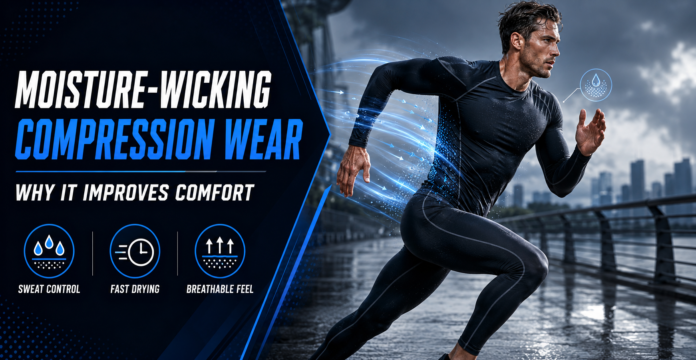
Sweat is normal during training, walking, running, gym work, sports, and long active days, but wet clothing can quickly make the body feel heavy, sticky, and uncomfortable. moisture wicking compression wear is designed to manage this problem by pulling sweat away from the skin and spreading it across the fabric surface so it can dry faster. This does not mean the clothing stops sweating. It means the fabric helps move moisture before it builds up against the body. Compression also gives a close, supportive fit, which can reduce fabric movement, rubbing, and loose folds during exercise. When moisture control and compression are combined, the result is clothing that feels cleaner, lighter, and more stable during movement. This is why moisture wicking compression wear is useful for athletes, gym users, runners, cyclists, workers, and anyone who wants better comfort in warm or active conditions. It is also easy to understand: the body still works hard, but the clothing helps sweat feel less annoying.
What Is Moisture Wicking Compression Wear?
moisture wicking compression wear is close-fitting active clothing made with performance fabrics that move sweat away from the skin while giving gentle body support. It is different from a normal cotton shirt because cotton often absorbs sweat and holds it, which can make the garment feel wet for a long time. A compression garment usually uses polyester, nylon, spandex, elastane, or blended stretch fibers because these materials can fit close to the body without losing shape. Many athletes choose compression wear because it supports movement and helps manage sweat during training. The main job of moisture wicking compression wear is simple: keep the skin feeling drier, reduce clingy wet fabric, and make the body feel more comfortable while moving. It can be used in tops, leggings, shorts, sleeves, socks, and base layers for indoor and outdoor activities. The best pieces feel firm but not harsh, so the wearer can move freely without feeling trapped.
Why Sweat Management Matters for Comfort
When sweat stays trapped under clothing, the skin can feel damp, hot, and irritated. This can distract a person during exercise because the body starts focusing on discomfort instead of movement. Wet fabric can also become heavier, especially during longer workouts or outdoor training. moisture wicking compression wear improves comfort because it helps sweat spread out instead of collecting in one place. When moisture spreads across the fabric, air can reach it more easily, and drying becomes faster. This helps the garment feel lighter and less sticky. It also reduces the cold, wet feeling that can happen when sweat cools on the skin after activity slows down. For simple comfort, this matters a lot. A person may not always notice fabric technology when everything feels fine, but they quickly notice when a shirt becomes soaked, rough, and clingy. Better sweat control can also help people stay focused, especially during long workouts, team practice, or outdoor training in warm weather.
How Compression Fit Helps the Body Move
Compression fit is not only about tight clothing. Good compression should feel supportive without cutting off movement or making breathing difficult. The close fit helps the fabric stay in place, so it does not flap, bunch, twist, or rub during repeated motion. This is helpful in running, cycling, weight training, football, yoga, and gym workouts where the body moves again and again. moisture wicking compression wear also helps because the fabric sits close enough to pick up sweat from the skin quickly. If the garment is too loose, sweat may stay on the body longer before the fabric can move it away. A proper compression fit feels smooth, flexible, and stable. It should stretch when the body bends, recover when the body returns to position, and remain comfortable during both fast and slow movements. This stable fit can also make layering easier because a hoodie, jacket, or uniform can sit over the base layer without extra bunching.
Moisture Wicking Compression Wear for Different Activities
moisture wicking compression wear can help in many activities because sweat and movement happen in many ways. In the gym, it can keep the body feeling dry during strength training, cardio machines, and circuit workouts. For running, it can reduce the heavy feeling caused by sweat-soaked shirts and help the garment stay steady with each step. For cycling, it can limit rubbing because the fabric stays close to the body. For yoga or stretching, it can support the muscles while allowing flexible movement. For sports teams, moisture wicking compression wear can work as a base layer under uniforms. For people who train after school, after work, or during busy days, this comfort can make exercise feel easier to continue. The best choice depends on the activity, weather, fabric weight, and how much compression feels comfortable. A lighter garment is better for hot conditions, while a slightly thicker one may feel better in cooler weather.
Moisture Wicking Compression Wear vs Regular Activewear
Regular activewear can be comfortable, but it may not always give the same close support as compression clothing. A normal training shirt may wick sweat well, but if it is loose, it can move around more and create friction. A normal pair of shorts or joggers may feel easy to wear, but it may not give the body a locked-in training feel. moisture wicking compression wear combines two comfort ideas in one garment: sweat movement and body-hugging support. This does not mean it is always better for every person or every activity. Some people prefer relaxed clothing for walking, warm-ups, or casual use. Compression is better when support, stability, and fast sweat movement matter more. Regular activewear is better when the person wants airflow, softness, and a looser everyday feel. The right choice depends on how hard you train and how close you want the garment to feel. In simple words, choose compression for strong movement and choose relaxed activewear for easy comfort.
Key Comfort Benefits in One Paragraph
moisture wicking compression wear improves comfort in small but important ways during active use:
- It helps pull sweat away from the skin before the body feels too wet.
- It keeps the garment lighter because sweat spreads and dries faster.
- It reduces rubbing because the close fit limits extra fabric movement.
- It supports flexible movement when the fabric has good stretch and recovery.
- It can work as a base layer under uniforms, jackets, or training clothes.
- It helps the body feel cleaner during long workouts or warm weather.
- It gives a smooth fit that can improve confidence during sports and gym work.
- It can help people stay focused because clothing discomfort becomes less distracting.
Choosing the Right Fabric and Fit
The best moisture wicking compression wear should feel smooth, stretch easily, and return to shape after movement. Fabric matters because not every stretch fabric handles sweat in the same way. Polyester is often used for quick drying, nylon can feel smooth and strong, and spandex or elastane gives stretch and recovery. A good garment should not become see-through during bending, should not roll at the waist, and should not dig into the skin. For lower-body training, compression leggings can be useful because they support movement while helping manage sweat around the legs. Fit is also important. If compression wear is too tight, it can feel uncomfortable. If it is too loose, it may not wick sweat as well. Good moisture wicking compression wear should feel close, breathable, and secure without causing pressure pain. A simple fit test is useful: bend, squat, stretch, and walk before deciding. If the garment stays smooth and comfortable, the fit is likely right.
Common Mistakes When Buying Compression Clothing
Many people choose compression clothing only by size, but size is not the only factor. Fabric weight, stretch direction, seam placement, waistband comfort, breathability, and activity type all matter. A very thick garment may feel supportive but too warm for summer workouts. A very thin garment may feel light but may not provide enough coverage or durability. Another mistake is thinking every tight garment is compression wear. True moisture wicking compression wear should stretch well, manage sweat, and stay stable during movement. Some people also buy a smaller size because they think tighter means better support. That can cause discomfort, marks on the skin, and restricted movement. The best garment should feel close but not painful. It should allow normal bending, sitting, stretching, lifting, and breathing. Comfort is the sign that compression is working properly, not extreme tightness. A smart buyer should also check stitching quality, fabric recovery, and care instructions before placing a bulk or personal order.
Best Garment Types for Moisture Control
Different garment types solve different comfort problems. Compression T-shirts help keep the upper body dry and can work under sports uniforms, hoodies, jackets, or gym tops. Compression leggings help with leg movement, sweat control, and coverage during training. Compression shorts are useful under loose shorts because they can reduce thigh rubbing. Compression socks or stockings may support lower-leg comfort for sports, travel, or long standing, depending on the design and purpose. A compression t-shirt can be a simple starting point for people who want moisture wicking compression wear for gym training, running, or team sports. The best garment type depends on where you sweat most and what kind of movement you do. For full comfort, many athletes combine a compression top with leggings or shorts when training becomes intense. For teams and brands, matching fabric quality across tops and bottoms also helps the full outfit feel balanced.
Care Tips to Keep Performance Strong
moisture wicking compression wear works best when the fabric surface stays clean and the stretch fibers stay healthy. Sweat, body oils, detergent buildup, and fabric softeners can reduce the fabric’s ability to move moisture. Wash compression garments after heavy use, especially after gym sessions, sports matches, or outdoor runs. Use mild detergent and avoid heavy fabric softener because softener can coat performance fibers and make them less effective. Air drying is often better than high heat because heat can damage spandex or elastane over time. Turn garments inside out before washing to protect the outside surface. Do not iron compression wear unless the care label allows it. With good care, moisture wicking compression wear can stay comfortable, stretchy, and useful for many workouts. Proper washing protects both sweat control and fit recovery. This care routine is simple, but it makes a big difference because performance clothing depends on clean fibers and healthy stretch.
Conclusion
moisture wicking compression wear is better for comfort when a person wants sweat control, close support, and stable movement in one garment. It helps move sweat away from the skin, spreads moisture across the fabric, and reduces the sticky feeling that can happen during exercise. It also supports the body with a smooth fit, which can reduce rubbing and loose fabric movement. However, it is not always the best choice for every moment. Relaxed activewear may feel better for casual walking, light activity, or people who dislike close-fitting clothes. The best answer is to choose clothing based on activity, weather, fabric, and personal comfort. For gym training, running, cycling, sports, and base-layer use, moisture wicking compression wear is often a smart choice because it helps the body feel dry, supported, and ready to keep moving. In the end, comfort is not only about softness; it is also about staying dry, moving freely, and feeling confident during activity.
FAQs
What does moisture wicking compression wear mean?
moisture wicking compression wear means close-fitting clothing that supports the body and helps move sweat away from the skin. It is made for comfort during exercise, sports, and active movement.
Is moisture wicking compression wear better than cotton?
Yes, moisture wicking compression wear is usually better for workouts because it dries faster and does not hold sweat like cotton. Cotton can feel soft, but it often becomes heavy when wet.
Can I wear moisture wicking compression wear every day?
Yes, you can wear it every day if the fit feels comfortable and the garment is made for regular use. Choose lighter compression for daily wear and stronger compression for training.
How should moisture wicking compression wear fit?
It should fit close to the body without pain, tight marks, or breathing trouble. Good moisture wicking compression wear should stretch, recover, and stay in place while you move.