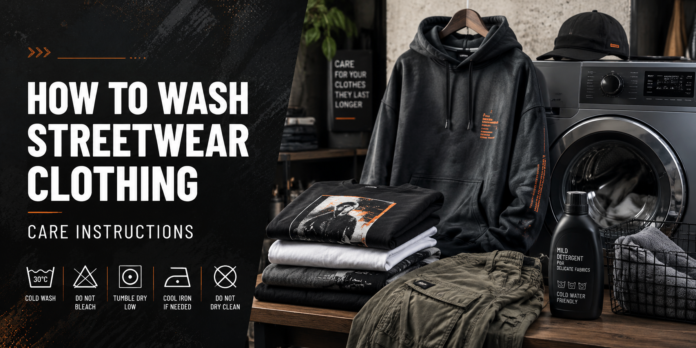
You spend real money on streetwear. A quality hoodie, a great pair of baggy jeans, a graphic tee with a design you genuinely love — these aren’t throwaway purchases. So it makes sense to protect that investment by washing your pieces correctly. Knowing how to wash streetwear properly is one of the most underrated skills in building a lasting wardrobe.
The reality is that most streetwear damage happens in the laundry — not on the street. Faded graphics, shrunken hoodies, distorted fits, and pilling surfaces are almost always the result of incorrect washing rather than normal wear. Get the washing right and your pieces stay looking fresh for years. Get it wrong and even expensive streetwear deteriorates fast.
This guide covers everything you need to know — from sorting and pre-treatment through washing, drying, and storage — so every piece in your collection gets the care it deserves.
Why Proper Washing Matters for Streetwear
Streetwear isn’t just clothing — it’s expression. The graphics, the colorways, the fits, and the textures are all part of what makes a piece worth owning. Incorrect washing attacks all of those qualities simultaneously — fading colors, cracking graphics, distorting silhouettes, and degrading the fabric textures that make streetwear feel as good as it looks.
Understanding how to wash streetwear correctly preserves everything that makes each piece valuable — the color vibrancy, the graphic sharpness, the fabric hand feel, and the original fit. It also extends the life of each piece significantly, meaning you get more wear from every item in your collection before it needs replacing.
This matters even more for pieces with heavy graphic print content, bold colorways, or premium fabric construction — all of which are standard in quality streetwear and all of which are vulnerable to damage from incorrect washing techniques.
Why It Matters — Key Benefits
Taking care of your streetwear properly delivers real, lasting benefits across your entire wardrobe. Here’s why washing correctly matters:
- Preserves graphic quality — Correct washing prevents graphic prints from cracking, peeling, or fading — keeping designs sharp and vibrant wash after wash.
- Maintains original color vibrancy — Cold water and gentle techniques protect the saturated colors that define great streetwear from premature fading.
- Extends garment lifespan — Properly washed streetwear lasts significantly longer, delivering better long-term value from every purchase.
- Protects fabric texture — Gentle washing preserves the feel of premium fabrics — heavyweight cotton, French terry, and technical materials all benefit from careful handling.
- Maintains the original fit — Avoiding heat and aggressive agitation prevents the shrinkage and distortion that ruins carefully chosen silhouettes.
- Reduces pilling — Correct washing technique minimizes friction on fabric surfaces, preventing the unsightly pilling that makes pieces look worn and cheap.
- Saves money long-term — Pieces that don’t deteriorate through incorrect washing don’t need replacing as often, reducing the overall cost of maintaining a quality streetwear wardrobe.
Read the Care Label Before Anything Else
This sounds obvious — but most people skip it entirely. The care label on every streetwear piece contains specific washing instructions from the manufacturer, based on the exact fabric composition and construction of that garment. It’s the most accurate and reliable guide to washing any specific piece correctly.
Most streetwear care labels recommend cold water washing, gentle or delicate cycles, and low heat or air drying. Some premium pieces with specific fabric constructions may have additional requirements. Always treat the care label as your primary guide — the general advice in this article applies broadly, but individual pieces may have specific needs that override general guidance.
If the care label has worn off or become unreadable, default to the most cautious approach — cold water, gentle cycle, inside out, and air dry. This conservative baseline protects virtually any streetwear fabric without risking damage.
Sorting Your Streetwear Before Washing
Sorting laundry correctly is the first practical step in understanding how to wash streetwear — and it makes a bigger difference than most people realize. The core principle is simple — wash similar colors together and separate heavy from lightweight pieces.
Dark streetwear pieces — black hoodies, dark graphic tees, deep-colored baggy jeans — should always be washed separately from light or white pieces, particularly for the first few washes. New dark pieces are especially prone to color bleeding, and washing them with lighter clothing risks permanent color transfer that ruins both pieces simultaneously.
Heavy pieces like thick hoodies and heavyweight denim should ideally be washed separately from delicate or lighter pieces. The weight and bulk of heavy garments creates friction during the wash cycle that can damage lighter, more delicate fabrics washing alongside them.
Our hip hop baggy jeans and baggy jeans shorts should always be washed separately from lighter pieces — particularly for the first few washes — to prevent any color transfer and protect the fabric integrity of everything else in the load.
Turning Pieces Inside Out
Before any streetwear piece goes into the washing machine, turn it inside out. This single step is one of the most effective things you can do to protect graphic prints, preserve color vibrancy, and reduce pilling on the outer surface of the fabric.
Turning pieces inside out reduces the direct friction between the outer surface of the garment and the drum of the washing machine — as well as friction between adjacent pieces in the same load. This protection is particularly critical for graphic-heavy streetwear where the print is the most valuable element of the piece.
For pieces with particularly detailed or important graphics — limited edition prints, bold all-over designs, or precisely positioned artwork — turning inside out is non-negotiable. The difference in graphic longevity between pieces consistently washed inside out and those washed right-side out is genuinely dramatic over the course of a year of regular washing.
Choosing the Right Water Temperature
Water temperature is one of the most critical variables in how to wash streetwear correctly — and getting it wrong causes more irreversible damage than almost any other washing mistake. Cold water is the correct choice for virtually all streetwear, in virtually all circumstances.
Cold water protects colors from fading, prevents shrinkage in cotton and cotton-blend fabrics, and is gentler on graphic prints and technical fabric constructions. It’s also perfectly effective at cleaning — the idea that hot water is necessary for a thorough clean is largely a myth for everyday streetwear washing situations.
Warm water can be used for heavily soiled pieces that genuinely need deeper cleaning — but even then, it increases shrinkage and color fade risk. Hot water should never be used for streetwear under any circumstances. The damage it causes — to colors, to fits, and to graphic prints — is often permanent and irreversible from a single wash.
The Right Wash Cycle for Streetwear
Beyond water temperature, the wash cycle itself plays an important role in protecting streetwear through the cleaning process. The gentle or delicate cycle is the correct choice for most streetwear pieces — it uses slower agitation speeds and shorter cycle times that significantly reduce the mechanical stress placed on fabrics and graphics during washing.
Standard or heavy-duty cycles generate too much agitation for most streetwear. The increased mechanical action damages fabric surfaces, accelerates color fading, and puts unnecessary stress on seams, prints, and construction details that define quality streetwear pieces.
For particularly heavy or heavily soiled pieces — thick hoodies, heavyweight denim, or pieces with significant dirt or staining — a slightly more standard cycle may be needed, but cold water should still always be used. Pre-treating specific stains before the wash is almost always a better approach than using a more aggressive cycle to handle dirty pieces.
Choosing the Right Detergent
Detergent choice matters more than most people realize for streetwear care. Harsh, heavy-duty detergents with strong chemical formulas strip color from fabrics, degrade the binders in graphic prints, and break down premium fabric constructions faster than gentle alternatives.
A mild, color-safe detergent is the best choice for most streetwear washing situations. Look for formulas designed for delicate fabrics, dark colors, or sportswear — these are gentler on the fabrics and prints that define quality streetwear while still delivering effective cleaning performance.
Avoid using too much detergent — excess detergent doesn’t improve cleaning results and leaves residue in the fabric that requires more vigorous rinsing to remove. This additional agitation puts more stress on the garment than necessary. Use the recommended amount and let the detergent do its job efficiently.
Fabric softener is generally not recommended for most streetwear. It coats fabric fibers with a residue that can flatten textures, reduce moisture management in technical fabrics, and affect the adhesion of graphic prints over time. If softness is the goal, air drying naturally produces a softer result than machine drying with dryer sheets — without the side effects of fabric softener on streetwear fabrics.
Dealing With Stains on Streetwear
Stains are inevitable when you’re actually wearing your streetwear regularly — which is exactly what it’s made for. The key to successful stain removal is acting quickly and treating stains correctly before they set into the fabric.
For most everyday stains — food, drink, or general soiling — blot the affected area immediately with a clean cloth to remove as much of the substance as possible before it dries. Never rub — rubbing pushes the stain deeper into the fiber and spreads it across a larger surface area. Once the excess is removed, apply a small amount of mild liquid detergent directly to the stain and work it in gently with your fingers.
Allow the pre-treatment to sit for ten to fifteen minutes before washing the piece normally on a cold, gentle cycle. For oil-based stains, a small amount of dish soap works particularly effectively as a pre-treatment for most streetwear fabrics.
For graphic-heavy areas, be especially careful with stain treatment — aggressive scrubbing on or near graphic prints can damage the print surface even before washing. Gentle blotting and minimal pre-treatment product on graphic areas is always safer than aggressive direct treatment.
Our off the shoulder dress styles and other more delicate fashion pieces require particularly gentle stain treatment — always test any stain product on an inconspicuous area before applying to a visible surface.
How to Dry Streetwear Correctly
Drying is where a lot of streetwear gets damaged even when the washing has been done perfectly. The tumble dryer is a significant threat to most streetwear — high heat causes shrinkage, degrades graphic prints, accelerates color fading, and breaks down the fabric constructions that make quality streetwear feel so good to wear.
Air drying is the correct approach for virtually all streetwear. For most pieces — tees, hoodies, sweatshirts, and lighter jackets — lay them flat on a clean towel and reshape to original dimensions while still damp. Flat drying prevents the stretching that can occur when heavy wet garments are hung on hangers — particularly at the shoulders and underarms where the weight of a wet hoodie can distort the fabric significantly over time.
For baggy jeans and heavier denim, hanging to dry is generally fine — the weight of denim is more evenly distributed and less prone to distortion from hanging than knit or jersey fabrics. Turn them inside out before hanging to protect the outer surface and color from any UV exposure during drying.
If the tumble dryer is unavoidable, use the lowest possible heat setting — ideally a no-heat air-only cycle — and remove the piece while it’s still slightly damp, allowing it to finish drying naturally in the open air. Never leave streetwear in a hot dryer until completely dry — this is one of the fastest ways to cause permanent damage across almost every type of streetwear fabric.
Washing Specific Streetwear Pieces
Different streetwear pieces have slightly different washing considerations worth knowing about specifically.
Graphic tees are among the most washing-sensitive streetwear pieces because the graphic is typically the most valuable element of the garment. Always wash inside out, always cold water, always gentle cycle. Air dry flat or on a hanger — never in a hot dryer.
Heavy hoodies and sweatshirts can handle slightly more robust washing than tees — their heavyweight construction is more forgiving — but cold water and gentle cycles still apply. Washing alone or with other heavy pieces prevents lighter garments from being damaged by the bulk and weight of a thick hoodie in the same load.
Baggy jeans and denim pieces benefit from being washed less frequently than other streetwear — denim doesn’t need washing after every wear and benefits from less frequent laundering. When washing is needed, cold water inside out is the approach that best preserves color, fit, and fabric integrity. Our hip hop baggy jeans and baggy jeans shorts are designed for durability — but cold water washing still makes a meaningful difference to their long-term appearance.
Technical and performance streetwear pieces — windbreakers, nylon outerwear, and technical fabric pieces — often have specific care requirements beyond standard streetwear washing advice. Always check the care label carefully for these pieces and follow the manufacturer’s specific guidance.
How Often Should You Wash Streetwear?
One of the most common questions about how to wash streetwear is simply how frequently it needs washing. The answer varies by piece type — and washing less often than most people assume is actually better for most streetwear fabrics.
Graphic tees and hoodies worn in clean, casual environments can typically be worn two to four times before washing — provided they haven’t been exposed to significant sweating, staining, or strong odors. Airing pieces out between wears — hanging them in fresh air for an hour or two after wearing — significantly extends the time between necessary washes.
Denim pieces like baggy jeans can often go significantly longer between washes — some denim enthusiasts wash their jeans only a handful of times per year, spot-treating individual stains as they occur rather than washing the entire garment. This approach significantly extends the life and appearance of denim pieces.
The habit of washing less frequently — only when genuinely needed — is one of the simplest and most effective things you can do to extend the life of every piece in your streetwear collection. Explore our full streetwear collection for pieces designed with durability in mind — and protect that durability with the right washing habits from the start.
Storing Streetwear After Washing
Proper storage after washing is the final piece of the care puzzle. How streetwear is stored between wears significantly affects how it looks and feels over time.
Fold heavy knit pieces like hoodies and sweatshirts rather than hanging them for long-term storage. Heavy pieces can stretch at the shoulders when hung for extended periods — particularly on narrow hangers that concentrate pressure on a small area of fabric. Folding preserves the original shape and prevents shoulder distortion.
Hang lighter pieces like tees, lightweight jackets, and technical outerwear on appropriate hangers that support the shoulder width of the garment. Cramming too many pieces onto a hanging rail creates pressure and friction between garments that causes creasing and surface damage over time.
Store all streetwear in a cool, dry place away from direct light. Prolonged exposure to sunlight fades colors even without washing — particularly in darker, more saturated tones that are common across streetwear colorways. Our full fashion wear collection is designed for lasting color and construction — and proper storage protects both qualities between wears.
Conclusion
Knowing how to wash streetwear correctly is one of the most practical investments you can make in your wardrobe. Cold water, gentle cycles, inside out washing, mild detergent, and air drying — these five habits protect everything that makes quality streetwear worth owning in the first place.
At Eco Jersey, we manufacture streetwear built to last — but even the best construction benefits from proper care. Whether you’re washing graphic tees, heavyweight hoodies, or baggy denim, the principles in this guide keep every piece looking fresh and performing at its best for years to come. Ready to explore quality streetwear worth caring for? Browse our complete streetwear collection and find your next favorite piece today.
FAQs
Can I wash all streetwear in the washing machine?
Most streetwear is machine washable on a cold, gentle cycle. However, some delicate or technical pieces may require hand washing or specific care — always check the care label before machine washing any piece you’re unsure about.
Why do graphic prints crack and peel after washing?
Graphic prints crack and peel primarily because of heat — from hot water or tumble dryers — and from washing right-side out, which creates direct friction on the print surface. Always wash graphic pieces inside out in cold water and air dry to maximize print longevity.
How do I stop my black streetwear from fading?
Wash black pieces inside out in cold water on a gentle cycle, use a detergent designed for dark colors, and air dry away from direct sunlight. Washing less frequently and spot-treating minor stains rather than washing the whole garment also significantly slows color fading.
Is it okay to put streetwear hoodies in the dryer?
Air drying is always the safer option for hoodies. If the dryer is necessary, use the lowest no-heat setting and remove the hoodie while still slightly damp. Never tumble dry on high heat — it causes shrinkage, fades colors, and degrades the fabric construction significantly faster than air drying.