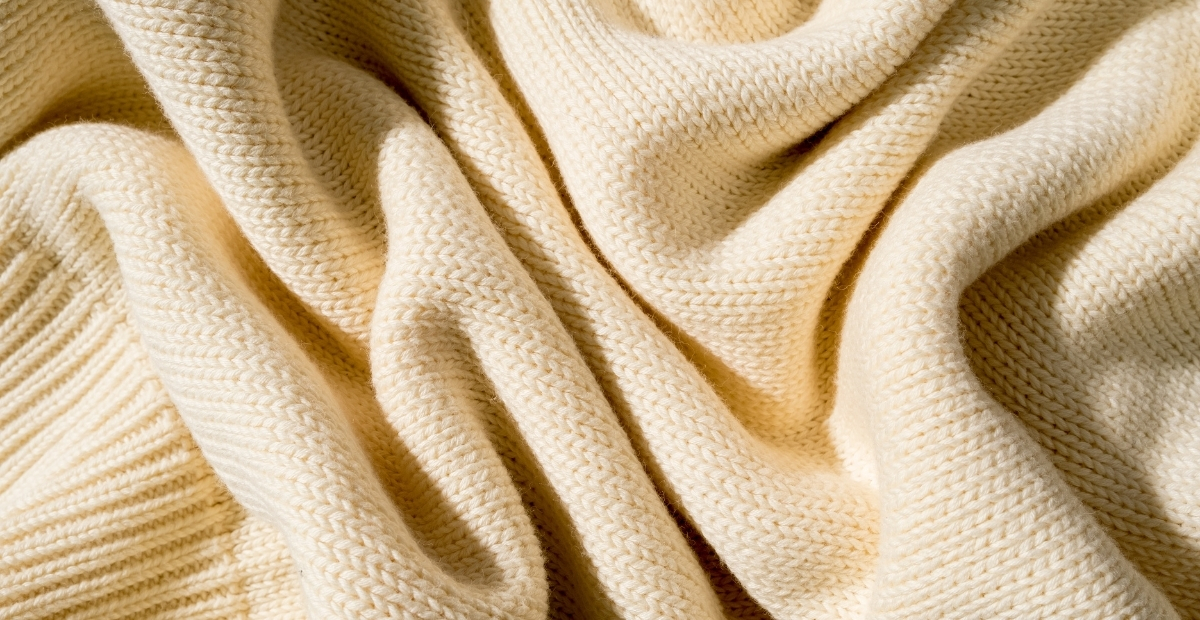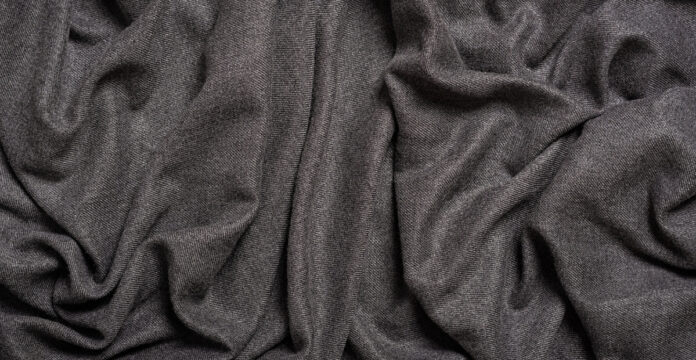
Cashmere is a luxurious wool that has been prized for centuries because of its warmth, softness and elegance. Cashmere is not created equal. Grade D cashmere fabric is equally important in the textile industry. It offers an appealing balance between affordability, performance and durability that is attractive to both consumers and manufacturers.
This guide will explore Grade B cashmere fabric and its features, production process advantages, limitations and best uses. This article also explains why Grade C Cashmere is a great option for budget-conscious shoppers without compromising comfort or functionality.
Understanding Cashmere Wool Grading
It is important to know how cashmere is graded before diving into Grade C. Cashmere can be classified into three grades: grade A, grade B, and grade C . These grades are determined by fiber size, fiber diameter and softness.
The Grade C cashmere has shorter fibres and a slightly rougher texture in comparison to the higher grades. It still comes from the undercoat of the cashmere goat, so its core properties remain intact.
What is Grade C Cashmere wool fabric?
The fibers that are usually smaller than 14 microns are used to make Grade C cashmere. These fibers may not be as long as those in Grade A, but they are still soft and warm.
Grade C Cashmere Wool Fabric is usually blended or woven to enhance durability. It is therefore widely used for everyday clothing and home textiles, where durability is more important than ultra-luxurious texture.
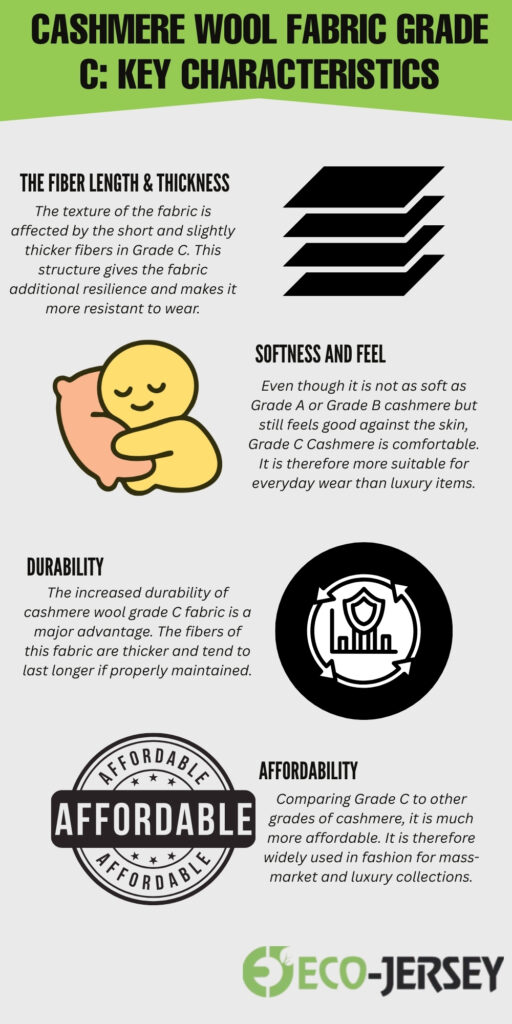
Cashmere wool fabric grade C: Key characteristics
1. The Fiber Length & Thickness
The texture of the fabric is affected by the short and slightly thicker fibers inGrade C Cashmere Wool Fabric. This structure gives the fabric additional resilience and makes it more resistant to wear.
2. Softness and Feel
Even though it is not as soft as Grade A or Grade B cashmere but still feels good against the skin, Grade C Cashmere is comfortable. It is therefore more suitable for everyday wear than luxury items.
3. Durability
The increased durability of cashmere wool grade C fabric is a major advantage. The fibers of this fabric are thicker and tend to last longer if properly maintained.
4. Affordability
Grade C Cashmere Wool Fabric to other grades of cashmere, it is much more affordable. It is therefore widely used in fashion for mass-market and luxury collections.
How to Produce Grade C Cashmere wool fabric
Grade C Cashmere Wool Fabric is produced in the same way as traditional cashmere. The shorter fibers are separated by additional sorting.
Step 1: Shearing and Combing
Grade C Cashmere Wool Fabric undergo a gentle comb during the molting period. The soft undercoat fibers can be collected without harming animals.
Step 2: Sorting the fiber
After collection, the fibers are separated based on their length and diameter. The shorter fibers are classified in Grade C.
Step 3: Cleaning & Dehairing
At this stage the coarse guard hairs and impurities are separated. The cashmere fibers that are usable are then refined.
Step 4: Weaving and Spinning
The fibers are spun to yarn and then woven into fabric. Blends are often created to increase strength and lower cost.
What is Grade C Cashmere Wool Fabric?
Grade C Cashmere Wool Fabric is still important to the textile industry, even though it’s considered lower quality. Cashmere products that are affordable to a wide range of consumers would not be available without it.
Many designers also prefer Grade C Cashmere to create entry level collections because it allows them the opportunity to offer cashmere clothing at competitive prices.
Cashmere Wool Grade C Fabric: Common Applications
Grade C Cashmere Wool Fabric fabric is widely used in different sectors.
Everyday Apparel
- Sweaters
- Cardigans
- Scarves
- Shawls
The fabric is suitable for clothing that is worn often.
Outerwear and Blends
jackets and coats are often made by blending Grade C cashmere with wool. The warmth is maintained while the cost is reduced.
Home textiles
- Blankets
- Throws
- Cushion covers
Grade C Cashmere Wool Fabric is a natural insulation material, but it doesn’t have to be ultra-fine.
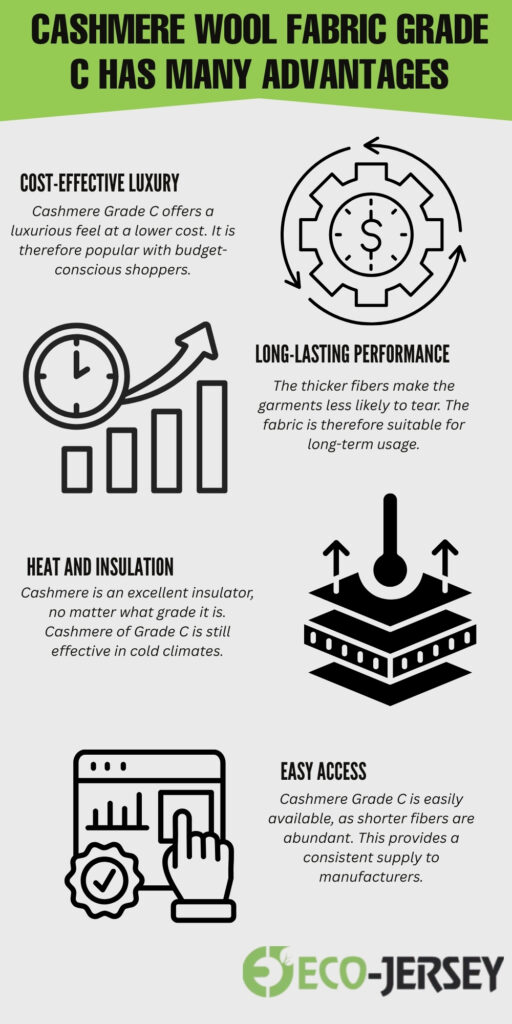
Cashmere wool fabric grade C has many advantages
Cost-Effective Luxury
Cashmere Grade C offers a luxurious feel at a lower cost. It is therefore popular with budget-conscious shoppers.
Long-Lasting Performance
The thicker fibers make the garments less likely to tear. The fabric is therefore suitable for long-term usage.
Heat and Insulation
Cashmere is an excellent insulator, no matter what grade it is. Cashmere of Grade C is still effective in cold climates.
Easy Access
Cashmere Grade C is easily available, as shorter fibers are abundant. This provides a consistent supply to manufacturers.
Cashmere Wool Grade C Fabric Limitations
Cashmere of Grade C has its benefits but also some limitations.
Reduced Softness
The texture of Grade A cashmere is slightly coarser. This difference is usually minimal when it comes to blended fabrics.
The Pilling Potential
Less Luxurious Appearance
While Grade C cashmere is visually appealing, it may not have the same refined drape as premium grades.
How to care for Cashmere Wool Fabric Grade C
When properly maintained, your appearance and longevity will be preserved.
Washing Tips
- Handwash in cold water
- Use mild detergent
- Avoid wringing
Drying Recommendations
The garments should be dried flat. This prevents shape distortion.
Storage Advice
To keep moths away, store in bags that are breathable and scented with lavender or cedar. Fabric integrity is preserved.
Sustainability and ethical considerations
Cashmere Grade C supports sustainability through by utilizing fibers which would otherwise be discarded. So, waste is reduced and resource efficiency improves.
Responsible manufacturers also ensure that goats are raised in an ethical manner and dyeing is done using environmentally friendly processes.
Why manufacturers choose Grade C Cashmere
Cashmere Grade C is flexible from a production perspective. It is easily blended, dyed, and mass produced without compromising its warmth.
Moreover, brands can introduce collections of cashmere at affordable prices. As a result, the brand’s reach is increased.
What is the best cashmere for you?
Cashmere of Grade C is perfect if you:
- Cashmere at affordable prices
- Durability is more important than ultra-softness
- You like everyday comfort
- Warmth and practicality are important to you
If luxury softness and comfort are your main priorities, you may prefer higher grades.
The Future of Cashmere Wool Fabric Grade C
Cashmere Grade C is expected to grow in popularity as the demand for luxury at an affordable price increases. Already, innovations in spinning and finishing technologies have improved softness and appearance.
Cashmere of Grade C will continue to be a popular choice for textiles.
The conclusion
Although it is not the most luxurious fabric, Grade C Cashmere Wool Fabric remains one of the most cost-effective. The fabric is durable, warm, and comfortable, while still maintaining the true essence of cashmere.
Cashmere is also affordable, making it more accessible. Cashmere Grade C can last for years if it is chosen carefully and properly cared for. It proves, in the end, that luxury doesn’t always come with a high cost.
FAQs
What is Grade C cashmere wool fabric?
Grade C cashmere wool fabric is made from shorter and slightly thicker cashmere fibers. It offers warmth, durability, and affordability for everyday use.
Is Grade C cashmere real cashmere?
Yes, Grade C cashmere is 100% real cashmere. It comes from the soft undercoat of cashmere goats but uses shorter fibers than higher grades.
How does Grade C cashmere differ from Grade A cashmere?
Grade C cashmere is less soft and more affordable than Grade A. However, it is more durable and better suited for regular wear.