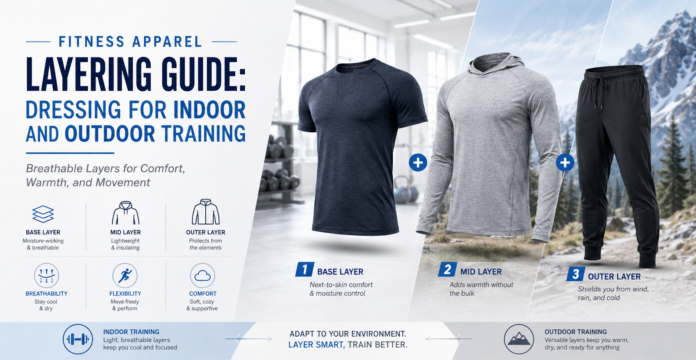
A fitness apparel layering guide is useful considering how quickly conditions can change when training. For example, a person can start a workout feeling cold, but after a few minutes of movement, may begin to feel hot. There are many options for workouts whether they be in a gym, on an outdoor track, walking, at home, or even on the road, and all require different clothing. Layering apparel helps modify comfort without needing to change the whole outfit. The right layering options can help maintain warmth and dryness while also being breathable. Poor layering will make a person feel hot and cold, and may feel sticky and constrained.
Fitness Apparel Layering Guide Basics
Fitness apparel layering guide basics start with three simple levels: base layer, middle layer, and outer layer. A full category like the fitness apparel collection can include workout tops, stringers,Working out often includes the essentials; T-shirts, joggers, pants, and training gear. The base layer is the closest layer to your skin, and their main design focus is moisture control. The second layer provides comfort or warmth. The outermost layer is your protection from air and other elements from the outdoors. Not every workout requires all three layers. The best arrangement relies on the conditions (environmental and personal), the intensity of the training, and the fabric.
Base Layers for Sweat Control
A fitness apparel layering guide describes base layers as the first and most essential layer. Since this layer first contacts the skin, it should be soft and breathable. Comfort also matters, but base layers should also be designed with sweat management in mind. Damp clothes can become uncomfortable and sticky during a workout. Base layers can include lightweight t-shirts, stringers, tanks, and fitted workout tops. A base layer should be lightweight and soft. While base layers can be the only layer used for indoor training, they can also help with comfort when warm-up layers, hoodies, and jackets are used for outdoor training.
Stringers for Indoor Training
Stringers are useful in a fitness apparel layering guide because they support airflow and easy arm movement. A product like graphics stringers can work well for gym training,KSR – Bodybuilding stringers promote body ventilation and help eliminate heat trapped in the shoulders and arms. Bodybuilding stringers also help eliminate heat in the shoulders and arms. Bodybuilding stringers are easy to layer under hoodies or light jackets for training time. Buyers need to gauge the comfort of the armholes, fabric softness, stitch, and print quality. An excellent stringer should maintain the breathability of the air in motion and should not make skin contact.
T-Shirts as Versatile Training Layers
T-shirts are handy items in a fitness apparel layering guide because they are suitable for both indoor and outdoor training. T-shirts are easily breathable. They can be worn to the gym alone, placed under a hoodie, or worn under a jacket for outdoor training. A product like soft drop shoulder tees can support relaxed comfort, easy styling, and casual fitness layering. The fabric should feel smooth and allow movement through the shoulders and chest. A good fitness t-shirt should not feel too heavy when sweating. It should stay comfortable during long wear.
Middle Layers for Warmth and Comfort
When layering for fitness apparel, there is a need for a middle layer during cooler weather, or when factoring in warm up/rest periods during a workout. This outer layer can include a lightweight hoodie, sweatshirt, a training top, or a relaxed tee, and can be placed on top of a base layer. The goal is to make sure more warmth is added without the risk of body overheating. The middle layer must be easily removable when the workout is in a more intense state, and must also allow the arms to move, and must be lightweight, and not at all bulky. If the training is to be done outdoors, a middle layer can make the early morning walks and stretching,
Bottom Layers and Training Pants
Bottoms contribute to a fitness apparel layering guide as legs need to be comfortable and movable. Lightweight pants, joggers, shorts, or bottoms that match the workout setting should be considered. During indoor training, breathable joggers or shorts may be needed, while outdoor training usually requires more coverage, especially when the weather is cool. A product like pumper pants breathable lightweight linen cotton joggers can support relaxed movement and breathable daily comfort. Buyers should check waistband comfort, pocket placement, leg shape, and fabric weight. Good bottoms should allow walking, stretching, squats, and warm-up movement without restriction.
Outdoor Training Layering
Designing a fitness apparel layering guide for outdoor training presents a unique challenge. The weather is unpredictable and can change at any moment. Wind and cool air feel different from sunlight. And sweat is uncomfortable. The solution to sweat is a base layer that can breathe. Adding a layer is necessary for warmth. Protecting from wind and cool air is a light outer layer. Too much heat cannot be trapped by the outer layer because there is still sweat from the outdoor workouts. Flexible pieces that can be removed and adjusted are best. Outdoor layering is great for many activities including; walking, jogging, and hiking. It can also be used to warm-up and provide workouts while traveling.
Simple One-Line Layering Checks
These checks make a fitness apparel layering guide easy to follow before training.
- Choose a breathable base layer for sweat control.
- Choose stringers for warm indoor workouts.
- Choose t-shirts for versatile indoor and outdoor layering.
- Choose joggers when comfort and coverage matter.
- Choose removable layers for changing temperature.
- Check stretch because training needs easy movement.
- Check fabric weight because heavy layers can overheat the body.
These one-line checks help buyers understand fitness apparel layering without difficult fabric terms.
Fabric, Fit, and Movement
When assessing a fitness apparel layering guide, fabric and fit become the pivotal elements. Ideally, layers coexist peacefully. However, a set of thick layers will weigh an outfit down. Conversely, tightly fitting sections will restrict movement. An effective layering system will employ a breathable fabric with soft surfaces and flexible fits. The Base layer should fit comfortably, while the middle layer remains non-bulky and warm. The bottom layer should allow movement and not constrict. Shoppers need to test arm movement, waistbands, and comfort to ensure layers function as intended. Good layering should aid the workout and not make it worse.
Final Guide for Indoor and Outdoor Training
This fitness apparel layering guide will help you dress based off activity, temperature, and comfort. For indoor training, fewer and lighter layers are required. Outdoors, you may need a base layer that’s breathable, a middle layer that’s removable, and cover that’s protective to the elements. When deciding on training apparel, check the fabric for softness, breathability, moisture management, stretch, fit, waistband, comfort, seam finish, and care instructions. Since layering isn’t clear, and customers require fitness apparel that meets real world demands, brands need to improve their layering instructions. A fitness apparel layering guide improves product pages, helps customers confidently buy fitness apparel, and helps them dress better for workouts, walking, travel, and other activities.
FAQs
What is a fitness apparel layering guide?
A fitness apparel layering guide explains how to wear base, middle, and outer layers for training comfort.
What should I wear for indoor training?
Wear breathable tops, stringers, tees, shorts, or lightweight joggers.
What should I wear for outdoor training?
Wear a breathable base layer, flexible bottoms, and removable warm layers.
Why is layering important?
Layering helps control warmth, sweat, airflow, and comfort during changing training conditions.