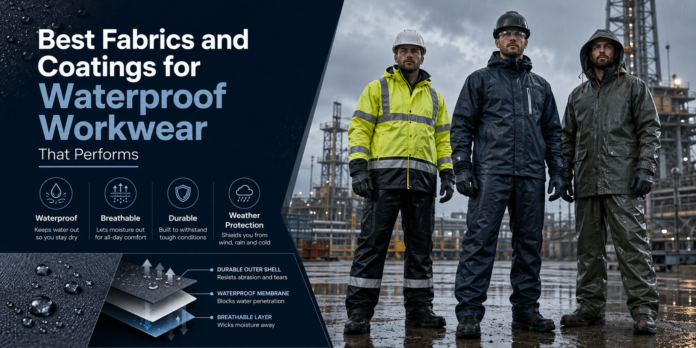
Working outdoors in wet conditions is a reality for millions of workers around the world. Whether it’s a construction site in the rain or an oil field in harsh weather, staying dry isn’t just about comfort — it’s about safety and productivity. That’s why choosing the right fabrics for waterproof workwear is one of the most critical decisions in outfitting an outdoor workforce.
The wrong fabric leaves workers cold, wet, and distracted. The right one keeps them protected, comfortable, and focused on the job. Let’s break down the best fabrics and coatings available today.
What Are the Best Fabrics for Waterproof Workwear?
Fabrics for waterproof workwear are specialized materials engineered to prevent water penetration while still allowing the body to breathe and move freely. Unlike regular clothing, these fabrics go through specific treatments and construction processes that make them suitable for prolonged exposure to rain, moisture, and wet working conditions.
The most commonly used fabrics for waterproof workwear include Gore-Tex, nylon, polyester with DWR coatings, and laminated technical fabrics. Each brings specific strengths to the table — and the best workwear programs combine the right fabric with the right coating for maximum protection.
Why It Matters — Key Benefits
Choosing the right fabrics for waterproof workwear delivers real value for workers and businesses alike. Here’s why it matters:
- Full weather protection — Quality waterproof fabrics keep workers dry in rain, wind, and wet outdoor conditions throughout the workday.
- Improved worker safety — Wet, cold workers are distracted and prone to accidents. Proper waterproofing keeps workers alert and focused.
- Breathability under exertion — The best waterproof fabrics allow moisture vapor to escape, preventing overheating during physical work.
- Durability in tough conditions — Waterproof fabrics are built to withstand extended outdoor exposure without breaking down or losing protection.
- Long-term cost efficiency — Investing in quality waterproof workwear reduces the frequency of replacements, saving money over time.
- Compliance with safety standards — Many industries require waterproof workwear that meets specific protective standards for outdoor environments.
- Worker comfort and morale — Employees who stay dry and comfortable in tough conditions perform better and maintain higher morale.
Gore-Tex: The Gold Standard in Waterproof Fabric
Gore-Tex is widely regarded as the benchmark material among fabrics for waterproof workwear. It uses a microporous membrane that blocks liquid water from entering while allowing water vapor — body heat and sweat — to escape outward. This combination of waterproofing and breathability makes it exceptional for physically demanding outdoor work.
Gore-Tex is particularly popular in industries where workers face sustained exposure to rain and harsh weather over long shifts. While it sits at a higher price point than other options, its durability and performance justify the investment for businesses that need reliable, long-term waterproof protection for their teams.
DWR Coatings and Their Role in Waterproofing
Durable Water Repellent coatings — commonly known as DWR — are one of the most widely used treatments in fabrics for waterproof workwear. Rather than a separate layer, DWR is applied directly to the outer fabric surface, causing water to bead up and roll off rather than soaking in. This keeps the outer layer light and functional even in heavy rain.
DWR coatings are commonly applied to nylon and polyester base fabrics, making them a cost-effective waterproofing solution for a wide range of workwear. One important consideration is that DWR effectiveness reduces over time with washing and heavy use, requiring periodic re-treatment to maintain peak performance. Businesses can learn more about protective workwear standards by reviewing relevant workwear safety standards before selecting their fabric solution.
Laminated and Membrane Fabrics
Laminated fabrics represent the next level of waterproof performance beyond DWR coatings. These fabrics for waterproof workwear bond a waterproof membrane directly to the inner or outer surface of the base fabric, creating a permanent waterproof barrier that doesn’t degrade with washing the way DWR coatings can.
Two-layer and three-layer laminated constructions are common in professional workwear. Three-layer laminates bond the outer fabric, membrane, and inner lining together into a single, highly durable garment that performs consistently across demanding conditions. These are particularly popular in industrial workwear and oil and gas workwear environments where workers face sustained exposure to wet and hazardous conditions.
Who Needs to Understand Fabrics for Waterproof Workwear?
Understanding fabrics for waterproof workwear matters to everyone responsible for outfitting outdoor or field-based workforces. Safety managers and procurement teams need this knowledge to select fabrics that meet both protective requirements and budget constraints. Getting the fabric choice wrong means frequent replacements and, more critically, workers who aren’t adequately protected.
Industries operating in wet, outdoor environments — construction, utilities, agriculture, and logistics — all rely on proper waterproof workwear to keep their teams productive and safe. Businesses in specialized sectors can explore options like high visibility workwear combined with waterproof features, or dedicated waterproof workwear solutions designed specifically for their industry.
Standards of Quality in Waterproof Workwear Fabrics
Not every fabric marketed as waterproof delivers consistent protection in real working conditions. Quality fabrics for waterproof workwear need to meet measurable performance standards — including hydrostatic head ratings that indicate how much water pressure the fabric can resist before allowing penetration.
Breathability ratings are equally important, since a fabric that repels water but traps body heat is uncomfortable and unsafe for physically demanding work. Seam sealing is another critical quality factor — even the best waterproof fabric fails if the seams are not properly taped or welded to prevent water ingress at stitching points. Businesses sourcing waterproof workwear should verify these performance metrics and ensure the products align with the full range of workwear safety standards relevant to their industry.
Why Choose Eco Jersey for Waterproof Workwear?
Eco Jersey is a specialist workwear manufacturer with deep expertise in producing waterproof workwear built on the right fabrics for waterproof workwear. We carefully select fabrics and coatings based on the specific industry, environment, and protective requirements of each client.
Our waterproof workwear range covers everything from DWR-treated outer layers to fully laminated three-layer constructions for the most demanding outdoor environments. We offer full customization across colors, logos, and design — with flexible order quantities and reliable production timelines. We also manufacture corporate uniforms, high visibility workwear, and more — all under one roof.
Conclusion
Choosing the right fabrics for waterproof workwear is a decision that directly affects worker safety, comfort, and productivity in wet and challenging outdoor conditions. From Gore-Tex membranes to DWR coatings and laminated constructions, the right choice depends on the specific demands of your industry and workforce.
At Eco Jersey, we help businesses make that choice confidently — with expert guidance and precision manufacturing behind every waterproof workwear solution we deliver. Ready to protect your outdoor workforce? Explore our waterproof workwear options and get in touch with our team today.
FAQs
What is the most effective fabric for waterproof workwear?
Gore-Tex is widely considered the most effective waterproof fabric for professional workwear, offering exceptional waterproofing combined with breathability. For more cost-effective solutions, polyester or nylon with DWR coatings or laminated membranes also deliver strong waterproof performance.
What is a DWR coating and how long does it last?
DWR stands for Durable Water Repellent — a treatment applied to fabric surfaces that causes water to bead and roll off. DWR effectiveness reduces over time with washing and heavy use, typically requiring re-treatment every one to two years depending on usage.
What is a hydrostatic head rating and why does it matter?
A hydrostatic head rating measures how much water pressure a fabric can resist before allowing water to penetrate. Higher ratings indicate better waterproofing — a rating of 1500mm or above is generally considered suitable for most outdoor workwear applications.
Do waterproof workwear fabrics also need to be breathable?
Yes. Breathability is critical in workwear because physically active workers generate significant body heat. A fabric that repels water but traps heat causes discomfort and can create safety risks during demanding outdoor work.