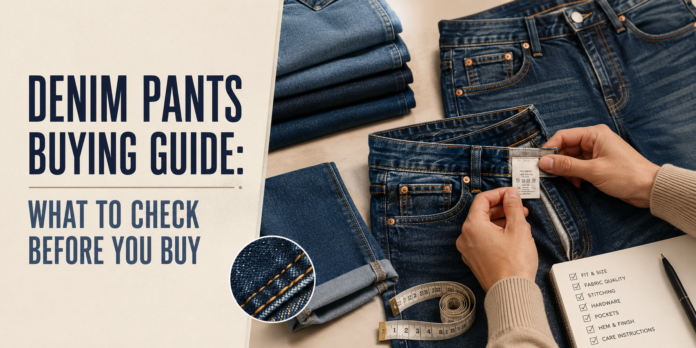
Denim pants are one of the most useful clothing items because they can be worn at school, work, travel, casual outings, and daily routines. But buying denim pants without checking the right things can lead to poor comfort, bad fitting, weak stitching, or fabric that loses shape quickly. This denim pants buying guide is made to help you choose denim pants in a simple and smart way. A good pair of denim pants should feel comfortable, move easily with your body, match your daily style, and stay strong after many washes. Many people only look at color or price, but denim quality depends on many small details such as fabric weight, waist fit, seam strength, pocket placement, stretch level, leg opening, and washing instructions. This denim pants buying guide explains each important point in easy words, so even a young reader can understand what to check before buying. When you know these basics, you can avoid wasting money and choose denim pants that look good, feel good, and last longer.
Check the Fit Before Anything Else
Fit is the first thing to check because even high-quality denim pants will not feel good if the size is wrong. Denim pants should sit comfortably on your waist without feeling too tight or too loose. The seat area should not pull when you sit, and the thighs should have enough room for walking, bending, and climbing stairs. A good denim pants buying guide always starts with fit because comfort matters more than style alone. Slim fit pants look neat, but they should not stop your movement. Relaxed fit pants give more space, but they should not look too baggy unless that is the style you want. Straight fit denim is often the safest choice because it works for many body types and daily activities. You should also check the rise, which means the distance from the waistband to the crotch. Mid-rise denim pants are usually comfortable for everyday wear. This denim pants buying guide suggests trying denim pants while standing, sitting, and walking because real comfort is tested through movement, not just by looking in a mirror.
Denim Pants Buying Guide: Read the Fabric Details
Fabric is the heart of denim pants, so always check what the denim is made from before buying. Traditional denim is mostly cotton, which gives a strong and natural feel. Some denim pants include elastane or spandex, which adds stretch and makes movement easier. A small amount of stretch can make denim more comfortable, especially for daily wear, travel, and active routines. This denim pants buying guide recommends checking the fabric label because it tells you whether the pants are rigid, stretch, lightweight, or heavy-duty. Lightweight denim is softer and easier to wear in warm weather, while heavier denim feels stronger and can last longer if cared for properly. But heavier denim may feel stiff at first. If you want denim pants for work or outdoor use, stronger fabric is better. If you want denim pants for casual daily wear, soft stretch denim may be more comfortable. A smart denim pants buying guide helps you understand that fabric choice should match your lifestyle, not just the look of the pants.
Look Closely at Stitching and Seams
Stitching shows how well denim pants are made. Strong stitching means the pants can handle daily use, washing, sitting, walking, and movement without opening at the seams. Check the side seams, back pocket stitching, crotch seam, hem, waistband, and belt loops. These are the areas that face the most stress. A useful denim pants buying guide always tells buyers to look at the small details because weak stitching is one of the first signs of poor quality. The stitches should be straight, even, and tight. Loose threads do not always mean the pants are bad, but too many loose threads can show weak finishing. The crotch area should be strongly stitched because this part handles pressure when walking and sitting. Belt loops should also feel secure because many people pull denim pants up by the belt loops without thinking. In this denim pants buying guide, stitching is not just a factory detail; it is a real-life durability point. Good seams help denim pants keep their shape and stay wearable for a longer time.
Check Waistband, Buttons, Zippers, and Pockets
Small parts can make a big difference in denim pants. A waistband should feel firm but not hard. It should hold the pants in place without digging into the body. Buttons should be attached strongly, and zippers should move smoothly without getting stuck. If the zipper feels weak before buying, it may become a problem later. This denim pants buying guide also recommends checking the pockets because pockets are used almost every day. Front pockets should be deep enough for small items like keys, coins, or a phone. Back pockets should sit in a balanced place because pocket placement affects how denim pants look from the back. If pockets are too low, too small, or uneven, the pants may not look clean. Rivets, buttons, and zipper quality can also show whether the denim pants are carefully made. A proper denim pants buying guide teaches that denim is not only about the main fabric. Hardware, pockets, waistband finishing, and small construction details also decide comfort, appearance, and long-term use.
Think About Style, Use, and Daily Routine
Denim pants should match your real life, not just a photo or trend. Before buying, think about where you will wear them most. For school, casual days, and simple outings, straight or regular denim pants are easy to style. For fashion looks, wide-leg, relaxed, or tapered denim pants may work better. If you want a stronger denim look for workwear-inspired outfits, you can also explore related denim options like denim overalls collection, because overalls show how denim can be used in a more practical and utility-focused way. This denim pants buying guide suggests choosing style based on comfort first and trend second. Very tight denim may look stylish for a short time but can feel uncomfortable during long wear. Very loose denim may feel relaxed but may not suit every occasion. Your daily routine should guide the style. A good denim pants buying guide is not about forcing one fit on everyone. It is about helping you choose denim pants that work with your body, your activities, and your personal dressing style.
Compare Denim Pants With Other Denim Clothing
Denim pants are not the only denim option, and comparing them with other denim clothing can help you understand what you really need. Denim pants are easy to wear with shirts, hoodies, jackets, polos, and casual tops. They are simple, flexible, and suitable for many outfits. Overalls, on the other hand, cover more of the body and give a stronger workwear or utility look. If you are buying denim for women’s casual fashion, checking styles like denim overalls for women can help you see how denim changes when the design includes shoulder straps, bib pockets, and full-body coverage. This denim pants buying guide focuses on pants, but it is useful to compare different denim garments before choosing. Pants are easier to style every day, while overalls create a more complete outfit by themselves. This denim pants buying guide helps you think beyond one product and choose what fits your need. If you want simple daily wear, denim pants are usually the better choice. If you want a more bold denim outfit, overalls may be a good extra option.
Check Comfort for Kids, Men, and Women
Different people need different denim comfort. Kids need denim that allows running, sitting, playing, and moving freely. Adults may need denim for work, travel, shopping, or casual fashion. Men often prefer strong denim with practical pockets and relaxed movement, while women may look for a balance of fit, shape, comfort, and style. This denim pants buying guide suggests checking the wearer’s daily routine before selecting any denim pants. For children, soft fabric and flexible waistbands are helpful because kids move a lot during the day. You can also compare pants with practical options like kids denim overalls to understand how denim can support movement and durability for active children. For adults, waist comfort, thigh room, fabric stretch, and length are more important. A good denim pants buying guide should never treat all buyers the same. The best denim pants for one person may not be the best for another. Always think about age, activity level, body shape, weather, and how often the denim will be washed.
Quick Checklist Before You Buy
A quick checklist makes buying easier because it helps you remember the most important points while shopping. This denim pants buying guide recommends using this simple checklist before paying for any denim pants.
- Check that the waist feels comfortable and does not press too hard.
- Sit down once to see if the pants pull at the thighs or seat.
- Look at the stitching around the crotch, pockets, waistband, and hem.
- Open and close the zipper to make sure it moves smoothly.
- Check the fabric label to see whether the denim is rigid or stretch.
- Make sure the length works with your shoes and daily style.
- Look for deep and useful pockets if you carry small items.
- Choose a color that matches your shirts, jackets, and regular outfits.
- Read the washing instructions before buying.
- Avoid buying only because of discount if the fit or quality is poor.
This denim pants buying guide keeps the checklist simple because smart buying does not have to be difficult. If denim pants pass these basic checks, they are more likely to feel good and last longer.
Choose the Right Color and Wash
Color and wash affect how denim pants look and how often you can wear them. Dark blue denim looks clean, classic, and slightly more formal. Light blue denim feels casual and relaxed. Black denim is easy to match with many outfits and can look neat for daily wear. Faded denim gives a more worn-in style, while raw or dark denim looks sharper. This denim pants buying guide suggests choosing at least one color that works with most of your wardrobe. If you are buying your first good pair, dark blue or black is usually a safe choice. If you already have basic denim pants, then you can try light wash, grey, relaxed wash, or fashion colors. Wash quality also matters. Some cheap washes may fade unevenly or look artificial after a few washes. Better denim usually has a more balanced finish. This denim pants buying guide also reminds you that color should match your use. For school or daily casual wear, medium blue is easy. For a cleaner look, dark denim is better. For relaxed weekend style, light wash denim can work well.
Conclusion
The way you care for denim pants decides how long they stay useful. Even strong denim can lose shape, color, and comfort if washed carelessly. Always check the care label before washing. Turning denim pants inside out before washing can help protect the outer color. Cold water is usually safer for denim because hot water may increase fading and shrinkage. Avoid washing denim after every short wear unless it is dirty or sweaty. This denim pants buying guide recommends gentle washing, mild detergent, and air drying when possible. High heat from dryers can damage stretch fibers and may shrink the fabric. Good denim pants should become more comfortable with time, but they still need proper care. Before buying, ask yourself simple questions: Do they fit well? Can I move easily? Is the stitching strong? Does the color match my clothes? Is the fabric right for my weather and routine? This denim pants buying guide gives you a simple way to buy better denim without confusion. In the end, the best denim pants are not always the most expensive ones; they are the ones that fit your body, support your daily life, and stay comfortable after many wears.
FAQs
What is the most important thing in a denim pants buying guide?
The most important thing in a denim pants buying guide is fit. If denim pants do not fit well at the waist, thighs, seat, and length, they will not feel comfortable even if the fabric is strong or the style looks good.
Should denim pants be tight or loose?
Denim pants should not be too tight or too loose. They should feel secure at the waist, comfortable at the thighs, and easy to move in. A good denim pants buying guide recommends testing denim while sitting, walking, and bending.
Is stretch denim better than regular denim?
Stretch denim is better for comfort and movement, while regular denim can feel stronger and more classic. The best choice depends on your daily use. For active routines, stretch denim is often easier to wear.
How can I make denim pants last longer?
Wash denim pants inside out, use cold water, avoid harsh detergent, and air dry when possible. Do not wash them too often unless needed. Proper care keeps the color, shape, and fabric stronger for longer.