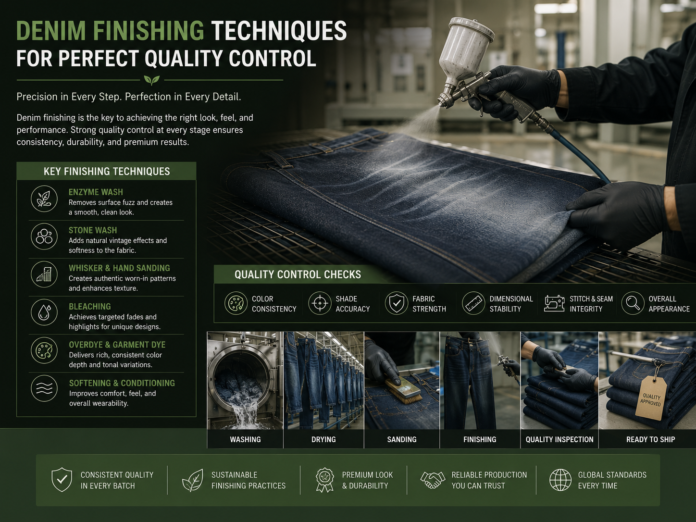
Denim production may look simple, but maintaining the same quality in every garment is a difficult process. When brands manufacture denim at scale, even a small variation in washing or finishing can affect the final appearance, softness, and durability of the product.
That is why denim finishing techniques are extremely important in modern apparel manufacturing. These techniques help brands maintain consistent quality while creating denim finishing techniques that feels comfortable and looks premium.
Many fashion brands work with professional Washing & Dyeing Services to achieve reliable finishing results across large production runs.
Why Denim Finishing Matters for Brands
Denim finishing techniques is much more than a final production step. It directly affects how the garment looks, feels, and performs after production.
Customers expect every denim piece to have the same color, texture, softness, and fitting. If there are differences between batches, it can reduce customer trust and damage brand reputation.
That is why strong finishing processes help brands maintain quality consistency, improve customer satisfaction, and reduce manufacturing defects. Brands with advanced Production Capabilities usually achieve more stable and professional results during large-scale production.
How Brands Achieve Perfect Denim Finishes at Scale
Controlled Industrial Washing
Industrial washing is one of the most important denim finishing techniques used in apparel manufacturing. This process removes stiffness from raw denim and creates a softer and more wearable fabric.
Manufacturers carefully control machine speed, washing duration, and water temperature to make sure every garment receives the same treatment. This level of control helps brands maintain consistent quality across large production volumes.
Different washing methods are used depending on the desired result, including enzyme washing, rinse washing, and stone washing.
Enzyme Finishing for Uniform Results
Enzyme finishing is widely used because it creates a soft and smooth texture without damaging the fabric. It works gently on denim fibers and delivers more controlled results compared to traditional methods.
This technique helps brands maintain uniform softness, stable color tone, and consistent comfort in every garment. For this reason, many manufacturers offering advanced Manufacturing Process systems prefer enzyme-based finishing methods for premium denim finishing techniques production.
Stone Washing for Vintage Effects
Stone washing remains popular because it creates a natural faded and vintage appearance. In this process, denim garments are washed with pumice stones inside industrial machines to create worn effects.
However, large-scale stone washing requires careful management because small changes in timing or stone quantity can affect the final outcome. When handled properly, it produces a consistent vintage finish across the entire production batch.
How Brands Maintain Consistency in Production
Fabric Selection
Fabric quality plays a major role in denim finishing techniques consistency. If the base fabric is unstable, the final garment will also show inconsistent results after washing and finishing.
That is why brands invest heavily in professional Fabric Sourcing & Development before mass production begins.
Strong fabric sourcing helps manufacturers maintain:
- Stable color results
- Better durability
- Uniform washing response
- Consistent garment finishing
Process Control
Large-scale denim production requires strict process control because even small variations can affect thousands of garments.
Manufacturers carefully monitor machine settings, chemical usage, washing time, drying conditions, and water temperature to maintain stable results throughout production.
Brands that follow structured QC Standards Resources can reduce quality issues and maintain consistency more effectively.
Skilled Production Teams
Even with advanced machinery, experienced technicians are still essential for maintaining stable production quality. Skilled teams monitor every stage of denim finishing and quickly adjust processes whenever needed.
Their expertise helps reduce production errors and ensures consistent results across all manufacturing batches.
Quality Control in Denim Finishing
Quality control is one of the most important parts of denim manufacturing. Every garment must pass detailed inspections before shipment to ensure it meets brand standards.
Manufacturers inspect color consistency, fabric softness, shrinkage levels, surface quality, and garment durability during the finishing process.
Strong quality systems help brands reduce defects, improve customer satisfaction, and maintain long-term reliability in the market.
Sustainable Denim Finishing
Modern fashion brands are also focusing on sustainable denim finishing techniques. Eco-friendly production methods help reduce environmental impact while maintaining high product quality.
Popular sustainable solutions include ozone washing, enzyme treatments, water recycling systems, and low-impact dyeing methods.
Many brands combine sustainable practices with professional Production Capabilities to maintain both quality and environmental responsibility during large-scale production.
Conclusion
Denim finishing techniques are essential for achieving consistent quality in modern apparel manufacturing. From controlled washing to fabric selection and quality inspections, every step plays an important role in the final result.
Brands that invest in advanced finishing systems, skilled production teams, and proper quality control can produce denim garments that look professional, feel comfortable, and maintain consistent standards across every production batch.
FAQs
What are denim finishing techniques?
They are processes used to improve denim’s look, feel, and durability after production.
Why is consistency important in denim finishing?
Because customers expect the same quality in every product they buy.
Which denim finishing methods are commonly used?
Enzyme washing and stone washing are widely used techniques.
How do brands maintain quality at scale?
They use controlled processes, skilled teams, and strict quality checks.
Are eco-friendly finishing methods effective?
Yes, they maintain quality while reducing environmental impact.