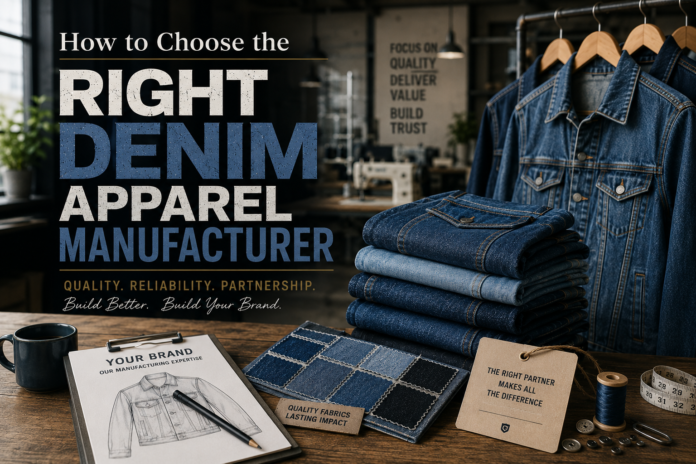
It is easy to find a denim producer. Finding the best one is another story. A denim apparel manufacturer is considered a specialty category. Fabrics behave differently from standard clothing materials. The finishing and washing processes are more complicated. The quality indicators — stitching, hardware, and wash consistency — are more complex.
This guide will help you determine what you should look for in a manufacturer of denim clothing before you make a decision.
Why Denim Manufacturing is a Specialty Category
Denim is not understood by every apparel manufacturer. A company that produces t-shirts, hoodies and sweatshirts operates in a different environment than one that makes stretch denim jackets or selvedge jeans.
Denim is heavy. Denim is heavy. It requires industrial machines that can handle the fabric without any skipped stitches or broken needles. It fades and shrinks in a way that needs to be precisely controlled. Finishing processes like stonewashing and sandblasting require specialized equipment, as well as expertise, that are not available in general apparel factories.
It is for this reason that category experience is the primary filter. Check that the factory is a specialist in denim before evaluating its price, capacity or location.
Know Your Product Before You Search
A manufacturer of denim jeans will operate differently from a factory that produces denim jackets or overalls. A denim jeans manufacturer will operate differently than a factory that specializes in denim jackets or overalls. Construction requirements, machinery required, and finishing expertise differ significantly between denim products.
Before you contact any manufacturers, know your fabric weight, wash finish, hardware specifications and target price. These details will determine which factories you should approach.
Evaluate Washing and Finishing Capability
Denim takes on its final character during washing and finishing. This is also where the most variation in quality occurs. Washing can make all the difference between a good pair of jeans and one that is mediocre.
Ask each manufacturer to describe their washing capabilities. Are they able to produce vintage finishes, acid washes and stone washes? They have their own facility for washing or outsource it? Who controls the quality of washing if it is outsourced?
You can control the finish more closely with a denim clothing manufacturer that has in-house wash capability. This also means you have fewer points of failure in your supply chains.
Check Fabric Sourcing and Denim Quality
Everything downstream is determined by the denim fabric. The weight, stretch content and weave structure of the denim fabric, as well as its shrinkage rate, all influence how the final garment fits and looks.
You can ask manufacturers about the fabric they use. Where is the denim sourced? What are the weights they use? Are they able to source denim in different weights, such as stretch, rigid, selvedge, or sustainable? It’s better to choose a manufacturer who has strong relationships with fabric suppliers than one that will accept whatever you request.
Access to specialist or premium denim fabrics is a real competitive advantage for brands that are interested in Streetwear Denim and fashion-forward collections.
Assess Hardware and Trim Quality
Hardware is very visible in denim. All the hardware is visible, including buttons, zippers and rivets.
YKK zippers set the standard. Copper rivets must be solid, not hollow. Buttons must be able to fasten and unfasten without any wobble. All hardware should be the same across all units in a run – same finish, weight and placement.
A serious hardware manufacturer will have a list of suppliers and be open to discussing their specifications. A manufacturer who is vague on hardware sourcing will give you valuable information about the quality of their products.
Confirm Private Label and Custom Options
Many denim brands begin with a private label and then move on to fully customized production. If you confirm that a manufacturer offers both options, it gives you more flexibility as your brand expands.
You can enter the market faster by working with a denim manufacturer that has a solid base range. You can apply your branding to existing styles and develop custom pieces simultaneously. It is possible to switch from private label to customized with the same factory, keeping your supply chain simple.
Sample Rigorously Before Committing
Samples are always recommended before committing to bulk production. After washing, denim behaves in a different way — the measurements will change, colors may shift, and the fabric texture will transform. A sample that isn’t fully washed and finished will not be a good indicator of the bulk product.
Before approving a denim style, request a sample that is fully finished — washed and finished, pressed and labelled. After washing, measure the denim. Check the color. Check the hardware. Wear it, if possible.
Check these key points on each denim sample.
- Measurements after washing against your size specification
- Colour consistency with approved wash standards
- The quality of the stitching and thread tension is consistent throughout
- Hardware finish and function quality
- Label placement and brand execution
Conclusion
It takes more than just finding a factory to stitch denim before you can choose the best denim apparel manufacturer. Finding a partner that understands your category — fabric, washing, hardware and finishing — is key.
Spend the time necessary to properly evaluate. Sample rigorously. Choose based on the demonstrated ability.
Explore the options for denim clothing manufacturing and find the best partner to help you grow your brand.
FAQs
How is denim different from other apparel?
Denim production requires specialized machinery, washing and finishing equipment and expertise in shrinkage control.
Is it better to choose a manufacturer that has in-house washers?
When possible, yes. You can control the quality of your finished product better by washing it in-house.
What quality hardware can I expect from premium denim jeans?
Solid copper rivets and YKK zippers are among the most important indicators of quality.
Can i start with private label before I go custom?
Of course. Private label is a popular way for brands to quickly enter the market and then transition to custom production after they’ve validated customer demand and preferences.