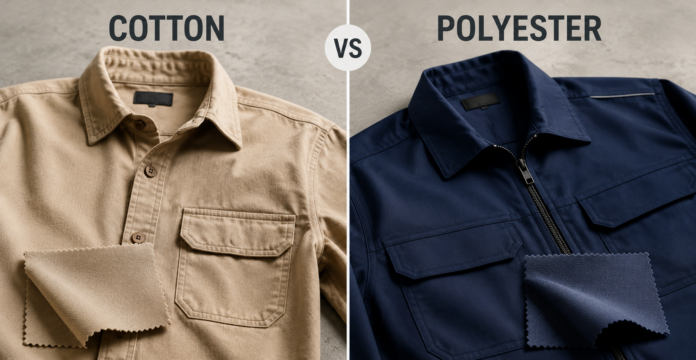
With so many factors tied to the fabric you choose for workwear, it’s critical to get it right. It can impact comfort, durability, safety and, of course, cost. Cotton and polyester are the two materials that most people first think of.
There are lovers and haters of both, so it’s clear they meet different needs. We aim to answer the question of which fabric is best for your workwear line and do so by addressing them honestly to identify their best use cases.
The Two Fabrics Cotton vs Polyester differences
Cotton, which comes from the cotton plant, is soft, breathable and great for use with clothing. It is common and, really, it’s hard to fault why. On the other hand, polyester is a patented synthetic, petroleum derived, easy, strong and moisture resistant fiber. Since it is synthetic, it can be designed to provide certain fabric characteristics.
Durability
If you ask any buyer, they will tell you that durability is the most important. This is where polyester dominates the cotton choice. The fibers used to create polyester are far stronger than those of cotton. This will help garments maintain their intended shape and resist use over the stress of a workday.
While cotton is comfortable and soft to the touch, it is not as durable as some fabric options. This gap is decreasing with the introduction of new technology, cotton blends, and cotton treatments. In rugged settings, such as workwear for construction, apparel made from polyester, or a polyester blend, will typically provide better value.
Comfort and Breathability
Comfort is one area where cotton outperforms polyester. The natural fibers of cotton allow it to breathe and wick away moisture and keeps personnel cool on the job. Many prefer cotton to other fabrics.
Polyester tends to trap heat and feels less breathable to many. Luckily, product engineers have developed moisture-wicking polyester that pulls moisture away from and thus the comfort gap with the use of advanced fabrics continues to close.
Moisture and Weather Resistance
When dealing with moisture, polyester, without a doubt, is the winner. Polyester dries faster and is waterproof. Because of this, it fits the needs of outdoor crews that work in damp environments.
Cotton soaks up moisture and takes a long time to dry. This can leave personnel feeling cold and uncomfortable. For waterproof workwear and uniforms designed to be in the rain, synthetic fabrics or coated blends are the better option.
Safety Considerations
Safety is another area where cotton can be superior to other fabrics. Cotton naturally resists melting, which is a factor for many heat-exposed jobs. In addition to cotton resisting melting, it has a good performance record for being the base fabric of flame-resistant workwear.
The differences between fabrics can be subtle, but polyester simply does not hold up as well as cotton does to many hazards at work. Polyester can melt in high heat and is typically not suited for environments with open flames and sparks. Buyers in the oil and gas sectors should take this into account before making their choice.
Cost and Maintenance
Cost is always a crucial factor in completing the purchase. Maintenance costs are usually lower for polyester as it is cheaper to produce. Polyester resists shrinkage, holds dye better, and dries more quickly, which lowers maintenance costs.
Cotton can be costlier and requires more maintenance, but it does not have the shrinkage and wrinkles that polyester does. Buyers usually are okay with the trade-off between maintenance and comfort with the natural fabric. It comes down to preference which is more of a priority for you.
The Case for Blends
The good news is you can have the best of both worlds because you do to have to choose cotton or polyester alone. Blends provide the strength of polyester and the comfort of cotton.
Due to this balance of comfort and strength, blends are very popular. An example of a common blend is 65% polyester and 35% cotton. You will frequently see this used for both industrial workwear and common uniforms.
So, Which Fabric Is Best?
Unfortunately, the truth is there is no best fabric. The winning fabric is the one that is best suited to do the job your workwear is intended to do.
To sum it up – Pick cotton for role-based comfort and heat-sensitive work apparel, pick polyester for workwear and ease of care, and choose blends for compromises. Getting it right means workwear no longer for worse.
Final Thoughts
Both cotton and polyester have their advantages. Cotton means comfort, while polyester means durability and ease of care. Blends mean compromises. If you’re designing a new uniform and need help with the right fabric, the EcoJersey team will help you choose the right fabric for your uniform and create bespoke workwear for your requirements.
FAQs
Which is more durable, cotton or polyester workwear?
Generally, polyester wins out for durability over cotton. Its synthetic nature means polyester workwear is more resistant to abrasions, stretching, and repeated washing. This makes polyester work apparel the better choice for the more demanding work roles.
Is cotton or polyester better for hot conditions?
Cotton better handles the heat. The natural fibers of cotton breathe and absorb moisture so the worker stays cooler during lengthy shifts. But, with modern advancements in moisture-wicking, polyester has also improved, and now handles heat better than cotton.
Why do workwear manufacturers like cotton-polyester blends?
Blends allow workwear manufacturers to take advantage of both fabrics. Comfort for the end-user comes from the cotton, and durability comes from the polyester. The end product is perfect for industrial workwear and other commonly used uniforms.