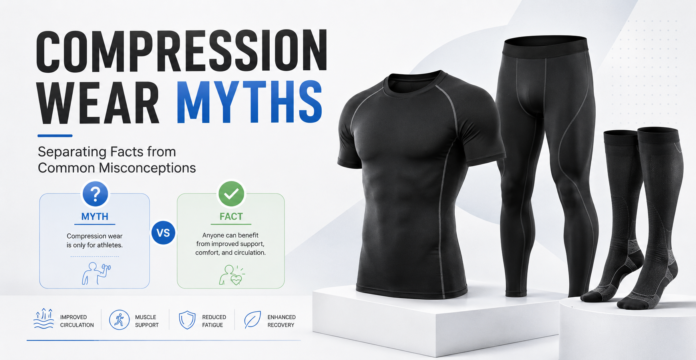
Myths about compression wear can lead to confusion among buyers. This is because compression clothing has been marketed as both a performance garment and a workout essential. Some people believe compression wear should be extremely tight. Some people think that compression wear can automatically improve workouts. Some buyers think that all compression garments, regardless of fabric, fit or construction, are the same. These beliefs can lead to poor purchasing decisions. The purpose of the compression garment, its size, comfortability, breathability and fabric recovery should all be considered when choosing a good compression wear. Once buyers are aware of the facts, it is easier to choose clothing that feels better and works better.
Compression Wear Myths Basics
Compression wear myths usually start when buyers do not understand the difference between tight clothing and proper compression clothing. A full category like the compression wear collection can include t-shirts, Leggings, hoodies and stockings. Each product can have a unique purpose and fit. Compression clothing isn’t just about compressing the body. It should be comfortable, support movement and stay in place. The right garment for you will depend on your activity, body type, fabric, and comfort level. Good product details help remove confusion before purchase.
Compression Wear Must Feel Painfully Tight
The most common myth about compression wear is that it must be painfully tight in order to work. It isn’t true. It is not true. Compression wear should be firm and supportive but should not cause any pain, numbness or breathing discomfort. It may be that the garment is too small or has an incorrect compression level. Clothing that is too tight may not be the best compression. A well-made item should fit close to the body, while still allowing for movement. Buyers should carefully check size charts and select a fit which feels comfortable during travel, workouts or everyday wear.
All Compression Wear Is the Same
A common myth about compression garments is that they all work the same. This is incorrect. The compression tee-shirt, compression leggings and compression stockings all have different uses and are designed for different body parts. A product like a compression t-shirt may focus on upper-body fit, layering, stretch, and training comfort. Leggings may focus more on lower-body movement and waistband support. Stockings may focus more on lower-leg support. Fabric, pressure, seams, and fit can change the full experience. Buyers should compare product type before choosing.
Compression Wear Replaces Good Training
Some compression wear myths lead buyers to believe that compression clothing can substitute proper training, warming-ups or rest. Compression clothing can provide comfort and support movement, but is not a quick fix. It can’t replace the correct form of exercise, regular training, proper sleep and recovery habits. The garment may help you feel more secure when moving, but the performance is still dependent on your routine. Compression wear is a useful tool for clothing, but not a magical solution. When good clothing is combined with intelligent training, proper sizing and regular maintenance, the best results are achieved.
Thicker Fabric Always Means Better Support
Many compression garment myths are based on fabric thickness. Some buyers believe that thicker fabric means more support. It’s not always the case. Even a thick garment may have weak seams or a bad fit. Even a lighter fabric with strong elastic fibers can perform well, if the construction is good and it has strong elastic fibres. Support is dependent on fabric properties, such as stretch, recovery, garment pattern, and pressure balance. A product like compression leggings should have enough structure around the waist, hips, thighs, knees, and calves, but it should still allow movement. Balance matters more than thickness alone.
Compression Wear Is Only for Athletes
Compression wear is not just for athletes. Many people use compression wear for everyday activities, travel, layering, comfort, and daily movement. The product that is right for you depends on your needs. Some people choose compression t-shirts for base layers. Leggings are also popular for yoga, running, and gym sessions. Some use stockings for lower-leg support. When fitted correctly, compression clothing can be beneficial for many lifestyles. The use of compression clothing is not limited to athletes or those who train intensely.
Compression Wear Should Not Be Breathable
Some myths about compression clothing suggest that they don’t need to breathe because they fit so close to the skin. This is incorrect. Close-fitting clothing can trap sweat and heat quickly, so it is important to ensure that the garments breathe. A good compression fabric will promote airflow, allowing the wearer to feel fresh and active. Moisture-control fabrics can also reduce uncomfortable sticky feelings during long-term wear or workouts. Compression wear that feels heavy or hot may cause buyers to stop wearing it. A good compression garment will feel both supportive and breathable. Performance is a function of comfort.
Simple One-Line Myth Checks
These checks make compression wear myths easier to understand before buying or approving production.
- Compression should feel firm, not painful.
- Tight clothing is not always proper compression.
- All compression garments do not work the same way.
- Fabric thickness alone does not decide support.
- Compression wear cannot replace proper training habits.
- Breathability matters because close-fit clothing can trap heat.
- Correct sizing is important for comfort and support.
These one-line checks help buyers avoid compression wear myths and choose products more carefully.
Compression Stockings and Sports Pieces Are Identical
A common myth about compression wear is that sports compression clothing and compression stockings are the same. Both may fit closely to the body but they can have different uses. A product like compression stockings focuses on lower-leg fit and support, while sports compression tops or leggings may focus more on movement, sweat control, and athletic comfort. Buyers should check the product type, size guide, fabric, stretch, and intended use. Choosing the wrong type can lead to discomfort or poor performance. Product purpose should always guide the buying decision.
Final Guide to Understanding Compression Wear
The last piece of advice regarding compression wear myths is easy: buy compression garments based on facts, not on assumptions. Compression wear should feel supportively snug, while breathable and flexible. It should be comfortable and should meet the buyer’s needs as far as activity, body type, and sizing. Buyers should not consider tighter to be better, thicker to be stronger, or assume compression garments are created equally. A clear explanation of a product’s purpose is the minimal guidance a buyer should receive prior to a purchase. An effective compression wear myths guide has the ability to enhance product pages, foster buyer trust, and promote educated purchases of compression garments.
FAQs
What are compression wear myths?
Compression wear myths are common misunderstandings about compression clothing, such as thinking it must feel painful, works like magic, or fits every body the same way.
Should compression wear feel very tight?
Compression wear should feel firm and supportive, but it should not feel painful, restrict breathing, cause numbness, or create strong discomfort.
Is all compression wear the same?
No, compression t-shirts, leggings, hoodies, stockings, shorts, and base layers can have different fabric, fit, pressure, and use purposes.
Does thicker compression fabric always mean better support?
No, support depends on fabric quality, stretch recovery, pressure balance, seam strength, and fit, not only fabric thickness.