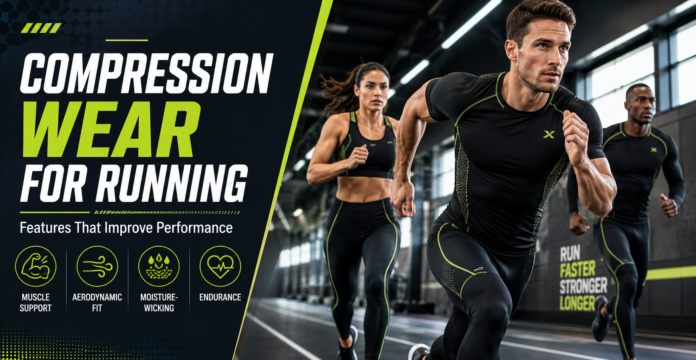
Compression wear for running is tight, stretchable clothing made to support the body during movement. It is designed to sit close to the skin without feeling painful or too hard to wear. Runners use compression shirts, leggings, shorts, socks, and hoodies because these clothes help the body feel more stable during training. The main idea is simple: the fabric gently holds the muscles while allowing the runner to move freely. Compression wear for running is not magic, but it can make running feel smoother, cleaner, and more controlled. It helps reduce loose fabric, rubbing, and extra movement that can distract a runner. For beginners, it can make the body feel more supported. For regular runners, it can improve comfort during longer sessions. The best compression wear for running should feel snug, breathable, flexible, and comfortable from the first step to the last step.
Why Compression Wear for Running Matters
Compression wear for running matters because running creates repeated pressure on the legs, hips, core, and upper body. Every step sends force through the body, and soft muscles can shake more during long runs. Good compression clothing helps reduce that extra movement by giving light support to the muscles. This can make the runner feel more balanced and less tired. Many runners also choose activewear because it is made for movement, sweat control, and daily training comfort. Compression wear for running works best when it is part of a full performance outfit, not just one tight garment. A runner needs breathable fabric, flexible stitching, and the right fit. If the clothing is too loose, it will not support the body well. If it is too tight, it may feel uncomfortable. The right balance gives support without stopping natural movement.
Compression Wear for Running and Muscle Support
Compression wear for running can help muscles feel more supported during exercise. When you run, your leg muscles move again and again. This repeated movement can cause small shaking in the muscles, especially during longer runs or faster training. Compression fabric gently holds the muscles and may help reduce this shaking. This can make running feel more steady. It can also help some runners feel less heavy in the legs. The support is most useful in areas like the thighs, calves, hips, and core. Compression leggings and tights are popular because they cover larger muscle groups. Compression shirts can also support the upper body and help reduce fabric movement. Compression wear for running should not feel like it is squeezing the body too much. It should feel firm but still comfortable. A good rule is that you should be able to breathe, bend, and run naturally while wearing it.
Stretch Fitness Apparel vs Compression Fitness Apparel for Running
Stretch fitness apparel and compression fitness apparel are not the same, even though both use flexible fabrics. Stretch fitness apparel focuses on easy movement. It bends, expands, and returns to shape when the body moves. Compression fitness apparel gives a tighter fit and adds muscle support. For running, the difference is important because runners need both freedom and control. Stretch clothing feels relaxed and is good for warm-ups, gym workouts, walking, and light training. Compression wear for running is better when the runner wants a close fit, reduced muscle movement, and a locked-in feeling. You can explore more focused options in the compression wear category because these pieces are made for body support and performance use. The best choice depends on your running style. For easy jogging, stretch apparel may be enough. For longer runs, speed work, or recovery support, compression wear for running can be more useful.
Breathability and Sweat Control
Compression wear for running should manage sweat well because running quickly raises body heat. If the fabric traps sweat, the runner may feel wet, sticky, and uncomfortable. Breathable compression clothing allows air to move through the fabric. It also helps moisture spread across the surface so it can dry faster. This is important during hot weather, long-distance running, and indoor treadmill sessions. A good compression shirt or legging should not feel heavy after sweating. It should keep the skin more comfortable and reduce the feeling of wet fabric rubbing against the body. Compression wear for running usually performs better when it uses polyester, nylon, or spandex blends. These materials are common in performance clothing because they stretch well and dry faster than basic cotton. Cotton may feel soft at first, but it can hold sweat and become heavy. That is why runners often prefer technical compression fabrics.
Fit, Comfort, and Freedom of Movement
The fit of compression wear for running is one of the most important features. The clothing should feel close to the body, but it should not block blood flow or limit movement. A good fit allows the runner to lift the knees, stretch the legs, swing the arms, and breathe normally. Compression leggings are helpful for many runners because they support the thighs, knees, and calves in one piece. Compression tops can also keep the upper body comfortable when running in cooler weather or during layered training. For example, compression leggings can be useful for runners who want lower-body support without loose fabric moving around the legs. Compression wear for running should stay in place without rolling down, sliding up, or bunching behind the knees. If you need to keep adjusting the garment while running, the fit is not right. Good running clothing should let you focus on your pace, not your outfit.
Key Features of Good Compression Wear for Running
Good compression wear for running should include useful features that help the runner feel comfortable, supported, and ready for movement.
- The fabric should stretch in more than one direction so the body can move naturally.
- The fit should be snug but not painful, tight, or hard to breathe in.
- The material should dry quickly so sweat does not stay trapped on the skin.
- The seams should be smooth to reduce rubbing during long runs.
- The waistband should stay secure without digging into the stomach.
- The fabric should feel light enough for training but strong enough for repeated use.
- The garment should keep its shape after washing and wearing.
- The design should reduce loose fabric so the runner feels cleaner and faster.
- The clothing should match the weather, training level, and running distance.
- Compression wear for running should support performance without making the runner feel restricted.
Compression Socks and Lower-Leg Support
Compression wear for running is not only about shirts and leggings. Compression socks and stockings are also popular because many runners feel pressure in the calves, ankles, and feet. The lower legs work hard during every run. They help push the body forward, absorb impact, and keep balance. Compression socks can give a firm feeling around the calves and ankles. Some runners like this because it makes their legs feel more stable. Compression stockings may also be used by people who need more lower-leg coverage. However, the fit must be correct. If socks are too tight, they can feel uncomfortable and leave marks. If they are too loose, they may slide down during the run. Compression wear for running should always feel supportive, not painful. Beginners should start with comfortable compression levels and test them on shorter runs before using them for longer training.
Weather Protection and Layering
Compression wear for running can also help with layering. In cool weather, a compression shirt or hoodie can sit close to the body and work as a base layer. This helps keep the runner warm without adding bulky clothing. In warm weather, lighter compression pieces can help manage sweat and reduce rubbing. The goal is to choose clothing based on the weather and the run. A runner should not wear thick compression gear in very hot weather unless the fabric is breathable enough. In cold weather, compression wear for running can be worn under jackets, hoodies, or outer layers. The close fit makes layering easier because there is less extra fabric under the top layer. Good running layers should protect the body but still allow airflow. If the outfit becomes too heavy, the runner may overheat or feel slow. Smart layering keeps the body comfortable from start to finish.
Who Should Choose Compression Wear for Running?
Compression wear for running is useful for many types of runners. Beginners can wear it to feel more supported and confident. Regular runners can use it during daily miles, gym cardio, and longer routes. Athletes may choose compression garments for speed work, recovery sessions, and performance training. People who dislike loose clothing may also prefer compression because it stays close to the body. However, compression wear for running is not required for every runner. Some people prefer relaxed fitness clothing because it feels easier and cooler. The best choice depends on comfort, body shape, training goal, and weather. If a runner feels better, moves better, and stays more focused in compression clothing, then it is a good choice. If the clothing feels too tight or distracting, a stretch fitness outfit may be better. Comfort should always come before fashion or trends.
Conclusion
Compression wear for running is worth it for runners who want better support, less fabric movement, improved comfort, and a more stable training feel. It can help the body feel controlled during short runs, long runs, treadmill sessions, and outdoor training. The biggest benefits come from the right fit, breathable fabric, smooth seams, and flexible construction. Compression wear for running should never feel painful or too tight. It should support the body while still allowing natural movement. Stretch fitness apparel is better for relaxed workouts, while compression fitness apparel is better for runners who want a closer and more supportive fit. The best option is the one that helps you run with more comfort and confidence. When chosen correctly, compression wear for running can become a useful part of a runner’s regular training wardrobe.
FAQs
Is compression wear for running good for beginners?
Yes, compression wear for running can be good for beginners because it gives a supported and secure feeling. Beginners should choose comfortable compression, not very tight clothing.
Can I wear compression wear for running every day?
Yes, you can wear compression wear for running often if it feels comfortable and does not cause pain or skin irritation. Always wash it properly after sweaty workouts.
Is stretch fitness apparel better than compression fitness apparel?
Stretch fitness apparel is better for relaxed movement, while compression fitness apparel is better for firm support. For running, compression wear for running is often more useful during longer or faster sessions.
Should compression wear for running feel very tight?
No, compression wear for running should feel snug but not painful. You should be able to breathe, bend, stretch, and run without feeling restricted.