Compression wear is tight fitness clothing made to support your muscles, improve body awareness, and reduce unwanted movement during training. A good compression wear fit guide helps you understand how tight your clothing should feel without making you uncomfortable. Compression clothing may include T-shirts, leggings, shorts, hoodies, stockings, sleeves, and base layers. The main idea is simple: the garment should fit close to the body, but it should not stop you from breathing, bending, stretching, or moving normally. Many people think tighter always means better, but that is not true. If compression is too strong, it can feel painful, restrict movement, or leave marks on the skin. If it is too loose, it will act like normal activewear and give very little support. This compression wear fit guide explains how to choose the right level for workouts, recovery, daily use, and sport-specific needs.
Compression Wear Fit Guide: Why Fit Matters Most
A proper compression wear fit guide matters because compression works only when the fit is balanced. The fabric needs to sit close enough to support muscles, but it must still allow easy movement. For example, a runner may need compression leggings that support the thighs and calves, while a gym user may need a compression T-shirt that supports the chest, shoulders, and upper back. When choosing products from a good compression wear collection, the right fit helps the garment stay in place during exercise instead of rolling, slipping, or bunching. The best compression wear fit guide is not about buying the tightest size. It is about finding clothing that feels firm, smooth, and secure. You should feel light pressure, not sharp tightness. You should also be able to squat, stretch, lift, walk, and breathe without fighting the garment.
Light Compression: Best for Daily Comfort
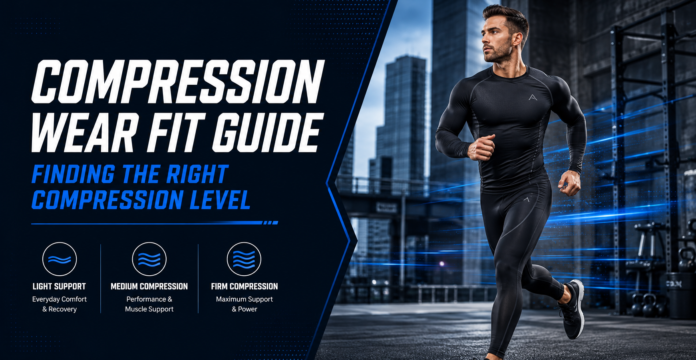
Light compression is the softest level and is usually best for beginners, everyday wear, warm-ups, travel, and casual fitness routines. In a compression wear fit guide, light compression means the garment feels snug but gentle. It should lightly hug the body without pressing hard on the muscles. This level is useful for people who want better comfort and a clean athletic fit without a strong squeezing feeling. Light compression can work well for walking, yoga, stretching, light gym sessions, and long days when you want support but not pressure. It is also a good choice if you are new to compression clothing and do not know how firm you like it yet. A simple way to test light compression is to wear the garment for a few minutes and move around. If it feels supportive but easy, it is likely a good fit. This compression wear fit guide recommends light compression when comfort is more important than maximum muscle control.
Medium Compression: Best for Regular Training
Medium compression is the most common level for active people because it gives support without feeling too extreme. A compression wear fit guide usually recommends medium compression for gym workouts, running, cycling, functional training, and sports practice. This level should feel firm on the body, but not painful. It can help reduce fabric movement, support muscles during repeated motion, and create a locked-in feeling during exercise. Medium compression is often the safest choice if you want one garment for different activities. It works well for people who train several times a week and need clothing that can handle sweat, stretching, and fast body movement. The garment should not twist, sag, or roll down during training. If you are wearing leggings, the waistband should stay flat. If you are wearing a top, the chest and shoulders should feel supported but not squeezed. This compression wear fit guide suggests medium compression for balanced performance and comfort.
Firm Compression: Best for Strong Support
Firm compression gives the highest level of support and is best for serious training, intense sports, high-impact movement, and some recovery needs. In this compression wear fit guide, firm compression means the garment feels very secure, but it still should not hurt or block circulation. It may be useful for athletes who want strong muscle control during running, lifting, sprinting, or explosive workouts. However, firm compression is not always the best choice for beginners. If the garment is hard to put on, makes breathing difficult, causes numbness, or leaves deep marks, the compression is too strong. Firm compression should feel powerful, not painful. It should help you feel stable during movement, not trapped. People using firm compression should pay close attention to sizing charts and body measurements. This compression wear fit guide recommends firm compression only when you need extra support and already understand how compression clothing should feel.
Choosing Compression Tops for Upper Body Support
Compression tops support the chest, shoulders, arms, and back during movement. A good compression wear fit guide looks at how the top feels across the upper body. A compression T-shirt should sit close to the skin without pulling under the arms or digging into the neck. When checking compression T-shirts, make sure the fabric stretches when you raise your arms, twist your body, or bend forward. The sleeves should not cut into your biceps, and the hem should not roll up every time you move. A top that is too small may feel tight around the chest and shoulders, while a top that is too large may wrinkle and lose its support. For gym training, running, and team sports, medium compression is often enough. For recovery or strong upper-body control, firm compression may help. This compression wear fit guide recommends choosing a top that feels smooth, breathable, and secure during full movement.
Choosing Compression Leggings, Stockings, and Lower Body Fit
Lower body compression supports the hips, thighs, knees, calves, and sometimes ankles. In this compression wear fit guide, leggings and stockings need special attention because poor fit can affect comfort quickly. Compression leggings should stay in place at the waist and should not slide down during squats, running, or stretching. When looking at compression leggings, check whether the fabric feels firm around the thighs and calves without pulling behind the knees. The knees should bend easily, and the crotch area should not feel too tight. Compression stockings are different because they are often used for lower-leg support, travel, standing work, or recovery. They should feel tighter around the lower leg but still comfortable enough for safe wear. If your toes feel numb, your skin changes color, or you feel strong pain, the fit is wrong. This compression wear fit guide recommends measuring your waist, hips, inseam, calf, and ankle before buying lower-body compression.
Quick Fit Check Before You Buy
A smart compression wear fit guide should include a quick check that anyone can follow before buying or wearing compression clothing. Use these simple points to judge whether the fit is right:
- The garment should feel snug, not painful.
- You should breathe normally while wearing it.
- You should move, squat, bend, and stretch easily.
- The fabric should not roll, twist, or bunch up.
- Seams should not dig into your skin.
- The waistband should stay flat and secure.
- The sleeves or legs should not leave deep marks.
- You should not feel numbness, tingling, or sharp pressure.
- The garment should return to shape after stretching.
- The size should match your real body measurements, not only your usual size.
This compression wear fit guide makes sizing easier because these checks work for tops, leggings, hoodies, shorts, and stockings.
Compression Level by Activity Type
Different activities need different compression levels, so one garment may not be perfect for every situation. A compression wear fit guide should always connect fit with movement. For yoga, stretching, walking, and light exercise, light compression is usually enough because comfort and flexibility matter most. For gym workouts, cycling, running, and general fitness, medium compression is often the best choice because it gives support without feeling too tight. For sprinting, intense training, heavy lifting, and competitive sports, firm compression may feel better because it gives stronger muscle control. For recovery, many people prefer medium or firm compression, depending on comfort and purpose. Daily wear should usually stay light or medium because wearing very firm compression for too long can become uncomfortable. This compression wear fit guide also reminds you to think about weather. In hot weather, breathable and moisture-wicking fabric is important. In cool weather, a compression hoodie or base layer may feel more useful.
Common Compression Wear Fit Mistakes
Many people make simple mistakes when buying compression clothing. The first mistake is choosing a smaller size because they think tighter means better. This can cause discomfort and poor movement. The second mistake is buying compression wear without checking the size chart. Every brand can fit differently, so your usual size may not always work. The third mistake is ignoring fabric stretch. Good compression fabric should stretch and recover, not stay loose after movement. The fourth mistake is wearing firm compression for activities that only need light support. This can make workouts feel harder instead of better. The fifth mistake is ignoring body shape. Two people with the same weight may need different sizes because their chest, waist, hips, thighs, or calves are different. A careful compression wear fit guide helps avoid these problems by focusing on feel, function, and movement. The best fit should support your body quietly, so you can focus on training instead of adjusting your clothes.
Conclusion
The best compression level is the one that supports your activity without making you uncomfortable. This compression wear fit guide shows that light compression is best for daily comfort, medium compression is best for regular training, and firm compression is best for strong support. You should never choose compression wear only because it looks tight. You should choose it because it helps you move better, feel supported, and stay comfortable. Good compression clothing should feel secure, breathable, flexible, and easy to wear during real activity. Always check your measurements, read the size guide, test your movement, and listen to your body. If the garment causes pain, numbness, or breathing trouble, it is not the right fit. A smart compression wear fit guide is simple: choose enough pressure to support you, but not so much that it controls you. When compression feels natural, your workout becomes easier, cleaner, and more focused.
FAQs
What is the best compression level for beginners?
Beginners should usually start with light or medium compression. Light compression is easier to wear and feels more comfortable for daily use, walking, yoga, or light workouts. Medium compression is better if you already exercise regularly and want more support. This compression wear fit guide does not recommend firm compression for beginners unless they understand their size and comfort level.
How tight should compression wear feel?
Compression wear should feel snug, smooth, and supportive, but it should not feel painful. You should be able to breathe, bend, stretch, and move without trouble. If the garment causes numbness, sharp pressure, deep marks, or skin color changes, it is too tight. A proper compression wear fit guide focuses on controlled support, not extreme tightness.
Can I wear compression clothing all day?
You can wear light or medium compression for longer periods if it feels comfortable and does not cause pain. Firm compression should be used more carefully because it gives stronger pressure. For daily wear, choose breathable fabric and avoid anything that feels too tight after a few hours. This compression wear fit guide recommends removing the garment if you feel discomfort.
Is compression wear good for workouts?
Yes, compression wear can be good for workouts when the fit is correct. It can support muscles, reduce fabric movement, and help you feel more stable during training. The right choice depends on your activity. Light compression works for easy movement, medium compression works for regular workouts, and firm compression works for intense training. This compression wear fit guide helps you choose the right level.