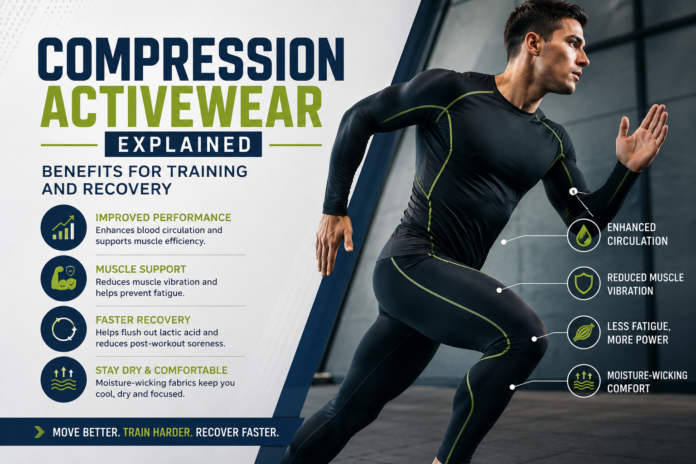
Compression activewear is tight-fitting sports clothing made to support muscles during exercise and recovery. It includes leggings, shorts, tops, sleeves, tights, and base layers that gently press against the body. The main purpose of compression activewear is to improve comfort, reduce muscle movement, support blood flow, and help athletes feel more stable during training. It is used in gyms, running, cycling, yoga, football, fitness classes, and recovery routines. Good compression clothing should feel firm but not painful. It should allow easy movement, breathing, sweating, and stretching. Many people wear it because it feels supportive and keeps the body controlled during hard activity. Compression activewear is not magic, and it does not replace training, sleep, hydration, or nutrition. However, when the fit and fabric are right, it can make workouts feel smoother and recovery feel more comfortable.
Why Compression Activewear Is Used in Training
People use compression activewear during training because it gives the body a more supported feeling. When you run, jump, lift, or stretch, your muscles move and shake with every action. This small movement is normal, but during long or intense exercise it can make the body feel tired faster. Compression activewear helps reduce extra muscle vibration, which may improve comfort and body control. Many gym users like it because it fits close to the skin and does not flap, drag, or get in the way. For general workout clothing, activewear options can support different training needs, but compression clothing is more focused on firm support and close fit. It is also useful for people who want clean movement during squats, lunges, sprints, cycling, or machine workouts. The main benefit is not only performance; it is also confidence, stability, and comfort during repeated movement.
Compression Activewear Benefits for Muscle Support
The biggest reason many athletes choose compression activewear is muscle support. During exercise, muscles work hard and expand with blood flow. A good compression garment applies gentle pressure to the muscles and helps them feel held in place. This can be helpful during high-impact activities like running, jumping, HIIT, basketball, football, or intense gym sessions. Compression activewear may also help people feel more aware of their body position. This body awareness is useful because it can help you move with better control. For example, compression leggings can make your legs feel more stable during squats, while a compression top can make the upper body feel secure during training. The support should always feel balanced. If the clothing is too tight, it can restrict movement and become uncomfortable. If it is too loose, it will not provide real compression. The right piece should feel snug, flexible, and smooth against the skin.
How Compression Activewear Helps During Recovery
Compression activewear is also worn after training because many people feel it helps with recovery comfort. After a hard workout, muscles can feel heavy, sore, or tight. Compression may help support circulation and reduce the feeling of swelling in some people. This does not mean it heals muscles instantly, but it may make the body feel more comfortable after exercise. Many athletes wear compression tights or tops after running, cycling, gym training, or sports practice. The idea is simple: gentle pressure may help the body feel supported while it returns to a normal resting state. People looking for direct support garments can explore compression wear because this category is made for close-fit support rather than loose workout style. Recovery still depends on sleep, water, protein, stretching, and rest days. Compression activewear works best as one small part of a smart recovery routine, not as the only solution.
Compression Activewear and Sweat Control
A good compression activewear fabric should not only be tight; it should also handle sweat well. During exercise, sweat can build up quickly, especially when the clothing sits close to the skin. That is why moisture-wicking fabric is important. Moisture-wicking material pulls sweat away from the body and helps it dry faster. This keeps the wearer more comfortable and reduces the sticky feeling that happens with poor fabric. Polyester blends, nylon blends, and spandex are common materials in compression activewear because they stretch, recover shape, and dry faster than heavy cotton. Breathability is also important because the body needs airflow during training. If compression clothing traps too much heat, it can feel uncomfortable during long workouts. The best fabric should feel smooth, stretch in different directions, and return to shape after use. Good sweat control makes compression clothing useful for gym wear, running, yoga, and active recovery.
Compression Activewear for Different Workouts
Compression activewear can be useful for many workouts, but the best style depends on the activity. For running, compression tights or shorts can support leg movement and reduce fabric friction. For gym training, compression tops and leggings can help with clean movement during lifting and bodyweight exercises. For yoga or stretching, compression clothing must be flexible enough to bend without pulling. For cycling, close-fit clothing helps reduce extra fabric movement. For sports, it can work as a base layer under uniforms. Some people also use performance-focused clothing for outdoor training because it feels light and controlled. When choosing training clothes, performance wear can be useful for athletes who want fabric that supports movement, sweat control, and durability. Compression activewear should always match the workout, not just the look. A very tight garment may be good for running but uncomfortable for relaxed stretching or casual use.
Important Points Before Buying Compression Activewear
Before buying compression activewear, check these points carefully because the wrong choice can feel uncomfortable or useless.
- Choose a snug fit, but never choose a size that causes pain.
- Pick stretch fabric that moves easily with your body.
- Look for moisture-wicking material for sweaty workouts.
- Check flat seams to reduce rubbing and skin irritation.
- Choose leggings, tops, or shorts based on your training type.
- Avoid very cheap fabric that becomes loose after washing.
- Make sure the waistband stays in place without rolling down.
- Use lighter compression for daily workouts and firmer compression for intense training.
- Do not wear compression clothing too long if it causes numbness or marks.
- Always test comfort during movement, not only while standing still.
Mistakes People Make With Compression Activewear
One common mistake is buying compression activewear that is too small. Some people think tighter means better, but that is not true. Compression should feel supportive, not painful. If clothing leaves deep marks, causes tingling, restricts breathing, or makes movement hard, it is too tight. Another mistake is wearing the same compression clothing for every activity. A strong compression top may feel good for gym work but too warm for outdoor summer training. Some people also ignore fabric quality and only focus on design. Poor fabric can lose shape, hold sweat, smell bad, or become transparent during stretching. Washing mistakes are also common. Hot water, harsh drying, and rough washing can damage stretch fibers. Compression activewear needs proper care because spandex and elastane can weaken over time. The best approach is simple: buy the right fit, use it for the right workout, and wash it gently.
Who Should Wear Compression Activewear
Compression activewear can be useful for gym users, runners, cyclists, athletes, yoga lovers, sports teams, and people who want a more supported workout feel. It is also helpful for people who dislike loose clothing during exercise. Many beginners enjoy compression clothing because it gives a secure feeling and helps them move with more confidence. Athletes may use it for training, warm-ups, base layers, and recovery. However, not everyone needs strong compression. Some people prefer regular gym wear or athleisure clothing because it feels more relaxed. People with medical circulation problems, skin sensitivity, or swelling issues should be careful and ask a health professional before using strong compression garments. Compression activewear should make training feel better, not harder. If it causes discomfort, pressure, numbness, or breathing difficulty, it is not the right fit. Comfort, movement, and safety should always come before style.
Compression Activewear: Best Use for Training and Recovery
Compression activewear works best when it is used with a clear purpose. During training, it can support muscles, reduce extra fabric movement, manage sweat, and help the body feel stable. After training, it can give gentle pressure that may make sore muscles feel more comfortable. It is most useful when the garment fits correctly and matches the activity. A runner may need compression tights. A gym user may need leggings or a compression top. A team athlete may need compression base layers under a uniform. A person doing recovery may prefer lighter compression that feels easy to wear. The keyword is balance. Compression activewear should be firm but flexible, supportive but breathable, and close-fitting but not painful. When used correctly, it can become a helpful part of both workout performance and recovery comfort. It is not only about looking athletic; it is about feeling supported while moving.
Conclusion
Compression activewear is worth it for people who want better support, cleaner movement, sweat control, and more comfort during training or recovery. It can help muscles feel stable during exercise and may reduce the heavy feeling after hard workouts. The best results come from choosing the right size, fabric, and compression level. It should never feel painful, overly tight, or hard to breathe in. Beginners, athletes, gym users, runners, and active people can all benefit from compression activewear when it matches their routine. Still, it should be used as part of a full fitness plan that includes rest, water, proper food, stretching, and smart training. In the end, compression clothing is not a shortcut, but it is a useful tool. If you choose it carefully, compression activewear can make training feel more controlled and recovery feel more comfortable.
FAQs
What is compression activewear?
Compression activewear is tight sports clothing that applies gentle pressure to the body. It is used to support muscles, improve comfort, manage sweat, and help movement during workouts.
Can compression activewear improve performance?
Compression activewear may help some people feel more stable and comfortable during exercise. It does not replace training, but it can support better movement and confidence.
Is compression activewear good for recovery?
Yes, compression activewear may help muscles feel more supported after training. It can be useful for recovery comfort, but sleep, hydration, and nutrition are still more important.
How tight should compression activewear be?
Compression activewear should feel snug and supportive, not painful. If it causes numbness, deep marks, breathing trouble, or restricted movement, it is too tight.