
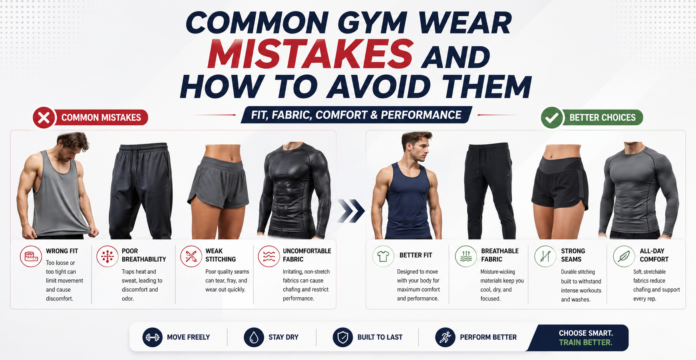
There are many errors one can make when selecting workout clothes. Mistakes can lead to items that are uncomfortable to wear and that distract from and detract from the experience. Clothing for the gym is not the same as everyday clothing. It needs to be durable and able to withstand the rigors of gym wear. There are choices of fabric, size, and construction that make the difference in creating an item that is the correct fit and comfortable versus clothing that is sticky, tight, or rough. Poor quality workout clothes lose their shape after a wash, and poor choices distract from the experience of moving freely.
Common Gym Wear Mistakes Basics
Common gym wear mistakes usually start when buyers choose workout clothing without checking purpose and quality. A full category like the gym wear collection can include tank tops, joggers, shorts, compression shirts, t-shirts, and training layers. Every product serves a different purpose. Tank tops allow for airflow and movement of the arms. Joggers allow coverage for warm ups. Compression shirts tend to be form fitting. Fabric, fit, stretch, seams, waistbands, breathability and care are all different factors that need to be considered when buying. Good gym clothing aligns with the workouts they are meant for, in addition to the personal style of the customer.
Mistake 1: Choosing Style Over Fabric
Selecting workout clothes just because they look trendy is acommon gym wear mistakes. Apparel should provide a good balance of color, print, and design and the quality of the fabric. Breathability, flexibility, smoothness, and strength are some important fabric factors to keep in mind when selecting gym apparel. Fabric that is rough, thin, heavy, and stiff will become uncomfortable with movement. Potential buyers should check the fabric’s hand feel, stretch, texture, and thickness. Management of sweat and support of movement and shape (after washing) is also an important fabric consideration. Apparel with poor fabric will not provide long-term value, no matter how stylish it is.
Mistake 2: Ignoring Breathability
Not considering breathability is another typical gym wear mistake. Many gym sessions bring heat and sweat buildup from lifting and focusing on cardio. Some sessions can be uncomfortable with the heat and humidity indoors. If breathability is ignored, the body can feel uncomfortable and sticky. The right fabric can allow air to pass and sweat to evaporate. This is essential for tops, shorts, joggers, and even all pieces of compression wear. If clothing feels heavy and tough to stretch over the body, it’s not the right material to help you workout. The right material can help support and comfort focus during gym wear. The purpose of the gym wear is to help support the body and not trap heat.
Mistake 3: Wearing the Wrong Tank Top Fit
Tank tops are great to wear, but choosing the wrong fit is one of the worst gym wear mistakes. Oversized tank tops shift while lifting, and tank tops that are too fitted can also limit shoulder movement. A product like gym tank tops should have comfortable armholes, smooth stitching, and breathable fabric. The neckline should stay stable, and the armholes should not rub the skin. Buyers should choose tank tops based on activity. Weight training needs free arm movement, while high-intensity workouts may need a more secure fit. Balance is important.
Mistake 4: Choosing Poor Stretch Recovery
Poor stretch recovery is a common gym wear mistakes made when buying gym wear that buyers often don’t notice right away. Stretch refers to how much a material can expand, while recovery refers to how quickly a material returns to its original state. If a fabric has poor recovery, athletic wear becomes loose, saggy, or deformed after a short amount of time. This can be true for tops, joggers, shorts, or even compression wear. When buying gym wear, look for fabric that has a smooth stretch, but won’t stay stretched. Garments with a smooth stretch recovery will keep their fit even after doing some exercises like squats, lunges, or running, as well as after going through the wash.
Mistake 5: Picking Joggers That Restrict Movement
Joggers can be a comfortable piece of clothing but wearing the wrong pair of joggers is one of the common gym wear mistakes fails. Joggers that are tightly fitted around the thighs or knees can restrict movement during squats and lunges, and can limit stretching and warming up. Joggers that are too baggy can be untidy and can be a distracting element when training. A product like tapered joggers stylish mens athletic sweatpants should balance comfort, leg shape, waistband support, and movement. The waistband should stay secure without digging into the skin. The cuffs should feel neat, not tight. Good joggers should support workouts and casual activewear use.
Mistake 6: Ignoring Seam and Stitching Quality
Ignoring seams is one of the common gym wear mistakes observed gym wear errors due to seams not usually being immediately noticeable. During physical activities seams are subjected to considerable pressure from stretching, bending, lifting, and washing. Poor stitching can pop open around the shoulders, sides, waistbands, pockets, armholes, hems, and cuffs. Additionally, poorly finished seams can rub against skin and cause discomfort. Shoppers should keep an eye out for threads, seams, and stress points that are not up to par. Stitching salons will have better common gym wear mistakes and a more functional piece.
Simple One-Line Mistake Checks
These checks make common gym wear mistakes easier to avoid before buying or approving production.
- Do not choose gym wear only by color or print.
- Do not ignore fabric because comfort starts with material.
- Do not choose tight clothing that restricts movement.
- Do not choose loose clothing that distracts during training.
- Do not ignore breathability because workouts create heat.
- Do not ignore seams because weak stitching can fail.
- Do not use high dryer heat because it can damage stretch.
These one-line checks help buyers avoid common gym wear mistakes without difficult textile words.
Mistake 7: Wearing Compression Pieces Too Tight
A frequent error with common gym wear mistakes is wearing compression clothing too tight. Compression clothing should be firm and supportive but should not be painful and should not feel constrictive. A product like a compression shirt women should allow breathing, shoulder movement, stretching, and training comfort. If the neckline, sleeves, or body feel too tight, the garment may not be the right size. Close-fit clothing should also be breathable because it can trap heat faster than loose tops. Buyers should check size charts and comfort during movement. Support should never come at the cost of comfort.
Final Guide to Avoid Gym Wear Mistakes
The last common gym wear mistakes tip is easy: think about the purpose, comfort, fabric, fit, and durability of gym clothing. Buyers should be careful to not pick clothing only because it’s trendy, cheap, and looks nice. Proper common gym wear mistakes clothing should have proper breathability, be stretchable and resilient, and remain comfortable after many washes. Tank tops need to allow full movement of the arms, while joggers should allow easy movement of the legs. Supportive compression shirts are great, but only if they’re not overly tight. These brands need to explain these things on their product pages. A useful guide to common gym wear mistakes clothing mistakes is a great product page and helps customers buy workout clothing.
FAQs
What are common gym wear mistakes?
Common gym wear mistakes include choosing poor fabric, wrong fit, weak seams, bad breathability, and poor care habits.
Why is fabric important in gym wear?
Fabric affects comfort, sweat control, stretch, movement, and long-term durability.
Should gym wear be tight or loose?
Gym wear should feel secure and comfortable, not too tight or too loose.
How can buyers avoid gym wear mistakes?
Buyers should check fabric, fit, stretch recovery, seams, breathability, waistband comfort, and care instructions.


