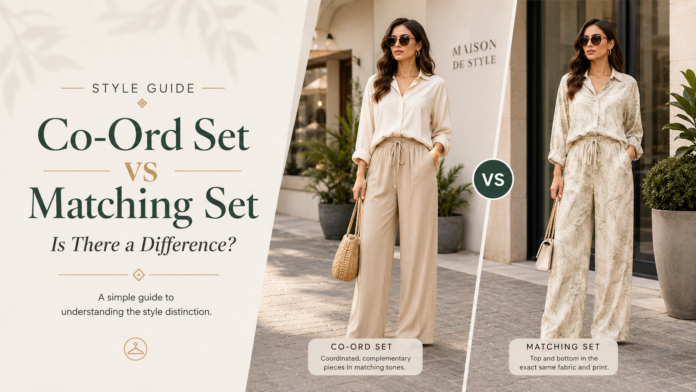
If you’ve spent any time shopping for coordinated outfits recently, you’ve probably noticed that these pieces get called different things depending on where you’re shopping. Sometimes they’re called co-ord sets. Sometimes matching sets. Occasionally two-piece sets. So when it comes to co ord set vs matching set — is there actually a meaningful difference, or are people just using different words for the same thing?
The honest answer is that it depends on who you ask. In most everyday fashion contexts, the terms are used interchangeably. But there are some subtle distinctions worth understanding — particularly if you’re shopping with a specific styling outcome in mind, building a brand around coordinated pieces, or simply trying to make sense of what the fashion industry means when it uses each term.
Let’s clear it all up properly.
What Is a Co-Ord Set?
A co-ord set — short for coordinated set — is an outfit consisting of two or more pieces that have been deliberately designed to work together. They share the same fabric, print, color palette, or design details, creating a cohesive, intentionally matched appearance when worn together.
The term “co-ord” carries a specific connotation in contemporary fashion — it suggests pieces that are coordinated in a considered, fashion-forward way. Co-ords tend to be associated with style-conscious dressing, trend awareness, and a deliberate approach to putting an outfit together. When someone says co-ord, they’re usually talking about a fashion piece with some level of intentional design thinking behind the coordination.
Co ord set vs matching set starts here — the co-ord framing tends to imply a slightly more fashion-oriented product, often designed with specific styling versatility in mind. Co-ord pieces are frequently designed to be worn as a complete set or broken up and worn separately with other wardrobe items — a design philosophy that gives them broader wardrobe utility.
Why It Matters — Key Benefits
Understanding the difference between co-ord sets and matching sets helps buyers make better decisions. Here’s why it matters:
- Smarter purchasing decisions — Understanding what each term typically signals helps buyers choose the right product for their specific styling needs.
- Better wardrobe planning — Knowing whether you’re buying pieces designed for versatile separates use or purely as a complete set affects how you plan around the purchase.
- Clearer brand communication — For brands and retailers, understanding the distinction helps communicate product positioning more accurately to the right customer.
- More informed styling choices — Understanding which type of coordinated set you own helps you get the most versatile use from every piece.
- Avoiding purchasing mistakes — Knowing the difference prevents buying a matching set expecting co-ord versatility — or vice versa.
- Stronger personal style building — Understanding coordinated set options across both categories helps build a more cohesive and versatile personal wardrobe.
- Better value from every purchase — Pieces chosen with full understanding of their design intent deliver more consistent use and satisfaction than pieces bought without that context.
What Is a Matching Set?
A matching set is exactly what it sounds like — two or more pieces that match each other. The emphasis in the matching set concept is on the visual coordination between pieces rather than on any specific fashion positioning or styling philosophy.
Matching sets have a broader, more inclusive definition than co-ords in most fashion contexts. A matching tracksuit is a matching set. A pajama set is a matching set. A swimsuit cover-up worn with a coordinating bikini is a matching set. The matching is the defining quality — and that matching can exist across any level of formality, any fashion context, and any level of styling sophistication.
In co ord set vs matching set terms, matching sets tend to be the more inclusive and broadly defined category. Every co-ord is technically a matching set — but not every matching set carries the fashion-forward, styling-conscious connotations of a co-ord. A basic matching tracksuit, for example, is a matching set but would rarely be described as a co-ord in contemporary fashion language.
Where the Terms Overlap
Here’s where the co ord set vs matching set distinction gets genuinely blurry — and why most people use the terms interchangeably without causing much confusion. In the vast majority of everyday fashion shopping contexts, both terms describe the same thing — two or more coordinated pieces designed to be worn together.
A floral two-piece summer set might be called a co-ord on one website and a matching set on another — and the product itself is identical. A linen shirt and shorts set might be described as a co-ord set in a fashion-forward boutique and a matching set in a general clothing store — again, the product is functionally the same, just positioned differently through terminology.
The overlap is significant enough that shopping specifically for “co-ord sets” versus “matching sets” often returns largely the same products across most retail environments. The distinction is more about how brands choose to position and communicate their products than about fundamentally different product categories. Our complete co-ord set collection covers pieces that work under both descriptions — coordinated, intentionally designed, and versatile across multiple styling contexts.
The Fashion Positioning Difference
One of the most practically meaningful aspects of the co ord set vs matching set distinction is how the two terms position products within the broader fashion market. This matters most for brands, retailers, and anyone making purchasing decisions with specific styling goals in mind.
Co-ord sets tend to be positioned at a slightly higher fashion awareness level — they’re more commonly found in trend-conscious fashion retailers, described in fashion media, and associated with style-forward consumers who think carefully about how they dress. The co-ord framing signals that the product has been designed with current fashion sensibilities in mind and that the individual pieces have been considered as potential separates as well as a complete set.
Matching sets tend to be positioned more broadly across the market — from budget basics to premium fashion — without the same specific fashion-consciousness connotation. They’re more commonly found in mass-market retail alongside athletic wear, loungewear, and casual basics where the matching quality is a practical feature rather than a fashion statement.
Understanding this positioning difference helps shoppers find what they’re actually looking for — whether that’s a fashion-forward co-ord for styling versatility or a practical matching set for comfortable everyday wear.
Co-Ord Sets for Men: What the Term Means in Practice
In men’s fashion specifically, the co ord set vs matching set distinction plays out in an interesting way. Men’s matching sets have been a practical wardrobe staple for decades — matching tracksuits, pajama sets, and athletic co-ords are all deeply familiar in men’s wardrobes.
The co-ord framing for men’s fashion is more recent and more specifically fashion-conscious — reflecting the broader expansion of men’s fashion interest and the growing male consumer appetite for deliberately styled, fashion-aware clothing beyond basic athletic matching sets.
A men’s co-ord in contemporary fashion typically implies a two-piece set — shorts and shirt, trousers and top, or matching separates — in a fabric and design that signals fashion intentionality beyond pure practicality. This is distinct from a basic matching tracksuit in the same way that a carefully chosen outfit is distinct from simply grabbing something comfortable to wear.
Our co-ord set for men range reflects this more fashion-conscious approach — offering coordinated sets designed with deliberate styling versatility and contemporary aesthetic sensibility in mind.
Co-Ord Sets for Women: A Richer Vocabulary
Women’s fashion has the most developed vocabulary around coordinated dressing — and the co ord set vs matching set distinction is most nuanced and meaningful in this context. Women’s co-ords have evolved into a genuinely diverse product category that encompasses everything from tailored blazer and trouser sets to casual linen shirt and shorts combinations to elegant silk two-piece evening sets.
The co-ord framing in women’s fashion specifically implies pieces that have been designed with the dual purpose of working as a complete set and as versatile separates. A well-designed women’s co-ord top might work with the matching co-ord bottoms, with casual denim, with tailored trousers, or with different occasion-specific pieces — giving the buyer multiple outfits from a single co-ord purchase.
Matching sets in women’s fashion tend to be more specifically designed to be worn together — swimwear sets, pajama sets, and athletic matching sets are all primarily designed as complete units rather than versatile separates. This is the most practically meaningful distinction in the co ord set vs matching set conversation for women’s fashion specifically.
Our women’s co-ord set collection is designed with exactly this versatility philosophy — pieces that work beautifully as complete sets and as individual separates in a wider wardrobe context.
Co-Ord Sets for Kids: Practical Coordination
For children’s fashion, the co ord set vs matching set distinction matters least in terms of styling philosophy and most in terms of practical design quality. Whether described as a co-ord or a matching set, the key qualities that matter for children’s coordinated pieces are comfort, durability, ease of wear, and fabric quality.
A well-designed kids’ co-ord or matching set creates an instantly coordinated, visually appealing outfit that removes the daily challenge of mixing and matching individual children’s pieces — a practical benefit that most parents deeply appreciate. The matching quality also creates a sense of occasion-appropriate dressing for children that individual pieces often struggle to achieve.
The specific terminology matters less than the quality of the design and construction — which is why focusing on the product itself rather than the label it’s given is always the smarter approach when shopping for children’s coordinated sets. Our kids co-ord set range prioritizes exactly these qualities — comfortable, durable, and beautifully coordinated for active young wearers across a range of occasions.
Two-Piece Sets: A Third Term Worth Mentioning
Beyond co-ord sets and matching sets, the term “two-piece set” is commonly used across fashion retail — and it adds one more layer to the co ord set vs matching set conversation worth briefly addressing.
Two-piece sets are simply outfits consisting of two coordinated pieces — the term is even more neutral and descriptive than either co-ord or matching set. It makes no specific claim about fashion positioning, styling versatility, or the nature of the coordination — it simply describes the numerical structure of the outfit.
In practice, two-piece sets, co-ord sets, and matching sets all describe largely overlapping product categories. The specific term used is more often a reflection of how the brand or retailer has chosen to communicate their product than a meaningful difference in the product itself. Understanding all three terms helps you navigate fashion retail more effectively and find what you’re actually looking for regardless of which terminology a specific retailer prefers.
Does the Distinction Actually Matter for Shopping?
In practical shopping terms — does the co ord set vs matching set distinction actually change what you should be looking for? The honest answer is — only slightly, and only in specific contexts.
If you’re shopping for a fashion-forward coordinated set with styling versatility built into the individual pieces, searching specifically for co-ord sets tends to surface more of what you’re looking for. The co-ord framing typically signals products designed with this versatility in mind.
If you’re shopping for a practical, comfortable coordinated set — loungewear, athletic wear, or a simple casual matching outfit — the matching set framing often surfaces a broader range of options across different price points and styling contexts.
For most everyday shopping purposes, using both terms interchangeably and focusing on the product qualities that actually matter — fabric, fit, design, and versatility — is the most practical approach. Explore our full co-ord set collection for pieces across all of these categories — coordinated, versatile, and designed for genuine everyday wearability.
Conclusion
The co ord set vs matching set question doesn’t have a dramatically different answer in most real-world contexts — the terms largely describe the same product category with slightly different positioning and connotations. Co-ord sets tend to imply fashion-forward versatility and styling consciousness, while matching sets carry a broader, more inclusive definition across different fashion contexts and price points.
What matters most isn’t which term is used — it’s the quality, versatility, and design of the specific pieces you’re buying. At Eco Jersey, we manufacture coordinated sets for men, women, and children with genuine attention to fabric quality, design versatility, and styling possibilities across multiple occasions. Ready to explore? Browse our complete co-ord set collection and find the perfect coordinated pieces for your wardrobe today.
FAQs
Is there a real difference between a co-ord set and a matching set?
In most practical contexts, the terms describe the same thing — coordinated pieces designed to be worn together. The main distinction is in positioning — co-ord sets tend to imply fashion-forward versatility while matching sets is a broader, more inclusive term across fashion contexts.
Can co-ord pieces be worn separately as individual items?
Well-designed co-ord sets are typically created with this versatility in mind — individual pieces working both as a complete set and as separates with other wardrobe items. This distinguishes fashion-forward co-ords from some matching sets designed purely as complete units.
Which term should I search when shopping online?
Using both terms in your search typically gives you the broadest range of results. If you want specifically fashion-forward, versatile pieces, co-ord set tends to surface more relevant results. For practical casual or athletic coordinated pieces, matching set often returns a broader range of options.
Do co-ord sets work for all ages?
Absolutely. Coordinated sets work beautifully for men, women, and children — with the specific design, fabric, and styling approach adjusted for each age group’s needs and lifestyle requirements.