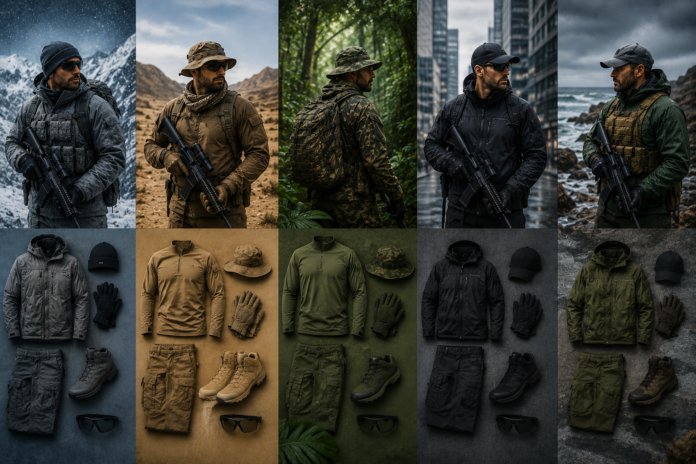
The same size does not fit all when it comes to tactical clothing. A jacket designed for cold mountain environments may not be the best choice for a humid, hot jungle. Understanding the environment is the first step in choose the right tactical apparel. Then, match each garment to the demands of that environment.
The Environment is the Driver of Every Tactical Apparel Choice
Most tactical clothing is selected based on aesthetics or brand reputation rather than environmental fit. Each environment is unique, combining factors such as temperature, terrain, weather, and operational requirements. Fabrics, constructions and features will be determined by each factor.
The manufacturer of tactical outdoor clothing creates apparel for specific environments, rather than generic aesthetics. This specificity is evident in the materials and construction decisions they make.
Cold and Alpine Environments
Layering is essential in cold and alpine conditions to manage the extreme temperature variations between prolonged physical exertion, and static exposure. If the clothing system is not designed to cover both situations, a climber can be dangerously cold after stopping.
Base layer clothing should prioritize moisture management. Base-layer clothing made of merino or synthetic fabrics that wick away sweat during exercise while still maintaining insulation value when damp. outdoor flannel is a good mid-layer because it provides warmth for its weight and can continue to provide insulation even when damp. For alpine or cold mountain conditions, the outer shell should provide full weather protection. A hardshell with sealed seams is ideal.
Environments that are Wet or Rainy
Weather protection is needed in environments that are constantly wet. This goes beyond the standard DWR. When a DWR-treated coat gets wet in heavy rain it loses its breathability and the wearer is dampened by both external moisture as well as trapped perspiration.
A full waterproof protection is a waterproof membrane that has fully taped seams. Rainwear and waterproof jackets have seam tape on every stitch line to prevent water from entering the areas where standard waterproof fabrics can be most vulnerable. Wet trousers can cause rapid heat loss in prolonged field operations.
Heat and humid environments
In humid and hot environments, breathability and moisture control are the top priorities. Heavyweight fabrics trap moisture and heat, which can lead to overheating during prolonged physical activity.
The best choice is lightweight, breathable fabrics with moisture-wicking properties. Outdoor Tees, lightweight tactical shirts and lightweight tees with mesh ventilation panels will maintain your body temperature better than heavier alternatives. Outdoor Shorts are a real performance consideration, allowing for air circulation and reducing the thermal load on your lower body when you’re active.
Forest and Woodland Environments
The forest and woodland environment is characterized by a wide range of temperatures, frequent rainfall, dense vegetation and terrain, which can create a significant tearing and ripping risk. Clothing is easily damaged by branches, bark and rocky surfaces. Abrasion-resistant fabrics are essential.
This environment requires ripstop fabrics that are reinforced at the knees and elbows. Camouflage Clothing In Woodland Patterns — Green, Brown, and Black Disruption Designs for Tree and Vegetation Backgrounds — Manages Visual Signature in This Terrain. Camouflage Balaclavas with matching patterns complete the system of low-visibility protection for head and face.
Desert and Arid Environments
Desert environments are characterized by extremes on both sides — intense heat in the daytime and cold temperatures at night. The tactical clothing used in desert environments must be able to handle this range of temperatures without the added weight and bulk of a cold-weather system.
The foundation is made up of lightweight, breathable fabrics with earth tones, sand and tan. Airy cuts that allow for good circulation of air protect skin exposed to the sun without trapping heat. Hunting clothing for open terrain has similar characteristics: light weight, suitable colour and construction which manages solar heat gain as well as cold exposure in the morning and evening.
Urban and Transitional Environments
Clothing that is suitable for urban tactical environments must be able to perform tactically while not attracting unwanted attention. Priority is given to low-profile performance – weather protection, equipment carrying capacity and aesthetics without obvious tactical aesthetics.
Windbreaker Jackets provide weather protection with a low-profile. Outdoor vests provide equipment-carrying capability without the bulkiness of a full tactical coat — useful in urban contexts, where concealability and mobility are important.
Conclusion
To choose the best tactical clothing, you must first understand your environment. Then, select fabrics, constructions and features that are directly in line with the needs that this environment presents. Cold environments require layering, and hardshell protection. Waterproof membranes are needed in wet environments. Heat environments require lightweights that breathe. Woodland environments require abrasion-resistant materials and camouflage that is appropriate.
Find the best production partner to meet your needs by exploring the full range of tactical outdoor apparel manufacturing.
FAQs
What is the importance of selecting tactical clothing based on your operating environment?
Each environment has its own demands for temperature control, weather protection and abrasion resistance.
Which is the best outer-layer for cold alpine environments?
Hardshell jackets with waterproof membranes and fully sealed seams provide the weather protection, breathability and durability that cold mountain conditions require.
Which waterproofing is required for wet environments that are serious?
An actual waterproof membrane with fully-taped seams – not just a DWR treatment. DWR treatments become saturated in prolonged rain, and they lose their breathability.
Which fabrics are best for hot, humid tactical environments.
Lightweight blends of polyester and polycotton with moisture-wicking qualities — heavyweight fabrics can trap heat in prolonged hot conditions.