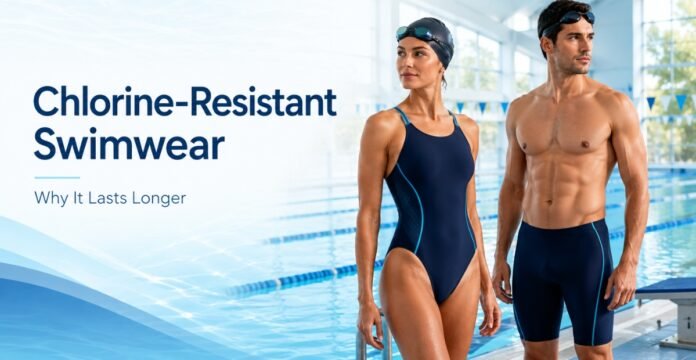
Chlorine is an important part of keeping swimming pool water clean and safe, but chlorine actually breaks down the fabric of most swimwear. This first appears as fading of color, and eventually the stretching fabric becomes rough and the swimsuit may even begin to fit loosely. Chlorine-resistant swimwear is designed to resist the effects of chlorine. The fabric can wear out eventually, but chlorine-resistant swimwear maintains its shape and strength longer and will survive frequent pool visits when properly laundered.
What Is Chlorine-Resistant Swimwear?
Chlorine-resistant swimwear is swimming clothing made with fibers and construction methods that better resist damage from treated pool water. Many designs use polyester, PBT polyester, or special blends instead of relying heavily on standard elastane. These fibers hold their shape well and are less likely to become weak after regular swimming. People can explore different cuts in the Eco Jersey swimwear collection while comparing coverage, fit, and intended use. Chlorine-resistant swimwear is especially useful for swim lessons, fitness training, water sports, and frequent pool use.
Why Chlorine-Resistant Swimwear Lasts Longer
Chlorine resistant swimwear lasts longer mainly because core fibers respond to chlorine better than stretch fibers do. Basic swimwear has a lot of elastane. Elastane gives swimwear good stretch but loses power with chlorine exposure. Chlorine resistant swimwear combines stretch and stronger polyester fibers. Chlorine resistant swimwear is better at bounce back and reduces sag and thinning. Chlorine resistant swimwear offers stability keeps swimmers from frequently replacing swimwear and reduces clothing waste.
How Fabric Choice Protects Shape and Stretch
Choosing a good fabric affects the life of the swimsuit. Polyester is a strong fabric, dries quickly, and holds color. PBT is a Polyester that has stretch recovery and is resistant to chemicals in pools. Some chlorine resistant swimwear uses fabric blends that add comfort but have hold strong. Stretching fabric should have the ability to stretch across the body and move with the swimmer. Good chlorine resistant swimwear should not be stiff. Good swimwear should provide a good fit while allowing movement.
Chlorine-Resistant Swimwear Helps Colors Stay Brighter
Chlorine’s effect on swimwear isn’t limited to stretch. It can also make swimwear look dull and lifeless. Chlorine-resistant swimwear utilizes new technology in fabric construction that makes the dyes more stable and more resistant to fading. Along with improved dye technology, fading less also depends on the printing technology and the curing (heat-setting) technology. With these improved technologies, there is still no guarantee that fading won’t still occur after prolonged exposures to the sun and chlorine with less than ideal washing practices.
Key Benefits of Chlorine-Resistant Swimwear
Chlorine-resistant swimwear offers several practical benefits for regular swimmers:
- It keeps its shape better after repeated pool sessions.
- It reduces sagging around straps, waistbands, and leg openings.
- It helps colors and prints stay brighter for longer.
- It provides more reliable coverage during swimming and movement.
- It dries quickly when made with suitable polyester-based fabrics.
- It may reduce how often a swimmer needs to buy a replacement.
- It works well for lessons, training, leisure swimming, and team use.
- It can support a cleaner, more professional look throughout the season.
These benefits make chlorine-resistant swimwear a sensible choice for children, adults, instructors, athletes, and anyone who spends a lot of time in treated water.
Fit and Coverage Still Matter
A strong fabric cannot fix a poor fit. Chlorine-resistant swimwear should feel close to the body without digging into the skin or limiting movement. Loose fabric can create drag, while an overly tight suit may strain seams and elastic areas. The right cut depends on the swimmer’s activity and comfort needs. For people who prefer greater body coverage, modest swimwear options can combine secure shapes with practical movement. Whatever the style, chlorine-resistant swimwear should stay in place during kicks, turns, dives, and normal pool activity without constant adjustment.
Construction Quality Makes a Big Difference
The quality of swimwear can be almost fully determined by the quality of the seams. Chlorine-resistant fabric that stands the test of time can still fail if the seams are not done well. For seams that won’t rub against the swimmer, the swimwear should have flat seams. Areas that stretch and are designed to open should have reinforced seams. Linings should be lightweight and dry quickly. Quality swimwear for chlorine-resistant swimwear should use pool grade elastic. When checking a suit, look for neat seams, elastic that has an even stretch, and all of the attachments that are secure.
Choosing the Right Style for Regular Swimming
The best style depends on how and where the suit will be used. Competitive swimmers often prefer close-fitting designs that reduce drag. Leisure swimmers may want more coverage, support, or adjustable features. Men may choose briefs, trunks, jammers, or compact performance cuts, and the men’s thong swimwear design shows one minimal-coverage option for specific markets and preferences. Women may choose one-piece suits, tankinis, skirted designs, or modest sets. In every case, chlorine-resistant swimwear should match the user’s comfort, movement, and coverage needs.
How to Care for Chlorine-Resistant Swimwear
Chlorine resistant suits still require special care if you want to maintain their integrity. The best way to care for these swimsuits is to rinse out the chlorine with cool, clean water as soon as you are done swimming. Washing them more infrequently can be done with cool, clean water and some mild soap, but be careful not to take the suits out of their chlorine resistant state with bleach or hot water. No twisting or wringing the fabric, but gently pressing and piping water away is the best way to prepare the suits for drying to repair swim sessions.
Conclusion
Chlorine Resistant Swimwear is constructed differently and works better for regular pool use. Unlike regular swimwear, these swimsuits won’t sag or lose fit as fast. These swimsuits do still have different levels of quality, so it’s best to consider the type of fiber, stitching, elastic, lining, and fit. Zone 3 suits have extra lining and better elastic. Of course, regular rinsing and care help, as well. On the whole, for regular swimmers, chlorine-resistant swimwear provides better value, a more dependable fit, and better appearance for a longer period.
FAQs
Is Chlorine-Resistant Swimwear Completely Chlorine-Proof?
No swimwear is completely protected from chlorine. Chlorine-resistant swimwear simply handles repeated pool exposure better than ordinary swim fabric. Correct washing and drying are still important.
How Long Does Chlorine-Resistant Swimwear Last?
Its lifespan depends on pool use, chlorine strength, fabric quality, fit, and care. Quality chlorine-resistant swimwear can stay usable for many more sessions than a regular swimsuit.
Should Chlorine-Resistant Swimwear Be Washed After Every Swim?
Yes. Rinse chlorine-resistant swimwear in cool, clean water after every pool session. This removes chemical residue before it can remain inside the fibers.