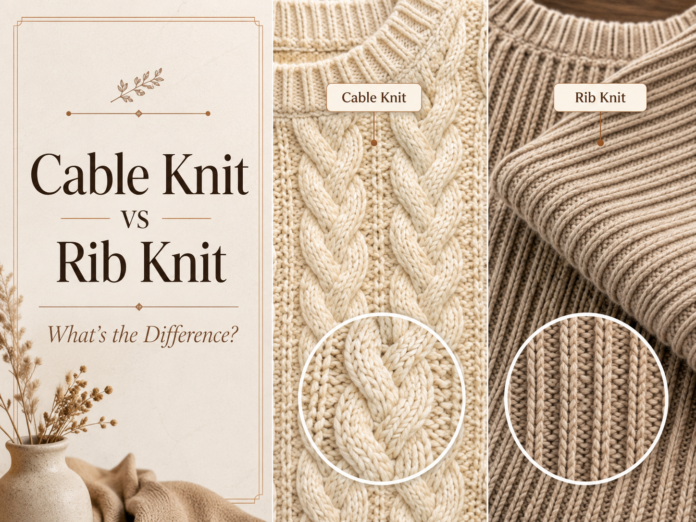
Cable knit vs rib knit is a common question when people start learning about sweaters, cardigans, winter tops, cuffs, collars, and knitted clothing. Both fabrics are made by knitting yarn, but they do not look, feel, or fit the same. Cable knit usually has raised, twisted patterns that look like ropes or braids. It often feels thicker, warmer, and more decorative. Rib knit has straight raised lines that run up and down the fabric. It is usually stretchier, closer-fitting, and smoother for everyday wear. When you understand cable knit vs rib knit, it becomes easier to choose the right garment for comfort, style, and season. Cable knit is often used when you want a cozy and classic look, while rib knit is useful when you need stretch and shape. Both are important in fashion, but each one has its own best use.
What Is Cable Knit?
Cable knit is a knitted style that has raised patterns made by crossing stitches over each other. These crossed stitches create a rope-like or braided design on the fabric surface. This is why cable knit sweaters often look thick, rich, and handmade. Cable knit is commonly used in winter sweaters, cardigans, scarves, pullovers, and warm casual clothing. It gives clothing a traditional and premium look without needing heavy prints or logos. In cable knit vs rib knit, cable knit usually stands out more because of its bold texture and visible design. It is not always the stretchiest option, but it gives strong visual detail and warmth. Many people like cable knit because it feels cozy and looks stylish in cold weather. It also works well in neutral colors like cream, grey, brown, navy, and black because the pattern itself already adds beauty.
What Is Rib Knit?
Rib knit is a knitted fabric style made with alternating raised and lowered lines. These lines usually run vertically, which means they go from top to bottom. Rib knit is known for its stretch, recovery, and body-hugging shape. It can stretch when worn and then return close to its original form. This is why rib knit is often used for cuffs, necklines, waistbands, fitted tops, dresses, and base layers. In the cable knit vs rib knit comparison, rib knit is usually more flexible and practical for daily movement. It can be used as the main fabric or as a finishing fabric on garments. Rib knit is also comfortable because it can sit close to the body without feeling too stiff. If a brand wants clean casual pieces with simple structure, rib knit can be a smart choice for many clothing designs.
Cable Knit vs Rib Knit: Main Difference
Cable knit vs rib knit mainly comes down to texture, stretch, warmth, and style. Cable knit has a raised braided pattern, while rib knit has straight vertical lines. Cable knit often looks heavier and more decorative, while rib knit looks cleaner and more fitted. Cable knit is mostly chosen for sweaters, winter cardigans, and cozy outer layers. Rib knit is often chosen for collars, cuffs, waistbands, fitted tops, and stretchy casual clothing. If you want a strong winter fashion look, cable knit can be better. If you want comfort, shape, and easy movement, rib knit can be better. For casual outfits, rib knit can pair well with everyday basics like crew neck tees because both create a simple and relaxed look. So, the best choice depends on how the garment will be worn, not just how it looks.
Texture and Appearance
The texture is one of the easiest ways to understand cable knit vs rib knit. Cable knit has a bold surface with twisted or braided lines that look raised from the fabric. It gives a sweater a soft, warm, and detailed appearance. This type of knit can make even a plain color look interesting. Rib knit, on the other hand, has regular vertical ribs that make the fabric look neat and structured. It is less decorative than cable knit, but it looks clean and modern. Rib knit can also make clothing look slimmer because the vertical lines can create a lengthening effect. Cable knit feels more traditional, while rib knit feels more basic and versatile. If you want a garment that catches attention, cable knit is stronger. If you want something simple for daily wear, rib knit is easier to style.
Stretch and Fit
Stretch is another big point in cable knit vs rib knit. Rib knit usually stretches more because of the way its stitches are arranged. It can expand and contract, which makes it good for fitted clothing and flexible garment parts. That is why rib knit is often used on sleeve cuffs, hems, collars, and waistbands. It helps garments stay in place without feeling too tight. Cable knit can have some stretch, but it is usually not as elastic as rib knit. The crossed stitches in cable knit create more texture, but they can also make the fabric thicker and less flexible. If someone wants a close body fit, rib knit is normally the better option. If someone wants a relaxed, chunky, and cozy look, cable knit works well. This is why both fabrics are useful, but for different fitting needs.
Warmth and Season Use
When comparing cable knit vs rib knit for warmth, cable knit often feels warmer because it is usually thicker and heavier. The raised patterns can trap more air, which helps create a cozy feeling in cold weather. Cable knit sweaters and cardigans are popular in winter because they give both comfort and style. Rib knit can also be warm, but it depends on the yarn, thickness, and garment design. A lightweight rib knit top may be good for spring or indoor wear, while a thick rib knit sweater can work in winter too. Cable knit is better for a classic cold-weather look, while rib knit is more flexible across seasons. For example, long knitted layers like long cardigans for women can use knit texture to add comfort and style without making the outfit too complicated.
Best Uses in Clothing
Cable knit and rib knit are both useful in clothing, but they are used in different ways. Cable knit is best for sweaters, cardigans, scarves, vests, winter pullovers, and statement knitwear. It looks good when the design needs depth and detail. Rib knit is best for fitted tops, cuffs, collars, hems, tank tops, bodycon dresses, waistbands, and layering pieces. In cable knit vs rib knit, cable knit is more about style and warmth, while rib knit is more about fit and function. Many garments can also use both together. For example, a sweater may have a cable knit body and rib knit cuffs. This gives the garment a decorative front with flexible finishing. That combination is common because it balances beauty and comfort. So, brands do not always need to choose only one knit style.
Quick Points to Remember
- Cable knit has raised braided patterns, while rib knit has straight vertical lines.
- Cable knit is usually thicker, warmer, and more decorative.
- Rib knit is usually stretchier, smoother, and better for fitted areas.
- Cable knit is great for sweaters, cardigans, scarves, and winter layers.
- Rib knit is great for cuffs, collars, hems, fitted tops, and waistbands.
- Cable knit vs rib knit should be chosen based on comfort, style, and garment use.
- Cable knit gives a classic cozy look, while rib knit gives a clean casual look.
- Rib knit works better when the garment needs stretch and shape recovery.
- Cable knit can feel heavier, so it is better for cooler weather.
- Both knit styles can be used together in one garment for better balance.
Which One Is Better for Casual Wear?
For casual wear, the better choice depends on the type of outfit you want. If you want a warm and stylish winter outfit, cable knit can be a better choice because it adds texture and makes the outfit look more complete. A cable knit sweater with jeans or casual trousers can look simple but still polished. If you want something lighter, stretchier, and easier to wear every day, rib knit can be better. Rib knit tops, cuffs, and casual layers are comfortable because they move with the body. In cable knit vs rib knit, rib knit often works better for regular daily outfits, while cable knit works better when you want a cozy fashion piece. For broader outfit ideas, both knit types can fit naturally into casual wear collections because they are easy to style with simple clothing pieces.
Conclusion
Cable knit vs rib knit is not about one fabric being good and the other being bad. It is about choosing the right knit for the right purpose. Cable knit is better when you want warmth, texture, and a classic winter look. It makes sweaters and cardigans look rich without adding prints or extra decorations. Rib knit is better when you want stretch, comfort, and a neat fit. It works well for cuffs, collars, waistbands, fitted tops, and casual pieces that need flexibility. If you are buying or designing knitwear, think about the weather, garment style, body fit, and comfort level. Cable knit vs rib knit becomes simple when you remember this: cable knit is more decorative and cozy, while rib knit is more flexible and practical. Both are useful, and the best clothing often uses the right knit in the right place.
FAQs
What is the main difference between cable knit and rib knit?
The main difference is the pattern and stretch. Cable knit has raised braided designs, while rib knit has straight vertical lines and usually stretches more.
Is cable knit warmer than rib knit?
Cable knit is often warmer because it is usually thicker and has raised patterns that can trap more air. However, warmth also depends on yarn and fabric weight.
Is rib knit good for everyday wear?
Yes, rib knit is very good for everyday wear because it is stretchy, comfortable, and easy to style. It is common in cuffs, collars, tops, and fitted garments.
Which is better in cable knit vs rib knit?
Cable knit is better for cozy winter style, while rib knit is better for stretch and fit. The better choice depends on the garment type and use.