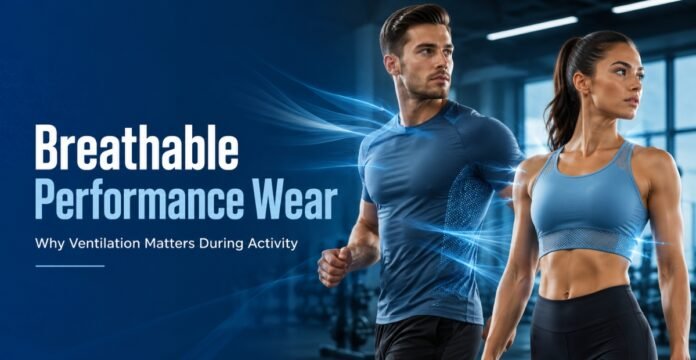
Breathable performance wear fabrics are intended to remove heat and moisture from the body. Air does not actually flow freely through the fabric. Instead, certain materials and knits used in specific shapes and fits of garments are designed to reduce the level of warmth that is retained. High quality breathable garments are light, dry quickly, and offer a lasting level of comfort to the body as it continues to warm. Breathable performance fabrics are also useful in a variety of daily activities including all forms of exercise.
Why the Body Needs Better Airflow During Activity
The body creates extra heat when muscles work. Sweating helps control this heat, but sweat must evaporate to cool the skin. Thick, tight, or poorly designed clothing can trap warm, damp air close to the body. This can make activity feel harder than it should. Well-planned breathable performance wear gives heat and moisture more ways to escape. People can explore different cuts and uses in an activewear clothing range, but breathability should always be judged by fabric weight, construction, fit, and coverage. Breathable performance wear supports comfort, yet it should still match the activity and weather. Clothing type and limited air movement can increase heat stored by the body during physical work.
How Ventilation Helps Sweat Evaporate
When ventilation is introduced, the skin, clothing, and air create movement. This helps remove moist air from the space behind a garment. With sweat less spread and evaporated, the wearer feels cooler and less clammy. The best breathable performance wear creates a balance between air and moisture transfer. Fabric can often ease the movement of moisture and sweat, but still feel warm. Conversely, a fabric can easily allow the movement of air while holding moisture.
Why Fabric Structure Matters More Than Fabric Name
A fiber name alone does not prove that a garment will breathe well. Polyester, nylon, cotton, wool, and blended fabrics can all perform differently because yarn size, knit pattern, thickness, and finishing change the final result. Open knits and mesh areas usually allow more air movement than tightly packed fabric. Lightweight fabric can also reduce heat buildup, although very thin material still needs enough strength for repeated use. When reviewing a performance wear collection, buyers should look beyond the product label and ask how the fabric is built. Reliable breathable performance wear depends on the complete material system, not one popular fiber. The supplied collection includes different garment shapes intended for active and performance uses.
Why Mesh Panels and Vent Zones Are Useful
Certain areas of the body, like the upper back, underarms, and the sides of the torso, can become the warmest and most concentrated with sweat and moisture. Designers can use panels, small holes, or even lighter knit zones to create airflow in targeted areas. This creates a balance of breathability and texture across the garment. For vent zones, seams need to be strong because open zones are naturally less strong. The best breathable performance wear uses advanced ventilation design as part of the construction of the garment, not as additional design elements.
How Fit Changes Breathability
Fit determines how much air circulation the clothes allow. Tight garments can move the sweat away from the skin, but they can space needed for airflow. On the other hand, a very loose garment may allow more air movement, but extra fabric can move, become twisted, and even hold moisture. Breathable clothing performs better when it fits better for the activity. For running, a close fitting top may be best, but a hiking shirt can be more relaxed. Even more room may be needed at the shoulders and hips for stretch clothes. Breathable clothing should feel better than a plastic wrap.
Why Sleeveless Designs Can Feel Cooler
Sleeveless tops reduce fabric coverage around the arms and underarms, where heat can build quickly. They also give the shoulders more freedom during lifting, stretching, and fast movement. A lightweight performance tank top for women can show how a simple racerback or sleeveless cut supports airflow and range of motion. However, less coverage does not always mean better breathable performance wear. The fabric must still move moisture and avoid becoming heavy with sweat. Armholes should not rub, and the neckline should remain secure. Useful breathable performance wear combines an open design, soft edges, stable fit, and suitable fabric rather than depending only on bare skin.
Why Breathability Still Matters in Cool Weather
Even in the cold, people will sweat when skiing, running, or hiking in the winter. If breathability stops, moisture will chill the body once movement slows. Cold weather performance wear must balance breathability and moisture with insulation. This is why layering is essential. The base layer should manage sweat, the middle layer should provide insulation, and the outer layer should protect from the elements. Insulated layers without moisture control can still be very uncomfortable.
How Breathable Clothing Supports Comfort and Focus
Comfort impacts how long people are willing to move. Wet clothes can cling, rub, sag, or even become heavier. Trapped heat can also make a normal workout feel unpleasant. Breathable performance clothing minimizes a few of these discomforts. Breathable performance clothing cannot replace water, rest, shade, and safe training decisions, but it can help make clothing easier to wear while moving. Breathable performance clothing can and should have seams that are smooth, soft and flexible panels, and a cut that does not pull or stretch.
Quick Checklist for Choosing Breathable Performance Wear
- Choose breathable performance wear with a fabric weight suited to the weather and activity.
- Check whether mesh panels or open knit zones sit in high-sweat areas.
- Make sure breathable performance wear moves freely without feeling too tight or too loose.
- Look for smooth seams that will not rub damp skin during repeated movement.
- Test whether breathable performance wear becomes heavy, clingy, or slow to dry after sweating.
- Select coverage that gives enough airflow while still providing the protection you need.
- Wash breathable performance wear as directed because heavy residue can reduce moisture movement.
Conclusion
Ventilation is important when considering how bodies are in constant motion, generate heat, and sweat. Clothes that trap sweat and heat become wet, heavy, and uncomfortable. Clothing that is designed to be breathable and allows the passage of air, heat, and moisture, can enhance the experience of doing exercises, playing sports, and doing outdoor and even work activities. Breathable performance wear cannot be identified by the name of the fabric or by the use of a specific marketing term.
FAQs
Is Breathable Performance Wear the Same as Moisture-Wicking Clothing?
Not exactly. Moisture-wicking clothing moves sweat away from the skin, while breathable performance wear also allows heat and water vapor to pass through the garment. The best products often combine both features, but one feature does not always guarantee the other.
Is Cotton Good for Breathable Performance Wear?
Cotton can feel airy and soft, especially in light and loose clothing. However, it can absorb a lot of sweat and may stay wet during hard exercise. Breathable performance wear for intense activity often uses carefully built synthetic or blended fabrics that dry faster.
Does More Mesh Always Mean Better Ventilation?
No. Mesh can improve airflow, but weak placement or rough edges may reduce comfort and durability. Good breathable performance wear uses mesh only where it helps the body release heat and where the garment can still keep its shape during movement and washing.