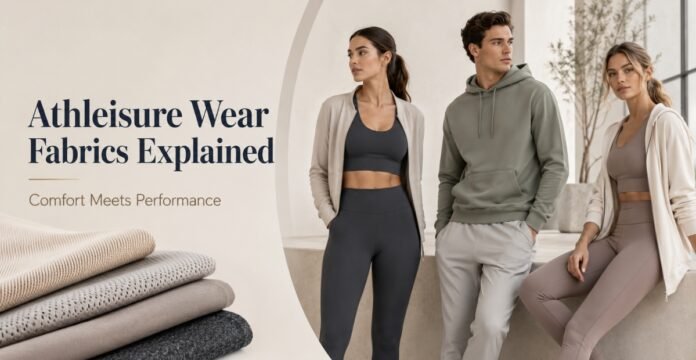
athleisure wear fabrics Wear are designed to be comfortable and supportive of light physical activity. These fabrics are used for joggers and hoodies as well as T-shirts, leggings. sweatshirts and matching sets. Fabrics for athleisure clothing should feel soft on the skin, move with the body easily, and maintain their shape even after repeated use. These fabrics may help to manage sweat, increase airflow and dry faster than other fashion materials. athleisure wear fabrics clothing are determined by the brand, the season, the level of activity, and the fit.
What Fabric Choice Means for Athleisure
Fabric determines how an athleisure wear fabrics item feels, fits and performs. Poor quality fabrics can feel heavy, trap body heat, lose their shape or cause discomfort after a short time. Athleisure fabrics that are better allow the wearer to travel, work or relax without having to change clothes. When exploring athleisure collections, brands should consider softness, weight and stretch as well as breathability, durability, and recovery. Athleisure wear fabrics Wear should not just look good on the product page, but also feel good in daily use.
Cotton for natural softness
Cotton is a popular athleisure wear fabrics clothing because it feels comfortable, soft and breathable against the skin. Cotton is a great fabric for casual joggers, sweatshirts, hoodies and relaxed T-shirts. Cotton athleisure wear fabrics wear can absorb moisture but tend to dry slower than polyester or nylon. Pure cotton is therefore better for comforting everyday movements and for low-intensity training than synthetic fabrics. Lighter cotton is cooler and can help give your garments a neat shape. Untreated cotton can shrink, wrinkle or lose its shape. Fabric quality and finishing is important.
Polyester for Quick Drying Performance
The main reason why polyester is used for athleisure wear fabrics clothing is that it is lightweight, strong, stable in shape, and dries quickly. These fabrics are great for travelling, working, going to the gym, or just a busy day. Blending polyester with cotton can provide a natural softness while also improving moisture control and durability. This fabric is ideal for printed designs, as it holds colour well. Fabric structure is still important. Poorly made polyester fabrics may feel warmer or less breathable. A well-designed, knit fabric can offer airflow, flexibility and a clean, athletic look.
Nylon for Smooth Strength
Nylon is a smooth fabric that is used for leggings and fitted tops. It is also used in lightweight jackets and performance clothing. athleisure wear fabrics made from nylon are soft and strong, but they also resist rubbing much better than other materials. Blends of nylon can produce a smooth surface, which is ideal for garments that are close-fitting. When mixed with elastane, they dry faster and promote active movement. Nylon can retain heat if it is too thick and tightly knitted. Designers must choose the right weight and structure to ensure that the garment is supportive, but not hot, stiff or uncomfortable.
Elastane for Stretch and Recovery
Elastane (also known as spandex) is added to athleisure wear fabrics wear to give them stretch and to help the garments return back to their original form. A small amount of spandex can help T-shirts and joggers move more easily. athletic pants, for example, need to be flexible around the hips and knees as well as at the waistband in order to allow for walking and sitting. Fabrics for athletic wear with too little or too much elastane can limit movement. Too much elastane can cause the fabric to feel heavy and tight. Stretch is important, but so is recovery. It prevents the knees, elbows and waistbands becoming loose.
Blending Fabrics for Comfortable Wear
Blends are often better than single fibre materials for athleisure wear fabrics clothing. Cotton-polyester mixes can be softer, dry faster, and hold their shape better than pure 100% cotton. Blends of nylon and elastane can be used to create leggings, fitted tops, and smooth, flexible leggings. Blends of polyester and elastane are commonly used in lightweight garments for training because they offer quick drying and easy movement. Designers can balance comfort, performance and price with blended athleisure wear fabrics wear. The right blend will depend on the product. The hand-feel and weight of a relaxed hoodie is different from a fitted tank or stretch jogger.
Important Fabric Features To Check
Buyers should compare the performance of fabrics when comparing sportswear, rather than focusing solely on the fibre name.
- Softness Fabrics for athletic wear should be comfortable to wear over long periods.
- Breathability : The material should breathe to reduce the hot, sticky sensation.
- Stretch: The clothing should stretch without pulling across the body.
- Recovery: After stretching, the fabric should return to its original shape.
- Control moisture: Sweat must be able to move away or dry quickly.
- Durability The fabric should resist pilling and early wear.
- Easy Care: Good fabrics for athleisure clothing should still be functional after washing.
Choose Fabric Based on Garment Type
Athleisure wear fabrics clothing can vary depending on the product. Hoodies need medium-weight, soft knits to provide warmth and comfort without being too bulky. Athletic Hoodies can be made from French terry or stretch jersey, depending on the intended activity and season. Fabrics that are flexible and have good recovery for the knees will be ideal for joggers. Tank tops need a lighter fabric with more stretch, while t-shirts require breathability and a smooth feeling. Leggings are usually made from nylon-elastane and polyester-elastane mixtures. These blends provide coverage, support, as well as shape retention when moving.
Fabric Weight and Seasonal Comfort
Fabric weight affects how athleisure wear fabrics wear feel during different seasons. athleisure wear fabrics that are lightweight can be used for the summer, for indoor training, traveling, and as a layering fabric. The midweight fabric is ideal for T-shirts, sweatshirts and casual sets. Winter hoodies, loungewear and winter lounge pieces can be made warmer and more structured with heavy athleisure fabrics. However, they may feel too warm when worn. The fabric weight is usually measured in GSM (grams per square metre). Higher GSM means thicker, denser fabrics, but also feel, softness and knit type.
How to judge fabric quality
Fabrics for high-quality athletic wear should be smooth and even without any weak spots or loose fibers. Check if the fabric returns to its original shape by gently stretching it. Rub the surface and see if it becomes fuzzy quickly. Lighter athleisure wear fabrics should be held up to a bright light source in order to determine if the fabric is balanced and has adequate coverage. Before bulk production, buyers should test for shrinkage, colourfastness and pilling. They should also check the strength of seams, recovery, and seam strength. Fabrics for athletic wear may appear good on a small test but behave differently after washing, cutting, stitching and printing. Proper testing can help prevent expensive quality problems.
Conclusion
The fabrics used in athletic wear combine everyday comfort with useful performance. Cotton is soft, polyester increases durability and drying, nylon provides smooth strength and elastane offers stretch and recovery. Blends are often the best for achieving a balanced result because they combine different fibre strengths. athleisure wear fabrics clothing should be chosen according to the type of garment, climate, care requirements, and anticipated activity. By testing fabrics for softness and weight, as well as airflow, recovery and stretch, brands can create clothing that is comfortable and looks stylish. that looks modern, feels comfortable, and remains useful throughout the day.
FAQs
Which Fabric Is Best for Athleisure Wear?
The best fabric depends on the product and how it will be used. Cotton-polyester blends are useful for soft hoodies and joggers, while nylon-elastane and polyester-elastane blends work well for fitted garments that need stretch, support, and faster drying.
Are Cotton Athleisure Clothes Good for Workouts?
Cotton athleisure clothes are comfortable for walking, stretching, and low-intensity exercise. However, cotton absorbs sweat and dries slowly, so polyester or nylon blends are usually more practical for hard workouts and warm conditions.
How Much Elastane Should Athleisure Fabric Contain?
The right amount depends on the garment. Relaxed T-shirts may need little or no elastane, while joggers may use a small amount for easier movement. Fitted leggings and tops often need more elastane for stretch, support, and shape recovery.