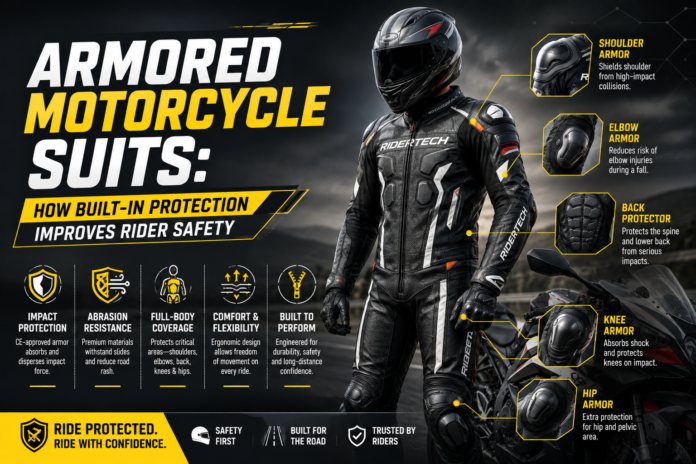
Armoured motorcycle suits provide a greater level of protection for riders than standard motorcycle clothing. A motorcycle suit will protect more than one part of your body. It can include abrasion resistant materials and built-in protection in areas like the shoulders, elbows knees hips and back.
These riding gears are ideal for riders who want to be covered more, whether they’re riding on a track, doing sport riding or touring. The collection of motorcycle suits allows riders to explore different suit designs and compare them for different riding conditions.
What are Armored Motorcycle Suits (Motorcycle Armor)?
Armoured motorcycle suits can be one-piece or a two-piece garment that combines protective outer materials and impact protection. They may have armor on the shoulders, elbows and back.
The integrated protection is the main benefit. A motorcycle suit is a better option than separate jackets or pants that have different protection systems.
Why Built-In Protective Systems Matter
In a motorcycle crash, the body is exposed to two major dangers: impact and skin abrasion. Impact protection reduces the force that is transferred to the body’s most vulnerable areas. Abrasion resistant materials protect the skin by preventing it from contacting the road surface.
These functions are brought together by a suit that is designed properly. It can help reduce the gaps between different garments, and keep protective components in place while the rider moves.
Impact protection and armor placement
The placement of armor is a key feature of a motorcycle protective suit. The shoulders, elbows and back are common protection zones.
While the rider is sitting, leaning to the front, or moving the motorcycle, the armor should stay in the correct position. The protective inserts can shift if the suit is not fitted properly.
Abrasion-Resistant outer materials
A motorcycle suit requires more than just impact protection. The outer shell must also be resistant to abrasion, as sliding on asphalt can quickly damage normal clothing.
Protective riding garments are often made from materials such as leather or high-strength fabrics. The durability of the garment can be further improved by using reinforced panels and strong stitches in areas that are likely to come into contact with each other during a fall.
One-Piece vs Two-Piece Motorcycle Suits
The one-piece suit provides continuous coverage of the upper body and legs. One-piece suits are commonly associated with sports riding and situations that require maximum coverage.
The jacket and pants are separate so they can be worn separately. Two-piece suits are more convenient, especially for riders who need to remove their upper or lower garments during stops.
Men’s Armored Motorbike Suits
Men should pay attention to the following: shoulder width, chest size, sleeve fit, waist position and leg proportions. The suit should be able to allow the rider a natural position without excessive pulling at the shoulders and knees.
Comparing suit designs for men can be done by using a men’s motorbike suit. It is important to consider not only the appearance of the suit, but also whether it provides a comfortable riding position and offers stable protection.
Women’s Armored Motorbike Suits
Women riders need protective suits that take into account their body shape and riding position. Poorly fitted suits can cause pressure in the chest, waist or hips and affect the placement of protective armor.
A women’s motorbike suit will help women riders to compare options. The suit should be tested while the rider is seated, as the fit may differ significantly from standing to riding position.
Fit and Freedom of Movement
Protecting riders should not compromise their basic movement. Riders must be able to move their arms and knees while operating the controls.
The armored motorcycle suit should be able to fit snugly without causing excessive pressure. Stretch panels, flexible inserts and pre-curved sleeves can improve mobility, while keeping the protective structure near the body.
Protection When Leaning Forward
Sport and performance riders tend to lean significantly forward while riding. The suit may be designed with pre-curved legs and sleeves to reduce tension as the rider leans toward the handlebars.
It is important to consider the back length. When the rider assumes a forward riding position, a suit that fits well while standing shouldn’t expose the lower back.
Ventilation for Riding Comfort
Protective suits, especially those made of thick leather or textiles reinforced with reinforcement, can get warm. Ventilation allows for the release of excess heat.
Perforated panels, mesh, zippered ventilation, and breathable lining are all examples of ventilation. In warm climates, riders should choose a suit that balances airflow and protection instead of choosing the lightest one possible.
Weather Protection
The weather can quickly change during motorcycle rides. Riding in rain, wind and low temperatures may be uncomfortable and affect rider concentration.
A motorcycle rain suit provides an extra layer of protection from wet weather. Riders who travel frequently in changing weather conditions should also consider suits with removable or waterproof weather layers.
Heated motorcycle suits for cold conditions
Riding in cold weather presents a unique set of challenges. Low temperatures can cause the muscles to feel stiff, reducing comfort on long rides.
A heated motorcycle suit provides additional warmth during cold riding conditions. Heated systems are especially useful for riders who travel regularly during the winter or in colder climates.
Motorcycle Suits for Long Distance Touring
Comfort is just as important for touring riders as protection, as they spend long hours on the saddle. The suit should be able to move naturally, regulate temperature, resist the weather and have enough storage space or compatibility with other riding gear.
When touring, riders must also consider the ease of putting on and taking off their suit. One-piece suits may provide greater coverage, while two-piece designs can be more convenient.
Motorcycle Suits for Sport Riding
Sport riding places different demands on protective clothing. The riders may be more aggressive, ride faster, or move their bodies more often.
Sport-oriented suits should be made of strong materials that are resistant to abrasion, have pre-curved sections, flexible areas and a tight fit. The suit must remain stable even when the rider is changing positions quickly.
Zippers, seams and closures
The main fabric is not the only factor that determines how protective a garment will be. Zippers, seams and closures as well as connection points and zippers need to be able to withstand riding and regular use.
It is important to use strong stitching in areas of high stress, such as armor pockets, sleeves and knees. These components should be inspected regularly by riders for wear or damage.
Armor Replacement and Maintenance
Inserts that protect the body can become worn out over time, or damaged by an impact. The manufacturer will provide instructions on how to clean, store, and replace the armor.
Check that the armor inserts are correctly positioned within their pockets if a suit contains removable armor. It is important to not ignore damaged armor because it is a vital component of the system.
What to Look for When Choosing the Right Suit
Consider the type of riding that you do when choosing a motorcycle suit. Track-focused riders may prefer a close-fitting, one-piece suit, while commuters or touring riders may be more interested in weather resistance, flexibility and ease of removal.
Most important factors include
- Body Fit
- Armor protection
- Abrasion resistant construction
- Seams and closures that are secure
- Free movement
- Ventilation
- Weather protection
- Compatible with riding gloves and boots
- Easy maintenance
- Fit for the intended riding conditions
Common Purchase Mistakes
A common mistake is to choose a motorcycle suit solely based on its appearance. It is possible for a suit to look professional or aggressive without having adequate protection. Before buying, riders should check the materials, stitching and fit of the suit, as well as the intended use.
A suit that is too loose is another mistake. A suit that is too loose can cause armor to be moved away from its intended protection zones. The suit should be snug but still allow the rider to move freely.
Checklist for Armored Motorcycle Suits
Check the following before purchasing a protective riding outfit:
- Shoulder protection
- Elbow protection
- Back protection
- Hip protection
- Knee protection
- Abrasion resistant outer material
- Strong Stitching
- Zippers and closures that are secure
- Proper riding-position fit
- Adequate ventilation
- Weather compatibility
- The correct size and placement of armor
Conclusion
Armoured motorcycle suits offer a combination of impact protection, abrasion resistant, and full body coverage in a single riding system. These suits are especially useful for riders who want to prioritize protection in demanding conditions, such as when riding on the road, or while touring.
The suit must fit snugly, maintain the armor in its correct position, allow for natural movement and offer protection that is appropriate to the environment of the rider. Before making a decision, riders should consider factors such as ventilation, weather resistance and durability.
The best motorcycle suit does not necessarily have the most features. The best motorcycle suit is one that offers the right protection, while still allowing you to be comfortable and mobile.
FAQs
Are armored motorcycle suits safer than regular riding clothing?
These suits can offer a more comprehensive protection because they combine abrasion resistant materials with integrated impact-protection across multiple body parts. The suit’s construction and armor, as well as its fit and safety standards, determine the level of protection.
What should a motorcycle suit cover?
The shoulders, elbows and back are all common protection zones, as well as the hips, the knees, the shoulders and the chest. Coverage varies between different suit designs.
Do one-piece motorcycle suits perform better than two-piece suits for riders?
Both are equally good for riders. Two-piece suits are more convenient and flexible for everyday use or touring.