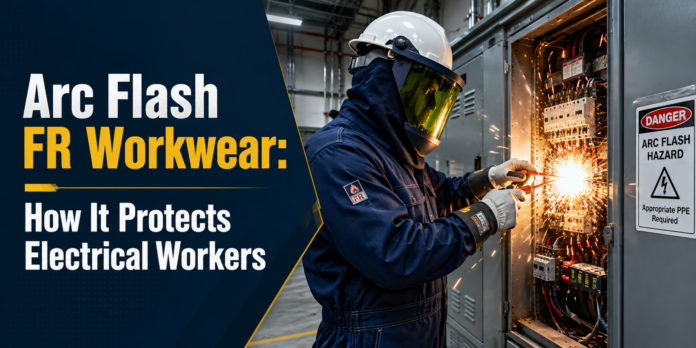
Electrical work is not only about wires, tools, and control panels. It also involves serious risks that can happen very fast. One of the most dangerous risks is an arc flash, which is a sudden release of electrical energy that can create extreme heat, bright light, pressure, and flying metal. This is why arc flash FR workwear is important for electricians, utility workers, maintenance teams, and industrial workers. Arc flash FR workwear is designed to reduce burn injuries by resisting ignition, slowing flame spread, and giving workers extra protection during unexpected electrical events. It does not make a worker fully safe by itself, but it becomes a strong safety layer when used with proper training, hazard assessment, gloves, face shields, helmets, and safe working methods.
What Is Arc Flash FR Workwear?
Arc flash FR workwear means flame-resistant and arc-rated clothing made for workers who may face electrical arc hazards. The main job of arc flash FR workwear is to protect the body from heat and flame during a short but dangerous electrical event. Normal clothing can burn, melt, or stick to the skin when exposed to high heat, but arc flash FR workwear is built to self-extinguish and reduce the chance of serious burns. This type of workwear may include FR shirts, FR pants, FR jackets, FR coveralls, bibs, hoods, and layered garments. The clothing must be selected according to the real job risk, not only by looks or comfort. A trained safety person should check the arc rating, fabric type, job task, and workplace rules before workers use it near energized equipment.
Why Electrical Workers Need Arc Flash FR Workwear
Electrical workers need arc flash FR workwear because an arc flash can happen in less than a second, and the body needs protection before the danger starts. A worker may be opening an electrical cabinet, testing equipment, repairing panels, or working near live parts when something goes wrong. Loose connections, dust, corrosion, wrong tools, damaged insulation, or human error can all increase the risk. For general site uniforms and protective clothing planning, companies can review broader workwear options when building a safer clothing program for electrical and industrial teams. However, regular workwear is not always enough for arc flash risk. Arc flash FR workwear should be chosen when the job needs flame resistance, arc rating, durable coverage, and protection that matches the workplace hazard.
How Arc Flash FR Workwear Protects the Body
Arc flash FR workwear protects the body by reducing how much heat reaches the skin during an electrical event. Its fabric is made to resist burning and stop flames from spreading across the garment. This is important because many burn injuries become worse when clothing continues to burn after the first flash. Arc flash FR workwear also gives workers covered protection across important body areas such as the arms, chest, legs, and torso. The protection works best when the clothing fits properly, stays closed, and covers the body without gaps. A shirt left open, sleeves rolled up, or an untucked garment can reduce protection. Workers should treat arc flash FR workwear as safety equipment, not just a uniform. It must be worn correctly every time the worker enters a risk area.
Arc Flash FR Workwear vs Regular FR Workwear
Arc flash FR workwear and regular FR workwear are related, but they are not always the same. FR means flame-resistant, which means the fabric is designed to resist ignition and self-extinguish. Arc-rated clothing is tested for protection against arc flash heat energy. This is why electrical workers should not choose clothing only because it says “FR” on the label. They should check whether the garment is suitable for arc flash exposure and whether the rating matches the task. Some FR workwear is made for flash fire, welding, oil and gas, or general flame hazards, while arc flash FR workwear is made for electrical thermal hazards. The best choice depends on hazard assessment, job type, equipment condition, and the required protection level. When electricity is involved, the arc rating matters a lot.
Best Garments Used in Arc Flash FR Workwear
A complete arc flash FR workwear setup may include several clothing items depending on the risk level. Workers may wear FR shirts and pants for daily low-risk tasks, while higher-risk tasks may need jackets, coveralls, face protection, gloves, and arc flash suits. Full-body garments like flame-resistant coveralls are useful because they reduce gaps between upper and lower clothing. Coveralls can protect the chest, arms, legs, and back in one garment, which makes them practical for maintenance crews and industrial electricians. Still, coveralls must fit correctly and should not be too tight or too loose. A tight garment can restrict movement, while a loose garment can catch on tools or equipment. Good arc flash FR workwear should protect workers while still allowing them to bend, reach, climb, and work safely.
Key Features to Look For in Arc Flash FR Workwear
When choosing arc flash FR workwear, buyers should check the garment label, fabric performance, stitching, closure system, and comfort level before placing an order. The clothing should offer proper body coverage, strong seams, durable fabric, and a practical design for daily electrical work. It should also support safe layering, because many workers need more than one garment depending on the hazard level. The following points are simple but important:
- Choose arc-rated garments that match the workplace hazard assessment.
- Use flame-resistant fabrics that self-extinguish instead of continuing to burn.
- Avoid exposed metal parts when they may create extra risk.
- Select covered buttons, secure zippers, and closed cuffs where needed.
- Make sure shirts stay tucked and sleeves stay down during work.
- Pick breathable fabric when workers face long shifts or hot conditions.
- Check that the garment allows safe movement without pulling or opening.
- Replace damaged clothing when fabric, seams, or closures lose strength.
Fabric Quality Matters in Arc Flash FR Workwear
The fabric is the heart of arc flash FR workwear because it decides how the clothing reacts to heat, flame, washing, and daily use. Good FR fabric should keep its protective properties after normal cleaning when care instructions are followed. It should not become weak, stiff, or uncomfortable too quickly. Many workers wear their FR clothing for long hours, so comfort is also important. Heavy fabric may feel strong, but it can cause heat stress if it does not breathe well. Lightweight fabric may feel comfortable, but it must still provide the required protection. For companies that want a focused product category, the FR workwear collection can help organize garments by flame-resistant use. The final choice should always match electrical risk, climate, movement needs, and safety rules.
Fit and Layering in Arc Flash FR Workwear
Fit and layering can change how well arc flash FR workwear performs in real life. A garment should not be so tight that it touches the skin closely across every area, because a small air gap can help reduce heat transfer. It should also not be so loose that it becomes unsafe near tools, panels, ladders, or machinery. Layering can improve protection when done correctly, but every layer should be suitable for the hazard. Workers should avoid wearing meltable synthetic clothing under arc flash FR workwear unless it is approved for the task. Inner layers matter because heat can pass through outer clothing during an arc event. A cotton or FR base layer is often safer than a meltable layer, but workers should follow company policy and safety guidance. The goal is simple: protect the skin without creating new risks.
Common Mistakes Workers Should Avoid
Many arc flash injuries become worse because small clothing mistakes are ignored. One common mistake is wearing normal polyester or nylon garments under FR clothing, which can melt under heat. Another mistake is leaving collars, cuffs, or front closures open. Some workers also roll up their sleeves because the job feels hot, but exposed skin has no protection during an arc flash. Dirty or oil-soaked garments can also become more dangerous because contaminants may burn. Damaged clothing should not be treated like normal old workwear because holes, tears, broken zippers, and weak seams can reduce protection. Arc flash FR workwear must also be cleaned according to care instructions. Workers should not use bleach or harsh chemicals unless the garment label allows it. Safe clothing habits are simple, but they must be followed every day.
Arc Flash FR Workwear for Different Electrical Jobs
Arc flash FR workwear is used in many jobs, but not every job needs the same clothing. A maintenance electrician working in a factory may need daily arc-rated shirts and pants. A utility worker may need stronger outerwear, face protection, gloves, and weather-ready FR layers. A worker opening switchgear may need a higher level of arc-rated PPE than a person doing routine checks away from live parts. Data centers, power plants, construction sites, manufacturing units, and oil and gas facilities can all have different electrical hazards. This is why arc flash FR workwear should be selected after checking the task, voltage, equipment condition, available fault current, and workplace safety plan. The best clothing is not always the heaviest clothing. The best clothing is the one that matches the risk and helps the worker do the job safely.
Conclusion
Arc flash FR workwear is an important safety layer for electrical workers because it helps reduce burn injuries during sudden electrical arc events. It protects by resisting ignition, limiting flame spread, covering the body, and reducing heat exposure when selected and worn correctly. Still, arc flash FR workwear is not a replacement for safe work practices. Workers must follow lockout procedures, use insulated tools, wear the right PPE, check labels, and follow the company’s electrical safety plan. The right garment should match the hazard, fit the worker, support movement, and remain protective after proper washing. In simple words, arc flash FR workwear gives electrical workers a better chance of staying protected when a fast and dangerous electrical accident happens.
FAQs
What is arc flash FR workwear?
Arc flash FR workwear is flame-resistant and arc-rated clothing designed to protect electrical workers from heat and flame caused by an arc flash. It may include shirts, pants, jackets, coveralls, hoods, and other protective garments.
Is normal FR clothing enough for electrical workers?
Normal FR clothing is not always enough for electrical workers. Electrical workers should use arc flash FR workwear that is suitable for arc flash hazards and matched to the required protection level.
Can arc flash FR workwear stop all injuries?
No, arc flash FR workwear cannot stop all injuries. It helps reduce burn severity, but workers still need safe work practices, proper tools, hazard assessment, and complete PPE.
How should arc flash FR workwear fit?
Arc flash FR workwear should fit comfortably without being too tight or too loose. It should cover the body properly, allow movement, and stay closed during work.