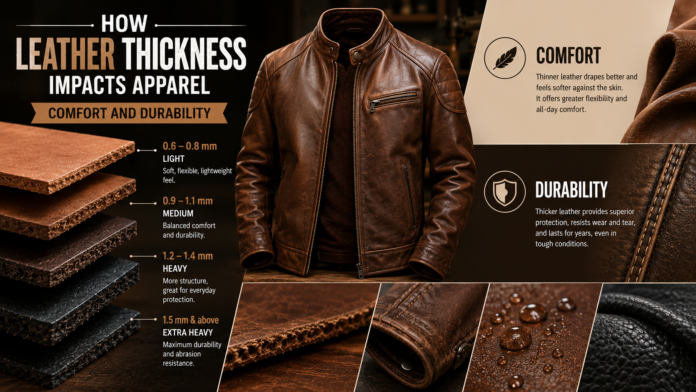
Two jackets can be made from the exact same type of leather and still feel completely different to wear, simply because of one overlooked factor: thickness. How Leather Thickness Impacts Apparel comes down to a straightforward trade-off thicker hides offer more durability and structure, while thinner hides offer more comfort and flexibility, and almost every leather garment sits somewhere along that spectrum.
Understanding this relationship makes it much easier to judge whether a garment is built for rugged, long-term use or a softer, more comfortable everyday feel. In this guide, we’ll break down how leather thickness is actually measured, how it affects comfort and durability, and how to choose the right thickness for different types of apparel because getting this one spec right often matters more than the leather grade itself.
How Leather Thickness Is Measured
In the US, leather thickness is traditionally measured in ounces, where one ounce equals roughly 1/64 of an inch, or about 0.4mm. So a piece of 4-ounce leather works out to around 1.6mm thick, while an 8-ounce piece measures approximately 3.2mm. Most of the rest of the world simply measures leather directly in millimeters, which tends to be a more precise system since it avoids the extra mental conversion step.
Because natural hides aren’t perfectly uniform, leather is often sold in ranges rather than exact figures, such as “4-5 oz” or “1.6-2.0mm,” to account for normal variation across different parts of the hide. Knowing this system makes it much easier to compare thickness specs from different suppliers, especially when sourcing from both US and international tanneries, and it’s the first thing worth checking when trying to understand how leather thickness impacts apparel from a given source.
Why Leather Thickness Affects Comfort
Thinner leathers, generally in the 1 to 3 ounce range (roughly 0.4 to 1.2mm), have a soft, fabric-like drape that requires little to no break-in period. This is exactly why lightweight hides are so commonly used for linings, gloves, and fitted, fashion-forward jackets where movement and comfort matter more than raw toughness. A thinner hide also breathes more easily, which can make a real difference for apparel worn for long stretches in warmer conditions.
Thicker leathers, typically 6 ounces (about 2.4mm) and above, feel noticeably stiffer and more structured right out of the gate, often requiring weeks or months of regular wear before they soften and mold to the body. Many people specifically want this trade-off, since a thicker hide holds its shape better and develops a bolder, more defined patina as it breaks in over time. This is one of the clearest examples of how leather thickness impacts apparel in ways that go well beyond simple durability.
Why Leather Thickness Affects Durability
Thickness has a direct, almost mechanical relationship with durability. A thicker hide simply has more material to resist abrasion, punctures, and tearing, which is why heavier leathers in the 8 to 10 ounce range (roughly 3.2 to 4.0mm) are the standard choice for work gloves, tool belts, and other apparel that faces constant physical stress. That extra material also gives a garment more margin before a single scuff or nick turns into a structural weak point.
Thinner leathers wear through much faster under the same conditions, since there’s less material standing between the surface and complete failure. This doesn’t make thin leather a lower-quality material it simply means thin hides need to be matched to lighter-use applications rather than heavy industrial wear, and it’s a good example of why thickness deserves just as much attention as leather grade when sourcing apparel.
Choosing the Right Thickness for Different Apparel Types
Matching leather thickness to its intended use is one of the most practical decisions in sourcing apparel, and it’s often where How Leather Thickness Impacts Apparel becomes most obvious in day-to-day wear. Lightweight leather in the 1 to 3 ounce range works well for linings, glove liners, and soft accessories where flexibility matters most. Mid-weight leather around 4 to 6 ounces strikes a balance that suits most everyday jackets and vests, offering reasonable durability without excessive stiffness.
Heavier leather in the 7 to 10 ounce range and above is generally reserved for apparel that needs to survive serious wear, such as work gloves, aprons, tool belts, and heavy-duty outerwear. Going heavier than necessary can make a garment needlessly stiff and uncomfortable, so matching thickness to actual use, rather than defaulting to the thickest available option, usually produces the better result for both comfort and cost.
Leather Thickness at a Glance
Here’s a quick reference for how common thickness ranges translate to real-world apparel use:
- 1-2 oz (0.4-0.8mm):Linings, glove liners, and delicate accessories
- 3-4 oz (1.2-1.6mm):Lightweight jackets and fashion-forward outerwear
- 5-6 oz (2.0-2.4mm):Everyday jackets, vests, and mid-weight apparel
- 7-8 oz (2.8-3.2mm):Heavier jackets and structured outerwear
- 9-10 oz+ (3.6-4.0mm+):Work gloves, aprons, tool belts, and heavy-duty protective gear
How Thickness Impacts Industrial and Protective Apparel
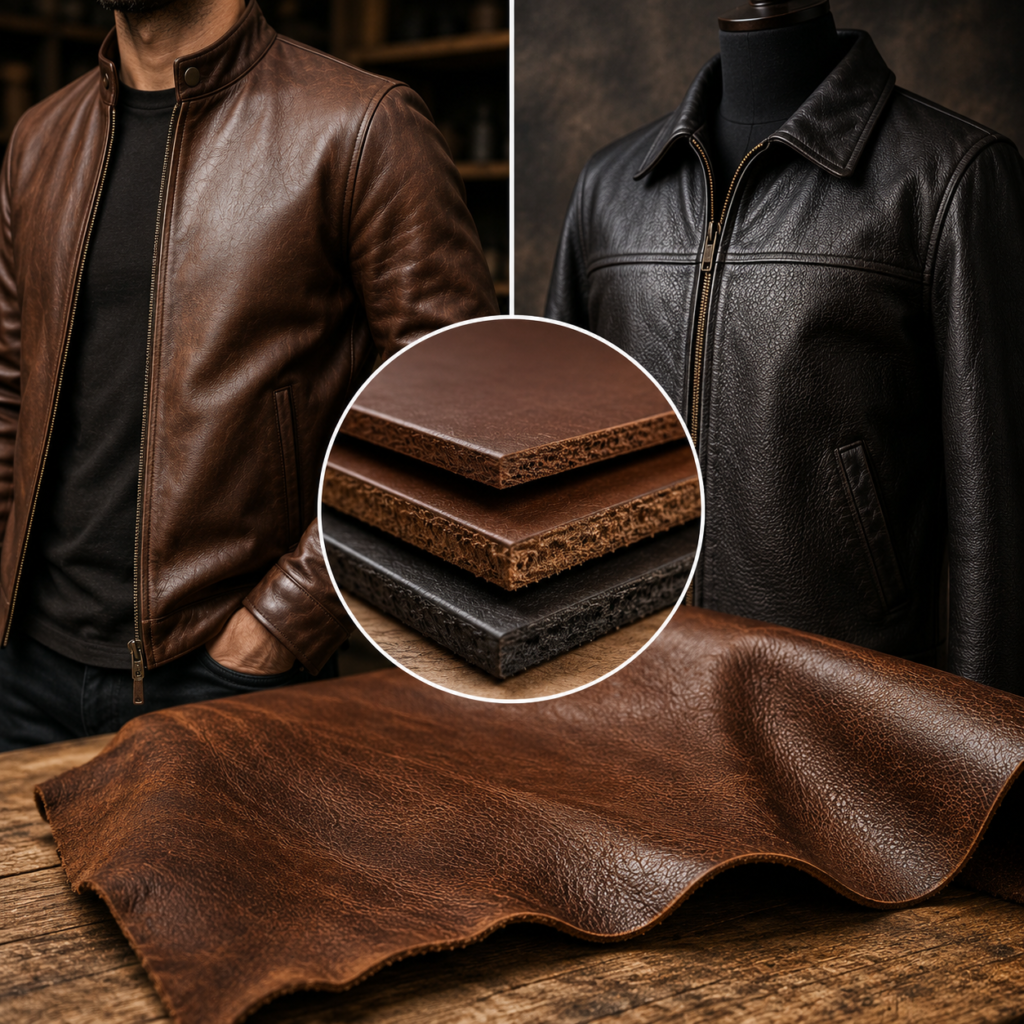
In industrial and protective settings, thickness is one of the most important specs to get right, and it’s a clear example of how leather thickness impacts apparel performance where it matters most. Heavier hides in the 8 to 10 ounce range are the standard for gloves, aprons, and jackets across general workwear collections, since that extra material directly translates to better resistance against cuts, abrasion, and rough handling on the job.
In demanding environments like oil and gas, where leather is often layered with flame-resistant materials, thicker hides are typically preferred within oil and gas workwear setups for the added protection they provide. Thickness also plays a role in outdoor apparel, where heavier leather holds up better when paired with the weatherproofing treatments common in waterproof workwear collections, since a thin hide can compress and lose its shape faster under repeated exposure to moisture.
How Thickness Impacts Corporate and Branded Apparel
For corporate and client-facing apparel, mid-weight leather in the 4 to 6 ounce range tends to be the more practical choice, offering enough structure to look polished while staying comfortable for employees wearing corporate uniforms throughout a full workday. Going too thin can make a garment feel flimsy in a professional setting, while going too thick can add unwanted bulk and stiffness for staff who need to stay comfortable for long shifts.
Because different roles call for very different demands, from heavy-duty protection to comfortable everyday wear, many businesses work with industry-specific work wear suppliers who can match the right thickness to the specific requirements of a trade or brand.
The Role of Custom Manufacturing in Leather Apparel
As demand grows for well-made leather apparel, more businesses are turning to custom manufacturers who understand how thickness affects comfort, durability, and cost, rather than relying on generic off-the-shelf sourcing that doesn’t account for the actual demands of the job. Getting this spec wrong is one of the most common and avoidable mistakes in sourcing leather apparel at scale.
At ECO-JERSEY, we manufacture and supply custom apparel including leather-based workwear and accessories to businesses around the world. Whether a company needs heavier, protective-grade leather for industrial gear or a lighter, more comfortable weight for corporate uniforms, our team works directly with clients to produce apparel that matches their exact specifications, down to the exact ounce or millimeter range required.
Conclusion
Understanding how leather thickness impacts apparel makes it much easier to judge whether a garment is built for comfort, durability, or somewhere in between. Thinner hides offer softness and flexibility ideal for fashion-forward pieces, while thicker hides offer the strength needed for rugged, long-term use. Neither is objectively better the right thickness simply depends on how the finished apparel will actually be worn, and matching that spec correctly is one of the simplest ways to avoid disappointment with a new garment.
For businesses looking to source reliable leather apparel whether for protective workwear or branded uniforms working with an experienced manufacturer like ECO-JERSEY ensures every garment is built with the right thickness for the job.
FAQs
How is leather thickness measured?
Leather thickness is measured in ounces in the US, where one ounce equals about 1/64 of an inch or 0.4mm, while most other countries measure it directly in millimeters.
Does thicker leather mean better quality?
Not necessarily. Thicker leather is generally more durable, but quality depends on the grade, tanning, and finish of the hide as much as its thickness, and the “best” thickness depends on how the garment will be used.
What thickness of leather is best for a jacket?
Most everyday leather jackets use leather in the 4 to 6 ounce range (about 1.6 to 2.4mm), which balances comfort and durability without excessive stiffness.
What thickness of leather is used for work gloves?
Work gloves typically use heavier leather in the 8 to 10 ounce range (about 3.2 to 4.0mm) to provide adequate resistance against cuts, abrasion, and punctures on the job.