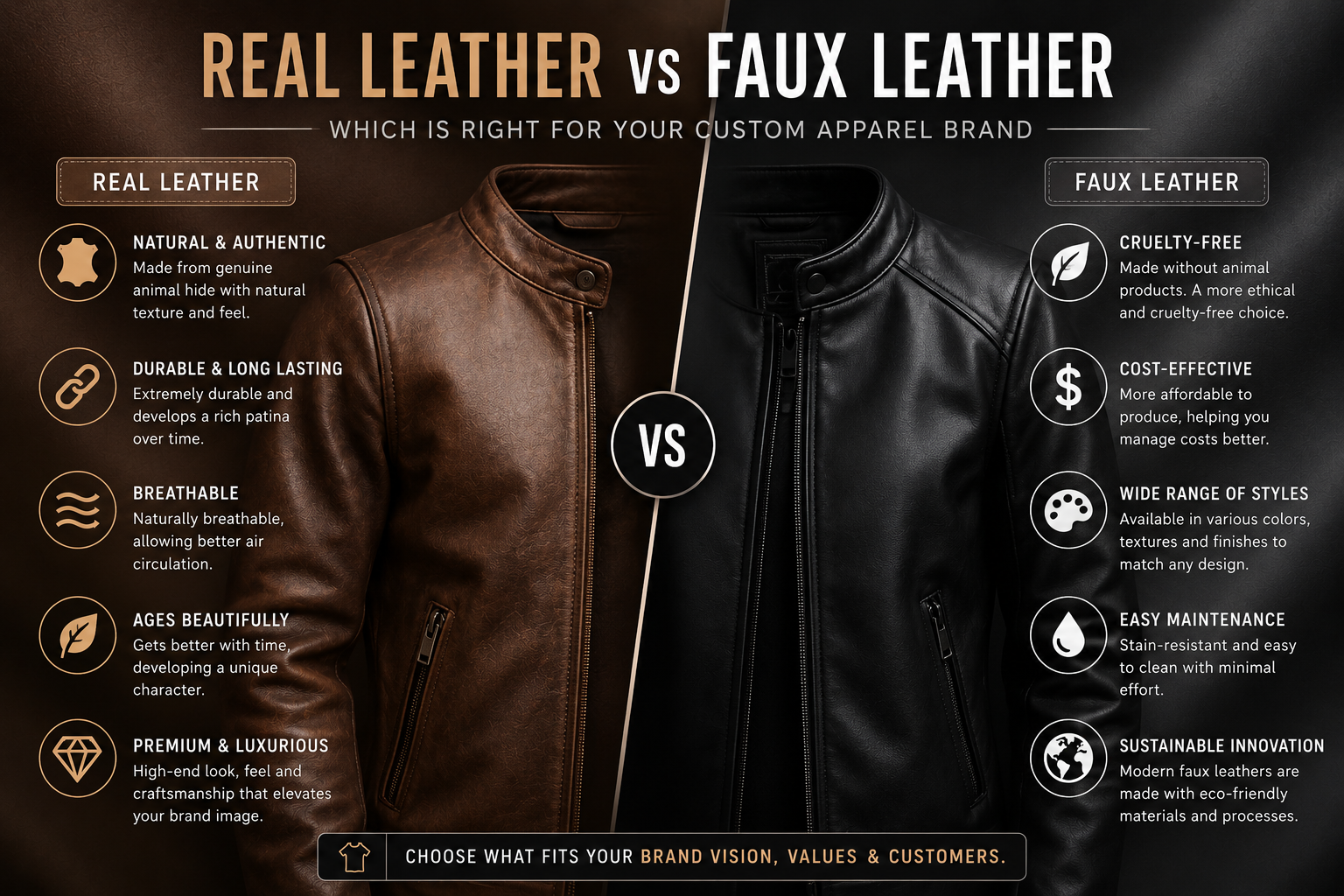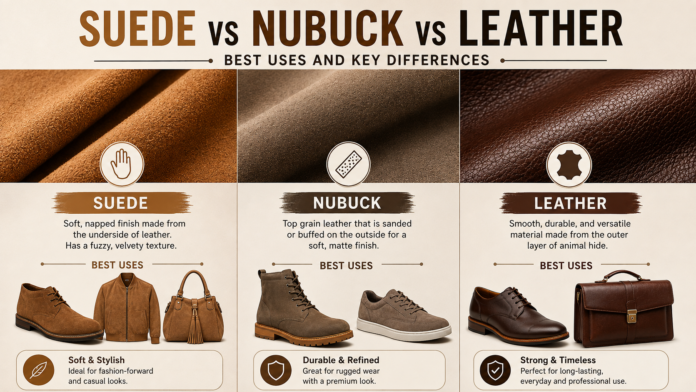
Shopping for a leather garment often means running into three very similar-looking terms suede, nubuck, and smooth leather without a clear sense of what actually separates them. The Suede vs Nubuck vs Leather comparison comes down to which side of the hide is used and how much processing the surface goes through, and those differences have a real impact on durability, feel, and how a garment should be cared for.
While all three materials come from the same starting point tanned animal hide the way each one is finished changes almost everything about how it performs. In this guide, we’ll break down what actually separates suede, nubuck, and smooth leather, where each one works best, and how to choose the right material for your next garment or apparel program.
What Is Smooth Leather?
Smooth leather, sometimes just called “leather” for short, refers to hide that retains its natural, unsanded grain surface, whether it’s left largely untouched as full grain leather or lightly buffed as top grain leather. The tight, unbroken surface is what gives smooth leather its characteristic sheen and its strong natural resistance to moisture, abrasion, and staining.
Because the surface fibers are left intact rather than sanded away, smooth leather is generally the most durable and weather-resistant of the three materials, which is why it remains the default choice for apparel that needs to survive years of regular handling, from jackets to work gloves.
What Is Suede?
Suede is made by sanding the flesh side (the inner side) of a hide, most commonly from lambskin, goatskin, or split cowhide, to expose the soft, fibrous underside. This process creates a napped, velvety texture that feels noticeably softer than smooth leather but sacrifices much of the hide’s natural strength and water resistance in the process.
Because suede is typically made from thinner or split hides, it’s also more prone to absorbing moisture, staining, and wearing thin with regular use. This makes it better suited to lighter, fashion-focused apparel than to rugged, everyday-use garments.
What Is Nubuck?
Nubuck starts from a very different point than suede. It’s made by lightly sanding the grain (outer) side of a full grain hide, rather than the inner side, which means it retains more of the hide’s original strength while still gaining a soft, textured nap similar in appearance to suede.
Because nubuck comes from the stronger, outer layer of the hide, it’s generally more durable than suede, though it still lacks the smooth surface’s natural resistance to staining and moisture. Nubuck sits in a practical middle ground softer and more textured than smooth leather, but tougher than suede.
Suede vs Nubuck vs Leather: Durability Compared
Durability is usually the deciding factor in the Suede vs Nubuck vs Leather comparison. Smooth leather comes out on top here, since its intact surface fibers resist abrasion, punctures, and moisture far better than either textured alternative. This is why smooth leather remains the standard for heavy-duty apparel and protective gear.
Nubuck holds the middle position, offering noticeably better strength than suede thanks to its origin on the tougher grain side of the hide, though it still can’t match smooth leather’s resistance to staining and water. Suede sits at the bottom of the durability scale among the three, making it the material best reserved for lighter use and lower-wear applications.
Appearance, Feel, and Everyday Care
Beyond durability, these three materials also differ significantly in how they look, feel, and need to be maintained. Smooth leather has a natural sheen and firm structure, and it’s relatively easy to wipe clean and maintain with basic conditioning. Suede and nubuck both offer a soft, matte, velvety texture that many people find more visually appealing for casual and fashion apparel, but both require special brushes and suede protectant sprays to manage stains, since neither can simply be wiped down like smooth leather.
Because suede and nubuck absorb moisture more readily, both are also more vulnerable to water stains and require extra care in wet conditions, something worth factoring in for anyone considering these materials for apparel worn outdoors on a regular basis.
Suede vs Nubuck vs Leather: Key Differences at a Glance
Here’s a quick side-by-side summary of how these three materials compare on the qualities that matter most:
- Surface :Leather natural grain intact; Nubuck: sanded grain side; Suede: sanded flesh side
- Durability: Leather is most durable, nubuck is moderate, suede is least durable
- Water resistance :Leather resists moisture best; nubuck and suede both absorb water easily
- Texture :Leather has a firm, smooth surface; nubuck and suede both have a soft, napped feel
- Maintenance :Leather is easy to wipe clean; nubuck and suede need special brushes and protectant sprays
- Best for :Leather suits rugged, daily-use apparel; nubuck and suede suit lighter, fashion-focused pieces
Choosing the Right Material for Industrial and Protective Apparel
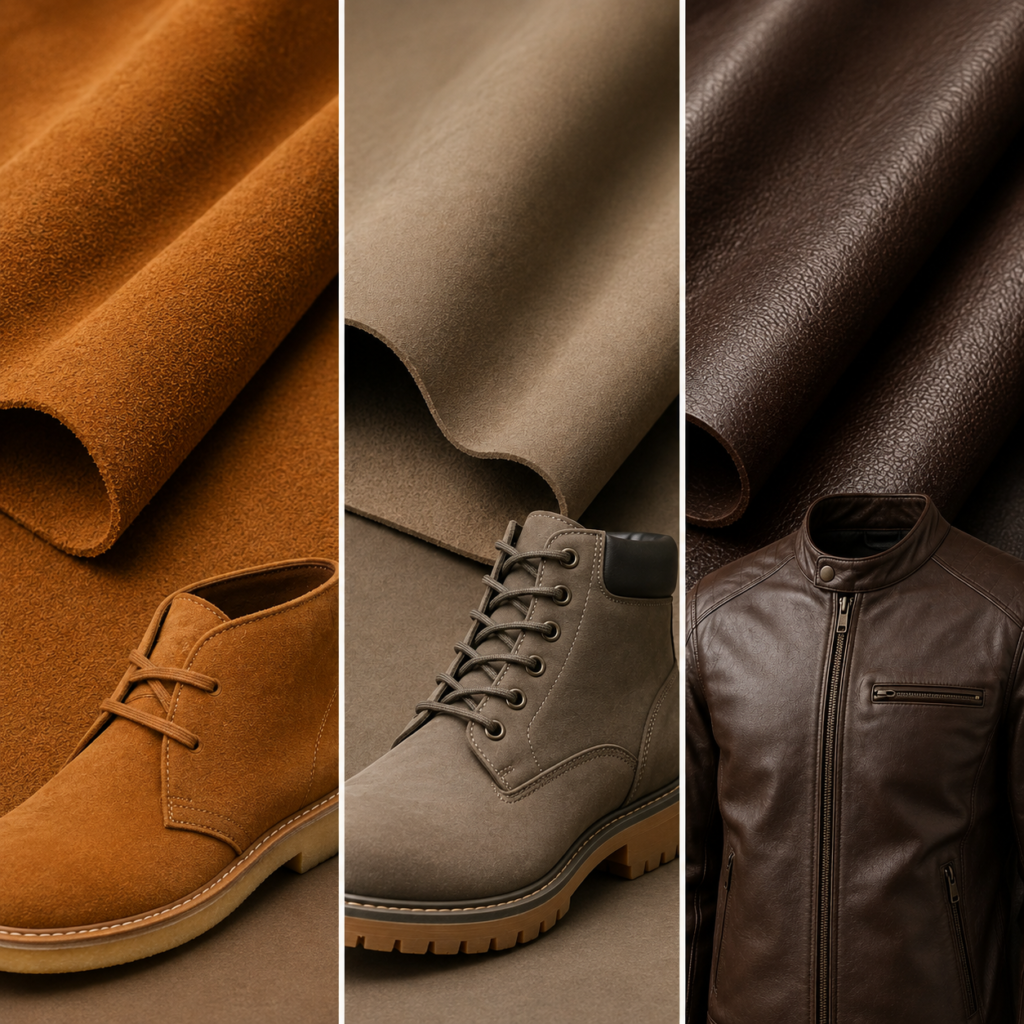
For heavy-duty protective apparel, smooth leather is almost always the practical choice in the Suede vs Nubuck vs Leather comparison, since its natural resistance to abrasion and moisture holds up far better across general workwear collections built for daily industrial use. Leather gloves used in demanding trades are often tested to standards like EN 388, which rates abrasion, cut, and puncture resistance, giving employers an objective way to compare protective performance.
In higher-risk environments like oil and gas, where materials face constant heat and rough handling, smooth leather’s durability makes it the standard choice within oil and gas workwear setups. For outdoor roles needing added moisture protection, leather is also frequently paired with weatherproof treatments found in waterproof workwear collections, something suede and nubuck simply aren’t built to withstand on their own.
Choosing the Right Material for Corporate and Branded Apparel
For corporate and client-facing apparel, the softer texture of nubuck or suede can add a distinctive, premium touch to accents and accessories used in corporate uniforms, particularly where a refined, tactile finish matters more than heavy daily durability.
Because different roles call for different priorities, from rugged industrial protection to soft, polished accents, many businesses work with industry-specific work wear suppliers who can match the right material to the specific demands of a trade or brand.
Which Material Should You Choose?
There’s no single right answer in the Suede vs Nubuck vs Leather debate — the better choice depends entirely on how the garment will be used. If durability, weather resistance, and long-term wear are the priority, smooth leather is the clear choice for apparel that needs to hold up to daily handling.
If a soft, distinctive texture matters more than raw toughness, nubuck offers a reasonable middle ground, while suede works best for lighter apparel and accessories that won’t face heavy or frequent use. For businesses sourcing apparel at scale, working with a manufacturer that understands how to construct and care for all three materials makes it far easier to get consistent, reliable results.
The Role of Custom Manufacturing in Leather Apparel
As demand grows for well-made leather apparel, more businesses are turning to custom manufacturers who understand how smooth leather, nubuck, and suede each perform differently, rather than relying on generic off-the-shelf sourcing that doesn’t account for real-world use.
At ECO-JERSEY, we manufacture and supply custom apparel — including leather-based workwear and accessories — to businesses around the world. Whether a company needs the rugged durability of smooth leather for industrial protective gear or a softer nubuck or suede accent for corporate pieces, our team works directly with clients to produce apparel that matches their exact specifications.
Conclusion
Understanding the Suede vs Nubuck vs Leather comparison makes it much easier to choose the right garment or supplier for the job. Smooth leather offers unmatched durability and weather resistance for apparel built to last, nubuck offers a reasonable balance of texture and strength, and suede offers the softest feel at the cost of durability. None of the three is universally better the right choice comes down to how the finished apparel will actually be worn and cared for.
For businesses looking to source reliable leather apparel whether for protective workwear or branded uniforms working with an experienced manufacturer like ECO-JERSEY ensures every garment is built with the right material for the job.
FAQs
What is the difference between suede, nubuck, and leather?
Smooth leather retains the hide’s natural, unsanded surface, nubuck is made by sanding the grain (outer) side of a full grain hide, and suede is made by sanding the flesh (inner) side, usually from a thinner hide.
Which is more durable, suede or nubuck?
Nubuck is generally more durable than suede because it comes from the stronger outer layer of the hide, while suede is typically made from thinner or split hides that wear and stain more easily.
Is nubuck the same as suede?
No, nubuck and suede are different materials. Both have a soft, napped texture, but nubuck comes from the grain side of a full grain hide, making it stronger than suede, which comes from the flesh side.
Is smooth leather more durable than suede or nubuck?
Yes, smooth leather is generally the most durable of the three because its intact surface fibers resist abrasion, punctures, and moisture significantly better than either sanded, napped alternative.