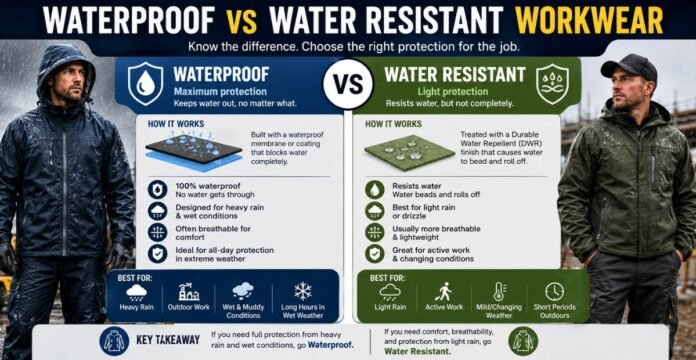
When working outdoors, choosing the right protective clothing is important. Rain, moisture, wind, and wet conditions can make a job uncomfortable and unsafe. Therefore, workers need clothing that helps keep them dry while allowing them to work comfortably. However, not all protective clothing offers the same level of protection.The terms waterproof and water resistant are often used together. Yet, they describe different levels of protection. Understanding the difference can help workers and businesses choose suitable clothing for different working conditions.In this guide, we will explain Waterproof vs Water Resistant Workwear, their features, benefits, and key differences. We will also discuss which option may be better for different jobs and weather conditions.
What Is Waterproof Workwear?
Waterproof workwear is designed to prevent water from passing through the fabric. It provides a high level of protection against rain and wet weather. Therefore, it is suitable for workers who spend long periods outdoors.Waterproof clothing usually uses specially treated fabrics, coatings, or membranes. These materials create a barrier against water. At the same time, many modern waterproof garments are designed to allow moisture vapor to escape. As a result, workers can stay dry without feeling excessively hot.Common waterproof workwear includes jackets, trousers, coveralls, and other protective garments. For example, businesses that need clothing for wet outdoor jobs can explore a range of waterproof workwear options designed for demanding working environments.
What Is Water Resistant Workwear?
Water resistant workwear can protect against light rain, splashes, and occasional moisture. However, it does not provide the same level of protection as waterproof clothing.Water resistant fabrics are usually treated with a coating or finish that causes water to bead up and roll off the surface. Therefore, the fabric can handle light moisture for a certain amount of time.However, heavy rain or long exposure to wet conditions can eventually allow water to pass through. For this reason, water resistant workwear is generally better for mild or short-term exposure to rain.For example, a worker who occasionally works outside may find water resistant clothing suitable. On the other hand, someone who works outdoors during heavy rainfall may need fully waterproof protection.
Waterproof vs Water Resistant Workwear: Key Difference
The main difference between waterproof and water resistant workwear is the level of protection they provide.Waterproof workwear is designed to stop water from penetrating the fabric. In contrast, water resistant workwear only slows down water penetration.Therefore, the best choice depends on the working environment. If a worker regularly faces heavy rain, waterproof clothing is usually the better option. However, if the worker only experiences light rain or occasional splashes, water resistant clothing may provide enough protection.The following differences can make the choice easier:
Level of Water Protection
Waterproof clothing offers stronger protection against rain and moisture. It is designed for prolonged exposure to wet conditions.Water resistant clothing provides basic protection. It works well during light rain and brief exposure to moisture.
Fabric Construction
Waterproof garments often use waterproof membranes, sealed seams, or protective coatings. These features help prevent water from entering through the fabric and seams.Water resistant garments usually rely on a surface treatment. Therefore, their protection can decrease after repeated washing or extended use.
Weather Conditions
Waterproof workwear is suitable for heavy rain, storms, and consistently wet environments. Meanwhile, water resistant workwear is more suitable for light rain and changing weather.
Durability of Protection
Waterproof clothing generally offers longer-lasting protection when it is properly maintained. However, water resistance can gradually decrease as the garment becomes worn or the protective finish fades.
Features of Waterproof Workwear
Waterproof workwear includes several features that improve protection and comfort. These features can vary depending on the garment and its intended use.
Waterproof Fabric
The fabric is the first line of defense against rain. Waterproof materials help prevent water from entering the garment.Furthermore, many workwear fabrics are designed to balance water protection with breathability. This allows workers to remain more comfortable during physical tasks.
Sealed Seams
Even highly waterproof fabric can allow water to enter through stitching. Therefore, sealed seams are an important feature.Seam sealing covers stitched areas and reduces the chance of water entering through small gaps. As a result, the entire garment can provide better protection.
Adjustable Hoods
A hood provides extra protection for the head and neck. Adjustable designs can also provide a better fit.In addition, some waterproof jackets include drawcords or adjustable cuffs. These features help reduce openings where rain could enter.
Waterproof Zippers
Water can enter through regular zippers. Therefore, waterproof or covered zippers can provide additional protection.This feature is particularly useful for outdoor workers who spend long periods in wet conditions.
High Visibility
Visibility is also important for many outdoor jobs. High-visibility colors and reflective details can help workers remain more noticeable in poor weather.For example, a high-visibility waterproof jacket can combine rain protection with improved visibility. This combination can be useful for workers near roads, construction areas, and other busy work environments.
Features of Water Resistant Workwear
Water resistant workwear also has useful features. However, these garments are usually designed for lighter weather protection.
Water-Repellent Finish
Many water resistant garments use a water-repellent finish. This finish encourages water droplets to remain on the surface instead of quickly soaking into the fabric.However, the effectiveness of the finish can reduce over time. Therefore, proper care is important.
Lightweight Design
Water resistant garments are often lightweight. This makes them easy to wear during everyday work.Furthermore, lightweight clothing can be useful when weather conditions change during the day. Workers can put on an extra layer when rain begins and remove it when conditions improve.
Breathability
Many water resistant fabrics allow good airflow. Therefore, they can be comfortable during moderate physical activity.This feature can be especially useful when workers need protection from occasional rain but do not require heavy-duty waterproof clothing.
Benefits of Waterproof Workwear
Waterproof workwear offers several benefits for outdoor workers and businesses.
Better Protection Against Heavy Rain
The biggest benefit is stronger protection from rain. Waterproof clothing helps keep workers dry during prolonged wet conditions.As a result, workers can focus more effectively on their tasks. They are also less likely to become uncomfortable because of wet clothing.
Improved Comfort
Staying dry can improve overall comfort. Wet clothing can become heavy and uncomfortable, especially during long shifts.Therefore, suitable waterproof workwear can make outdoor jobs easier in difficult weather.
Suitable for Many Industries
Waterproof workwear is useful across many industries. Construction, transportation, road maintenance, utilities, landscaping, and outdoor services can all require protection from wet weather.Moreover, waterproof garments can be combined with other protective equipment to create a practical workwear system.
Better Protection for Long Outdoor Shifts
Workers who spend many hours outside can benefit from waterproof clothing. Unlike basic water resistant garments, waterproof clothing is designed for more demanding wet conditions.Therefore, it can be a better investment for businesses with regular outdoor work.
Benefits of Water Resistant Workwear
Water resistant workwear can also be a practical choice.
Good for Light Rain
Water resistant clothing can handle light rain and occasional moisture. Therefore, it may be suitable for workers who are not regularly exposed to heavy rainfall.
Lightweight and Flexible
Many water resistant garments are easier to wear and move in. This makes them useful for everyday work.Furthermore, they can be worn as an outer layer when weather conditions are uncertain.
Cost-Effective Option
Water resistant clothing may be a practical option when full waterproof protection is not necessary. Businesses can choose garments based on actual working conditions rather than paying for features they may not need.
Easy to Layer
Water resistant jackets and outer layers can often be worn over shirts, sweatshirts, or other work clothing. Therefore, workers can adjust their clothing as temperatures and weather conditions change.
Waterproof vs Water Resistant Workwear for Different Jobs
The right choice depends on the job. Different industries have different exposure levels and weather requirements.
Construction Workers
Construction workers often work outdoors for several hours. Therefore, waterproof jackets and trousers can be useful during heavy rain.However, water resistant clothing may be enough during dry seasons or occasional light showers.
Road and Highway Workers
Road workers may face rain, wind, traffic, and poor visibility. Therefore, waterproof and high-visibility clothing can be particularly useful.Reflective details can improve visibility, while waterproof materials help protect against rain.
Landscaping Workers
Landscapers can experience changing weather throughout the day. Water resistant clothing may be suitable for light rain.However, waterproof workwear is a better option when the job continues during heavy rainfall.
Warehouse and Delivery Workers
Delivery workers may move between indoor and outdoor environments. Therefore, lightweight water resistant clothing can work well in mild conditions.For frequent deliveries during heavy rain, waterproof jackets and trousers can provide better protection.
Utility Workers
Utility workers often work outside in unpredictable weather. Consequently, waterproof workwear can help provide reliable protection during wet conditions.Businesses can also review workwear catalog options to compare different clothing solutions for workplace requirements.
Waterproof Workwear Jackets vs Waterproof Workwear Pants
A waterproof jacket protects the upper body, arms, and neck from rain. However, rain can still reach the legs. Therefore, workers who spend long periods outside may also need waterproof trousers.Waterproof pants can help protect the legs from rain and wet surfaces. They can be particularly useful for construction, landscaping, road work, and outdoor maintenance.For workers who need additional lower-body protection, waterproof workwear pants can be combined with a waterproof jacket for more complete coverage.
How to Choose Between Waterproof and Water Resistant Workwear
Choosing the right clothing starts with understanding the working environment.First, consider how much rain the worker normally experiences. Light rain may only require water resistant protection. However, heavy or continuous rain usually requires waterproof clothing.Next, consider how long the worker stays outdoors. Short periods outside may not require heavy waterproof garments. In contrast, long shifts can increase the need for stronger protection.The type of work is also important. Physical jobs can create heat and sweat. Therefore, breathable materials can improve comfort.In addition, consider visibility requirements. Workers near roads or machinery may need high-visibility garments with reflective elements.Finally, consider durability and maintenance. Workwear should be strong enough for regular use and easy to maintain.
Waterproof Does Not Always Mean Completely Comfortable
Although waterproof clothing provides excellent protection, comfort should also be considered. A garment that blocks rain but traps too much heat may become uncomfortable during physical work.Therefore, look for waterproof garments that combine protection with breathability. Features such as adjustable cuffs, ventilation areas, lightweight construction, and flexible fabrics can improve comfort.Furthermore, the correct size is important. Clothing that is too tight can restrict movement. On the other hand, clothing that is too loose can make work more difficult.
How to Maintain Waterproof and Water Resistant Workwear
Proper maintenance can help extend the life of workwear.Always follow the manufacturer’s washing instructions. Harsh detergents or incorrect washing methods may affect protective coatings.In addition, avoid unnecessary high heat when drying garments. Excessive heat can damage some fabrics and finishes.Inspect the clothing regularly for tears, damaged seams, worn coatings, or broken zippers. If protection is reduced, repair or replace the garment as needed.For water resistant clothing, the protective finish may need to be renewed after extended use. Therefore, regular maintenance can help maintain its water-repellent performance.
Why the Right Workwear Matters
The difference between waterproof and water resistant clothing may seem small. However, it can make a major difference in wet working environments.Workers exposed to heavy rain need stronger protection. Therefore, waterproof workwear is usually the more suitable option for demanding outdoor conditions.On the other hand, workers who experience occasional showers may not need full waterproof protection. In such cases, water resistant workwear can offer a lightweight and practical solution.Ultimately, the best choice depends on the level of exposure, type of work, weather conditions, and required comfort.
Conclusion
Understanding Waterproof vs Water Resistant Workwear makes it easier to choose suitable protection for different jobs. Waterproof workwear provides a higher level of protection against heavy and prolonged rain. In contrast, water resistant workwear is better suited to light rain, splashes, and short periods of outdoor exposure.
Therefore, businesses should assess their working conditions before selecting garments. Workers who regularly work in wet environments can benefit from waterproof jackets, trousers, and other protective clothing. Meanwhile, those facing occasional moisture may find water resistant garments more practical.
FAQs
What is the difference between waterproof and water resistant workwear?
Waterproof workwear provides a higher level of protection against rain and moisture. Water resistant workwear can handle light rain and splashes but may allow water through during heavy or prolonged exposure.
Is waterproof workwear better than water resistant workwear?
It depends on the working conditions. Waterproof workwear is better for heavy rain and long outdoor shifts. However, water resistant workwear can be suitable for light rain and occasional outdoor use.
What types of jobs need waterproof workwear?
Construction, road maintenance, landscaping, utilities, transportation, and other outdoor jobs may require waterproof workwear, especially when workers regularly face wet weather.
Can water resistant workwear be used in heavy rain?
Water resistant workwear is generally not designed for continuous heavy rain. For prolonged exposure to wet conditions, waterproof workwear offers better protection.