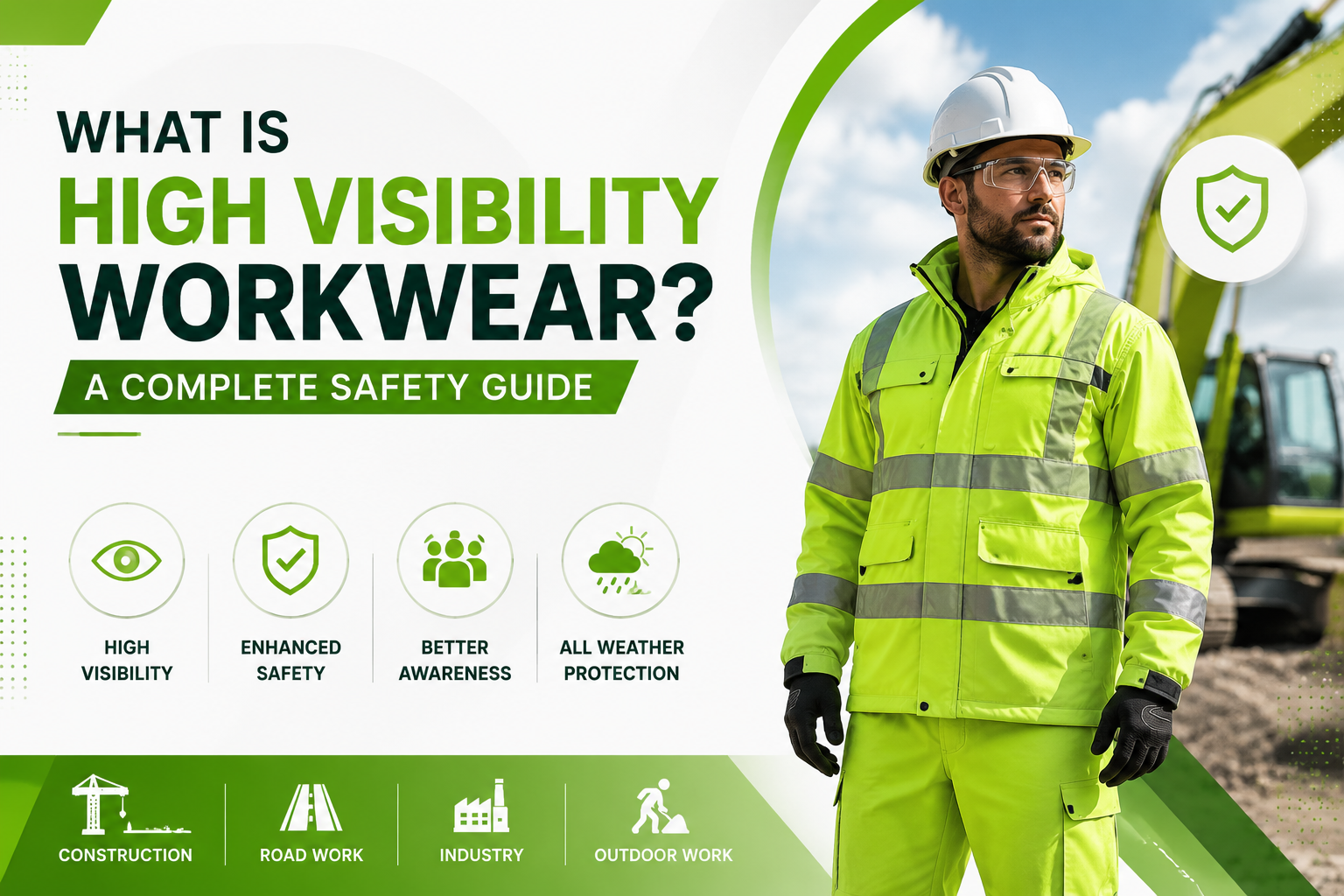
Many clothing and retail brands receive more requests from customers for high-visibility workwear, but many ask the same question: What is it? It is clothing that uses fluorescent fabrics and reflective tape to increase visibility in environments with low lighting or heavy traffic.
Understanding the category of safety apparel is essential for brands looking to build a product line that’s credible and compliant. Below are sections that break down science, standards and sourcing decisions.
Understand What High Visibility Workwear Is
Color and light are important factors to consider when determining what high-visibility workwear is. Fluorescent colors such as lime, orange and yellow absorb UV light, making them appear brighter during daylight.
Reflective strips do the same job at night. They bounce light away from the source, making the wearer visible even to machines and drivers who are far off. The dual layer approach of fluorescence during the day, and reflectivity at night is what distinguishes real safety clothing from clothes that just look bright. It is important that brands who enter this market accurately replicate both properties, as compliance relies on performance, not just appearance.
What This Category Means to Brands and Retailers
As safety standards in the construction, logistic, and municipal industries continue to increase, retailers are increasingly interested in workwear with high visibility. Clothing brands and retailers are now able to offer their own private-label or white-label hi vis apparel, instead of leaving it to safety specialists.
This opportunity is not without responsibility. High visibility workwear is regulated, so any brand that wants to enter this market must find a partner who can produce certified clothing, and not just garments with similar looks. Otherwise, they risk exposing themselves legally or compromising their reputation if it fails real safety standards.
Compliance Standards All Brands Should Know
The majority of global markets are governed by two standards: ANSI/ISEA 107 for the United States, and EN ISO 20471 for Europe. The standards divide garments into three categories based on the amount of fluorescent fabric and reflective material they contain.
The first class covers low-risk work environments, such as in warehouses. Class two is for roles with moderate risk, such as parking attendants. Class three applies to higher-risk situations, such as night shift operations and highway crews. Offering garments in multiple classes is a great way for a white label or private label program to reach a wider variety of customers, both retail and B2B.
Understanding Fabrics and their Construction is Important
Fabric weight and weave are just as important to compliance and comfort, and go beyond color or class. The hi-vis mesh fabric used in vests and light overlays is typically lighter than the woven knit bird’s eye fabrics that are used to make jackets and coveralls. These garments need to be able hold on securely even after repeated industrial laundering.
The most popular fiber is polyester, which holds dyes well and does not fade as easily as natural fibers. Fabric specification sheets should be requested by brands sourcing large quantities, as small variations in GSM and weave can affect both the compliance results of tests and cost per unit.
What to look for when sourcing high-visibility workwear
When evaluating manufacturing partners for this sector, brands should verify the following.
Fabric certified fluorescent which meets the minimum luminance requirements of ANSI and EN ISO standards
Positioning the reflective tape correctly on the shoulders, torso and legs will ensure visibility at multiple angles
Testing for durability Confirming that the garment can be washed repeatedly without losing its reflectivity
Customization capabilities including private labeling, brand packaging and white label documentation
Flexibility of Class: The product range can be spanned from Class 1 to Class 3, without separate sourcing agreements
Fabric performance such as flame-resistant or moisture-wicking options. End users wear garments like these for long hours.
How to do due diligence when vetting a manufacturer
Claim of compliance is not proof of compliance. Brands should insist on third-party testing reports to determine the luminance, colorfastness and reflectivity of a product before committing.
Asking how the manufacturer manages batch-to-batch consistency is also helpful, as a certified sample will mean little if later bulk production drifts away from this standard. Credible partners should share their test documentation and explain how they control quality. They also provide traceability of the materials that were used for each production.
Applying this Knowledge to Product Categories
The definition of high-visibility workwear varies depending on the type of garment. A Safety Vest is a great choice for general visibility, while a Hi-Vis Jacket can be used in outdoor or cold climate roles.
rainwear, heavier jackets for heavy duty daily use and dedicated jackets are available to meet the requirements of Class 3. Even safety accessories like gloves are becoming more popular for those who purchase gear in a kit.
How the sourcing process is typically carried out
When developing hi-vis products with a manufacturer partner, most brands follow a similar process. The process usually begins with a consultation in order to determine target markets, classes and budget. Next, samples are developed so that the brand can test fabric, fit and reflectivity placement.
After a test sample has been approved, certification tests confirm that the garment meets relevant standards before mass production can begin. Private label packaging and documentation, as well as tagging are usually finalized simultaneously, so that the product is ready to be sold or distributed without any additional work.
FAQs
In simple words, what is high visibility clothing?
High-visibility workwear is made of fluorescent fabrics and reflective tapes that make the wearer visible even in dimly lit or busy environments. It must also meet certain certified standards in order to be considered genuine safety apparel.
Is it possible to private-label or white-label high visibility clothing?
It is, as long as the manufacturer maintains certification standards and can apply custom branding, tags, and packaging on the final garment.
How much is the minimum quantity of a hi-vis private label program?
It varies depending on the manufacturer, garment type and lead time. Brands should ask about MOQs and sample costs during consultation before they commit to production.
What is the average time for sampling and certification tests?
The timeline depends on the complexity of the garment and the testing agency involved. Brands should plan their launch dates to include both the sample development process and the third-party testing.
Final Thoughts
What is high-visibility workwear? Not just a brightly colored garment, but a safety system based on fabric science and light. Clothing brands, private labels, or businesses that sell white-label products can enter this category by partnering with manufacturers who are familiar with the brand expectations and compliance standards of the apparel sector.
Eco-Jersey is there to help businesses through every step of the process – from sourcing all the way up until private label production. Browse the catalog for workwear or ask for a consultation on sourcing to find out how high-visibility, compliant workwear fits into your catalog.