Fashion has always moved in cycles — but streetwear is different. It doesn’t just follow trends. It creates them. Over the past three decades, streetwear trends have consistently moved from the margins of youth culture into the mainstream of global fashion — influencing luxury brands, changing how people dress for work, and reshaping what the entire fashion industry considers relevant and desirable.
What makes streetwear’s influence so enduring isn’t luck or timing. It’s the authenticity behind it. Streetwear has always been rooted in genuine communities, real cultural movements, and the honest desire to express identity through clothing. That authenticity gives streetwear a staying power that purely trend-driven fashion simply cannot replicate.
Let’s look at the specific trends that have emerged from streetwear culture and continue to shape the broader fashion landscape today.
What Makes a Streetwear Trend Different?
Before getting into specific streetwear trends, it’s worth understanding what makes a streetwear trend different from a conventional fashion trend. Mainstream fashion trends are typically driven from the top down — by designers, fashion houses, and industry gatekeepers who decide what’s relevant each season and push it through retail channels and media.
Streetwear trends move differently. They emerge from the bottom up — from communities, subcultures, musicians, athletes, and everyday people who find new ways to express identity through clothing. By the time a streetwear trend reaches mainstream fashion coverage, it’s usually already been alive and evolving in its originating community for years.
This bottom-up origin is what gives streetwear trends their cultural weight and longevity. They’re not manufactured relevance — they’re genuine expressions of how real people want to dress. And that authenticity is exactly what continues to make them influential far beyond the specific communities where they began.
Why It Matters — Key Benefits
Understanding current and enduring streetwear trends delivers real value for everyone who engages with fashion. Here’s why it matters:
- Informed buying decisions — Understanding which trends have genuine staying power helps buyers invest in pieces that remain relevant rather than pieces that fade quickly.
- Stronger brand development — Brands that understand authentic streetwear trends build more credible, culturally resonant product lines.
- Better retail performance — Retailers who stock pieces aligned with enduring streetwear trends see stronger, more consistent sales than those chasing purely short-lived trend cycles.
- Creative inspiration — Understanding the cultural context behind streetwear trends sparks more authentic creative decisions in styling, design, and brand building.
- Cultural awareness — Streetwear trends often reflect broader social and cultural shifts — understanding them provides insight into how culture is evolving more broadly.
- Wardrobe longevity — Building a wardrobe around enduring streetwear trends rather than purely seasonal fashion cycles delivers better long-term value and relevance.
- Community connection — Engaging with genuine streetwear trends connects you to the communities and cultural movements that give the aesthetic its meaning and depth.
The Oversized Silhouette: Still Going Strong
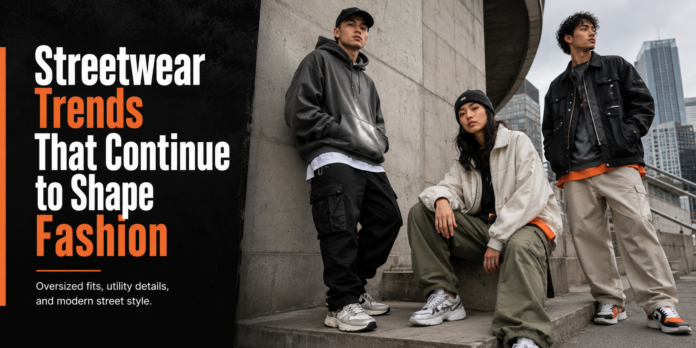
If there’s one streetwear trend that has demonstrated the most consistent staying power across the broadest range of contexts, it’s the oversized silhouette. Baggy fits, dropped shoulders, generous proportions, and relaxed cuts have been central to streetwear’s visual identity since the culture’s earliest days — and they show absolutely no signs of retreating from mainstream fashion consciousness.
What’s interesting about the oversized trend’s longevity is how it has continued to evolve rather than simply repeating itself. Early oversized streetwear was rooted in hip-hop culture’s deliberate rejection of conventional fitted clothing. Contemporary oversized streetwear is more diverse and sophisticated — incorporating proportion-play, layering techniques, and deliberate silhouette contrast that takes the basic oversized concept into much more nuanced styling territory.
The baggy jeans trend in particular has experienced a massive resurgence in recent years — becoming one of the defining silhouettes of contemporary streetwear across all demographics. Our hip hop baggy jeans and baggy jeans shorts reflect this enduring demand for generous, relaxed denim proportions that deliver both comfort and strong visual impact.
Gorpcore: Where Outdoor Meets Street
One of the most significant streetwear trends of the current era is gorpcore — the fusion of outdoor and performance gear aesthetics with streetwear styling sensibilities. The name comes from “gorp” — trail mix — a tongue-in-cheek reference to hiking and outdoor culture that signals the trend’s roots.
Gorpcore brings technical outdoor pieces — puffer jackets, hiking boots, cargo pants, fleece pullovers, and performance outerwear — into urban streetwear contexts where they’re worn as fashion statements rather than purely functional gear. Brands like The North Face, Arc’teryx, and Salomon have all benefited enormously from this crossover between performance and streetwear.
What makes gorpcore genuinely interesting as a trend is the authenticity behind it. Unlike purely aesthetic borrowings from subcultures, gorpcore reflects a real shift in how young people relate to the outdoors — the growing popularity of hiking, camping, and outdoor activities among demographics previously associated purely with urban culture. The clothing follows the lifestyle shift rather than leading it, which gives the trend a grounded quality that feels more lasting than purely aesthetic movements.
Techwear: Functional Futurism
Techwear is one of the most distinctive and visually cohesive streetwear trends to have emerged in recent years — and its influence continues to grow across broader fashion contexts. Built around technical fabrics, functional design details, and a dark, futuristic aesthetic, techwear represents streetwear’s most direct engagement with performance and utility as design principles.
Ripstop fabrics, waterproof membranes, cargo pockets in unusual positions, modular attachment systems, and technical hardware details define the techwear aesthetic. The color palette is typically dark and restrained — black, dark grey, and deep olive dominating — with the visual interest coming from functional design details and technical construction rather than color or graphic content.
Techwear’s growing influence is visible well beyond dedicated techwear communities. Technical fabric details, functional pocket designs, and utility-inspired construction have all become increasingly common in mainstream streetwear and even in high fashion — reflecting a broader shift toward clothing that functions as intelligently as it looks.
Y2K Revival: Early 2000s Aesthetics Return
The Y2K revival has been one of the most commercially significant streetwear trends of recent years — bringing the aesthetics of early 2000s hip-hop, pop, and youth culture back into contemporary fashion with enormous energy and enthusiasm. Low-rise silhouettes, rhinestone embellishment, velour tracksuits, baby tees, bold logo applications, and the specific color sensibility of that era have all resurfaced in contemporary streetwear with remarkable force.
What drives revival trends like this is generational — the young adults who are now the core streetwear consumer demographic grew up watching the early 2000s aesthetics through music videos, TV shows, and celebrity culture. The nostalgia for that era is genuine and emotionally resonant in a way that makes the Y2K revival feel like more than simple retro borrowing.
The Y2K revival has also pushed more fitted silhouettes back into streetwear relevance alongside the dominant oversized aesthetic — creating interesting tension between two very different approaches to fit and proportion that coexist in contemporary streetwear without either canceling the other out.
Luxury Streetwear: The High-Low Fusion
The blurring of boundaries between luxury fashion and streetwear has been one of the most structurally significant streetwear trends of the past decade — fundamentally changing the economics, the cultural positioning, and the visual language of both categories.
When luxury houses began collaborating with streetwear brands and incorporating streetwear aesthetics into their mainline collections, it validated the cultural significance of streetwear in a way that nothing else could. Supreme collaborating with Louis Vuitton, Nike collaborating with Off-White, and luxury brands adopting streetwear silhouettes and graphics in their seasonal collections all sent a clear signal that streetwear had moved from subcultural niche to genuine cultural mainstream.
The influence has moved in both directions. Streetwear has absorbed luxury’s emphasis on quality, craft, and exclusivity — driving premium pricing and limited release strategies across independent streetwear brands. And luxury fashion has absorbed streetwear’s emphasis on cultural authenticity, community connection, and the power of genuine subcultural roots.
Our fashion wear collection reflects this fusion — offering pieces that bring quality construction and considered design to accessible streetwear aesthetics.
Gender-Fluid Fashion: Breaking Traditional Boundaries
One of the most culturally significant streetwear trends of the current era is the genuine dissolution of traditional gender boundaries in clothing. Streetwear has always been more gender-inclusive than conventional fashion — the oversized aesthetic naturally transcends traditional gendered fit assumptions — but contemporary streetwear has pushed this much further into explicitly gender-fluid territory.
Men wearing skirts, dresses, and traditionally feminine pieces as part of streetwear outfits — and women building wardrobes entirely from pieces traditionally coded as masculine — have both become genuinely mainstream within streetwear culture. This isn’t simply men wearing women’s clothes or vice versa — it’s a fundamental rethinking of what gendered clothing means and why those categories should constrain personal expression.
The gender-fluid direction in streetwear reflects broader cultural shifts in how younger generations think about gender identity and self-expression. Clothing is increasingly understood as a medium for personal communication rather than a system of social conformity — and streetwear, with its emphasis on individual expression and community identity, is naturally positioned at the leading edge of that shift. Our off the shoulder dress styles and broader fashion pieces reflect this inclusive approach to design and styling.
Sustainability in Streetwear: Conscious Culture
Sustainability has emerged as one of the most important and genuinely transformative streetwear trends of the current moment. As the environmental impact of fast fashion has become impossible to ignore, streetwear culture — which has always had a strong DIY and anti-establishment streak — has increasingly embraced sustainable practices as a form of cultural authenticity.
Thrifting and vintage sourcing have become deeply embedded in streetwear culture — not just as budget-conscious alternatives to new clothing, but as genuine expressions of personal style and environmental values. The hunt for unique vintage pieces that nobody else has aligns perfectly with streetwear’s emphasis on individuality and self-expression.
Beyond vintage, sustainable material sourcing — organic cotton, recycled polyester, natural fiber alternatives — has become an increasing priority for streetwear brands that want to align their products with the values of their community. Transparency about supply chains and manufacturing practices has also become a genuine brand differentiator in a culture that values authenticity above almost everything else.
Graphic Identity: Logos, Art, and Visual Language
Graphic content has always been central to streetwear — but the sophistication and ambition of graphic identity in contemporary streetwear trends has evolved significantly from the early days of simple logo tees and basic text prints.
Contemporary streetwear graphics draw from art, music, film, political commentary, and pop culture in ways that give individual pieces genuine conceptual depth beyond simple branding. Collaborations between streetwear brands and visual artists, illustrators, and graphic designers have produced some of the most visually interesting clothing of the past decade — pieces that function as wearable art as much as fashion.
The graphic tee remains one of the most powerful and culturally significant vehicles for this visual language — a simple piece of clothing that carries enormous communicative potential through the image or text it displays. For a culture built on self-expression, the continued centrality of graphic content to streetwear identity makes complete sense.
Streetwear’s Influence Beyond Its Own Category
Perhaps the most significant measure of how powerfully streetwear trends have shaped broader fashion is the degree to which streetwear’s visual language and values have penetrated categories that once existed in complete opposition to it.
Luxury fashion, as discussed, has fundamentally absorbed streetwear aesthetics. But the influence extends further — into corporate workwear, where dress codes have relaxed dramatically in response to the casualization of fashion that streetwear helped drive. Into athletic wear, where the distinction between performance gear and fashion clothing has all but disappeared. Into children’s fashion, where oversized silhouettes and graphic content have become standard. Into women’s fashion, where the comfort-first values of streetwear have driven a widespread shift away from restrictive, appearance-first clothing.
Streetwear didn’t just create its own trend cycle — it changed the entire direction of fashion. And that influence continues to deepen rather than fade as each new generation finds its own authentic relationship with the culture.
Explore our complete streetwear collection for pieces that reflect the full breadth of these enduring trends — from oversized basics to fashion-forward pieces that capture the current moment in streetwear culture.
Conclusion
Streetwear trends have shaped global fashion in ways that go far beyond what anyone anticipated when the culture first emerged from New York’s streets and California’s skate parks decades ago. From oversized silhouettes and gorpcore to luxury collaborations and gender-fluid fashion, each major streetwear trend reflects genuine cultural shifts rather than manufactured fashion moments.
At Eco Jersey, we manufacture streetwear and fashion pieces that engage with these trends thoughtfully — building quality, considered garments that reflect where streetwear culture genuinely is rather than where it was. Ready to explore? Browse our complete streetwear collection and find pieces that connect you to the culture today.
FAQs
What are the biggest streetwear trends right now?
Oversized silhouettes, gorpcore, Y2K revival aesthetics, gender-fluid styling, sustainability, and luxury-streetwear fusion are among the most significant and enduring current streetwear trends — each reflecting genuine cultural shifts rather than purely seasonal fashion cycles.
Is streetwear still relevant in mainstream fashion?
More than ever. Streetwear’s influence has penetrated luxury fashion, corporate dress codes, athletic wear, and children’s fashion — fundamentally changing the direction of the entire industry in ways that show no signs of reversing.
How do I incorporate current streetwear trends without losing my personal style?
Start with the trends that genuinely resonate with your existing aesthetic and lifestyle rather than trying to adopt every trend simultaneously. The most authentic streetwear looks are built around genuine personal connection to the pieces and the culture they represent.
Are streetwear trends the same for men and women?
The core trends — oversized silhouettes, technical aesthetics, graphic content, and sustainability — apply across genders. But how those trends are expressed and styled differs, with women’s streetwear increasingly developing its own distinct visual language rather than simply borrowing from men’s streetwear aesthetics.