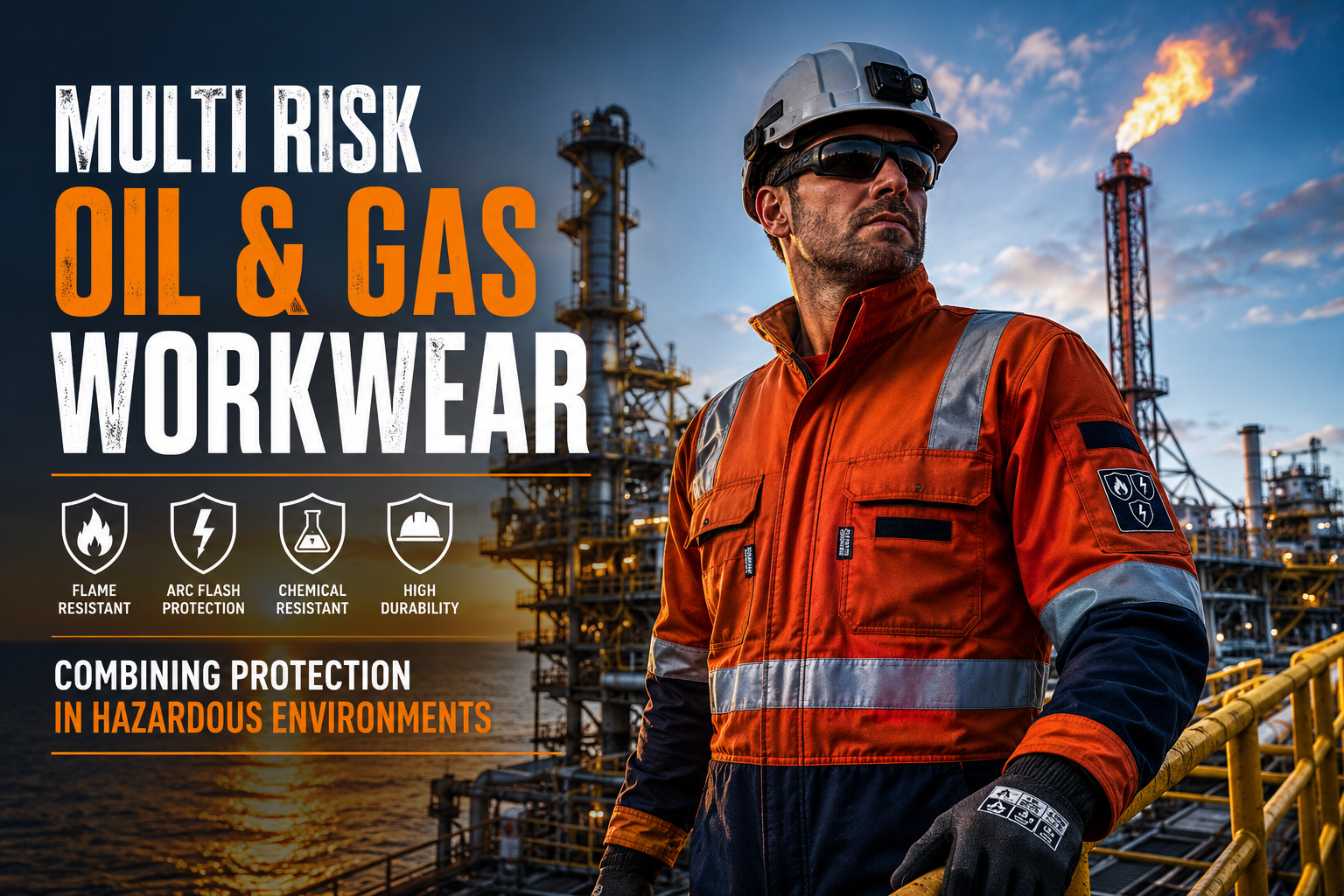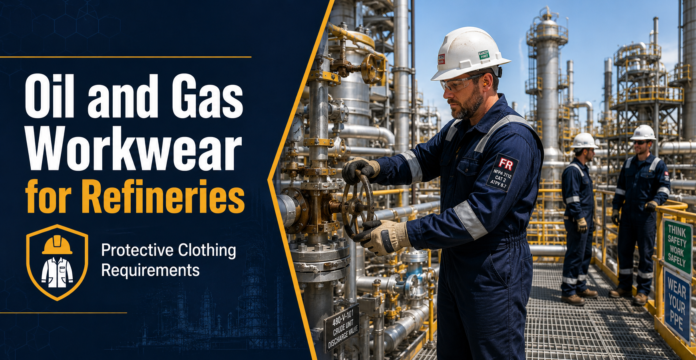
Refinery work needs serious protective clothing because workers may face heat, sparks, flame, chemicals, oil, sharp surfaces, moving equipment, and rough weather. Normal clothing is not enough for this type of workplace. A cotton T-shirt, casual jacket, or simple uniform may look fine, but it may not protect the body during sudden hazards. Oil and gas workwear for refineries is made to reduce injury risk while helping workers move, bend, climb, inspect, repair, and handle daily tasks. The best clothing should cover the body well, feel comfortable during long shifts, and match the hazard level of the job. It should also support safety rules, team identity, and professional appearance. In simple words, refinery clothing is not only about looking ready for work. It is about staying safer while working around dangerous materials and demanding conditions every day.
Oil and Gas Workwear for Refineries
Oil and gas workwear for refineries means protective clothing made for workers in petroleum processing plants, fuel storage areas, maintenance zones, loading areas, and inspection sites. This type of clothing may include FR coveralls, safety jackets, work pants, high-visibility vests, shirts, and layered garments. The goal is to protect the worker from common refinery risks while keeping the outfit practical for daily use. Buyers can review general protective options through Eco Jersey’s workwear collection when planning uniforms for refinery teams. However, the final choice should depend on the task, work zone, site policy, climate, and hazard assessment. Oil and gas workwear for refineries should never be selected only because it looks strong. It should be chosen because the fabric, fit, coverage, construction, and protective features match real refinery working conditions.
Main Hazards Refinery Workers Face
Refinery workers may face flash fire risk, heat exposure, oil splashes, chemical contact, low visibility, slippery surfaces, sparks, dust, sharp metal, and heavy-duty equipment. Some workers spend time near pipes, valves, tanks, pumps, platforms, loading points, and maintenance areas. These places can require stronger clothing than normal industrial work sites. Oil and gas workwear for refineries should protect the most exposed body areas, such as arms, legs, chest, back, and neck. Long sleeves and full-length pants are often preferred because they reduce exposed skin. Good clothing should also help workers stay visible when moving around vehicles or outdoor areas. The right outfit should not be too tight, because tight clothing can limit movement. It should not be too loose either, because loose fabric may catch on tools, rails, or machinery. Safety begins with understanding the hazards before choosing the clothing.
Why Flame-Resistant Clothing Matters
Flame-resistant clothing is important in refinery work because some areas may have a risk of short flame exposure or flash fire. FR fabric is designed to resist ignition and stop burning after the flame source is removed. This can reduce the chance of severe burn injury compared with ordinary clothing. Oil and gas workwear for refineries should often include FR garments when workers are near flammable materials, fuel vapors, hot surfaces, welding activity, or process equipment. FR clothing does not make a worker fireproof, and it does not replace safe work practices. It gives an extra layer of protection when something goes wrong. For heavier protection, one-piece garments can be useful because they reduce gaps between the shirt and pants. Eco Jersey’s oil and gas safety coveralls are a relevant option when a refinery team needs full-body protective clothing for demanding work zones.
Choosing the Right Garments for Refinery Teams
The best refinery uniform depends on the worker’s role. Maintenance crews may need durable coveralls, technicians may need shirts and pants, outdoor workers may need jackets, and traffic-facing workers may need high-visibility layers. Oil and gas workwear for refineries should be planned like a full clothing system, not a random mix of garments. Coveralls can give simple full-body coverage, while separate shirts and pants can offer more flexibility in hot weather. Jackets are useful for night shifts, winter work, storm response, and outdoor inspections. Pants should allow kneeling, climbing, and tool use without tearing or pulling. Vests should improve visibility but should not replace protective base clothing. Each garment should work with helmets, gloves, boots, goggles, hearing protection, and other PPE. A practical refinery clothing setup protects the worker while still allowing fast, safe, and comfortable movement during real work.
Fabric Quality, Strength, and Comfort
Fabric quality matters because refinery clothing is washed often, worn for long hours, and exposed to rough work. Oil and gas workwear for refineries should use fabrics that can handle abrasion, repeated movement, sweat, dirt, and industrial washing. A weak fabric may tear too quickly, while a very heavy fabric may cause overheating. The best fabric balance depends on the site climate and job type. Breathability is important in hot refineries because workers may feel tired faster when clothing traps too much heat. Strong stitching is also important because seams often fail before the fabric does. Reinforced stress points, secure pockets, strong closures, and stable trims can improve garment life. Comfort should never be ignored. If clothing feels too hot, stiff, or heavy, workers may open buttons, roll sleeves, or avoid wearing layers correctly. Safe clothing must be wearable enough for the full shift.
Jackets, Pants, and Vests for Different Work Zones
Different refinery zones may need different clothing combinations. A worker in an outdoor inspection area may need a protective jacket, while a worker in a hot process area may need lighter FR layers. Oil and gas workwear for refineries should match both the hazard and the season. For cold, windy, or outdoor sites, Eco Jersey’s oil and gas safety jackets can be considered as part of a protective outerwear plan. Pants should be durable enough for walking, bending, kneeling, and climbing stairs. Vests should help improve visibility, especially around vehicles, loading points, and low-light areas. However, vests should be selected carefully so they do not create loose hanging edges. Each layer should support the layer below it. A non-protective outer jacket over protective clothing may reduce safety, so every visible layer should be suitable for the work zone.
One-Paragraph Protective Clothing Checklist
When choosing oil and gas workwear for refineries, check these points before ordering:
- Choose FR clothing where flash-fire risk exists.
- Select full-body coverage for high-risk work zones.
- Match garments to the worker’s exact job role.
- Use breathable fabrics for hot refinery conditions.
- Choose strong stitching for long garment life.
- Avoid loose parts that may catch on equipment.
- Make sure sleeves and pants cover skin properly.
- Check that jackets close safely over inner layers.
- Use high-visibility details where vehicles move.
- Pick pockets that are useful but not bulky.
- Follow the care label after every wash.
- Replace torn, damaged, oily, or contaminated clothing.
- Test samples before placing a large order.
- Train workers to wear each garment correctly.
Fit and Sizing Requirements
Fit is one of the most important parts of refinery clothing. Oil and gas workwear for refineries should not feel like fashion wear or tight sportswear. It should give enough room for safe movement without hanging loosely. Sleeves should cover the wrists when the worker reaches forward. Pants should stay comfortable when the worker bends, climbs, or kneels. Jackets should close fully over shirts without pulling at the chest or shoulders. Coveralls should allow the worker to sit, squat, and raise arms without stress on the seams. The neck, cuffs, waist, and ankles should stay covered during movement. If clothing is too small, it may tear or expose skin. If it is too large, it may catch on handles, valves, ladders, or tools. A good size chart, sample fitting, and worker feedback can help buyers avoid expensive mistakes.
Care, Washing, and Replacement Rules
Protective clothing works best when it is cared for correctly. Oil and gas workwear for refineries should be washed according to the label because wrong washing may reduce garment life or affect protective performance. Workers should avoid bleach, harsh chemicals, and fabric softeners unless the garment instructions allow them. Oil, grease, fuel, paint, and chemical contamination should be taken seriously because dirty clothing may become less safe. Torn seams, damaged closures, holes, missing labels, and heavy fading are signs that clothing should be reviewed or replaced. Storage also matters. Garments should be kept clean, dry, and away from sharp tools or chemical spills. A simple inspection routine can save money and improve safety. Workers can check clothing before each shift, and supervisors can review condition during regular safety checks. Good care helps protective clothing last longer and perform better.
Common Buying Mistakes to Avoid
Many buyers make the mistake of choosing refinery clothing only by price. Low cost may look good at first, but weak fabric, poor stitching, and bad fit can create bigger problems later. Oil and gas workwear for refineries should be judged by protection, comfort, durability, and suitability for the work zone. Another mistake is using the same clothing for every worker, even when different teams face different hazards. A loading crew, maintenance worker, inspector, and outdoor repair worker may need different layers. Some buyers also add non-protective jackets or vests over protective garments, which can reduce the value of the safety system. Another issue is ignoring worker comfort. If the clothing is too hot or stiff, workers may not wear it correctly. The best buying decision is practical, safe, and tested through samples before bulk production begins.
Conclusion
The right oil and gas workwear for refineries should protect workers from real site hazards while still feeling comfortable enough for long shifts. It should include the correct garment type, proper fabric, safe fit, strong construction, and clear care rules. Coveralls, jackets, pants, and vests all have a place, but they must be selected for the correct task and work zone. A good refinery clothing program should also include training, inspection, washing guidance, and replacement rules. The safest choice is not always the heaviest garment or the cheapest order. The safest choice is the clothing system that fits the hazard, supports worker movement, and stays reliable during daily refinery work.
FAQs
What is oil and gas workwear for refineries?
Oil and gas workwear for refineries is protective clothing made for refinery workers. It may include FR coveralls, jackets, pants, shirts, and safety vests. Its purpose is to protect workers from heat, flame risk, oil, dirt, and tough job-site conditions.
Do refinery workers need flame-resistant clothing?
Many refinery workers may need flame-resistant clothing when they work near flammable materials, fuel vapors, hot surfaces, or flash-fire risk areas. The exact requirement depends on the job, site policy, and hazard assessment. FR clothing should match the real work environment.
Are coveralls better than shirts and pants?
Coveralls can be better when workers need simple full-body coverage with fewer gaps. Shirts and pants may be more flexible in hot conditions or lower-risk areas. The better choice depends on the worker’s task, climate, movement needs, and protection level.
When should refinery workwear be replaced?
Refinery workwear should be replaced when it has holes, torn seams, damaged closures, heavy contamination, unreadable labels, or poor fit. Clothing should also be replaced if it no longer meets the site’s safety needs. Regular inspection helps prevent unsafe use.