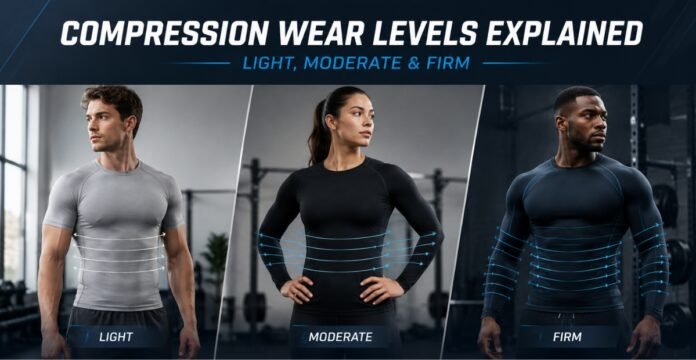
Compression wear levels clothing uses stretchy fabric to fit close to the body and apply gentle, even pressure. However, not every tight garment gives the same support. This is why compression wear levels matter when you choose clothing for exercise, recovery, travel, or everyday comfort. Some garments feel soft and flexible, while others feel much tighter and more controlled. Each level has a different purpose, so the strongest option is not always the best one. Before buying, look at the garment’s size chart, intended use, fabric stretch, and pressure rating. You can also explore the wider compression wear collection to see how different garment types are designed for separate parts of the body.
Why Do Compression Wear Levels Matter?
The levels of compression wear levels available are important because the right amount of pressure can encourage movement without the restriction of a hold. Something with light pressure may be fine for daily activities, movement, or stretching. Moderate pressure may be used for support during long-term standing or may hold during a workout. Strain for a purpose or support for a medical reason is typically used when a firm pressure is chosen. Knowing the levels of compression wear can eliminate buying mistakes that are typically made. If the garment is too loose, support can be nonexistent.
Compression Wear Levels
There are levels of compression wear levels, and the first of which is Light. At this level, the garment fits close to the body in the way of supportive activewear. The next level of compression is Moderate, and this involves a tighter fit and more muscle support. The third and final level is Firm. This level of compression supports the most pressure of the three levels, so it should be selected carefully. Firm could be moderate in a different company.
What Is Light Compression?
Light compression garments apply gentler pressure than most and therefore do not feel as tight. Because of this (and the fact that there is less overall sensation) light compression is often the best starting point for beginners. For those who prefer wearing compression for activities such as walking, stretching, light workouts, yoga, and even for daily travel, light compression is more suited. Light compression also lessens excess fabric and helps garments fit smoothly. Because of this, it is common to see light compression in sports bras and base layers.
What Is Moderate Compression?
Moderate compression creates a firmer and more noticeable hold than light compression. It is often used in training garments that need to stay stable during running, gym sessions, cycling, or repeated movement. Moderate compression wear levels may feel supportive around the thighs, calves, waist, chest, or shoulders, depending on the garment. Well-made compression leggings may use stretch panels, a stable waistband, and close-fitting fabric to support movement without slipping. This level should feel secure, but it should not cause sharp pressure, tingling, or loss of movement. Moderate compression is useful for people who want more structure than normal activewear but do not need the strongest pressure.
What Is Firm Compression?
Firm compression is the strongest of the three compression wear levels discussed in this guide. It creates a tight, controlled fit and is more difficult to put on and remove. In medical products, firm pressure may be recommended for swelling, vein conditions, recovery after certain procedures, or other health needs. For example, graduated compression stockings are designed to apply stronger pressure near the ankle and gradually reduce pressure higher on the leg. Because firm compression wear levels can affect comfort and circulation, people with pain, reduced feeling, skin problems, diabetes, or blood-flow conditions should ask a qualified healthcare professional before using strong medical compression.
How Are Compression Levels Measured?
Several levels of compression apparel use mmHg to represent pressure levels. These numbers indicate how much support the garment applies. A lower mmHg number applies a lighter pressure, while a higher number indicates a greater pressure. A product may indicate light compression is in the range of garment support levels of 8 to 15 mmHg, while moderate compression is in the range of support level of 15 to 20 or 20 to 30 mmHg, and firm compression indicates a range of 30 to 40 mmHg. These ranges vary between different companies, different countries, as well as different medical practices.
Which Compression Level Fits Each Activity?
Different activities require different levels of compression wear levels. For walking, light stretching, wearing compression at the gym, wearing layers for everyday use, and casual everyday wear, lower compression is appropriate. Running, lifting, cycling, participating in practice for team sports, and working out for prolonged periods may require compression that is of a moderate level. Firm compression is not typically found in regular workout clothing, and is reserved for special designs for sports or special health-related purposes.
How Should Compression Clothing Fit?
A garment that fits as intended should lay perfectly against the body, smooth, without any folds or gathers. Compression wear the seams should not dig or pinch. Waistbands or rolling seams should not cause pain. Sleeves, sleeves, and openings should not leave painful marks, but should fit enough to not leave gaps. It should not hinder any movements. Compression wear with a fit that causes numbness or unusual changes to the body such as color, or a strong tingling, should be removed. These symptoms are indicators that the garment is either too small, or a larger size is needed. Do not size down thinking that a smaller size means more compression.
Quick Guide to Choosing the Right Level
- Choose light compression wear levels for gentle support, easy movement, and longer everyday wear.
- Choose moderate compression wear levels for a firmer feel during running, gym training, cycling, or active work.
- Choose firm compression wear levels only when strong pressure is truly needed and the product is properly fitted.
- Check the mmHg number when buying medical socks or stockings because level names may differ between brands.
- Check fabric stretch, seam placement, breathability, and size when buying sports compression clothing.
- Avoid compression wear levels that cause pain, numbness, skin colour changes, or restricted movement.
- Ask a healthcare professional before using strong medical compression for swelling, circulation problems, or recovery.
- Wash compression garments as directed because heat and rough care can weaken stretch and change their support.
- Replace garments that have become loose, damaged, uneven, or unable to return to their original shape.
Conclusion
Compression wear provides a sculpting and more supportive fit, and improves ease of movement. The levels of compression wear offered may vary by manufacturer. The name of the level may not accurately represent the level of compression the garment provides. For a sports garment, focus on ease of movement and breathability. For a medical compression garment, consider the recommended mmHg and take any medical advice into account. When considering a level of compression wear, the garment should support the body and the intended use of the garment, and should be secure and comfortable; not painfully tight.
FAQs
What Are the Three Main Compression Levels?
The three common levels are light, moderate, and firm compression. Light feels gentle, moderate feels clearly tighter, and firm applies strong pressure. Brand labels can vary, so check the product details and pressure rating before buying.
Is Moderate Compression Suitable for Workouts?
Moderate compression can suit running, gym training, cycling, and other active movement when the garment fits correctly. It should feel firm and stable without causing numbness, pain, breathing difficulty, or restricted movement.
Can I Wear Firm Compression Every Day?
Firm compression should not be chosen for daily use without understanding why it is needed. Medical-grade firm garments may require professional fitting or healthcare advice, especially for people with circulation, skin, nerve, or swelling problems.