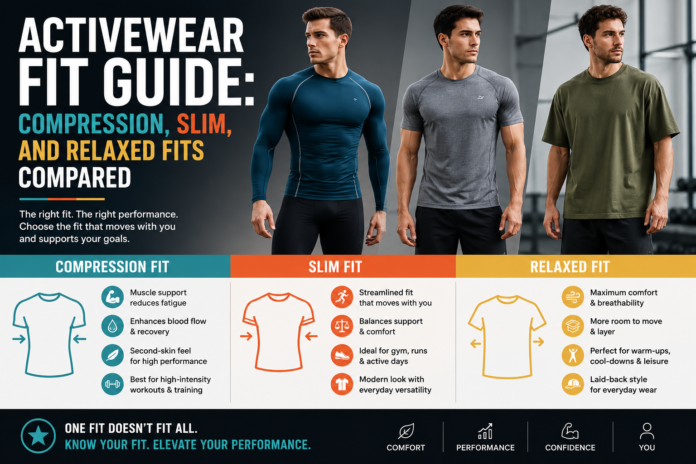
Choosing the right activewear fit is not only about looking good. It is about feeling comfortable, moving freely, and wearing clothing that supports your body during exercise. This activewear fit guide explains compression fit, slim fit, and relaxed fit in a simple way so you can understand which style works best for your workout, body shape, and daily routine. Compression fit feels tight and supportive. Slim fit sits close to the body without strong pressure. Relaxed fit gives more space and airflow. Each fit has a purpose, and the best choice depends on how you train, how much movement you need, and how much comfort you want. A good activewear fit guide helps you avoid clothes that feel too tight, too loose, too hot, or uncomfortable during movement.
What Is an Activewear Fit Guide?
An activewear fit guide is a simple way to compare how workout clothing sits on the body and how it performs during different activities. It helps you understand whether you need strong body support, a clean athletic shape, or easy everyday comfort. Many people choose activewear only by size, but fit is just as important as size. Two shirts can both be medium, but one may feel tight like compression wear while another may feel loose like relaxed training clothing. This activewear fit guide makes the choice easier by explaining the feel, use, and benefit of each fit. Compression fit is best when you want firm support. Slim fit is best when you want a neat look with easy movement. Relaxed fit is best when you want comfort, space, and breathability for casual training or daily wear.
Compression Fit: Tight, Supportive, and Performance Focused
Compression fit is the closest fit in activewear. It hugs the body and gives a firm feeling around muscles. This type of fit is often used in leggings, base layers, training tops, and recovery clothing. Compression clothing is popular because it stays in place during movement and does not flap around when you run, stretch, lift, or train. In this activewear fit guide, compression fit is the best option for people who want strong support and a locked-in feel. It can feel very comfortable during high-movement workouts when the fabric has enough stretch. However, compression fit should not feel painful, restrict breathing, or leave deep marks on the skin. If it feels too tight, it is not the right size. Good compression activewear should feel firm but still allow normal movement.
Slim Fit: Close to the Body Without Heavy Pressure
Slim fit activewear sits close to the body but does not squeeze like compression clothing. It gives a clean and athletic shape while still allowing comfortable movement. Slim fit is a smart choice for gym training, walking, light running, cycling, stretching, and everyday sportswear. Many people prefer slim fit because it looks modern without feeling too tight. This activewear fit guide places slim fit between compression and relaxed fit because it gives balance. It is fitted enough to look sharp but loose enough for regular comfort. For people building a general workout wardrobe, browsing an activewear collection can help show how different tops, bottoms, and layers are made for different movement needs. Slim fit is useful when you want clothing that works for training and also looks suitable outside the gym.
Relaxed Fit: Comfortable, Loose, and Easy to Wear
Relaxed fit activewear gives more room around the chest, waist, arms, hips, and legs. It is not baggy in a careless way, but it does feel easier and more open than compression or slim fit. Relaxed fit is helpful for warm-ups, walking, travel, casual workouts, yoga warm-up layers, and people who do not like tight clothing. This activewear fit guide recommends relaxed fit when comfort is the main priority. It gives better airflow and allows the body to move without feeling squeezed. Relaxed fit can also be better for beginners because it feels less restrictive. However, very loose clothing may get in the way during fast running, cycling, or machine exercises. The best relaxed fit should feel roomy but still controlled enough to move safely.
Activewear Fit Guide: Compression vs Slim vs Relaxed
The main difference between these three fits is how close the clothing sits on the body. Compression fit is tight and supportive. Slim fit is close but easier. Relaxed fit is loose and comfortable. This activewear fit guide helps you choose by thinking about the activity first. For example, compression leggings may be better for running or strength training because they stay secure. Slim fit T-shirts may be better for gym sessions because they look neat and move well. Relaxed tops may be better for walking, warm-ups, or casual daily wear. People who train hard may keep all three fits in their wardrobe. They may use compression for performance, slim fit for regular workouts, and relaxed fit for rest days or light movement. The best fit is not always the tightest fit. The best fit is the one that matches the activity.
When Should You Choose Compression Activewear?
You should choose compression activewear when you need a secure fit that stays close during movement. It is useful for running, lifting, cycling, functional training, and layering under outerwear. Compression fit works well when fabric has stretch, breathability, and recovery, meaning it returns to shape after being pulled. This activewear fit guide recommends checking how the garment feels around the waist, thighs, shoulders, and arms before using it for long workouts. Good compression should support the body without making movement difficult. If you are comparing fitted workout tops and bottoms, the compression wear category is a relevant place to understand how close-fitting activewear is designed for training support. Compression is not always needed for every workout, but it can be very useful when control and stability matter.
When Should You Choose Slim Fit Activewear?
Slim fit activewear is a strong everyday choice because it gives shape without strong tightness. It is useful for gym sessions, light cardio, stretching, walking, sports practice, and casual athleisure outfits. This activewear fit guide recommends slim fit for people who want clothing that feels active but still comfortable for daily use. A slim fit hoodie, T-shirt, jogger, or training top can look clean without feeling too serious or technical. Slim fit is also good for layering because it does not add too much bulk under jackets or sweatshirts. It is often easier to wear than compression because it gives the body more space to breathe. If you are unsure which fit to choose, slim fit is usually the safest middle option because it works for many body types and many activity levels.
When Should You Choose Relaxed Fit Activewear?
Relaxed fit activewear is best when comfort, airflow, and easy movement are more important than muscle support. It works well for casual training, stretching, walking, warm-ups, cool-downs, travel, and daily errands. This activewear fit guide recommends relaxed fit for people who do not like tight clothing or who want activewear that feels more natural during the day. Relaxed fit is also helpful in hot weather because air can move more easily around the body. It can be especially useful for oversized training tops, loose shorts, warm-up pants, and casual gym wear. However, relaxed fit should still have a clean shape. If clothing is too loose, it may twist, bunch, or disturb movement. The right relaxed fit gives comfort without making exercise harder.
One Quick Fit Checklist Before Buying
Before buying any activewear, use this activewear fit guide as a quick checklist so you do not choose clothing only because it looks good on a model.
• Choose compression fit when you want firm support and less fabric movement.
• Choose slim fit when you want a clean shape with normal comfort.
• Choose relaxed fit when you want more space, airflow, and easy daily wear.
• Raise your arms, bend your knees, and sit down to test movement before deciding.
• Make sure waistbands, cuffs, seams, and shoulders do not dig into the skin.
• Pick breathable fabric if you sweat a lot or train in warm weather.
• Choose stretch fabric when your workout includes squats, lunges, running, or yoga.
• Avoid very loose clothing for machines, cycling, or fast movement because extra fabric can get in the way.
Fabric and Stretch Also Affect the Fit
Fit is not only about the cut of the garment. Fabric also changes how activewear feels on the body. A compression T-shirt made with strong stretch fabric will feel very different from a loose cotton training shirt. A slim fit top with poor stretch may feel tighter than expected, while a relaxed fit top with soft fabric may feel easier to wear all day. This activewear fit guide recommends checking fabric stretch, thickness, breathability, and recovery before choosing a final size. For example, a close-fitting training top from a fitness apparel range can feel comfortable when the material supports movement instead of fighting against it. Good activewear should stretch when you move, breathe when you sweat, and keep its shape after washing.
Conclusion
There is no single best fit for everyone because compression, slim, and relaxed activewear all have different uses. Compression fit is better for support and high-movement workouts. Slim fit is better for a clean look, everyday gym use, and balanced comfort. Relaxed fit is better for easy movement, casual wear, and people who prefer more space. This activewear fit guide shows that the better choice depends on your workout, comfort level, body shape, and personal style. If you train often, it is smart to keep more than one fit in your wardrobe. Use compression when you need control, slim fit when you need balance, and relaxed fit when you need comfort. The right activewear should help you move better, feel better, and stay confident during every activity.
FAQs
What is the best fit for activewear?
The best fit depends on your activity. Compression fit is best for support, slim fit is best for balanced workouts, and relaxed fit is best for comfort and daily wear.
Is compression activewear better than slim fit activewear?
Compression activewear is better for firm support and high-movement training. Slim fit activewear is better if you want comfort, shape, and easy movement without strong pressure.
Should activewear be tight or loose?
Activewear should not be too tight or too loose. It should let you move easily, breathe comfortably, and stay in place during your workout.
What does an activewear fit guide help with?
An activewear fit guide helps you compare compression, slim, and relaxed fits so you can choose clothing that matches your workout, comfort needs, and body movement.