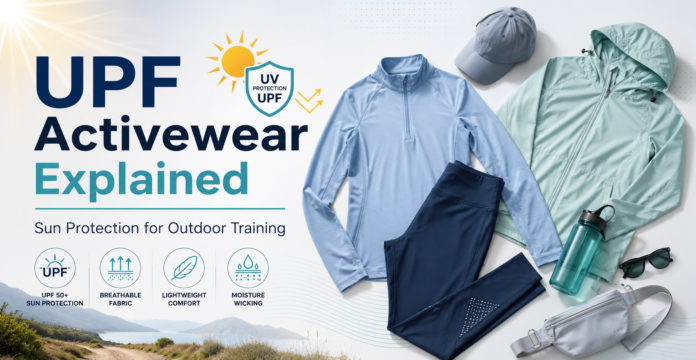
Without UV blocking, some activewear can allow rays to breach the body’s defense. Outdoor activities can lengthen body exposures to the sun. Sun protective activewear adds a layer of defense to clothes you may already use as defense like sunscreen. Many may only remember to bring the sunscreen but clothing can protect the body as well. Fabric can let UV rays through when it is wet, stretched, or thin. Even when clothes are thin, they can block UV rays with proper fabric. Consider the sun protective ability of the fabric when buying clothes for outdoor workouts. Better fabric better fit with greater coverage can all help training in the sun.
UPF Activewear Basics
UPF means sun-safe performance wear. Activewear with a UPF rating is made with fabric that blocks ultraviolet sun rays. Activewear with a high UPF rating blocks even more of the sun’s rays. A full category like the activewear collection can include tops, leggings, shorts, jackets, and training sets, but not every item offers the same sun protection. Buyers should check product details, fabric type, coverage, and intended use. UPF clothing is especially helpful for outdoor training because it combines sun protection with stretch, sweat control, and daily comfort.
What Does UPF Mean?
UPF activewear implements a rating system for UV blocking capabilities of fabrics. UPF activewear ranks fabrics based on their ability to block UV rays. UPF rankings are different from SPF rankings because SPF pertains to sunscreen and UPF pertains to fabrics. Several factors contribute to a good UPF rating such as weave, thickness, color, stretch and finishing. Weave and thickness refer to the density of cross threads. Stretch factors into UPF ratings as well because loose and stretched out fabrics do not provide as much protection. This shows that consumers need to look for UV activewear instead of assuming that the style of the activewear blocks UV rays.
Fabric Density and Construction
Fabric construction is critical to UPF activewear. Tightly woven fabrics typically protect better from the sun than loose, thin fabrics. The performance fabrics used in activewear should maintain enough stretch for workouts as well. Ideally, construction should stabilize protection and comfort. Too Thick Fabric may feel hot. Too thin fabric may not provide enough protection. Sun protective outdoor training apparel should help limit sun exposure and allow full range of motion. The shopper should evaluate fabric feel, thickness, stretch recovery, and coverage when selecting athletic apparel. The fabric construction of activewear should be designed for outdoor conditions.
Coverage and Garment Design
Since fabric only protects what it covers, full coverage is really important in UPF activewear. Long sleeves, high necks, full length leggings, and even UPF arm sleeves and light jackets are more protective than short styles. Still, all activewear should still feel breezy for breathability and easy to move in. For training, it should also feel light and non restrictive. Outdoor-focused products in performance wear should balance coverage, movement, and heat control. Buyers should choose design based on activity. A runner may need lightweight coverage, while a hiker may prefer more body protection.
Breathability and Sweat Control
Breathability is also essential when considering UPF activewear. Outdoor workouts can cause heat and sweating. UPF protection should not make the item heavy or uncomfortable. Quality UPF clothing should breathe and should pull sweat away from the body and keep the person feeling fresh. Control of moisture is a benefit for running, walking, training at the gym, practicing/playing sports, and hiking. If a fabric holds sweat, the clothing feels sticky and uncomfortable. Customers should also see if the activewear supports sweat and sun protection. The top outdoor activewear should UPF without making the person feel weighed down.
Fit, Stretch, and Movement
Another consideration with UPF activewear is fit. Garments should fit closely, but not so closely that the fabric is stretched. When fabric is stretched, it becomes thinner and less protective. Garments should allow the range of motion needed for activities including arm and back movement, walking, running, bending, and flexibility for stretching. Leggings should stay in place. Garments should not ride up. The shoulders should have full range of motion. A fit that is protective should also be supportive and allow for the optimal level of performance.
Color and Sun Protection
Color can influence the performance of UPF activewear. While darker colors and bold shades might block more light than very light colors, how the fabric is constructed is more important than the color. For example, a thin, dark, and loose shirt may not give the same protection as a lighter, denser, and sun-protective shirt. For protection, color should not be the only thing checked. Buyers should check the product details, fabric density, rating, and coverage. Color also contributes to the styling and feel of the product. Dark colors may feel ‘hotter’ vs. light color which may feel ‘cooler’ in direct sunlight. The ideal option will combine protection, comfort, and style.
Simple One-Line UPF Checks
These checks make UPF activewear easier to understand before buying or approving production.
- Check the UPF rating because higher numbers mean better fabric protection.
- Check coverage because fabric only protects covered areas.
- Check fabric density because loose fabric may block less sunlight.
- Check stretch because over-stretched fabric may reduce protection.
- Check breathability because outdoor training creates heat and sweat.
- Check fit because activewear should move without pulling.
- Check care instructions because washing can affect long-term performance.
These one-line checks help buyers compare sun-protective activewear without hard fabric words.
Care for Sun-Protective Activewear
Activewear from UPF is meant to last over many different uses while protecting you from the sun. It shouldn’t lose its form or comfort over this time. Taking care of your activewear means washing them gently in COLD water. Putting them through the wash with hot water or an aggressive detergent may ruin the fabric. Bleach should be avoided completely. Fabric softeners should be avoided, too, because they harm moisture controlling features. Rather than putting your activewear in the dryer, leave them out to air dry. The fabric can stretch and change in form due to the heat in the dryer. A category like fitness apparel may be washed often, so care instructions help buyers protect stretch,
Final Guide for Outdoor Training
When actively choosing UPF gear, remember what protective, active, breathable, and durable clothing does best — and choose accordingly. Outdoor gear is complex. Shoppers need to consider multiple factors, including UV and Sun protection assessments, fabric construction and care, coverage, fit and flexibility, seams, stretch and breathability, and care requirements. Good sun protection activewear works for anyone, be it runners, walkers, hikers, athletes, gym-goers, other active outdoor customers, or even passive customers. Brands should use clear messaging to communicate defined constructs because customers should understand the differentiation in their sun exposure potential between garments. An informative UPF activewear guide improves the product, the customer’s trust, and outdoor training comfort and confidence.
FAQs
What is UPF activewear?
UPF activewear is performance clothing made with fabric that helps block UV rays from the sun during outdoor workouts and daily training.
What does UPF mean in clothing?
UPF means Ultraviolet Protection Factor. It shows how well fabric can block ultraviolet rays from reaching the skin.
Is UPF activewear useful for outdoor training?
Yes, UPF activewear is useful for running, walking, hiking, cycling, sports practice, and outdoor gym sessions because it adds fabric-based sun protection.
Does color affect UPF protection?
Color can affect sun protection, but fabric density, construction, rating, coverage, and stretch are more important than color alone.
How should buyers care for UPF activewear?
Buyers should wash UPF activewear gently with cold water, mild detergent, no bleach, no fabric softener, and air dry when possible.