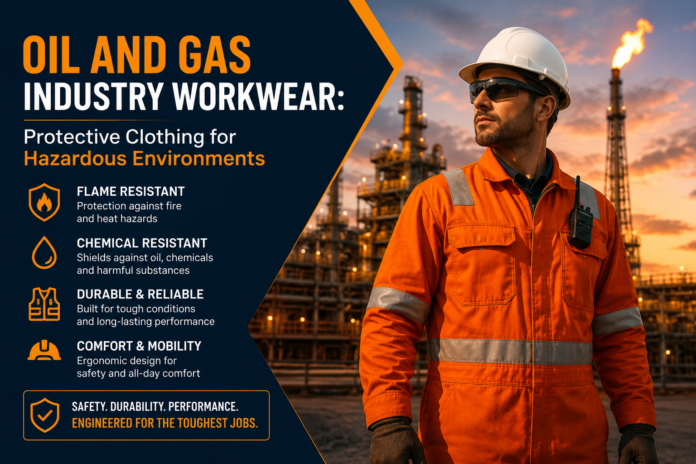
Oil and gas industry workwear is protective clothing made for workers who face fire, heat, chemicals, oil, gas, rain, wind, heavy tools, rough surfaces, and low-visibility job sites. It is not the same as normal work clothing because oil and gas sites can become dangerous very quickly. A worker may be near drilling machines, pipelines, offshore platforms, refineries, fuel storage areas, or maintenance zones where one small mistake can cause injury. Good oil and gas industry workwear helps reduce these risks by covering the body, improving visibility, resisting wear, and giving workers enough comfort to move safely. It can include jackets, coveralls, trousers, vests, gloves, rainwear, and high-visibility clothing. The main goal is simple: protect the worker while allowing them to do the job properly. When clothing is strong, visible, and suitable for the task, workers can focus better and stay safer during long shifts.
Oil and Gas Industry Workwear: Why It Matters
Oil and gas industry workwear matters because workers in this field often stand near hazards that are not always easy to see. Gas leaks, sparks, slippery oil, bad weather, moving vehicles, falling tools, sharp metal, and hot surfaces can all create serious safety risks. Protective clothing acts like the first safety layer between the worker and the danger. For example, a durable jacket can protect the skin from cuts and wind, while high-visibility panels help drivers and machine operators see workers from a distance. Companies also choose oil and gas industry workwear to build safer daily routines. When everyone wears the right clothing, teams look more professional, safety checks become easier, and workers understand that protection is part of the job. Good clothing cannot remove every danger, but it can reduce the chance of injury and make dangerous tasks more controlled.
Fire and Heat Protection on Hazardous Sites
Fire and heat protection is one of the most important parts of oil and gas industry workwear because many oil and gas jobs happen near flammable materials. Sparks, hot pipes, welding work, electrical faults, and fuel vapors can create flash fire risks. Normal fabric can burn, melt, or stick to the skin, which can make injuries worse. Protective workwear for these sites should be chosen with safety in mind, especially when workers are exposed to heat or flame hazards. Many companies look for strong industrial clothing through professional workwear options because oil and gas industry workwear must handle more than simple dirt or daily wear. It should cover key body areas, fit properly, and support safe movement. The clothing should also be checked often because damaged seams, holes, or worn fabric may reduce protection during a dangerous moment.
Visibility Is a Safety Requirement
Visibility is very important in oil and gas industry workwear because many workers operate around trucks, cranes, forklifts, service vehicles, and heavy machinery. A worker who is hard to see is at greater risk, especially during night shifts, fog, rain, dust, or offshore work. High-visibility clothing uses bright colors and reflective parts to help workers stand out from the background. This makes it easier for drivers, supervisors, and machine operators to notice people before accidents happen. For jobs where visibility is a major concern, companies often use hi-vis workwear as part of a full safety clothing plan. Oil and gas industry workwear should not only protect against physical hazards; it should also make the worker easy to identify from a safe distance. Bright jackets, safety vests, and reflective strips can make a real difference when teams are working in busy, noisy, or low-light areas.
Weather Protection for Outdoor and Offshore Work
Weather protection is another major part of oil and gas industry workwear because many workers spend long hours outside. Onshore workers may deal with sun, dust, wind, and cold mornings, while offshore workers may face rain, sea spray, strong wind, and wet decks. Wet clothing can make workers cold, uncomfortable, and distracted. It can also become heavy, which makes movement harder. Proper rain protection helps workers stay dry while still allowing them to move, bend, climb, and carry tools. For wet and outdoor conditions, protective rainwear can support oil and gas industry workwear needs by adding a useful layer against rain and harsh weather. However, rainwear should not feel too stiff or too bulky. Workers need clothing that protects them without slowing them down, especially when they must react quickly or work in tight spaces.
Comfort Helps Workers Stay Alert
Comfort is not only about feeling good; it is also part of safety. Oil and gas workers often stand, walk, climb, lift, inspect, repair, and monitor equipment for many hours. If oil and gas industry workwear is too tight, too hot, too heavy, or too rough, the worker may lose focus. Poor comfort can cause sweating, rubbing, tiredness, and restricted movement. Comfortable clothing should allow the worker to raise arms, bend knees, turn the body, and move tools without fighting against the fabric. Breathable fabric, correct sizing, smart seam placement, and useful pockets can make daily work easier. A good fit also matters because loose fabric can catch on equipment, while tight fabric can limit movement. The best oil and gas industry workwear protects the worker but still feels practical during real tasks. Safety clothing should help workers perform better, not make the job harder.
Key Features of Good Protective Workwear
Good oil and gas industry workwear should combine protection, comfort, strength, and practical design in one complete clothing system. A worker should not need to choose between safety and movement because both are necessary on hazardous sites. The best clothing is chosen according to the job, weather, work area, and level of risk. A jacket used near heavy machinery may need strong fabric and visibility, while clothing used offshore may need weather resistance and secure closures. Before buying or producing oil and gas industry workwear, companies should review the real working conditions and choose features that solve real problems.
- Strong fabric helps resist tearing, rubbing, and daily damage.
- Proper fit helps workers move safely without loose or tight areas.
- Reflective parts improve visibility in dark, dusty, or rainy conditions.
- Secure pockets help workers carry small tools without losing them.
- Weather-resistant layers help protect workers from rain, wind, and cold.
- Comfortable lining helps reduce irritation during long shifts.
- Durable stitching helps clothing last longer under heavy use.
- Easy-care fabric helps teams keep uniforms clean and ready for work.
Choosing the Right Clothing for Each Job Role
Different oil and gas workers need different types of oil and gas industry workwear because every job role has different risks. A drilling worker may need strong clothing that resists abrasion and supports movement. A pipeline worker may need clothing that handles outdoor weather and rough ground. A refinery worker may need protective layers for heat, sparks, and chemical exposure. A maintenance worker may need practical pockets, flexible fabric, and strong seams because they use tools all day. A supervisor may need high-visibility outerwear so the team can identify them quickly. This is why one uniform style is not always enough for every department. The right choice depends on the workplace, season, safety rules, and daily tasks. Companies should ask what workers actually do before choosing clothing. Better planning leads to safer, longer-lasting, and more useful oil and gas industry workwear.
Durability Saves Money Over Time
Durability is important because oil and gas industry workwear goes through hard use every day. Workers may kneel on rough ground, brush against metal, carry tools, climb ladders, and work in dirty environments. Weak clothing can tear quickly, lose shape, fade, or fail at the seams. When clothing wears out too fast, companies must replace it more often, which increases cost. Durable clothing may cost more at the start, but it can save money over time because it lasts longer and performs better. Strong stitching, reinforced stress points, heavy-duty closures, and quality fabric all improve lifespan. Durable oil and gas industry workwear also keeps workers looking professional. A clean and strong uniform gives a better impression than torn or poor-quality clothing. More importantly, damaged clothing may not protect properly, so durability is also a safety issue, not only a budget issue.
Common Mistakes When Buying Oil and Gas Workwear
One common mistake is choosing oil and gas industry workwear only by price. Low-cost clothing may look acceptable at first, but it can fail quickly if the fabric, stitching, or design is weak. Another mistake is buying clothing without checking the job conditions. A jacket that works well in dry weather may not be enough for rainy offshore work. A vest that looks bright indoors may not provide enough visibility in a dark outdoor site. Some companies also ignore sizing, which can create movement problems for workers. Poor sizing can cause discomfort, loose hanging fabric, or restricted movement. Another mistake is using the same clothing for every department. Oil and gas industry workwear should match the risk level of each task. The safest choice is not always the thickest or heaviest clothing; it is the clothing that protects workers while helping them work properly.
Conclusion
Oil and gas industry workwear is more than a uniform. It is a safety tool that protects workers from fire risks, weather, low visibility, rough surfaces, dirt, tools, and tough working conditions. The best clothing is strong, comfortable, visible, and suitable for the exact job role. Workers should be able to move easily, stay protected, and remain focused during long shifts. Companies should choose oil and gas industry workwear based on real hazards, not only appearance or price. Good protective clothing can improve confidence, reduce risk, and help teams look professional on every site. In hazardous environments, the right oil and gas industry workwear is not optional; it is part of responsible workplace safety.
FAQs
What is oil and gas industry workwear?
Oil and gas industry workwear is protective clothing made for workers in drilling, refining, pipeline, offshore, and energy sites. It helps protect against heat, fire, rain, dirt, rough surfaces, and low-visibility risks.
Why is high-visibility clothing important in oil and gas work?
High-visibility clothing helps workers stay visible around trucks, cranes, forklifts, machines, and night work areas. It reduces the chance of accidents in busy or low-light environments.
What features should oil and gas workwear have?
Oil and gas workwear should have durable fabric, strong stitching, proper fit, weather protection, reflective details, secure pockets, and comfortable movement. The exact features depend on the job role and worksite hazards.
How do companies choose the right oil and gas workwear?
Companies should choose workwear by checking the jobsite risks, weather conditions, worker tasks, safety needs, and comfort requirements. The best choice protects workers while allowing them to work easily.