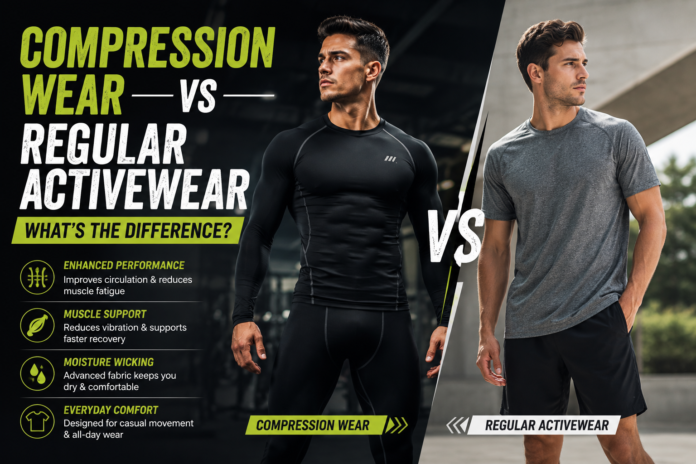
Compression wear vs regular activewear is an important comparison for anyone who exercises, trains, travels, works out casually, or wants comfortable clothing for movement. Both types of clothing are made for active use, but they are not the same. Compression wear is designed to fit tightly and apply gentle pressure to the body, while regular activewear is usually made for comfort, flexibility, and general movement. Compression wear often feels firm on the skin, supports muscles, and stays close to the body during workouts. Regular activewear gives more breathing room and can feel easier for everyday wear. A person may choose compression clothing for running, gym training, recovery, or support, while regular activewear may be better for walking, stretching, light exercise, errands, or casual sports. This guide explains compression wear vs regular activewear in simple language, so even a beginner can understand the difference before buying.
Compression Wear vs Regular Activewear
Compression wear vs regular activewear mainly comes down to fit, pressure, support, and purpose. Compression wear is made to sit very close to the body and give a snug feeling around muscles. It is not only tight for style; it is made to give controlled pressure. This pressure can help some people feel more supported during training, especially during running, cycling, weight training, or long activity sessions. Regular activewear is different because it focuses more on comfort, movement, and relaxed performance. A regular activewear T-shirt, hoodie, jogger, or legging may stretch and move with the body, but it does not usually give the same firm pressure as compression clothing. When comparing compression wear vs regular activewear, remember that one is support-focused and the other is comfort-focused. Neither is automatically better for everyone. The better choice depends on your body, activity level, weather, workout type, and how tight or relaxed you like your clothes to feel.
What Is Compression Wear?
Compression wear is clothing that fits tightly and applies light, even pressure to certain body areas. Common examples include compression T-shirts, leggings, shorts, sleeves, stockings, and hoodies. In the compression wear vs regular activewear discussion, compression clothing is the option made for people who want a more locked-in and supported feel. Many athletes wear compression pieces because they stay in place during movement and do not flap, bunch, or shift easily. This can make workouts feel smoother, especially during running, gym sessions, or sports training. Compression wear can also help reduce friction because the fabric stays close to the skin. Some people also use compression pieces for recovery or long standing hours, but the level of compression should match the purpose. Very tight clothing is not always better. Good compression wear should feel firm but not painful, should not limit breathing, and should not leave deep marks on the skin. Comfort is still important, even when the fit is tight.
What Is Regular Activewear?
Regular activewear is clothing made for exercise, movement, and casual sports without strong compression pressure. It includes workout T-shirts, tracksuits, hoodies, joggers, shorts, sports tops, and regular leggings. In the compression wear vs regular activewear comparison, regular activewear is usually the more relaxed and everyday-friendly choice. It gives the body more space and is often easier to wear for longer hours. People often choose regular activewear for gym warm-ups, walking, yoga, travel, home workouts, and daily casual outfits. It can still be breathable, stretchy, moisture-wicking, and durable, but it does not squeeze the muscles in the same way compression clothing does. For shoppers who want a wider view of workout clothing styles, the activewear collection can be used as a natural starting point to understand how regular activewear options may look and feel. Regular activewear is usually best when you want movement, comfort, and a sporty look without a very tight fit.
Fit and Feel Difference
Fit is the biggest difference in compression wear vs regular activewear. Compression wear feels like a second skin because it is designed to hug the body closely. It should stretch with movement but still return to its original shape. This close fit can make the wearer feel more stable during exercise. Regular activewear may be slim, relaxed, oversized, or loose, depending on the design. It gives more airflow and more freedom around the body. If you dislike tight clothing, regular activewear may feel more natural. If you like clothing that stays firmly in place, compression wear may feel better. The important thing is to avoid choosing compression wear only by size appearance. A compression garment should fit correctly according to body measurements, not just look tight. If it rolls down, pinches, restricts movement, or feels uncomfortable after a few minutes, it may be too small. Regular activewear is more forgiving because it does not need to apply controlled pressure to work properly.
Support and Performance Difference
Compression wear vs regular activewear also differs in how much support each one gives during movement. Compression clothing supports muscles by staying close to the body and reducing extra fabric movement. This can be helpful during high-impact training, running, sports drills, and workouts where the body moves quickly. Some people feel more confident wearing compression pieces because the fabric holds everything in place. Regular activewear gives lighter support and is more focused on easy movement. It can still perform well if the fabric is good, but it will not usually give the same firm hold. For example, someone doing sprints or heavy gym training may prefer compression leggings, while someone doing a relaxed walk may prefer normal joggers or loose workout pants. People who want targeted lower-body support can compare styles like compression leggings with normal leggings to understand the difference in hold, stretch, and body fit. Support matters most when movement is fast, repetitive, or intense.
Fabric and Breathability
Fabric quality matters in both compression wear and regular activewear. Compression clothing often uses stretchy blends such as polyester, nylon, and spandex because these fibers help the garment stretch, hold shape, and sit close to the body. Regular activewear may use similar fabrics, but the fabric structure is often less firm. In compression wear vs regular activewear, compression fabric usually needs stronger recovery, which means it should stretch and then return without becoming loose. Breathability is also important because tight clothing can feel warm if the fabric does not manage sweat well. Good compression wear should pull moisture away from the skin and dry quickly. Regular activewear can feel cooler because it may allow more air between the fabric and body. However, poor-quality regular activewear can still trap sweat and feel heavy. The best choice is not only about compression or regular fit. It is also about fabric weight, sweat control, stretch, stitching, and how the clothing feels after washing.
Comfort for Daily Use
Regular activewear usually wins when the main goal is all-day comfort. Many people wear activewear not only for exercise but also for travel, shopping, working from home, or casual daily outfits. In the compression wear vs regular activewear debate, regular activewear often feels easier for long hours because it does not keep constant pressure on the body. A relaxed hoodie, soft jogger, or lightweight training shirt can be comfortable from morning to evening. Compression wear can also be comfortable, but it depends on the compression level and the person wearing it. Some people enjoy the supported feeling, while others may feel restricted after a long time. For daily wear, mild compression may be better than strong compression. For training, firmer compression may be useful. The body should never feel numb, squeezed, or uncomfortable. If clothing leaves strong marks, causes tingling, or makes movement difficult, it is not the right fit. Comfort should always come before style or trend.
Best Uses for Each Type
The easiest way to understand compression wear vs regular activewear is to match the clothing with the activity. Compression wear is better for intense training, running, cycling, gym workouts, sports practice, and situations where you want muscle support and a close fit. Regular activewear is better for light exercise, walking, stretching, casual wear, travel, and relaxed gym sessions. A compression T-shirt may feel better under a hoodie or jacket because it stays smooth under layers. A regular activewear T-shirt may feel better on a hot day because it allows more airflow. Compression stockings are a special category and are often used for support during long standing, travel, or recovery, depending on need. People looking at broader support-based clothing can explore the compression wear category to see how different compression garments serve different purposes. The key is simple: choose compression when support matters, and choose regular activewear when relaxed comfort matters more.
One Quick Buying Checklist
When buying compression wear vs regular activewear, do not only look at color or style because the real value is in comfort, fabric, and function.
- Choose compression wear if you want a tight, supportive fit.
- Choose regular activewear if you want relaxed comfort.
- Check the size chart before buying compression clothing.
- Pick sweat-wicking fabric for workouts.
- Avoid compression wear that feels painful or too restrictive.
- Choose flat seams if you want less rubbing.
- Use regular activewear for travel, walking, and daily use.
- Use compression wear for running, gym, and high-movement sports.
- Wash both types gently to protect stretch and shape.
- Replace garments when they become loose, thin, or uncomfortable.
This simple checklist makes compression wear vs regular activewear easier to understand because it focuses on real use, not marketing words. A good garment should help your activity, not distract you during movement.
Common Mistakes to Avoid
Many buyers make mistakes when choosing compression wear vs regular activewear because they think tighter always means better. That is not true. Compression clothing should feel firm, not painful. If it limits breathing, causes discomfort, or makes the skin feel numb, it is too tight or not suitable for your body. Another mistake is using regular activewear for activities where extra support is needed. Loose clothing can move around during intense workouts and may cause rubbing. Some people also ignore fabric quality and only choose based on price. Cheap fabric can lose stretch quickly, hold sweat, or become see-through after a few washes. Another common mistake is wearing strong compression all day without knowing whether it suits your needs. Compression levels should match the activity and comfort level. Regular activewear also needs proper sizing because overly loose clothing can get in the way during workouts. The best choice is balanced: correct size, comfortable fabric, suitable purpose, and easy movement.
Conclusion
Compression wear vs regular activewear is not about one being good and the other being bad. It is about choosing the right clothing for the right purpose. Compression wear gives a tight, supportive, body-hugging fit that can be helpful for training, sports, running, and recovery-style use. Regular activewear gives more relaxed comfort and is often better for daily wear, light workouts, travel, and casual movement. Compression wear may feel more secure, while regular activewear may feel easier and cooler for long hours. The best wardrobe can include both types because each one solves a different problem. If your activity is intense and you want more support, compression wear can be the better option. If your activity is light and you want comfort, regular activewear is often the smarter choice. In the end, compression wear vs regular activewear should be decided by fit, comfort, fabric, activity, and how your body feels while wearing it.
FAQs
What is the main difference between compression wear and regular activewear?
The main difference is fit and support. Compression wear fits tightly and applies gentle pressure to the body, while regular activewear is usually more relaxed and focused on comfort and movement.
Is compression wear better than regular activewear?
Compression wear is better for support, intense workouts, running, and sports training. Regular activewear is better for daily comfort, light exercise, walking, travel, and casual wear.
Can I wear compression wear every day?
You can wear mild compression wear daily if it feels comfortable and does not cause pain, numbness, or tight marks. Strong compression should be used more carefully and according to your needs.
Which is better for beginners: compression wear or regular activewear?
Regular activewear is usually better for beginners because it feels easier and more comfortable. Compression wear can be added later for gym training, running, or activities where extra support is helpful.