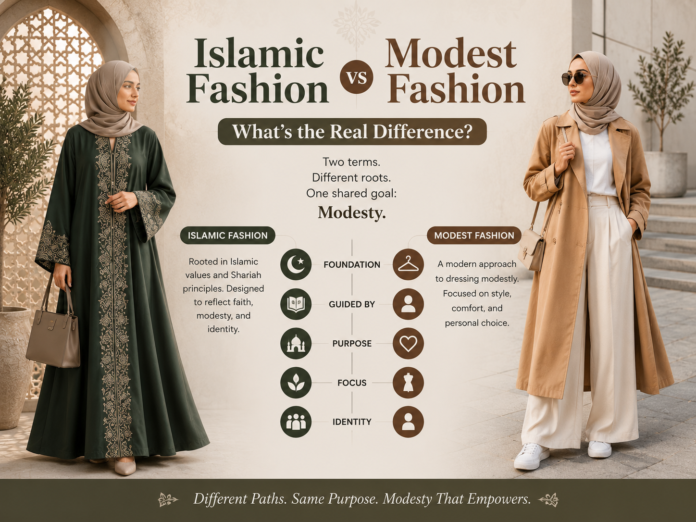
Islamic fashion vs modest fashion is a popular topic because both styles involve largely similar covered, respectful, and comfortable clothing. Many people assume a synonymous relationship between the two, but they are not identical. Islamic fashion is primarily a subset of Islamic values, religious dress codes, and Muslim cultural clothing. Modest fashion is an umbrella fashion concept that can be adopted by followers of numerous religions, cultures, and personal styles.
The simple difference is this: Islamic fashion is part of modest fashion, but modest fashion is not always Islamic fashion. A woman wearing an abaya and hijab may be following Islamic fashion, while another person wearing a long dress or loose outfit for personal comfort may be following modest fashion. You can explore different Islamic fashion styles to understand how Islamic clothing fits inside the wider modest fashion world.
Islamic Fashion vs Modest Fashion
Islamic fashion vs modest fashion can be explained in regard to their respective purposes. Islamic fashion traces its roots to religious values. Consequently, outfits that are deemed Islamic fashion cover the body, are loose, and are not overly revealing and dignified. Such outfits include hijabs, abayas, khimars, jilbabs and, kanduras, thawbs among other contemporary or traditional Muslim clothing.
On the other hand, modest fashion encompasses a wider style choice.
Modest fashion offers a comfortable, less revealing alternative. Choosing modest fashion may stem from culture, personal preference, profession, or body comfort. It may also stem from a desire to appear effortlessly elegant. Comparing Islamic fashion and modest fashion is not a matter of preference. Rather, it is understanding that Islamic fashion is faith-based while modest fashion is largely secular.
What Is Islamic Fashion?
Islamic fashion incorporates Islamic values of modesty and dignity when it comes to coverage. Consequently, it is Islamic lifestyle fashion for many Muslim men and women. Islamic fashion is very broad and encompasses traditional or contemporary designs. It can also be simple or extravagant and be casual or formal.
For women, Islamic fashion commonly includes abayas, hijabs, long dresses, loose tunics, maxi skirts, and full-coverage outfits. For example, an abaya for women is a well-known Islamic fashion piece because it gives coverage while still looking elegant. Islamic fashion can also include modern cuts, soft colors, embroidery, and premium fabrics.
What Is Modest Fashion?
Modest fashion is also concerned with coverage, but it is more broadly construed. Modest fashion priorit body comfort and confidence. It encompasses comfortable and respectful clothing that is longer, looser, and layered. Modest fashion is not restricted to one religion or culture. It can be worn by Muslims, Christians, Jews, or those with no religion.
Women may prefer modest fashion for a variety of reasons including: discomfort with form-fitting clothing, desire for professional attire, preference for more sophisticated styles, or greater comfort with less revealing apparel. Regarding Islamic fashion vs. modest fashion, modest fashion encompasses a broader range of styles than Islamic fashion.
Main Difference in Purpose
The primary distinction between Islamic fashion and modest fashion is intention. Unlike modest fashion, Islamic fashion is often aligned with and expresses religious faith and identity. In accordance with the values of Islam, there may be prescribed guidelines regarding the selection of Islamic apparel. For many Muslim women, the choice of hijab or abaya is a fashion statement. It embodies their principle of modesty and signifies personal choice and religious observance.
Modest fashion may be devoid of any religious motivation. A person may simply prefer modest clothing. There are many other reasons such as cultural preference, comfort, or the desire for professional attire. Thus, care should be taken in the discussion of islamic fashion vs modest fashion. While the two may be almost indistinguishable at times, the intention behind the outfit may be completely different.
Hijab in Islamic and Modest Fashion
The hijab, which covers a Muslim woman’s hair and is a component of a modest apparel, is one of the most prominent features of Islamic fashion. There are a variety of hijabs in many different fabrics such as chiffon, jersey, cotton, silk, modal, and crepe. Depending on the apparel, the hijab can be styled in many different ways and can be simple, elegant, formal, or casual.
There are many styles of hijabs; however, scarves in modest fashion may not always have a religious connotation.
In modest fashion, scarves may also be used, but not always for religious reasons. A scarf can be worn for style, weather, culture, or comfort. An Islamic women hijab is specifically connected with Islamic dressing, while a general scarf may only be a fashion accessory. This is an important point in islamic fashion vs modest fashion.
Men’s Islamic Fashion and Modest Fashion
Islamic fashion includes men’s clothing. In Islamic culture, men’s clothing can consist of thawbs, kanduras, trousers, long shirts, kufis, and shemaghs. All of these clothing items can cover the body while looking respectable and comfortable.
A kandura thawb is a good example of men’s Islamic fashion. It is long, loose, and commonly worn in many Muslim communities. In modest fashion, men may also wear loose shirts, relaxed trousers, long coats, and simple covered outfits, but they may not always be connected to Islamic tradition.
Cultural Difference
Islamic fashion can be associated with the Muslim communities worldwide. Islamic clothing can also be different based on the region. An example of this can be the shalwar kameez in the South Asian region or abayas in several Arab countries. Additionally, thawbs, shemaghs, kanduras, and kufiyas can be tied to cultural customs.
Modest fashion is more of a mix. It can consist of covered and loose clothing items from different fashion culture such as oversized shirts, long dresses, tunics, cardigans, and layered outfits. In Islamic fashion vs. modest fashion, culture is a distinguishing factor because of the religious significance of Islamic clothing.
Shemagh and Kufiya Styling
Culturally, the shemagh and kufiya can both be protective, but also modest styled clothing. These two traditional garments can be linked to cultural identity.
They’re common among men from many different countries. They protect against the sun, dust or wind. They also add a traditional style to the clothing.
A shemagh kufiya can be part of Islamic fashion when worn with traditional clothing. It can also be part of modest or cultural fashion when styled for identity, comfort, or heritage. This shows that some garments can belong to more than one fashion category depending on how and why they are worn.
Modern Styling Difference
Modern Islamic fashion now includes simple abayas, luxury abayas, stylish hijabs, long coats, modest dresses, and elegant matching sets. Many Muslim women want clothing that follows their values while still looking modern. This has made Islamic fashion more creative and more visible in global fashion.
Modern modest fashion is also growing because many people want covered clothing that feels stylish and comfortable. It can include oversized blazers, long skirts, loose trousers, maxi dresses, and soft layers. The styling may look similar to Islamic fashion, but it may not have the same religious meaning.
Islamic Fashion vs Modest Fashion Checklist
Here is a simple checklist to understand the difference:
- Islamic fashion is mainly connected with Islamic values.
- Modest fashion is a wider clothing style.
- Islamic fashion is usually faith-based.
- Modest fashion can be religious, cultural, or personal.
- Abayas and hijabs are common in Islamic fashion.
- Long dresses and loose outfits are common in modest fashion.
- Men’s Islamic fashion includes kanduras, thawbs, and shemaghs.
- Modest fashion is worn by people from many backgrounds.
- Islamic fashion can be modern, traditional, casual, or formal.
- Both styles focus on coverage, dignity, and comfort.
Common Misunderstandings
Modest clothing cannot be equated with Islamic clothing and that is a common misunderstanding. Modest fashion is multi-cultural and has a long dress or loose outfit. It can be modest without being Islamic.
Islamic fashion cannot be made elegant and stylish is another misunderstanding. There can be a modern, innovative, and modest design in Islamic fashion that can be respectful. There can be soft colors, embroidery, and good fabric with clean designs of Islamic fashion to make it beautiful.
Conclusion
The purpose and meaning behind Islamic and modest fashion helps clarify their differences. Clothing that falls under Islamic fashion extends to Islamic values and cultural garments. These reflect clothing like abayas, hijabs, kanduras, thawbs, shemaghs, and other clothing that is modest for Muslims.
Modest fashion extends to more covered clothing and more comfortable clothing that stylishly comes together. Although both of these clothing styles reflect similar styles, they can greatly vary. Modest fashion is broad and encompasses more than clothing that is Islamic in nature. Covers clothing can easily reflect both styles, but the beauty of clothing that reflects either of these styles is that clothing can be self-expressive and empowering. Whether someone opts to reflect their faith through Islamic clothing or choose Modest fashion for personal style, both of these clothing styles reflect covered clothing that is stylish, modern, and intentional.
FAQs
What is the main difference between Islamic fashion and modest fashion?
Islamic fashion is connected with Islamic values and religious dressing, while modest fashion is a wider style based on coverage and comfort.
Is Islamic fashion part of modest fashion?
Yes, Islamic fashion is part of modest fashion, but modest fashion is not always Islamic fashion.
Is hijab modest fashion or Islamic fashion?
Hijab is mainly part of Islamic fashion, but scarves can also appear in general modest fashion for style or coverage.
Is modest fashion only for women?
No, modest fashion is for both women and men. Men can also wear loose, covered, and respectful clothing.